Puppet MastersS


Light Sabers

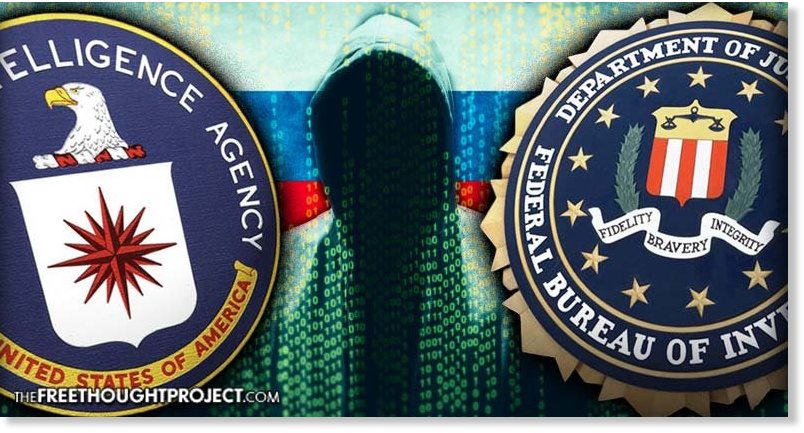
FBI rejects CIA assessment that Russia influenced presidential election to help Trump win, calling info "fuzzy and ambiguous"

fbi cia emblems
Blatantly operating as a propaganda outlet for U.S. intelligence/deep state interests, working in collusion with Democratic party elements, The Washington Post reported that anonymous sources claimed, "the CIA concluded in a secret assessment that Russia intervened in the 2016 election to help Donald Trump win the presidency, rather than just to undermine confidence in the U.S. electoral system."

What the Post, in their shameful piece of yellow journalism, failed to mention is that the FBI did not in any way agree with the assessment by the CIA. In fact, the FBI said the information was "fuzzy and ambiguous" and DID NOT provide clear evidence that Russia had meddled in the U.S. election.

The FBI's unwillingness to play along in this soft-coup has infuriated Democrats. According to a report for the BizPac Review:
The FBI did not corroborate the CIA's claim that Russia had a hand in the election of President-elect Donald Trump in a meeting with lawmakers last week.

A senior FBI counterintelligence official met with Republican and Democrat members of the House Permanent Select Committee on Intelligence in order to give the bureau's view of a recent CIA report. The official did not concur with the CIA, frustrating Democrats.

The CIA believes Russia "quite" clearly intended to send Trump to the White House. The claim is a bold one and concerned Democrats and some Republicans who are worried about Trump's desire to mend relations with an increasingly aggressive Russia. The CIA report was "direct, bold and unqualified," one of the officials at the meeting told The Washington Post Saturday.

The FBI official was much less convinced of the claims, providing "fuzzy" and "ambiguous" remarks.

Attention

Trump's closure of Saudi businesses portends changes in US-Saudi relationship

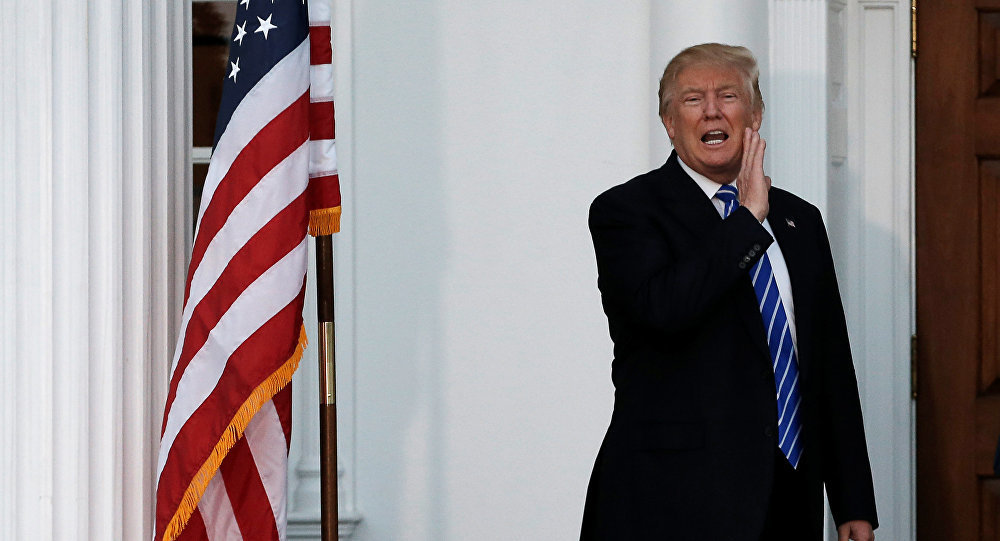
Donald Trump
© REUTERS/ Mike Segar
President-elect Donald Trump closed four companies associated with ventures in Saudi Arabia soon after winning the election. The Associated Press, which broke the story, said Trump's decision may have been part of an effort to avoid conflicts of interest as president. A Mideast politics expert told Sputnik there may be other more important motives.

Trump Organization General Counsel Alan Garten described the decision to shutter the four Saudi-related companies as routine "housecleaning," adding that there were now no Trump businesses remaining in Saudi Arabia.

Aside from the four Saudi-based companies, Trump has filed to dissolve or cancel the creation of at least five other ventures in other countries. The President-elect's business empire stretches over 500 private companies. Trump has promised to reveal plans to separate himself from his business after stepping into office next week.

Comment: Saudi Arabia has a lot of inner turmoil to reconcile: But Trump has to be careful how he approaches his foreign policy: Complicated foreign policy decisions that await Donald Trump

Meanwhile Germany and UK are increasing cooperation with Saudi Arabia.


Bad Guys

Syrian army hit from 'coordinated attack from Daesh and CIA'

Syrian Army
© Sputnik/ Mikhail Voskresenskiy
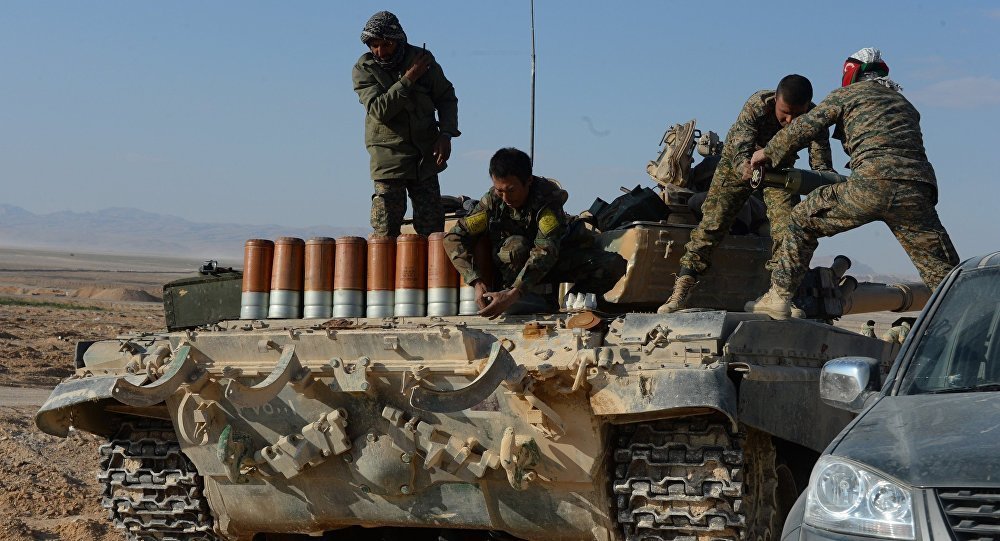
The Syrian army is regrouping around Palmyra, after Daesh retook the city following an opportunistic attack that looks to have had American involvement, Dr. Taleb Ibrahim, Deputy Director of the Damascus Center for International and Strategic Studies, alleged in conversation with Radio Sputnik.

The attack on Palmyra by Daesh terrorists on Sunday caught Syrian government forces on the hop, and the army is regrouping for an offensive to retake the city, Dr. Taleb Ibrahim, Deputy Director of the Damascus Center for International and Strategic Studies, told Radio Sputnik.

"The Syrian army wasn't in a very good position to fight because they were very busy with events taking place in Aleppo, and the defense units got too relaxed so they didn't set up a good defense for the city," Ibrahim said.

Ibrahim said that one of the most important things to note about the assault on Palmyra was the strategy of "hornets" used by Daesh.

"They are fighting using what they call the strategy of 'hornets.' In the beginning of their attacks, they send a small number of militants to attack army sites or cities, etc. After that, they come in waves, wave after wave until they capture the city or get what they want."

Bad Guys

Israeli defense minister wants to carve up Syria and Iraq along sectarian lines

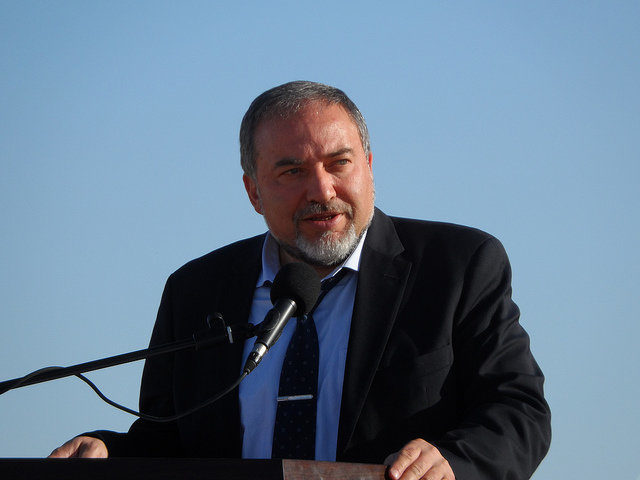
Avigdor Liberman
Avigdor Liberman, leader of the Yisrael Beytenu party
Israel's "defence" minister Avigdor Liberman in an article for Defense News penned an article to explain his regime's struggles in a trobulant Middle Ease.

In a similiar tone to those of other Israeli politicians, Liberman wastes no time to call the legitimate forces of Hamas in Palestine and Hezbollah in Lebanon as terrorist forces. He says, "The massive convulsions that in recent years have swept through North Africa and erupted in Syria, Iraq and Yemen and elsewhere throughout the region, and which have seen the empowerment of semi-territorial terrorist organizations such as ISIS, Hamas and Hezbollah, represent an earthquake of historic proportions. Multi-ethnic states such as Libya, Syria and Iraq have descended into chaotic civil wars as many aspects of the region's enduring political order, whose origins lie in the aftermath of World War One, disintegrate."

Liberman goes on to draw three conclusions as the solutions for ending the crisis in the Middle East. The second conclusion is clearly a call to attack the sovereignty of the independent countries. Liberman says, "many of the countries in the Middle East were established artificially, as a result of the Sykes-Picot Agreement and based on colonial considerations that did not take into account the pattern of inhabitance and the deep sectarian rifts within the respective societies.

Network

Japan brushes off US objections, will meet with Putin in Tokyo

putin abe handshake
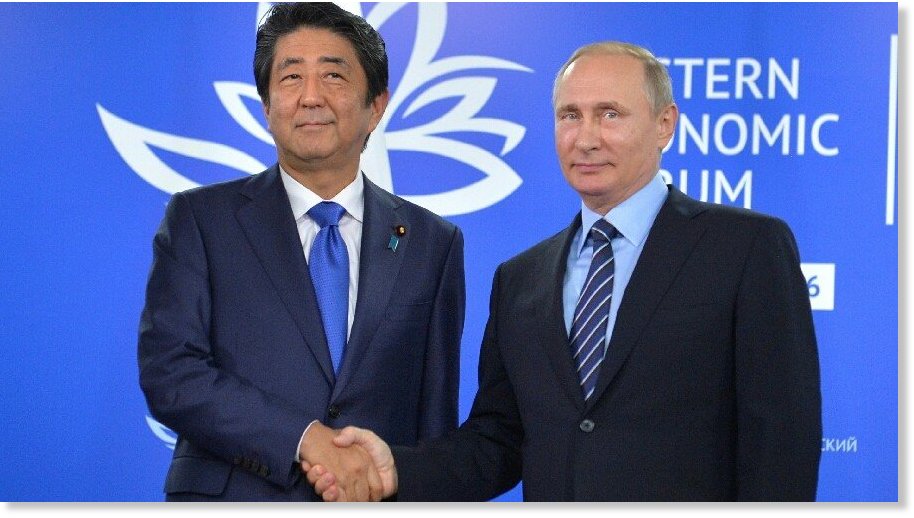
© Aleksei Druzhinin / ReutersRussian President Vladimir Putin (R) shakes hands with Japanese Prime Minister Shinzo Abe
Japan has brushed off US objections to planned talks between Prime Minister Shinzo Abe and Russian President Vladimir Putin, set to take place in Tokyo later this week, diplomatic sources say.

"Although Japan needs to play a role as a G7 member, it is also natural for us to pursue national interests and holding a summit meeting in Tokyo causes no problem," a Japanese government source told Kyodo news agency. Earlier this week, Japan formally announced the talks for next Friday, December 15, as well as another meeting in Yamaguchi Prefecture on Thursday, December 16.

According to its sources, the news agency reports, Washington expressed its displeasure with the upcoming bilateral Abe-Putin summit through diplomatic channels on a number of occasions in November, allegedly voicing concern that the meeting could "send the wrong message that the Group of Seven (G7) industrialized nations is not totally united in pressuring Moscow."


Comment: Apparently if one is in the Group of Seven, one must conform to the American way of behavior towards other nations. Perhaps Japan and the rest of the world is sick of being told what to do by the US.


Japanese authorities have reportedly dismissed these claims, saying that the visit should not be seen as granting Putin any special favors, as he will not be meeting with Emperor Akihito.

Bullseye

Furious Russian military blame US, 'humanitarian pauses', for fall of Palmyra

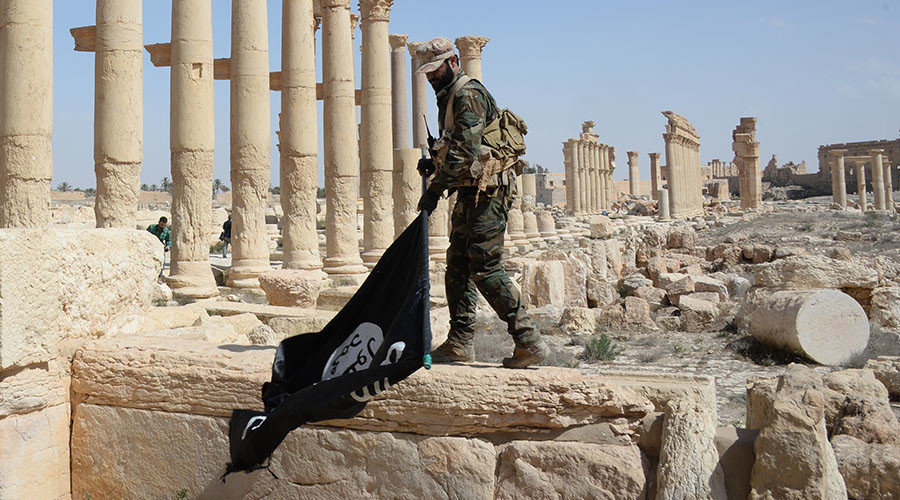
ISIL flag in Palmyra, Syria
Russian military blames US failure to press home attack on Raqqa for ISIS capture of Palmyra, but also implicitly criticises Russian government's 'humanitarian pauses' in Aleppo for prolonging siege and preventing Syrian troops from being redeployed to Palmyra to defend the city.

The fall of Palmyra is causing angry recriminations in Russia. Officially the Russian military is blaming the US.

In comments today General Igor Konashenkov, the Russian military's chief spokesman, blamed the fall of Palmyra on the US failure to apply pressure on ISIS in Raqqa, which enabled ISIS to send its fighters from Raqqa to attack Palmyra.
"Over the past two days militants of the terrorist organization Islamic State (outlawed in Russia) launched several attacks on the positions of Syrian troops in the area of Palmyra. The terrorists were pushing ahead from the North, the East and the South. The attackers numbered more than 5,000. Apparently, the IS militants had gathered around Palmyra, being very certain that combat operations in Raqqa would not resume."
I made the identical point yesterday
"There is in fact no sign of a serious US led offensive against Raqqa, whilst the offensive against Mosul has stalled. I said this some weeks ago on 19th November 2016, and recent reports in the Western media have confirmed it.

Obviously if ISIS really were under serious pressure in Raqqa it would not be able to send fighters from there to attack Palmyra. ISIS's latest offensive against Palmyra is therefore proof that the US led offensive against Raqqa is a fiction, whilst the fact ISIS has sent fighters from Iraq to Palmyra shows it is still a formidable force in Iraq as well."

Light Sabers

Will Trump be steered towards a hawkish stance towards China?

Trump China
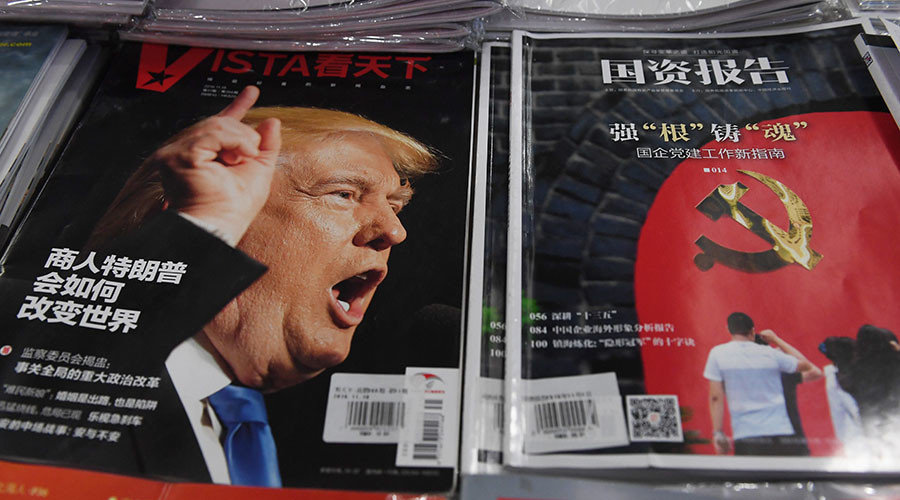
© Greg Baker / AFPA magazine featuring US President-elect Donald Trump is seen at a bookstore in Beijing on December 12, 2016.
Donald Trump again tested the strength of US-Chinese relations when he questioned the 'One China' policy in a discussion of Taiwan. A government-run newspaper in Beijing again responded with a scathing editorial stressing Trump's diplomatic inexperience.

On Monday, the Global Times wrote an editorial in response to the US president-elect's latest remarks, which questioned the idea of China's dominion over Taiwan. Acceptance of the 'One China' policy has long been a prerequisite for good relations with Beijing, but Trump on Sunday took issue with its logic for US-Chinese relations.

"I fully understand the 'One China' policy, but I don't know why we have to be bound by a 'One China' policy unless we make a deal with China having to do with other things, including trade," Trump said in a conversation on trade relations with Fox News on Sunday.

However, while this may concern trade, that's not the reason China is so angry. All of this comes back to the congratulatory phone call between Trump and new Taiwanese President Tsai Ing-wen, whose office China does not recognize. To make matters worse, Tsai is also vehemently opposed to a unified China, and has been speaking in favor of Taiwanese independence.

Comment: This isn't a matter of China dictating who Trump can or cannot talk to. It relates to fragile US-China relations and it relates to Asian sovereignty from the US. The idea of the nation-state and 'independence' is not so imbued in Asian culture as is in the West, although there has been some natural adaptation over the past decades. What it comes down to is the US really has no business in interfering with Asian development and agreements.


War Whore

Peace in Syria - it's the last thing the US wants

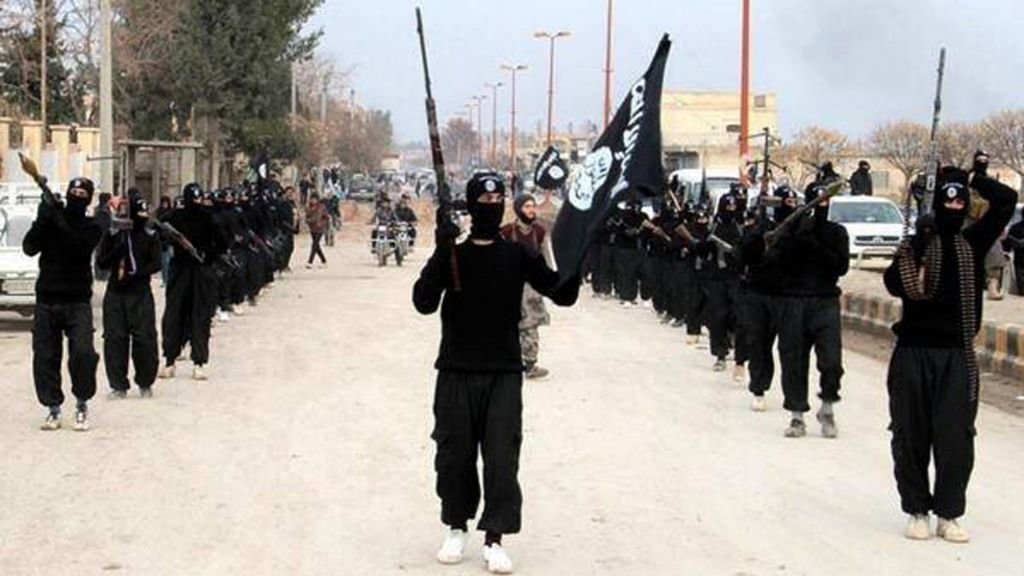
ISIL terrorists
© APISIL terrorists
Last week US President Obama waived military aid restrictions for "foreign forces" and others in Syria. When hopes were raised for an end to the Syrian conflict following the recapture of most of eastern Aleppo, the US is pouring more petrol on the fire.

Now, we can question as to whether this will make a massive difference on the ground as we know the US and its allies have already been backing "foreign forces" in Syria. However, at least it shows people who may have had their doubts, as to what Washington's game is. Namely, to prolong the agony for the people of Syria for as long as it can. The attitude is: "If we cannot topple Assad, then we'll damn well make sure we'll keep his country burning." And all this - lest we forget- brought to us by an American President who was awarded the Nobel Peace Prize.

Rocket

Russian diplomat: 'US nukes in Germany are Cold War relics, should go in dustbin of history'

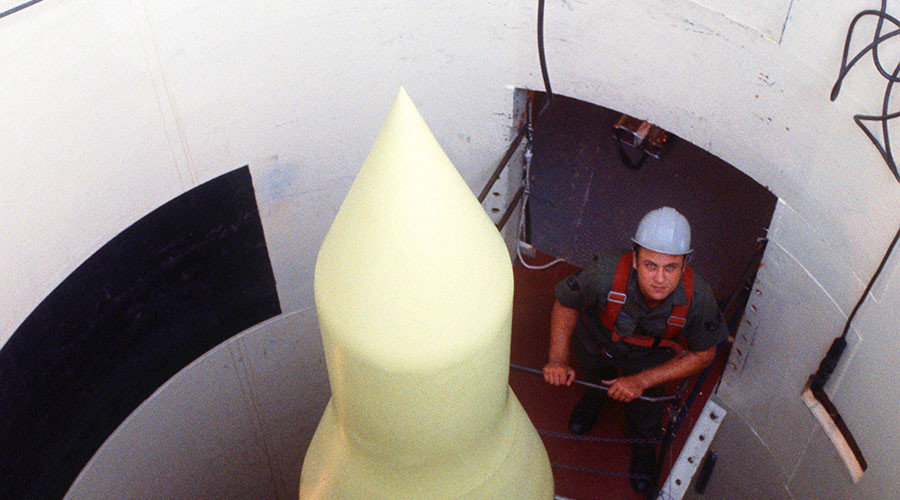
A nuke
© Reuters
American nuclear weapons placed in Germany during the Cold War are relics of that era and should be removed as they no longer serve any purpose, according to a senior diplomat at the Russian Foreign Ministry.

"American nuclear weapons in Germany are relics of the Cold War, for a long time they do not serve the implementation of any practical tasks and are subject to being thrown down the dustbin of history," Sergey Nechayev, chief of the Russian Foreign Ministry's department responsible for relations with Germany, among a number of other European countries, said in an interview with RIA Novosti.

He noted that US nuclear weapons first appeared on the territory of the Federal Republic of Germany in 1953, and since then have been a constant presence - although their placement was only approved by the German authorities retroactively in 1958.

"All the related issues are regulated in the context of Germany's obligations in the framework of its NATO cooperation. Since Berlin does not have full sovereignty in making decisions in this regard too, the topic is not the subject of [Russia's] negotiations with the German side," Nechayev noted.

Comment: See also:


Bullseye

How Iran closed the Mosul 'horseshoe' creating a 'killbox' for 90,000 refugees

Iraqi forces
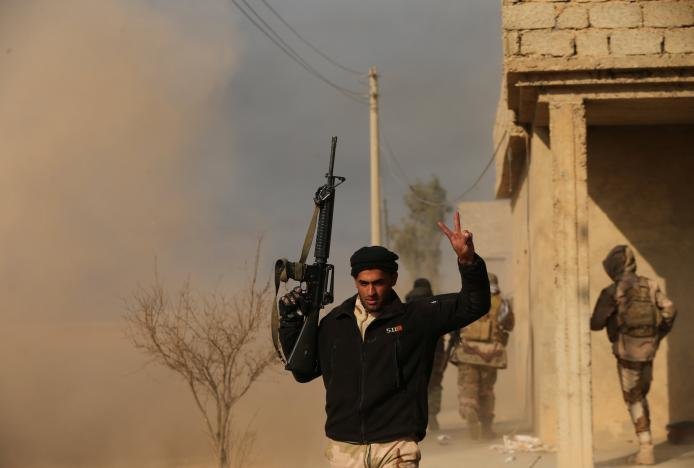
© REUTERS/Mohammed SalemIraqi forces backed by tribal militias during battle to retake a village from the Islamic State on the eastern bank of the river Tigris, Iraq December 7, 2016.
In the early days of the assault on Islamic State in Mosul, Iran successfully pressed Iraq to change its battle plan and seal off the city, an intervention which has since shaped the tortuous course of the conflict, sources briefed on the plan say.

The original campaign strategy called for Iraqi forces to close in around Mosul in a horseshoe formation, blocking three fronts but leaving open the fourth - to the west of the city leading to Islamic State territory in neighboring Syria.

That model, used to recapture several Iraqi cities from the ultra-hardline militants in the last two years, would have left fighters and civilians a clear route of escape and could have made the Mosul battle quicker and simpler.

But Tehran, anxious that retreating fighters would sweep back into Syria just as Iran's ally President Bashar al-Assad was gaining the upper hand in his country's five-year civil war, wanted Islamic State crushed and eliminated in Mosul.

Comment: See also: More 'Friendly' Airstrikes: US bombs Iraqi forces in Mosul, kills 90 servicemen