Puppet MastersS


Info

Why the US should accept China's proposal for direct talks with North Korea

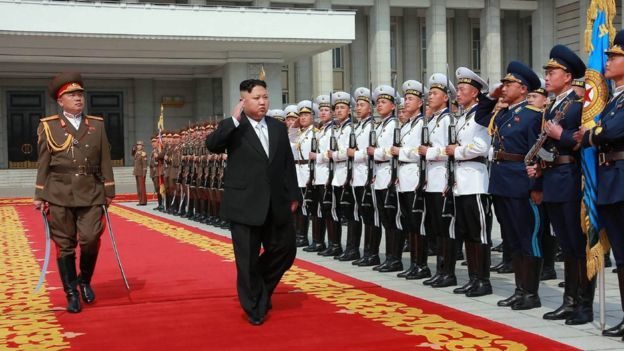
North Korea held a grand military parade on Saturday
© AFP
All the facts are consistent with North Korea's statements that its nuclear programme is purely defensive, in which case it may agree to suspend it if it is reassured it will not be attacked by the US.


One of the difficulties in discussing North Korea is that knowledge of the so-called 'hermit kingdom' is so limited.

No Western leader has ever met with Kim Jong-un, and nor at the highest level have the Chinese and Russian leaderships. There is scarcely any knowledge of the institutional framework within which he works. We do not know who his top advisers are and how he consults them. We do not know how well-informed he is about the world or even about North Korea itself. We do not know how intelligent he is, or if there is any institution like a Politburo or a cabinet or a Security Council which he consults. We do not know what his exact relationship with his top civilian and military officials is.

Attention

The Nerve Agent Attack that Did Not Occur: MIT professor presents evidence contradicting White House claims of Syria gas attack

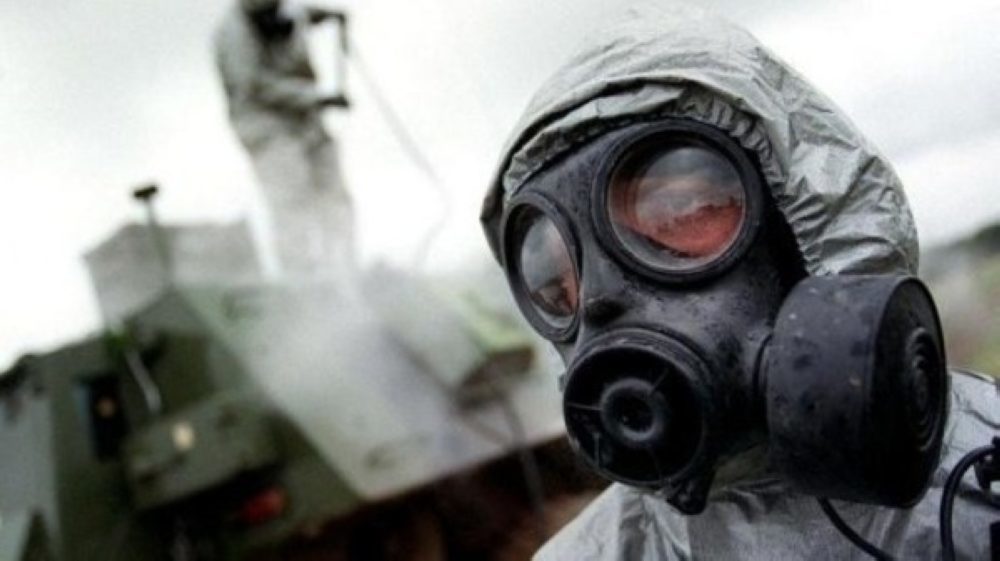
gas attack syria

By Theodore A. Postol, professor emeritus of science, technology, and national security policy at MIT. Postol's main expertise is in ballistic missiles. He has a substantial background in air dispersal, including how toxic plumes move in the air. Postol has taught courses on weapons of mass destruction - including chemical and biological threats - at MIT. Before joining MIT, Postol worked as an analyst at the Office of Technology Assessment, as a science and policy adviser to the chief of naval operations, and as a researcher at Argonne National Laboratory. He also helped build a program at Stanford University to train mid-career scientists to study weapons technology in relation to defense and arms control policy. Postol is a highly-decorated scientist, receiving the Leo Szilard Prize from the American Physical Society, the Hilliard Roderick Prize from the American Association for the Advancement of Science, and the Richard L. Garwin Award from the Federation of American Scientists.


For background on Dr. Postol's previous essays on this issue, see:

Rocket

Russia supports China's call to stop North Korean nuke tests, exchange for halt in US-South Korea drills

Tillerson and Kim
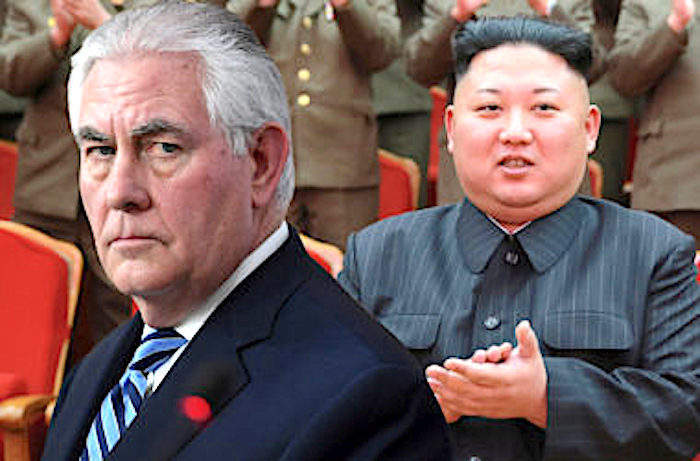
© The DuranUS Secretary of State Rex Tillerson and DPRK leader Kim Jong-Un
Russia has supported a Chinese initiative in the UNSC intended to stabilize the situation on the Korean peninsula. It calls on the North to refrain from missile and nuclear testing, while the US and South Korea should halt military drills in the area.

"Members of the [UN] Security Council have unanimously called upon DPRK [Democratic People's Republic of Korea] to stop missile and nuclear tests and to fulfill UNSC resolutions," the Russian Foreign Ministry said in a statement on Saturday following a United Nations Security Council (UNSC) session held in New York earlier on Friday. The UNSC called for a political and diplomatic solution to the nuclear crisis on the Korean Peninsula, the ministry added.

"In this context, the Russian Federation supported a Chinese proposal for a 'double suspension' (Pyongyang is to stop missile and nuclear tests and the US and South Korean militaries are to halt drills near North Korea) as a starting point for political negotiations." However, the council was not able to agree on a common solution, the ministry added.

The UNSC session was joined by Russian Deputy Foreign Minister Gennady Gatilov, who urged Washington and Seoul to reconsider their decision to station a THAAD anti-missile system on the Korean Peninsula, warning that it will serve as a "destabilizing factor" in the region.

Comment: Is it a push to escalate in order to de-escalate? Has Trump acquiesced to Russia and China to effect a change, a shake-up in North Korea? Or is Trump truly hell-bent on beginning a conflict? Businessman, Warmonger, Enigma...today's winner is...


Question

The Donald Trump phenomenon: Madder he gets, more seriously the world takes him

Trump
© Sputnik News
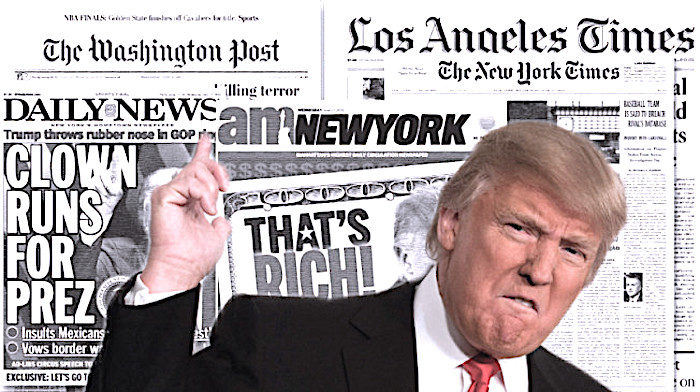
The more dangerous America's crackpot President becomes, the saner the world believes him to be. Just look back at the initial half of his first 100 days: the crazed tweeting, the lies, the fantasies and self-regard of this misogynist leader of the Western world appalled all of us. But the moment he went to war in Yemen, fired missiles at Syria and bombed Afghanistan, even the US media Trump had so ferociously condemned began to treat him with respect. And so did the rest of the world.


Comment: "And so did the rest of the world." This is not a fact. There were countries and leaders who were willing to accommodate Trump in ways Obama could never even approach, but Trump's display of instant chaos (his own or mandated) has had its negative effects as well...they might take him more seriously but, with the resources of the US behind him and its track record, he's become a person of concern. The window of global cooperation with a 'new and improved USA' may be closing.


It's one thing to have a lunatic in the White House who watches late night television and tweets all day. But when the same lunatic goes to war, it now emerges, he's a safer bet for democracy, a strong President who stands up to tyrants (unless they happen to be Saudis, Turks or Egyptians) and who acts out of human emotion rather than cynicism.

How else can one account for the extraordinary report in The New York Times which recorded how Trump's "anguish" at the film of dying Syrian babies had led him to abandon "isolationism"?

Comment: Critics seem to forget the crap, that was accepted unquestioningly, perpetrated by former administrations. In numerous ways the MSM became complicit, reinforcing what they wouldn't, couldn't call out. They overlooked or understated the US's instigation and involvement in manipulating other countries through color revolutions, monetary woes, threats, subterfuge, decimation of populations and military occupation. They have, over past decades, become adept at reading the motives and movements of the standard, compromised US politician...which Trump most definitely is not. What remains is speculation...and the more they do so, the broader the field of possibilities opens up for Trump's next unpredictable 'madman' moves.


Propaganda

Trump is more trusted than the US media, poll shows

Trump and media
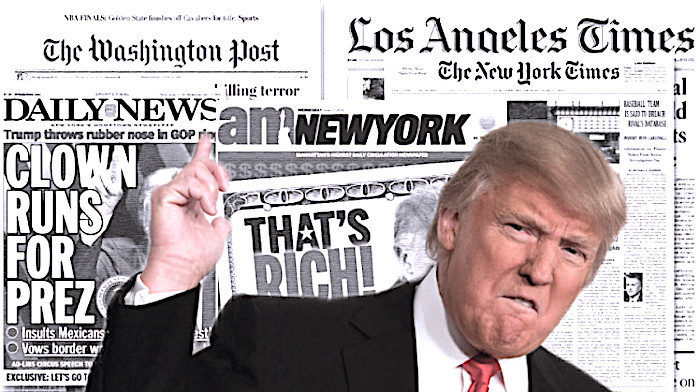
© The Politic
More Americans are inclined to trust US President Donald Trump than the country's political media, which the majority believes is "out of touch" with everyday people, a poll by Morning Consult revealed. Over a third - 37 percent - of US citizens said they thought that the Trump administration was telling them the truth, while only 29 percent of respondents trusted the US political media to be honest with them, Morning Consult said on Friday.

According to the poll, just over half of the respondents - 51 percent - said that the country's media "is out of touch with everyday Americans." The number of those who believe that the press "understand the issues everyday Americans are facing" was 29 percent.

Just over half of those polled - 52 percent - confessed to having not much or no trust at all in the coverage of Trump by the media. Forty-eight percent of respondents also thought that the American press has been treating the current president tougher than his White House predecessors.

The mistrust towards the media was much higher among Republican Party supports than the Democrats, Morning Consult said. Over two-thirds - 72 percent - of Republicans confirmed their trust in the White House, while 54 percent of Democrats called the media trustworthy, the poll revealed. The independents were also unimpressed with the media, with more than half calling the reporting on the White House unfair and having more trust in the White House than in the press.

Comment: No surprise the biggest differentials in polling answers run parallel to party lines, however, there seems to be somewhat of a shift for the average citizen in regards to swallowing MSM propaganda in whole chunks. Perhaps the 'media beating' President Trump received upon entering office had an upside in that the negative and biased thrust of MSM became more clearly apparent to some folks who, otherwise, would have remained asleep and deceived.


V

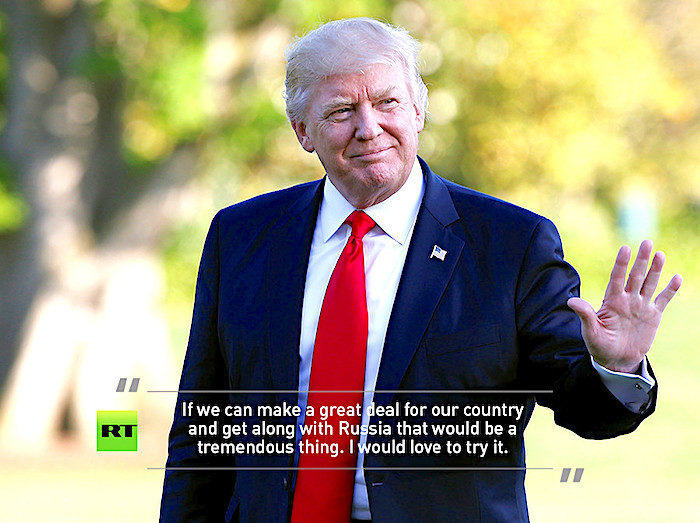
'Broken by US power machine', Trump has hard time living up to 'maverick' image

Trump quote Russia
© RT
Donald Trump's election strategy relied to a degree on the image of an anti-establishment billionaire who could fix a broken DC. Instead, his actions in office have been aligned with the policies of the same special interests he used to speak out against.

Some of Trump's critics say he was dishonest from the start. Others, like Russian Prime Minister Dmitry Medvedev, believe he has been "broken" by the US establishment, which would not tolerate a president that wanted to improve relations with Moscow or stop America's perpetual wars.

Either way, the 45th US president has proven himself consistently inconsistent during his first 100 days in office. Here are some of the issues Trump has done a 180 flip-flop on since taking the Oval Office.

NATO

The trans-Atlantic military bloc was an early target of Trump's ire. During the election campaign, he branded the alliance "obsolete" and complained that its European members were benefiting from America's protection, while failing to pay for it. Some British media outlets have even reported that he had handed German Chancellor Angela Merkel a multibillion dollar bill for services rendered. Both governments have denied this, however.

Skipping forward, Trump now says NATO is a "bulwark of international peace and security." So it may be just a matter of time before the US calls on its allies to bomb some country's government out of power, regardless of what goes on in the UN Security Council, just as it did in Iraq in 2003.


Comment: One or two turn-arounds would have been indicative enough. A solid and successful businessman doesn't back down until the final deal is accomplished. Stay tuned, there has to be more to this story than revealed so far.


Info

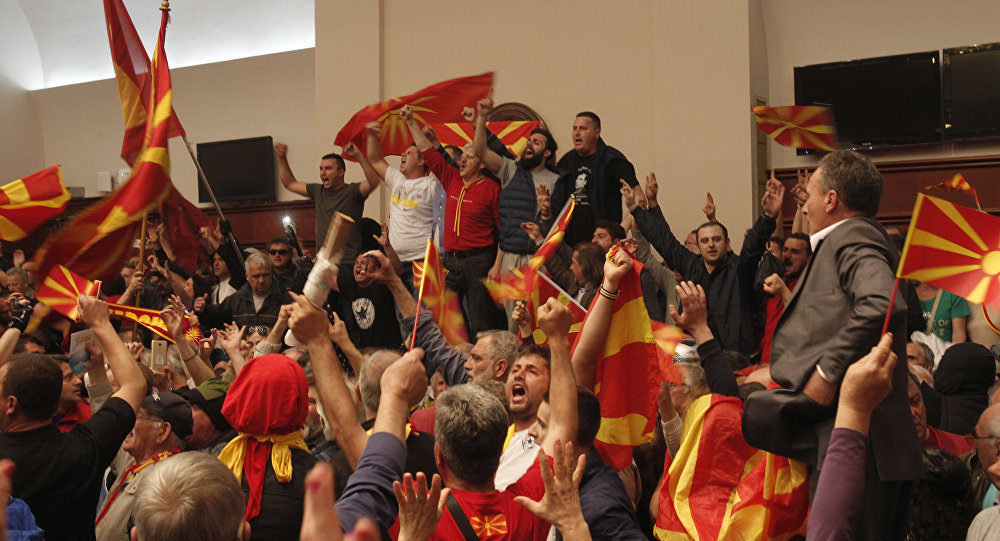
'Greater Albania': Why the Macedonian political crisis is part of broader strategy

Macedonian protesters
© AP Photo/ Boris Grdanoski
Following the outbreak of violence in the Macedonian parliament the country has found itself split in two, journalist Milenko Nedelkovski told Sputnik Serbia. For her part, MGIMO professor Elena Ponomareva believes that the crisis is part of a broader strategy aimed at uniting the Albanians of the Balkans into a larger national entity.

Macedonia is split in two, Macedonian journalist Milenko Nedelkovski told Sputnik Serbia, commenting on the ongoing parliamentary crisis; according to the journalist, the unity and sovereignty of the country are now at stake.

Arrow Down

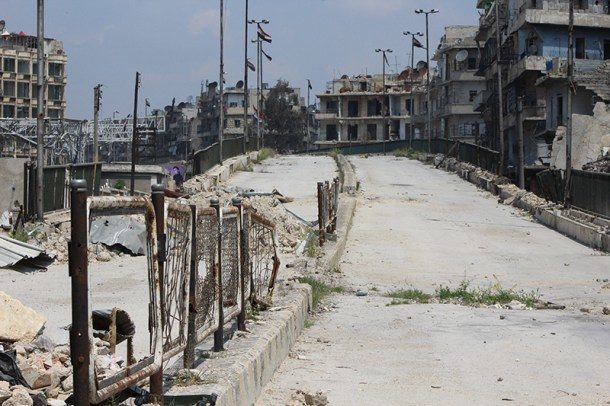
Western shock doctrine: The unimaginable scale of devastation in Aleppo

East Aleppo
© Patrick Henningsen@21WIREOverpass leading from East Aleppo into the city center on the front lines

For the last five years, everyone has been talking about Aleppo. I can't even count how many interviews we've conducted, or how many TV news segments I've watched and articles read - about the battles and sieges in this crucial theatre which has come to symbolise the long war on Syria.


With all of this in mind, nothing can really prepare you for the sheer scale of the devastation visible throughout Syria's second largest city.

Fortunately for us, the journey from Damascus to Aleppo is a lot safer than it was just a few months ago. Back in December 2016 before the liberation of Aleppo, travelers were forced to circle around the city heading northwest before turning south down the infamous Castello Road, down a perilous stretch of highway known as "Sniper Alley," and even less affectionately as the 'terrorists rat line' running from Turkey into northern Syria. For a while, that was the only way in, as Al Nusra Front and its affiliates took control of nearly every major artery heading into the city. Terrorists still control many of the main roads between Hama and Aleppo and some other roads between Aleppo and the coastal region of Latakia. This means that what would normally be a comfortable three to four hour drive from Damascus, is now an eight hour journey, which at times might take you as close as 10 km from ISIS-held territory while weaving your way into Aleppo from the city's eastern countryside.

While visiting the northern city of Aleppo, you quickly come to realise that the war is still far from over. What the US and the UK still refer to as "moderate rebels" are still occupying parts of the West Aleppo countryside and are firing Grad Missiles and mortars into neighborhoods located on the outskirts of the city.

Comment: See also: Your city will be next: Before and after photos of the devastation brought to Syria by the U.S.


Magic Wand

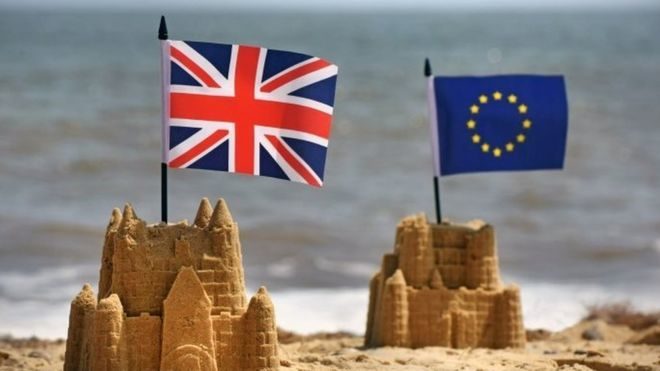
European Union leaders agree on negotiating stance for Brexit talks in record 4 minutes

Brexit castles made of sand
European Union leaders have unanimously agreed on the guidelines that the bloc will follow when negotiating with the UK over its exit from the union.

The talks to approve the guidelines were chaired by European Council President Donald Tusk on Saturday. The special summit, which was attended by the leaders of the 27 member states, took less than 15 minutes to unanimously agree upon the guidelines, which Tusk issued last month.

After the talks, Tusk tweeted that a "firm and fair political mandate" for the talks was ready.

The negotiations will begin after the UK's general election on June 8.


Attention

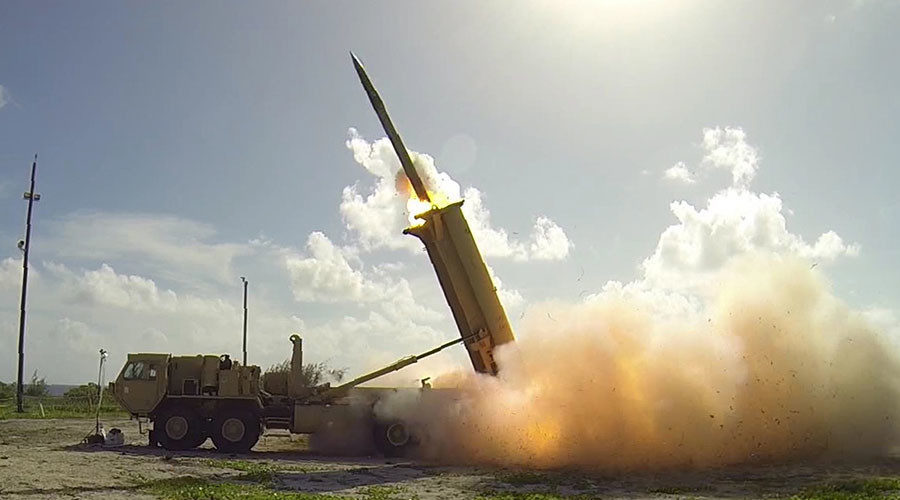
'Destabilizing factor': Russia urges US and S. Korea to reconsider THAAD anti-missiles deployment

THAAD missile system
© Ben Listerman / DoD / AFP
Russia has urged Washington and Seoul to reconsider their decision to station THAAD anti-missile system on the Korean Peninsula, warning that it will serve a "destabilizing factor" that could tip the existing military balance in the tense region.

Speaking in front of the UN Security Council just hours before North Korea reportedly conducted its second failed ballistic missile test this month, Russian Deputy Foreign Minister Gennady Gatilov noted that placing THAAD anti-missiles on North Korean borders will serve as "additional destabilizing factor in the region."