OF THE
TIMES
"The politicians are put there to give you the idea that you have freedom of choice. You don't. You have no choice. You have owners. They own you. They own everything. They own all the important land. They own and control the corporations. They've long since bought and paid for the Senate, the Congress, the state houses, the city halls. They got the judges in their back pockets and they own all the big media companies, so they control just about all of the news and information you get to hear... They spend billions of dollars every year lobbying. Lobbying to get what they want. Well, we know what they want. They want more for themselves and less for everybody else... It's called the American Dream, 'cause you have to be asleep to believe it." — George CarlinWho owns America?


Kiev's forces were communicating in English and Polish on military radios, a captured serviceman has saidThere does not seem to be any interest in the European countries of NATO for any violations of the usual rules for conducting war, so close to their own borders, as long as they can ignore it.
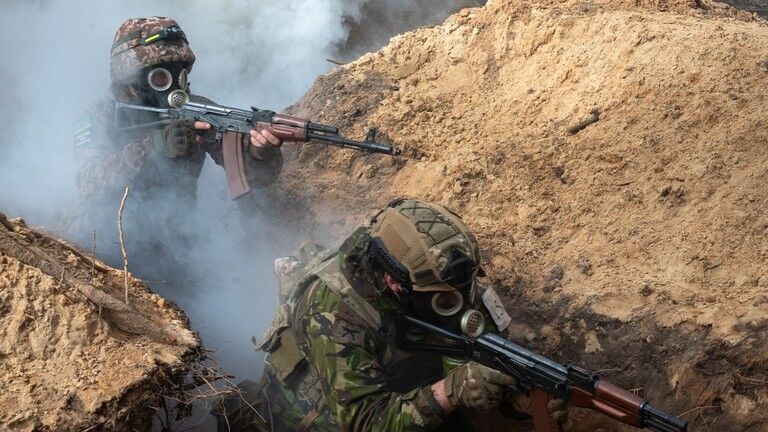
A Ukrainian soldier who was captured in Kursk Region amid Kiev's ongoing cross-border offensive has claimed that foreign mercenaries are fighting for Ukraine on Russian soil.
Footage of an interview with the detainee was released by Russia's Federal Security Service (FSB) on Monday. The agency claimed that the man shown in the footage was captured with the help of local residents in Kursk Region. The Ukrainian identified himself as a 26-year-old member of his country's 80th Air Assault Brigade, which is taking part in the offensive.
Ruslan Poltoratsky, as he introduced himself, said he first heard foreign radio chatter when crossing the Russian border and initially thought it was some kind of interference.
"They spoke in English, Polish, maybe French. I did not understand them, called on the radio to repeat, and only heard gibberish in response," he said.
He later concluded that the communications were local, since Ukrainian military officials were responding.
"There was something about houses and gunshots in the background," he claimed.
Poltoratsky also mentioned that a brigade "made up of those who used to be in jail" was taking part in the Kursk Region offensive. He was apparently referring to a unit composed of convicts who volunteered in exchange for early release from prison.
Ukraine has been using foreign fighters to bolster its military since the early days of the conflict with Russia, creating an 'International Legion' for volunteers. Moscow has described them as mercenaries and has accused Western nations of facilitating the recruitment of their citizens with combat experience.
The practice of embedding foreign fighters into the Ukrainian military predates the ongoing hostilities, as evidenced by a group known as the Georgian Legion. It features Georgian citizens in its ranks and was created in 2014. The unit is also in Kursk Region, according to a source cited last week by military news outlet The War Zone.
The legion is known for videos in which members are shown torturing and executing Russian prisoners in March 2022. Russia considers the Georgian Legion a terrorist organization and a tool of Ukrainian military intelligence.

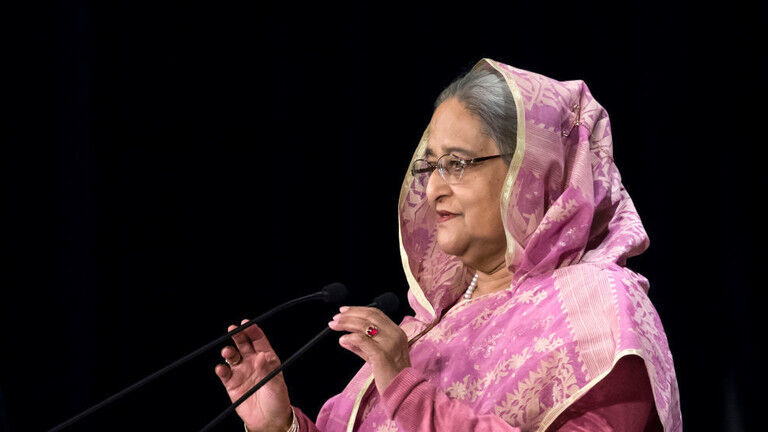
In a message on Sunday cited by the Economic Times, Hasina signaled that she could have retained power if she had agreed to host a US military base in Bangladesh.Looking for a source did not produce a result. From Economic Times, there was Former Bangladesh PM Sheikh Hasina seeks justice in first statement since her ouster published Aug 13, 2024, 08:52:00 PM IST
Bhaswar Kumar DelhiIn another article from the Economic Times /India Times, there was
Last Updated : Aug 12 2024 | 6:33 PM IST
A letter allegedly from former Bangladesh Prime Minister Sheikh Hasina was circulating among supporters of her Awami League party over the weekend, suggesting that her ouster after 15 years in power was the result of pressure from the United States (US) regarding St Martin's Island in the Bay of Bengal."
I could have remained in power if I had left St Martin's and the Bay of Bengal to America," the letter reportedly said.
Is the purported letter by Hasina authentic?
While the letter attributed Hasina's removal to her refusal to cede control of St Martin's island to Washington, Hasina's son, Sajeeb Wazed, said on Sunday that his mother had not made any statements before fleeing Dhaka on August 5 amid violent protests that led to hundreds of deaths.
Wazed's comments followed reports that Hasina was not allowed to address the nation by the Bangladesh Army and that her prepared speech allegedly accused the US of having a hand in her ouster. On social media platform X, Wazed posted, "The recent resignation statement attributed to my mother published in a newspaper is completely false and fabricated. I have just confirmed with her that she did not make any statement either before or since leaving Dhaka."
[...]
Earlier reports had claimed that in her undelivered speech, Hasina had allegedly mentioned that her government would have survived had she handed over St Martin's Island to Washington.
However, while the alleged letter that has been the news in recent days might not be authentic, in the past, Hasina has made a similar accusation on record.
On June 21, 2023, during a media conference, then Prime Minister Sheikh Hasina had said that there would be no problem for her to hold on to power if she leased out Saint Martin's island. However, she had added, "I have no intention to go to power by selling the country's assets." Hasina also did not take the name of any country at that time.
Hasina, however, accused her main Opposition, the Bangladesh Nationalist Party (BNP), of having designs to cede the island. Hasina had said, "How did BNP come to power in 2001? They came to power by pledging to sell gas. Now do they want to sell the country or come to power by pledging to sell Saint Martin's island?" For its part, the BNP had described Hasina's statements as nothing more than "political strategy".
US State Department spokesperson Matthew Miller had denied Hasina's allegations, describing them as "not accurate". Miller had said that "no discussions" on taking over the island had taken place with the then Hasina-led government."
We have never engaged in any conversations about taking over St Martin's Island," Miller had said, adding, "We value our partnership with Bangladesh. We strive to bolster our relationship by working together to promote democracy, including by supporting free and fair elections.
"What is St Martin's Island and where is it located?
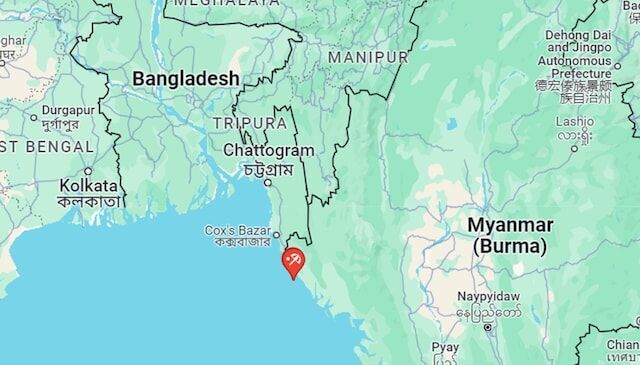
With an area of just 3 square kilometres (sq km), St Martin's Island, also known locally as "Narikel Zinzira" or "Coconut Island", is located in the northeastern part of the Bay of Bengal.
According to the website of the Bangladesh Parjatan Corporation, Saint Martin's is located about 9 km south of the tip of the Cox's Bazar-Teknaf peninsula, and forms the southernmost part of Bangladesh. It is also about 8 km west of the northwest coast of Myanmar, at the mouth of the Naf River. The coral reef island, which is completely cut off from mainland Bangladesh, is home to about 3,800 residents, most of whom are fishermen. St Martin's is reportedly Bangladesh's only coral island.
Why is St Martin's Island geopolitically important?
The US' alleged interest in St Martin's could be based on the fact that a base on the island would help Washington counter China's influence in the Indian Ocean. As explained by a recent India Today article, St Martin's location, its proximity to the Bay of Bengal, and its maritime boundary with Myanmar could be the reasons behind international interest in the island, particularly from the US and China. A military presence on the island would strengthen their capabilities in the region.
The crux of Hasina's allegations from June last year was also that the US wished to acquire St Martin's Island and build a military base there in exchange for helping the BNP come to power. According to Hasina, if the BNP came to power, it would sell the island to the US.
According to a report by Bangladeshi newspaper Prothom Alo, the geopolitical debate over the island goes back to at least the 1980s. On December 18, 1980, a Dainik Bangla report, titled "None will be allowed to establish naval base at Saint Martin's", had carried a statement by Bangladesh's foreign ministry, saying that the allegations by several political parties that a country had been allowed to set up a naval base at Saint Martin's were completely baseless.
There might also be some historical evidence of US interest in setting up a base on Bangladeshi soil.
Speaking to Prothom Alo last year, Bangladeshi writer and researcher Mohiuddin Ahmad had said that it was in February 1971 that he had first heard about allegations of leasing Bhola's Monpura island out to the US. According to Ahmad, Hasina's father, Sheikh Mujibur Rahman, had held a meeting with the US Ambassador to Pakistan, Josef S Farland, on February 28 that year, with pro-China Left leaning parties alleging at the time that the meeting was about giving the Monpura island to the US, in exchange for Washington's support.
In 1971, the West and East wings of Pakistan fought in the Bangladesh Liberation War, leading to the creation of Bangladesh on December 16, 1971. However, Bangladesh's Independence Day is celebrated on March 26 because Mujibur Rahman had declared independence from Pakistan on that date in 1971. The Bangladesh Liberation War started on March 26 and lasted till December 16, 1971.
[...]
Bangladesh unrest: Sheikh Hasina's son accuses foreign intelligence, claims protests were instigatedWe have seen the above scenario play out many times before, a few protesters and shortly after the US is willing to work with the new democracy.
Washington DC: Sajeeb Wazed Joy, son of former Bangladesh Prime Minister Sheikh Hasina, has claimed that the recent protests in Bangladesh were likely instigated by a foreign intelligence agency, specifically suspecting the involvement of the ISI.
Speaking to ANI, he said that the unrest was driven by external forces rather than domestic issues and criticized how his mother's statement was distorted to fuel the protests.
"I now firmly believe this was instigated by a small group and most likely by a foreign intelligence agency. I strongly suspect the ISI. There was no reason for the protests to continue because the quotas were not mandated by our vernment and were restored by a court ruling. Our government had lifted the quotas in 2018 or so when the first quota protests happened," he said.
He alleged that the protesters twisted Sheikh Hasina's statement on Razakars, which led to the escalation of the protests.
"When the protests started, they were peaceful. Our police provided security for the protesters. Then they took my mother's statement where she said that we don't want Razakars' families getting jobs. They took that statement and twisted it, saying that my mother said the protesters were Razakars. My mother never said that. But this was spread online. And then, in the middle of the night, some group--nobody knows who did that--marched through Dhaka University chanting, 'We are Razakars'. And that is what happened. The other students, especially Bangladesh Chhatra League, our student supporters, and the pro-liberation students, got angry. They attacked the protesters, and that is how the violence started," he said while adding, "The police tried to stop the violence, and in doing so, some police members used live ammunition, which they were not authorized to do. Our government never ordered anyone to attack. Our government never ordered the police to use live ammunition. We immediately called our student leaders and said, 'Stop the fighting.' The fighting stopped. We immediately suspended the police officers who used excessive force."
[...]
Wazed said that the current interim government in Bangladesh, led by Nobel laureate Muhammad Yunus, was 'unconstitutional'.
"We want a quick restoration of democracy. Right now, this government is completely unconstitutional. There is no provision for a selected government slected by a small minority, because we have 170 million people in Bangladesh, and 20,000-50,000 protesters are a tiny fraction of the minority. No one has voted for this government.
[...]
Sheikh Mujibur Rahman: Bangladesh's founding father gets the Saddam Hussein treatment after Sheikh Hasina's downfall
Last Updated: Aug 06, 2024, 04:54:00 PM IST
Nearly 50 years after him & his family was massacred in a military coup, 'Bangabandhu' Sheikh Mujibur Rahman, the founding father of Bangladesh once again finds his legacy toppled by protestors who have overthrown his daughter Sheikh Hasina's regime.
Much like the 2003 Firdous Square incident where a large statue of Iraqi despot Saddam Hussein was pulled down following the US invasion, Rahman's golden statue was climbed on and pulled down by angry mobs.
As unrest gripped the Asian nation, violent protestors attempted to undo the legacy of Rahman by tipping over his statues, defacing museums set up in his memory, among other acts of anarchy.
August marked the end of Hasina's 15-year rule of Bangladesh, which was liberated from West Pakistan in the first place by Rahman in 1971.
[...]
Rahman's run-in with Pakistan
In the 1970 national elections in Pakistan, the Awami League, led by Sheikh Mujibur Rahman, won almost all the seats in the National Legislature and was poised to form the government of Pakistan.
When Zulfiqar Ali Bhutto, the defeated leader of the second-largest party, conspired with Pakistan's military dictatorship to postpone the opening of the National Assembly, Rahman led a civil disobedience movement in response.
In a historic speech on 7 March 1971, he called for a movement that would ultimately lead his people to complete independence from Pakistan.
"The struggle now is the struggle for our emancipation; the struggle now is the struggle for our independence. Joy Bangla!..Since we have given blood, we will give more blood. God-willing, the people of this country will be liberated ... Turn every house into a fort. Face (the enemy) with whatever you have."
West Pakistan's leadership declared martial law, banned the Awami League, and ordered the arrest of Rahman along with other Bengali leaders and activists.
On March 26, as the army began its brutal crackdown, Mujib through a radio broadcas called on his people to resist the army occupation. Arrested without charges and taken to West Pakistan after midnight, Mujib remained imprisoned despite international pressure for his release or negotiation.
Following Indian intervention in December and the ensuing Indo-Pakistani War of 1971, the Pakistani Army surrendered to the joint forces of the Bengali Mukti Bahini and the Indian Army. In response to international pressure, Zulfikar Ali Bhutto released Mujib on January 8, 1972.
Mujib briefly assumed the provisional presidency before taking office as prime minister. He described the aftermath of the war as the "biggest human disaster in the world," citing the deaths of up to 3 million people and the rape of over 2 lakh women.
[...]

Comment: As one would expect, the leftist media had a conniption: