Puppet MastersS


Sheriff

'PLA will reunify Taiwan': Chinese general confronts US' Sullivan before his 'surprise' meeting with Xi

xi jinping sullivan
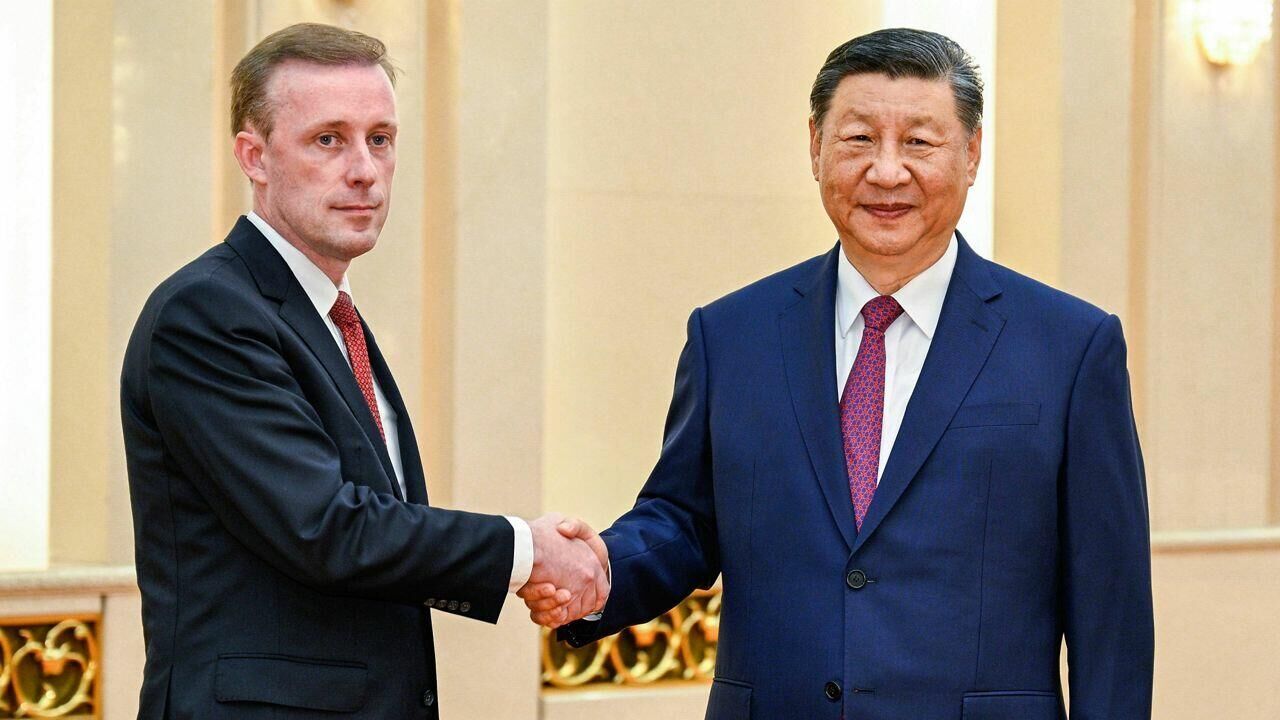
Photo released by Xinhua News Agency of Thursday's surprise meeting at the Great Hall of the People in Beijing.
Chinese leader Xi Jinping met with US National Security Adviser Jake Sullivan on Thursday at the end of the latter's three day trip to Beijing, which is a first such trip for a sitting US national security adviser in eight years.


Comment: Up until recently, China was rejecting meeting requests from various US officials.


But the most interesting and tense moment came just before that, when Sullivan met one of China's vice chairs of the Central Military Commission, Gen. Zhang Youxia. The top general confronted Sullivan on growing US support for Taiwan's military. Zhang informed Sullivan that reunification of Taiwan with the mainland is "the mission and responsibility" of the Chinese PLA military and that it won't be deterred. Sullivan looked nervous and unsettled throughout the whole encounter, with Zhang confident and beaming.

"China demands that the United States stop military collusion between the U.S. and Taiwan, stop arming Taiwan and stop spreading false narratives about Taiwan," the statement issued by the defense ministry said.

No Entry

Hungarian veto on arming Ukraine remains in place and it frustrates Brussels

Swedish combat vehicle
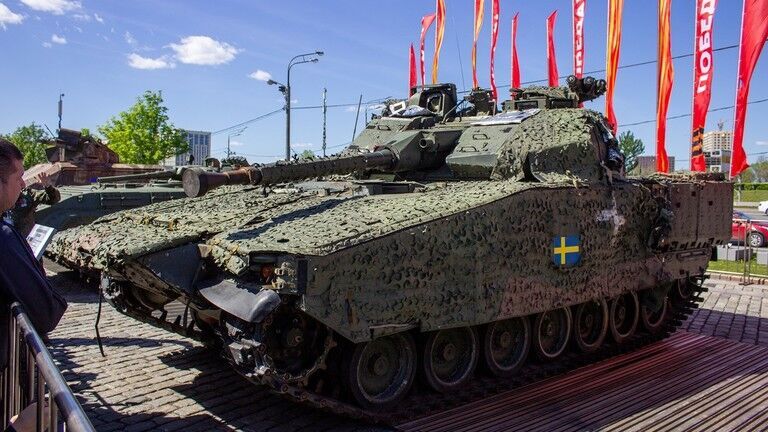
© Vlad KarkovA destroyed Sweden-made Combat Vehicle CV9040 displayed at an exhibition of trophy military equipment in Moscow.
EU foreign policy chief Josep Borrell has expressed frustration over Hungary's refusal to lift its veto on the use of some €6 billion ($6.6) allocated for weapons to Ukraine under the European Peace Facility (EPF).

The EU launched the scheme in 2021, but it came to prominence after Brussels decided to use it to help Ukraine's war effort against Russia. Hungary, a vocal opponent of EU policy on the Ukraine crisis, has been blocking military aid to Kiev for over a year. Among other things, it means that member states cannot be reimbursed for deliveries they have already made.

"I cannot accept to have €6 billion in my current account," Borrell told the media, when asked about the EPF money following an informal meeting of EU foreign ministers in Brussels on Thursday. "This money has to go to the member states."

Budapest objects to sending weapons to Ukraine, arguing that the deliveries have failed to alter the course of the conflict and stand in the way of peace talks. It refuses to provide military assistance either directly or through the joint EU budget.


Comment: While Borrell complains about not being able to use €6 billion, Hungary is paying a real price as €20 billion which they are owed, are withheld by the EU as punishment.

Hungary borrows €1 billion from China, as EU continues to withhold €20 billion in funds


Comment: The chief EU diplomat is only a diplomat in name as in truth he is a war monger. Borrell is not prepared to send his own money to Ukraine but is fine with sending the money of EU citizens to the black hole, which Ukraine has become.
Thanks to Hungary who likely represent more the view of EU citizens, the war mongers are having some stumbling blocks in their way.

See also:


Bad Guys

Best of the Web: US government-funded censorship arm 'Atlantic Council' targeted Telegram just two months before Durov's arrest

free speech constitution Pavel Durov
© Revolver
French authorities arrested Russian-born dual UAE-French citizen Pavel Durov last weekend as he disembarked his private plane in Paris. Durov, who is the CEO and founder of popular messaging app Telegram, faces a number of serious charges from French authorities ranging from drug offenses to child sexual exploitation offenses.

Of course, none of these charges have anything to do with Durov directly but rather refer to activity that allegedly occurred on Telegram, Durov's privacy-focused messaging app that boasts nearly 1 billion active users. It is unclear from the charging documents what exactly the French authorities' argument is regarding Durov's culpability, and French President Emmanuel Macron defensively took to X (formerly Twitter) to assure the public that the arrest wasn't "political." Nonetheless, it's extraordinarily unlikely that Durov's arrest is unconnected to Durov's well-known refusals to cooperate with intelligence agencies' censorship and law enforcement requests. Furthermore, it is inconceivable that Durov's arrest would occur without the foreknowledge and implicit approval, if not direct complicity and urging, of the United States government. There are even reputable reports that Macron himself may have lured Durov in for his arrest, as Durov apparently told French authorities that he traveled to Paris at the invitation of Macron to have dinner with the French President. Odd indeed.

Comment: Privacy and free speech advocate Mike Benz weighed in on the matter in an interview with Tucker Carlson, August 28, 2024. The dangers are deeper and more pervasive than anyone probably realizes.
(includes ads)


Update:
Here are some titles from the above YouTube:
Chapters: 00:00 Get Tickets at TuckerCarlson.com 01:20 Who Was Involved in Pavel Durov's Arrest? 15:50 How Telegram Is Used by the CIA 27:22 Domestic Policy Doesn't Exist 34:19 The Redefining of Democracy 39:21 The Biggest Threat to NATO 44:16 What Is DARPA? 1:02:53 WhatsApp and the Facebook Files 1:13:34 Does Putin Have a Back Door to Telegram? 1:19:12 The Red Lines Memo to Zelensky 1:28:09 The Real Motive Behind Durov's Arrest 1:43:51 The Deep State vs. Donald Trump 1:50:46 Will They Take Out Elon Musk Next? 2:04:27 Would Benz Join a Trump Administration?
RT carried an article relating to this chapter: 15:50 How Telegram Is Used by the CIA
29 Aug, 2024 04:48
The CIA loves Telegram - ex-State Department official
The encrypted app was used by US spies to attempt color revolutions and encourage riots according to Mike Benz

The US and its CIA-controlled "soft power" arm have used the encrypted social media app Telegram to foment riots and protest movements against foreign governments it deems undesirable, former Trump administration official and free speech activist Mike Benz has said.

He added that Telegram has been "the darling of the CIA, the State Department, and USAID" for political operations worldwide, due to its nearly billion users and the ease with which they can be directed to necessary channels for recruitment.

The comments were made during an interview with American journalist Tucker Carlson on Wednesday. Benz, a State Department official under the administration of former President Donald Trump, now runs the free speech watchdog Foundation for Freedom Online.

Carlson asked Benz about a potential US role in the arrest of Telegram co-founder and CEO Pavel Durov in France last week. A court in Paris charged Durov on Wednesday with complicity in several crimes perpetrated through his app, as well as failing to cooperate with the French authorities.

While the former diplomat did not speculate, he noted that Durov's arrest aligns with the pattern of "soft power" tactics the US has pursued in the past.

The US has championed free speech globally for decades, "in large part" because it allows the country to build resistance and political or paramilitary movements "in countries where the US State Department seeks political control," the former official said. Durov's end-to-end encrypted social media app Telegram has been instrumental in this effort, Benz claimed.

The reason "26 US-government-funded NGOs" condemned Russia for attempting to ban Telegram in 2018 was that "the US State Department was using Telegram," utilizing its encryption and local popularity "to foment protests and riots within Russia - just as they did in Belarus, Iran, Hong Kong, and attempted to do in China," the former State Department official said.

The app's encryption is a powerful means of evading state control over media and allowing "US-funded political groups or dissidents to garner tens of thousands of supporters with relative impunity," he added.

Benz claimed that Telegram was the "main channel" when the US was "effectively orchestrating a color revolution in Belarus" in 2020.

"The National Endowment for Democracy (NED) was actually paying the main administrators of the Telegram channels that orchestrated those riots," he said, calling the NED "one of the most prolific CIA cutouts in the arsenal."

This practice is part of a long-running campaign by the US, UK, and other NATO partners to gain political control over the territories of the former Soviet Union and their resources, according to Benz.
The current move against Telegram may in part be because its overall "usefulness" is becoming less.


Explosion

Blast from the past: Why the Nord Stream sabotage may yet have its day of reckoning

Nord Stream sabotage
Economic hardship in Europe and military humiliation in Ukraine mean this pivotal event won't stay on the figurative sea floor forever

As we approach the second anniversary of the Nord Stream pipeline bombing, nothing seems certain about one of the most significant acts of industrial sabotage in history.

For nearly two years, a stream of constantly shifting narratives never fully fleshed out or reconciled with each other has given the whole affair the feel of a magiclantern show illuminated by flickering torchlight.

However, earlier this month, the Wall Street Journal ventured forth with a long article purporting to, for the first time, tell the "outlines of the real story" of what happened to the one-time conduit for 35% of the Russian gas consumed by Europe.

Comment:
See also:


Yoda

Peacemaker: Iran's supreme leader opens door to negotiations with US over Tehran's nuclear program

Iran's Supreme Leader Ayatollah Ali Khamenei.
© REUTERS / Morteza NikoubazlIran's Supreme Leader Ayatollah Ali Khamenei.
Iran's supreme leader opened the door Tuesday to renewed negotiations with the United States over his country's rapidly advancing nuclear program, telling its civilian government there was "no harm" in engaging with its "enemy."

Ayatollah Ali Khamenei's remarks set clear red lines for any talks taking place under the government of reformist President Masoud Pezeshkian and renewed his warnings that Washington wasn't to be trusted.

But his comments mirror those around the time of Iran's 2015 nuclear deal with world powers, which saw Tehran's nuclear program greatly curtailed in exchange for the lifting of economic sanctions. Yet it remains unclear just how much room Pezeshkian will have to maneuver, particularly as tensions remain high in the wider Middle East over the Israel-Hamas war and as the U.S. prepares for a presidential election in November.

Syringe

Vaccination campaign in Gaza: Polio eradication or transition to bio-warfare?

Vaccination Campaign in Gaza
This is seriously creepy.

Over a million doses of polio vaccine have been shipped to Israel in preparation for a mass vaccination campaign in Gaza. The vaccines are an emergency response to the first confirmed case of polio reported in Gaza last month. According to an article in the New York Times:
UNICEF, the U.N. children's fund, said it was delivering the vaccines in cooperation with the World Health Organization... UNRWA; and other groups. UNRWA officials said they hoped to deliver the first vaccines to Gazan children starting on Saturday....

The Gaza Health Ministry confirmed that the vaccines had reached Gaza and that preparations to begin the campaign to inoculate children under 10 were underway.... the U.N. said on Monday that its already hamstrung humanitarian operations had been brought to a temporary halt after the Israeli military ordered the evacuation of Deir al-Balah, where the agency has its central operations.

But a senior U.N. official... said... that there was no change to plans to begin polio vaccinations, despite the fact that the temporary pause in the U.N.'s humanitarian mission. Polio Vaccines Arrive in Gaza, but Distributing Them Is the Next Challenge, New York Times
So, the UN is unable to distribute humanitarian aid to the Palestinians, but they are charging ahead with a mass vaccination campaign?

Propaganda

Press lies about the Venezuelan presidential election

maduro
© unknown
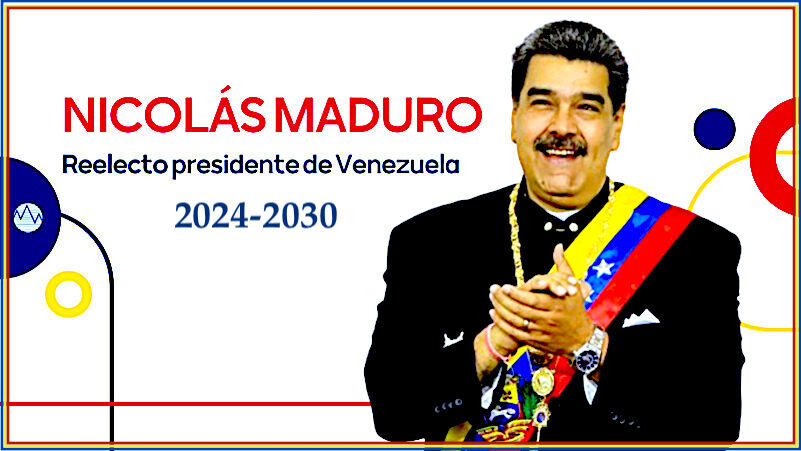
The presidential election in Venezuela was yet another opportunity for the West to destabilise the country. The international press consciously presented a totally false version of events in order to discredit President Nicolás Maduro and support his main challenger, Edmundo González.

The disputed re-election of President Nicolás Maduro has little to do with the outcome of the ballot box. In fact, as soon as they came to power in the United States on 11 September 2001, the Straussians (i.e. the followers of Leo Strauss, whose thinking was popularised by neo-conservative journalists [1]) thought that the then President of Venezuela, Hugo Chávez, should be shot. Since then, Venezuela has faced attempted military coups and colour revolutions.

The current president, Nicolás Maduro, is following in Hugo Chávez's footsteps, even if he lacks the stature. In 2019, President Trump's Secretary of State, Mike Pompeo, commissioned the Straussian Elliott Abrams to overthrow President Maduro.

Elliott Abrams, who had already taken part in the massacres in Guatemala in the 1980s, then in the Iran-Contra affair (for which he was convicted in the United States [2]) and the 2002 coup against President Chávez [3], is now the man in Israel who is piloting the ethnic cleansing of Gaza behind Benyamin Netanyahu [4]. In Venezuela, Abrams relied on a young deputy, Juan Guaidó. He got a handful of MPs to elect him president of the National Assembly, challenged Maduro's election and proclaimed himself interim president.

Arrow Down

Ukraine's top general admits key Kursk failure

Ukrtroops
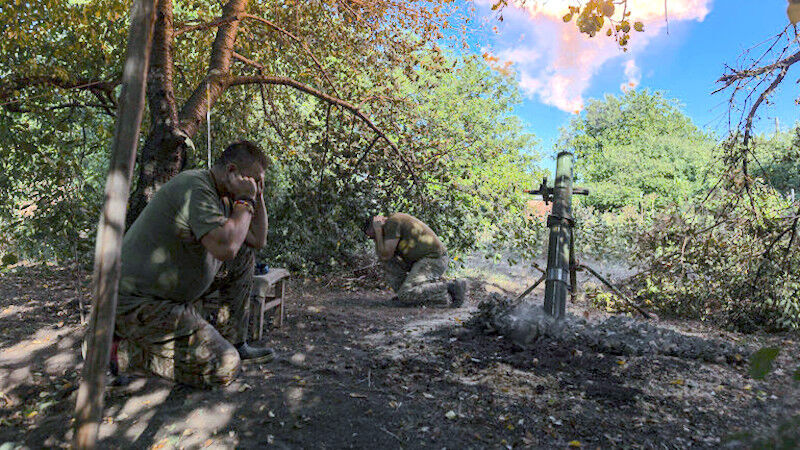
© Diego Herrera Carcedo/Getty ImagesUkrainian soldiers fire a mortar in the Donetsk People's Republic • August 18, 2024
Kiev had hoped to draw Russian forces away from a "difficult" sector of the front line, Aleksandr Syrsky has said

The Ukrainian military's Kursk Region incursion was a high-stakes gambit aimed at forcing Russia to divert troops from a key sector of the front line, but Moscow didn't take the bait, Ukraine's top commander has admitted.

Colonel General Aleksandr Syrsky said at a press conference in Kiev on Tuesday:
"One of the tasks of conducting an offensive operation in the Kursk direction was to divert significant enemy forces from other directions, first and foremost the Pokrovsk and Kurakhovsk directions. Of course, the enemy understands this, so it continues to focus its main efforts on the Pokrovsk direction, where its most combat-ready units are concentrated.

"The enemy is trying to withdraw units from other directions, while in the Pokrovsk direction, on the contrary, it is increasing its efforts."
Syrsky described the situation in Pokrovsk and Kurakhovsk as "quite difficult" for the Ukrainian Armed Forces.

Comment: 'Borderline' insanity!


Arrow Down

Poorly trained recruits contribute to loss of Ukrainian territory on eastern front, commanders say

Ukrainian army
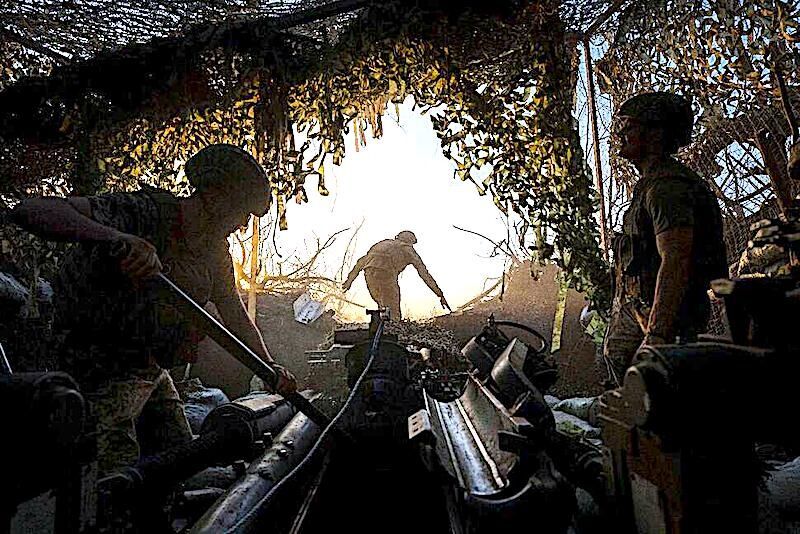
© Evgeniy MaloletkaUkrainian servicemen of 148th separate artillery brigade of the Air Assault Forces prepare M777 howitzer to fire towards Russian positions at the frontline in Donetsk region, Ukraine • August 21, 2024
Ukrainian commanders and soldiers say some new troops refuse to fire at the enemy. Others struggle to assemble weapons or to coordinate basic combat movements. A few have even walked away from their posts, abandoning the battlefield altogether.

While Ukraine presses on with its incursion into Russia's Kursk region, its troops are still losing precious ground along the country's eastern front — a grim erosion that military commanders blame in part on poorly trained recruits drawn from a recent mobilization drive, as well as Russia's clear superiority in ammunition and air power.

A frustrated battalion commander in Ukraine's 47th Brigade said:
"Some people don't want to shoot. They see the enemy in the firing position in trenches but don't open fire. ... That is why our men are dying. When they don't use the weapon, they are ineffective."
The accounts come from commanders and soldiers who spoke to The Associated Press on condition of anonymity in order to speak freely about sensitive military matters. Others spoke on the condition that they be identified only by their call signs in keeping with Ukrainian military protocol.

X

Pentagon rejects Zelensky's latest weapons plea

general
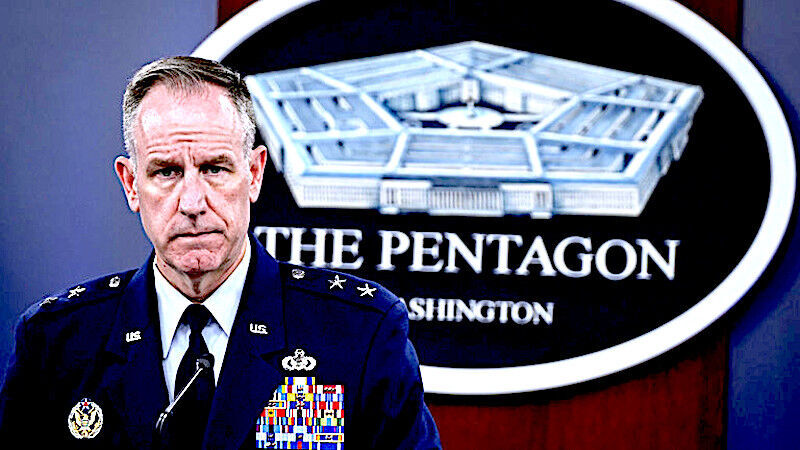
© Celal Gunes/Anadolu/Getty ImagesAir Force Brigadier General Patrick Ryder, spokesman for the US Department of Defense
The Ukrainian leader has once again demanded unrestricted use of US-supplied missiles.

Washington's policy on Kiev's use of American weapons against Russia remains unchanged, the US Department of Defense has said. The statement came after Ukrainian leader Vladimir Zelensky renewed his demands that all restrictions on Western hardware be lifted.

The limitations were put in place to allow the US and its allies to claim they were not directly involved in the conflict with Russia, yet still send Kiev billions of dollars worth of arms, ammunition, equipment, and cash.

"Our policy has not changed," Pentagon spokesman Major-General Patrick Ryder said on Tuesday, explaining that Ukraine is allowed to use US-supplied weapons to defend from cross-border attacks but not for "deep strikes" into Russian territory.

National Security Council spokesman John Kirby also told reporters on Monday that there were "no changes" to the policy with regard to the restrictions. The US has already relaxed its policy from the initial set of restrictions, which only allowed Kiev to strike Russian territory Ukraine claimed as its own - from Crimea to Zaporozhye, Kherson, and the Donetsk and Lugansk People's Republics.