
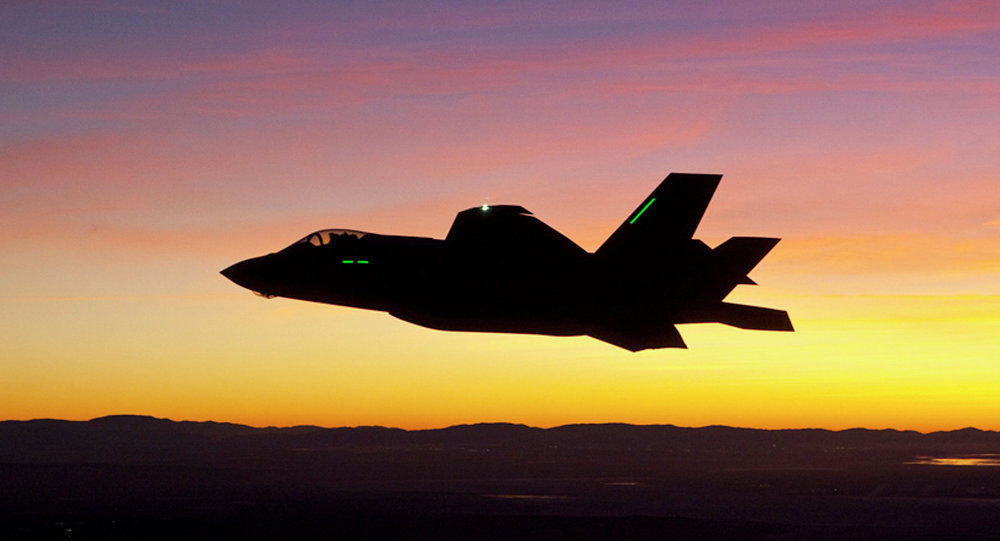
© Flickr/ US Air Force
F-22 Raptors "played an integral role" during last Saturday's attack in Syria, US. Air Force Central Command spokesman Capt. Mark Graff has said, according to the Air Force Times.
Last week, Joint Staff director Lt. Gen. Kenneth McKenzie told reporters that since US air assets did not enter Syria's air defense zone, F-22s were not used to accompany bombers. He also reported that the US's B1-B bombers launched 19 of its new JASSM-ER cruise missile, making it the first time the new but troublesome Lockheed Martin standoff weapon was deployed.


















Comment: See more: Syrian Crisis Shows US Empire Losing Hegemony as Western Mainstream Media Losing Grip Over Narrative