Puppet MastersS


Dig

Iraqi PM Abadi's acceding to US' unilateral anti-Iran sanctions shows he knows his career is over

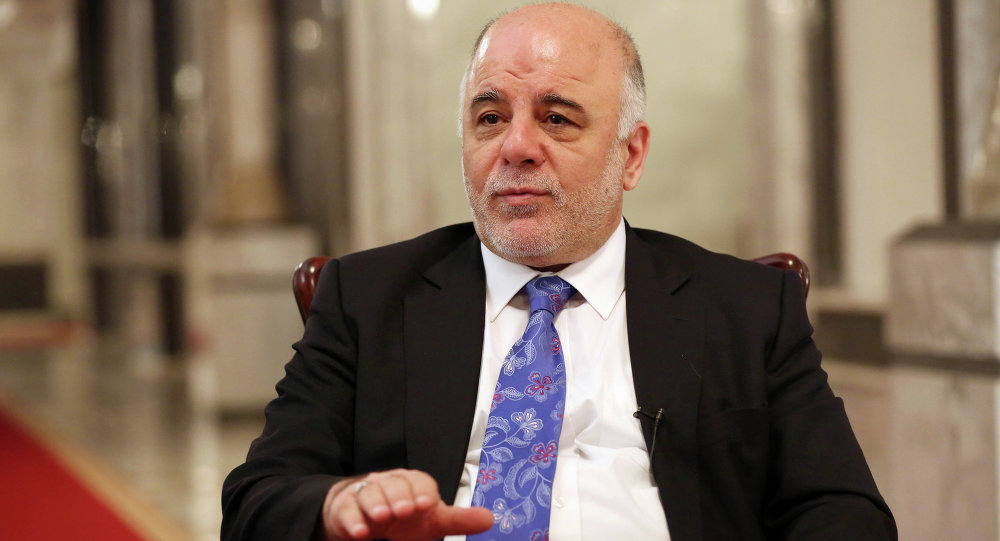
Iraqi Prime Minister Haider Abadi
© AP Photo/ Hadi MizbanIraqi Prime Minister Haider Abadi
It was not difficult to foresee Iraqi Prime Minister Haidar Abadi's decision to abide by the unilateral US decision to impose sanctions on Iran. Nevertheless, as long as it was not official, it was possible to pretend it would not happen. But now Abadi himself is saying it loud and clear: I stand with US against Iran. This can mean only one thing: the Prime Minister is aware that he will not get a second term as PM.

Abadi's Da'wa party, sympathisers and non-sympathisers with Iran alike, all condemned the Prime Minister's decision to stop all purchase and exchange of US dollars with Iran, one of several US sanctions imposed on the Islamic Republic. Moreover, the Iraqi government has decided to stop paying past due bills for electricity provided by Iran to several provinces in the south of the country. Electricity shortages in those regions are a primary cause of ongoing unrest in Iraq. That is not all: following Abadi's decision and declaration to abide by US sanctions, Iranian member of parliament Mahmoud Sadeghi requested the repayment of $1.1 trillion in compensation by the Iraqi government for the War initiated by Saddam Hussein on the 22d of September 1980.

Abadi showed yet again his incapacity to take a clear-cut decision, an inability that has been evident in many areas of his governance. His official statement professed opposition to what he called strategic and mistaken sanctions, yet at the same time he declares his willingness to abide by them "to protect the interests of our (Iraqi) people." People in Abadi's inner circle say the Prime Minister "didn't mean to declare economic war on Iran but finds it difficult to go against the US, mainly due to the need to rebuild the country with money from neighbouring countries that only the US can attract."

Evil Rays

Flashback What was Nellie Ohr doing getting a ham radio license just as spying on Trump team was exposed in 2016?

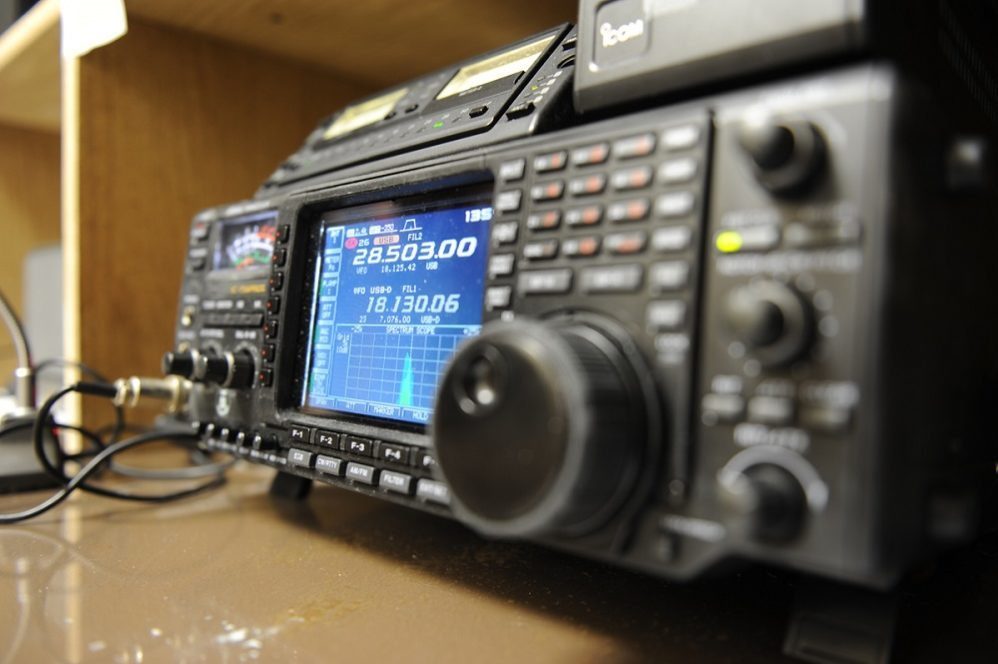
ham radio
In the late 1950s, when I was entering early adolescence, I became an amateur radio operator. It was like joining a very large audio-visual club whose geekiness was on steroids. Along with knowledge of electronics and Morse code, being a total techno-weirdo was an absolute pre-requisite.

The world back then seemed to be a much larger place, and communicating with foreign countries via the short-wave spectrum was a challenging and random proposition. So it was fun and exciting to communicate by code or voice with hams in remote parts of the planet. At least at first.

Unfortunately, the conversations were confined to exchanging names and locations, describing the strength and clarity of the other operator's signal, and discussing the type of equipment and antenna being used. This never varied.

For example, I once had a chance contact with a Christian missionary in the far-away Belgian Congo. At the time, the Belgians were relinquishing colonial control, Katanga Province had declared independence, and a bloody civil war had broken out. The missionary briefly mentioned in passing that the communist-backed Simba rebels were lurking about, but so far so good. With that small detail out of the way, he then quickly moved on to truly important matters such as the fact that he was using a homemade transmitter, a Hammarlund HQ-110 receiver, and a dipole antenna. And that was that.

Comment: Nellie Ohr: wife of Bruce Ohr, subject of the recent revelations showing him at the center of the Steele dossier machinations.


Biohazard

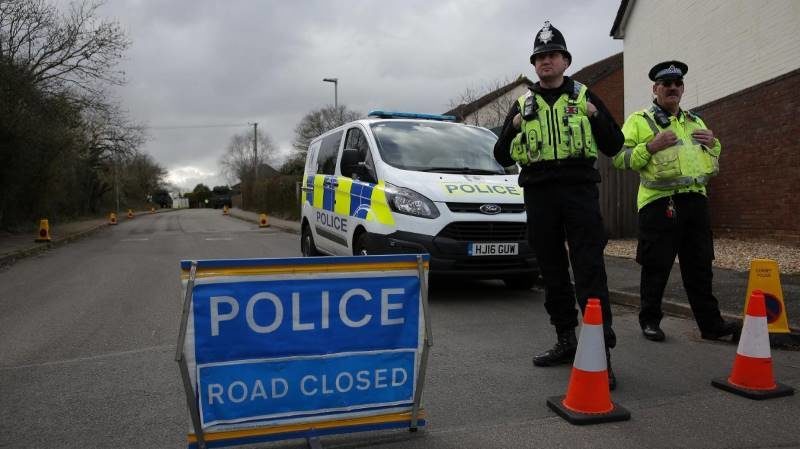
If Yulia Skripal wouldn't believe the UK govt's claims, why should the rest of us?

police line Salisbury novichok poison
My last two articles focused on some words of Yulia Skripal: one on the statement she read out on 23rd May in her "interview" with Reuters, the other on a conversation she had with her cousin, Viktoria, on 4th July. My view is that these two statements, when read very carefully together, blow the British Government's case to smithereens.

However, I'm not sure that I have done a very good job conveying why I believe this to be so in those pieces. And so I want to give it another attempt. Forgive me for any repetition and labouring of points; the reason I do so is because I consider it to be HUGELY IMPORTANT to the whole case.

Here are the crucial points from the statement and the conversation:

23rd May - In her statement, Yulia said the following: "I still find it difficult to come to terms with the fact that both of us were attacked" [my emphasis].

4th July - In her call to her cousin, Viktoria, it appears that she has no idea that the British Government has accused the Russian Government of the attack, since she:

a) Pins the blame for the publicity around the case on her cousin, rather than the fact that one state apparently used a chemical weapon on the territory of another, and

b) States her desire to return to Russia as soon as possible, which would of course be unthinkable if she thought the Russian Government was to blame.

Eye 2

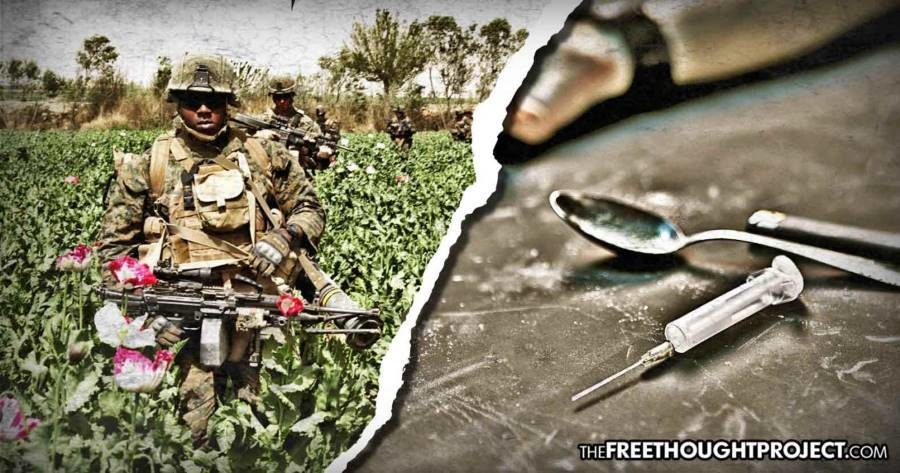
Intended consequences: Government's own report shows tax dollars spent in Afghanistan boosted opium production

afghanistan opium fields soldier
© The Free Thought Project
A report from the U.S. government admits that after spending $8.62 billion to eliminate opium production in Afghanistan, the U.S. actually contributed to it.

As the longest war in United States history approaches yet another anniversary, the U.S. is being forced to admit that after pouring billions of dollars into "counternarcotics efforts" in Afghanistan, the result has been an overwhelming increase in opium production.

The recent report from the Special Inspector General for Afghanistan Reconstruction (SIGAR) reveals that U.S. taxpayers spent $8.62 billion in Afghanistan between 2002 and 2017-solely on combatting poppy cultivation and drug production. The result was an absolute failure, and the report confirmed that "Afghanistan remains the world's largest opium producer, and opium poppy is the country's largest cash crop."

Comment:


Chess

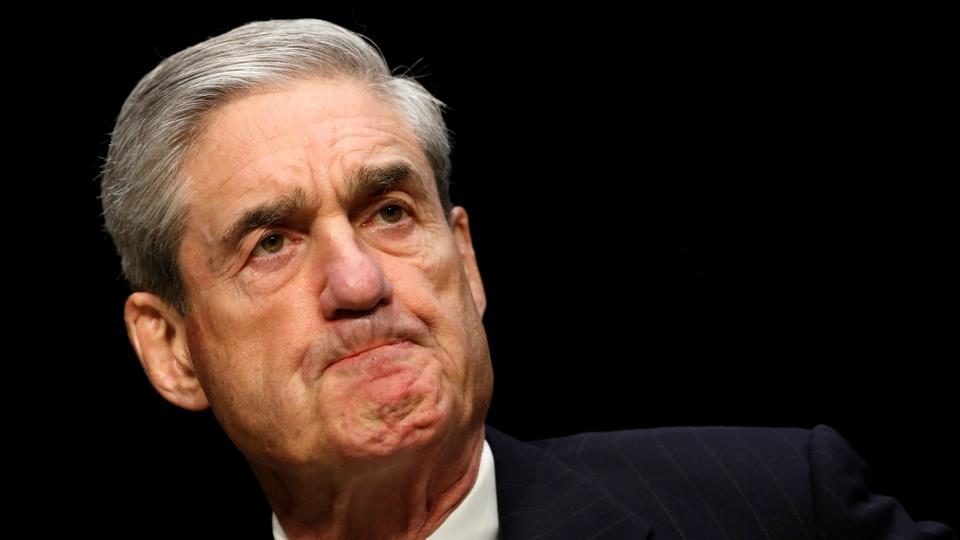
Andrew McCarthy: Yes, perjury traps are real, and Trump is right to avoid Mueller's

Mueller
© ReutersRobert Mueller
Studies will someday be done on the deleterious effect Donald Trump has had on the brains of people who loathe him. It drives them to say things that are as palpably foolish as some of the president's own doozies. This week's winner: There is no such thing as a "perjury trap."

Because some of the people making this nonsensical claim are very smart, let's stipulate that the heated moment we find ourselves in is driven by politics, not law or logic.

Special Counsel Robert Mueller wants to interview President Trump. President Trump's legal team is taking the public position that, although the president wants bigly to answer Mueller's questions, the lawyers are discouraging this because it could be a "perjury trap." That is, Mueller's prosecutors could be plotting to trip the president up, to dazzle him into saying something inaccurate that could be grist for a false-statements prosecution.

Of course, this drives Trump antagonists to distraction. They point out that the president says many things that are not just inaccurate but knowingly false. In maintaining that there are no perjury traps, what they are really arguing is that Trump does not need to be "trapped" into perjury; that his lawyers' claims about Mueller's treacherousness are a smokescreen to hide their real worry: viz., that Trump will lie in the interview because that is what Trump does.

If that is what they think, then that is what they should say. It's a perfectly coherent position, especially if one is predisposed to believe that Trump is incorrigible, and that he conspired with Russia to steal the election, then obstructed the FBI in order to cover it up.

Map

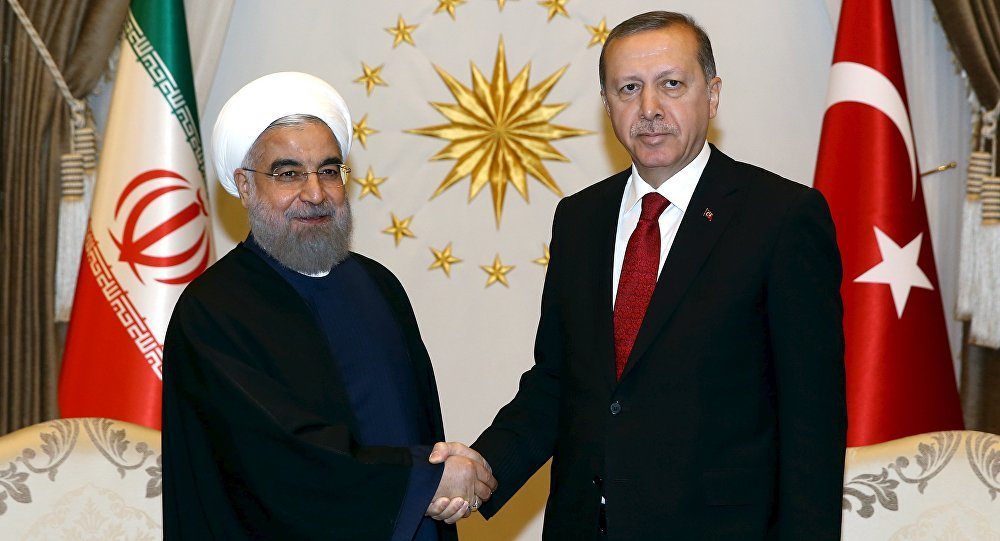
US foreign policy fail: Iran to bolster 'good ties' with Turkey amid US pressure

rouhani erdogan
© REUTERS / Yasin Bulbul/Presidential Palace
Relations between Ankara and Washington have plummeted to their lowest point in decades over a range of issues, including the detention of American pastor Andrew Brunson and Turkey's push for buying the Russian S-400 missile defense systems.

Iranian Foreign Ministry Spokesman Bahram Qassemi has lambasted a new round of US sanctions against Turkey, pledging Tehran's full support for Ankara.

"We hope that the Turkish government and people will manage these conditions and pressure imposed from outside Turkey's borders and [...] they will definitely do that because others cannot change the willpower of nations through coercion and threats," Qassemi told the Islamic Republic of Iranian Broadcasting (IRIB) news network.

He expressed hope that Iran and Turkey will continue to develop "good" bilateral relations and that the two countries will try to add to maintaining stability and security in the region.

Qassemi's remarks came a day after Iranian Foreign Minister Mohammad Javad Zarif tweeted that Washington's "jubilation in inflicting economic hardship" on Turkey was "shameful."

Comment: For decades the U.S. and Russia have been playing a geopolitical game rooted in Mackinder's idea of the heartland of Eurasia. In the West, Brzezinski and Freidman adopt Mackinder's ideas as axiomatic, as do Russians like Dugin and Panarin. Essential to the theory is limiting Russia's influence in the periphery. The West has failed there in regard to China. India is sitting on the fence, Germany is still for all intents and purposes a U.S. vassal (despite some calls for better relations with Russia), but the Levant is turning toward Russia. Iran and Syria are aligned with Russia. Turkey has been moving in that direction. And now Turkey - a NATO member - is not only at risk of going 'full Russia'. It may also become even closer to the U.S.'s biggest 'enemy' in the Middle East: Iran. It looks like Russia is winning the Great Game, at least at this juncture in time.


Jet3

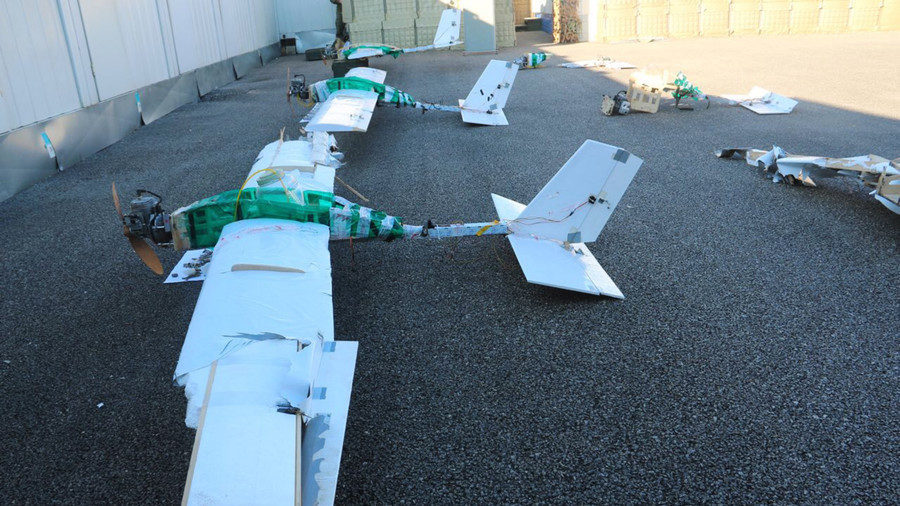
Russia downs 4th drone loaded with explosives in 3 days targeting its Khmeimim air base in Syria

drone
© Russia's Defense Ministry / SputnikFILE PHOTO
A drone, apparently carrying explosives, has been downed on approach to Russia's Khmeimim air base in Syria from the militant-held de-escalation zone in Idlib, becoming the fourth such incident in three days, the military said.

Russian air defense systems deployed at Khmeimim detected and neutralized the target early Saturday, the head of the Russian Center for Reconciliation of the opposing sides in Syria said, in a daily briefing. The hostile unmanned aerial vehicle (UAV) was, as usual, shot down at a safe distance from the base and the incident caused no injuries or damage, Maj. Gen. Alexei Tsygankov emphasized.

On Friday, the Russian military also shot down two "small-size air targets" that came from the north, from a territory held by illegal armed groups. Earlier on Thursday, yet another aerial target was downed on approach.

Comment: Judging by the surge in drone attacks it would seem the dark players who have clearly lost the war on Syria are becoming desperate - and these recent attacks are rather lame indeed:


Propaganda

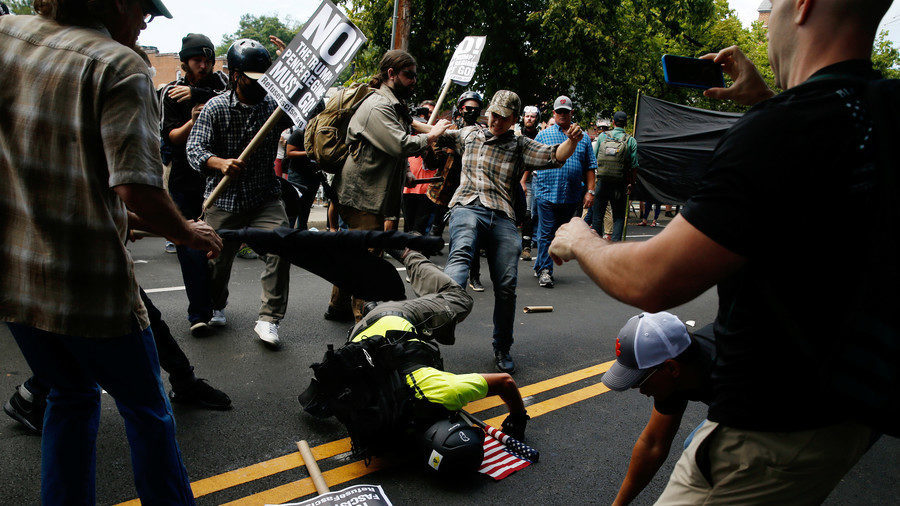
The Russian false narrative continues: US lawmaker says he was told Moscow played role in Charlottesville riots

White nationalist protesters clash with counter-protesters in Charlottesville on August 12, 2017.
© Joshua Roberts / ReutersWhite nationalist protesters clash with counter-protesters in Charlottesville on August 12, 2017.
A lot has happened on the one-year anniversary of the Charlottesville riots. Donald Trump has said he condemns racism, his critics have criticized him and, true to form, someone in Washington found a way to blame the Russians.

When there's no evidence proving Moscow was behind election-meddling or collusion, it's time to throw the "Russia did it" bombshell elsewhere. Congressman Tom Garrett found the perfect opportunity to do just that during a slot on CNN on Saturday.

Comment: From 'Watergate' to 'Russiagate' - from the sublime to the ridiculous


Document

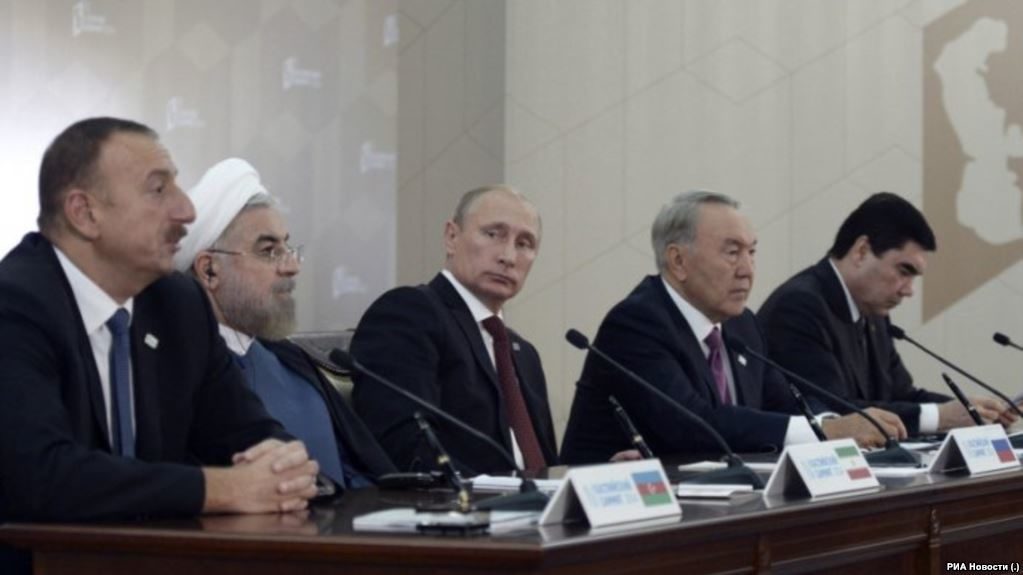
Five states sign convention on legal status of Caspian Sea

The presidents of Azerbaijan (left to right), Iran, Russia, Kazakhstan, and Turkmenistan attend the summit of the heads of the Caspian states in Aqtau on August 12.
Meeting in the Kazakh port city of Aqtau, the leaders of Azerbaijan, Iran, Kazakhstan, Russia, and Turkmenistan have signed a new convention on the legal status of the resource-rich Caspian Sea -- a matter disputed between the five neighbors for more than 20 years.

The leaders provided no details of the agreement in their speeches before the signing of the document.

Comment:
20+ years in the making: Caspian sea nations to sign landmark convention next week


Document

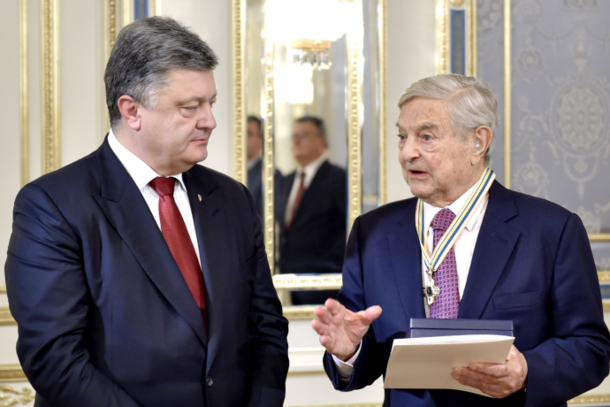
Flashback Leaked memo proves George Soros ruled Ukraine in 2014: Minutes from 'breakfast with US Ambassador Geoffrey Pyatt'

Poroshenko and Soros
We noted in a previous post how important Ukraine was to George Soros, with documents from DC Leaks that show Soros, and his Open Society NGO, scouring the Greek media and political landscape to push the benefits of his Ukraine coup upon a Russian leaning Greek society.

Now more documents, in the massive 2,500 leaked tranche, show the immense power and control Soros had over Ukraine immediately following the illegal Maidan government overthrow.

Soros and his NGO executives held detailed and extensive meetings with just about every actor involved in the Maidan coup...from US Ambassador Geoffrey Pyatt, to Ukraine's Ministers of Foreign Affairs, Justice, Health, and Education.

The only person missing was Victoria Nuland, though we are sure those meeting minutes are waiting to see the light of day.