Puppet MastersS


Bad Guys

Acting US Sec Def: Potential for attacks on Americans in Middle East "put on hold"

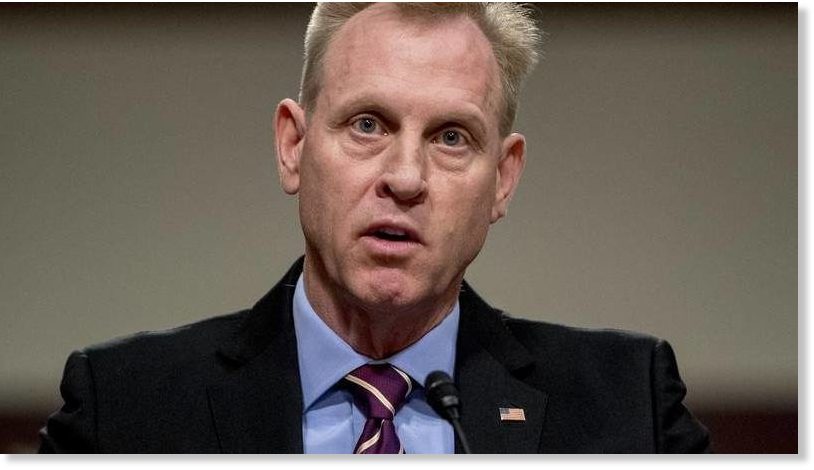
Patrick Shanahan
Acting U.S. Defense Secretary Patrick Shanahan said on Tuesday that while the threat from Iran in the region remains high, the potential for attacks on Americans had been "put on hold."

"I think our steps were very prudent and we've put on hold the potential for attacks on Americans and that is what is extremely important," Shanahan told reporters at the Pentagon. He did not provide further details.

"I'd say we're in a period where the threat remains high and our job is to make sure that there is no miscalculation by the Iranians," Shanahan added.

Propaganda

Leaked Douma report: Establishment narrative managers struggle with new Syria plot holes

Elliot Higgins - Idrees Ahmad
It has been about a week since the Working Group on Syria, Propaganda and Media (WGSPM) published a leaked internal document from the Organisation for the Prohibition of Chemical Weapons (OPCW) investigation into an alleged chemical attack in Douma, Syria last year. The document, whose authenticity the OPCW has confirmed, contends that the official story which was used to justify an air strike by the US, UK and France about poison gas being dropped on civilians from Syrian government helicopters is scientifically implausible, saying "In summary, observations at the scene of the two locations, together with subsequent analysis, suggest that there is a higher probability that both cylinders were manually placed at those two locations rather than being delivered from aircraft."

The document, titled "Engineering Assessment of Two Cylinders Observed at the Douma Incident", was signed by a man named Ian Henderson, whose name is seen listed in expert leadership positions on OPCW documents from as far back as 1998 and as recently as 2018. The OPCW hid this information from the public, for reasons it has yet to attempt to justify.

Comment: See also:


Light Sabers

Huawei founder: Clash with the US was 'inevitable'

  • Huawei CEO said he foresaw the confrontation with Washington because its aim to be global leader threatened US interests
  • Ren Zhengfei said US trade restrictions have no impact on Huawei's 5G plans as rivals cannot catch up within two to three years
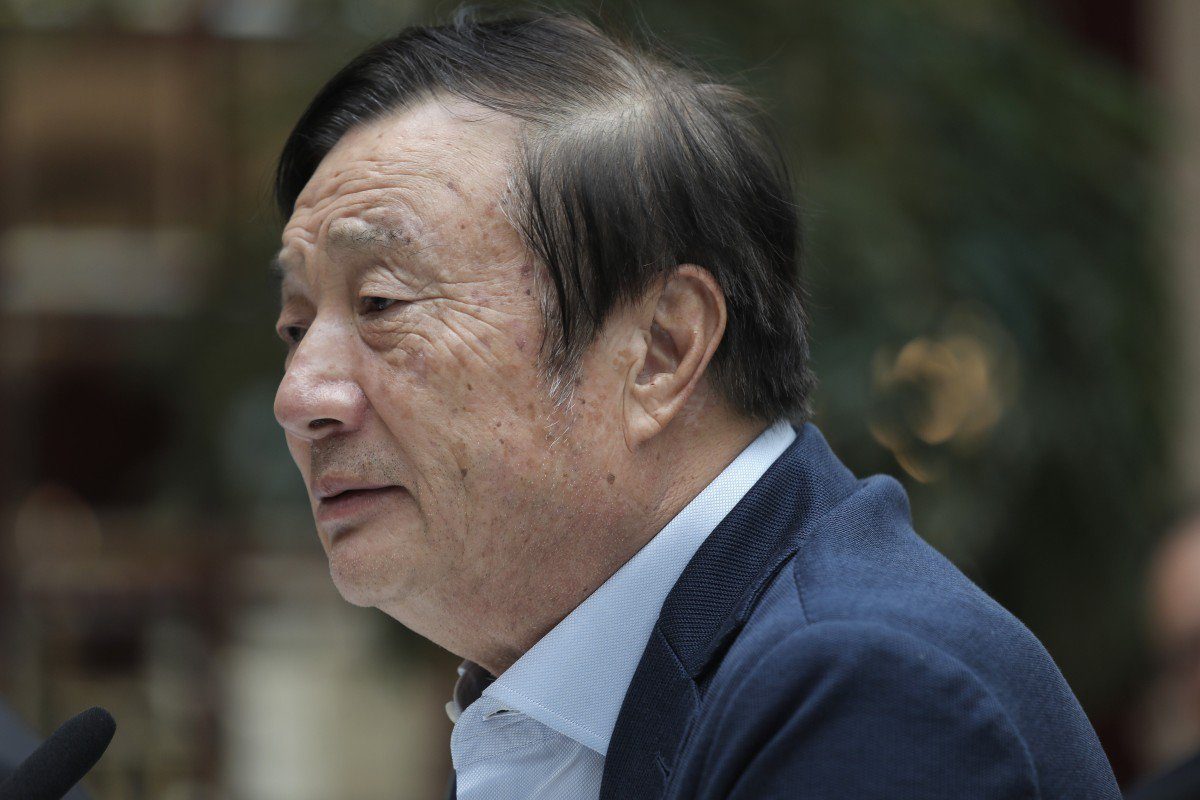
Ren Zhengfei
© APRen Zhengfei, founder and CEO of Huawei, said US trade restrictions have no impact on the Chinese tech giant’s 5G plans.
Huawei Technologies founder Ren Zhengfei said he foresaw the clash with the US government, saying it was a matter of time before the Chinese telecommunications equipment maker threatened US interests and attracted retaliation.

"We sacrificed [the interests of] individuals and families for the sake of an ideal, to stand at the top of the world," Ren said in interview with Chinese state media on Tuesday. "For this ideal, there will be conflict with the United States sooner or later."

The US government last week placed Huawei and its affiliates on a trade black list that restricted the Shenzhen-based company from buying services and parts from US companies without approval. US President Donald Trump also signed an executive order barring US companies from using telecommunications equipment made by firms posing a national security risk. The move was widely perceived in China as the US trying to contain the rise of its technological capabilities.

Comment: See also:


Arrow Up

US offers temporary waivers, Huawei declares 'service will not be affected'

huawei
© REUTERS/Eric Gaillard/File Photo
Two steps forward, one step back.

The Trump administration has seemingly been trying to calibrate its strategy around its intensifying trade dispute with China. Last week, it effectively banned Huawei from importing U.S. technology, a decision that forced several American companies, including Google, to partly sever their relationships with the Chinese handset and telecom provider.

Now, in an unpublished draft of a note in the Federal Register, the Department of Commerce and its Bureau of Industry and Security announced that Huawei would receive a "90-day temporary general license" to continue to use U.S. technology that it already has a license to. New technology and mobile phone models requiring new licenses would still need to apply for them - and those licenses are unlikely to be approved, according to Reuters.

Reasons for the drawback are unclear. One answer might be the impact on American jobs. The Information Technology and Innovation Foundation, a tech industry-backed research group, argued in a new report today that export controls could cost up to $56.3 billion in damage to the U.S. economy and up to 74,000 jobs, depending on their scale. Obviously, the tech industry is mostly opposed to new tariffs or export controls, and the Trump administration has made American jobs a centerpiece of its domestic policy agenda.

Comment: Perhaps because of waivers like these - as have occurred repeatedly in the US' sanctioning of the world and that show just how weak its position is - Huawei has stated quite openly it's not so concerned about the blacklisting:
Huawei's 5G 'will absolutely not be affected' by US blacklist, founder says

Huawei isn't going away just because the US government has tried to ban it from its markets, company founder Ren Zhengfei has said, declaring that the Trump administration "underestimates our strength."

"Huawei's 5G will absolutely not be affected" by the Commerce Department's ban on selling or transferring US technology to the company, Ren told Chinese state media. "In terms of 5G technologies, others won't be able to catch up with Huawei in two or three years."

The 90-day grace period before Huawei is officially blacklisted from doing business with US companies does not have much impact on the company, Ren claimed, adding: "We are ready."

A Huawei spokesperson assured reporters that nothing would change for US residents with Huawei devices, or even those planning to buy a device in the future - possibly because the Chinese firm is already in talks with Google on how to manage the ban.

Huawei has bracing for such a ban after the company watched fellow Chinese telecom ZTE struggle with a similar blacklisting maneuver last year. Unable to do business with US firms and unable to fill the equipment void itself, ZTE closed its doors for four months, throwing itself on the mercy of the US government and reopening its business more than $1 billion poorer. Not so for Huawei: not only has it been developing its own mobile operating system since 2012 to break dependence on Google's Android, but it already makes half the chips used in its devices.

"We cannot be isolated from the world," Ren boasted, adding that while Huawei was at odds with the US government, it was not the enemy of US companies.

While Trump's emergency order last week did not mention China or Huawei by name, it clearly targets both, giving the Secretary of Commerce the right to block any activity posing an "unacceptable risk to the national security of the United States or the security and safety of United States persons." The Commerce Department then moved to blacklist Huawei and 68 related companies from doing business with US firms.

The US has tried to convince its allies that Huawei is an unconscionable security risk, feeding information directly to the Chinese government through backdoors in its equipment. For its part, Huawei has accused the US of discrimination, claiming American telecoms cannot handle competition and pointing out the US' own record of backdooring allies' communications. Washington's efforts to convince the EU and its member nations to bar Huawei from their 5G networks have failed so far - although Australia has agreed to adopt such a ban.

The battle over Huawei reflects the ongoing trade war between the US and China. Both countries have slapped additional tariffs onto the other's exports after trade talks fell apart earlier this month, and Trump has threatened to dramatically expand the categories of goods taxed this summer.
See also: And check out SOTT radio's: Objective:Health #15 - The Dangers of 5G & WiFi - With Scott Ogrin of Scottie's Tech.Info


Chess

House Judiciary Committee subpoenas Hope Hicks, Annie Donaldson

Hope Hicks
© AP Photo/J. Scott ApplewhiteIn this Feb. 27, 2018 photo, White House Communications Director Hope Hicks, one of President Trump’s closest aides and advisers, arrives to meet behind closed doors with the House Intelligence Committee, at the Capitol in Washington.
House Judiciary Committee Chairman Jerrold Nadler issued subpoenas Tuesday to Hope Hicks and Annie Donaldson, both former Trump White House employees, demanding they turn over documents he's seeking from their time working for the president's team.

They were among the 81 persons or entities in the Trump orbit that Mr. Nadler demanded documents from earlier this year.

Mr. Nadler said he wants both documents and testimony from Ms. Hicks, who served as the president's communications chief, and Ms. Donaldson, who was chief of staff to former White House Counsel Don McGahn.

"I have issued these subpoenas today to two critical witnesses who have worked closely with the president," Mr. Nadler said. "We are seeking the information in order to conduct proper oversight, consider potential legislation and perform our constitutional duties."

Attention

Best of the Web: Here we go AGAIN! US sez Syria 'may be using chemical weapons' - threatens 'retaliation'

OPCW inspectors chemical weapons
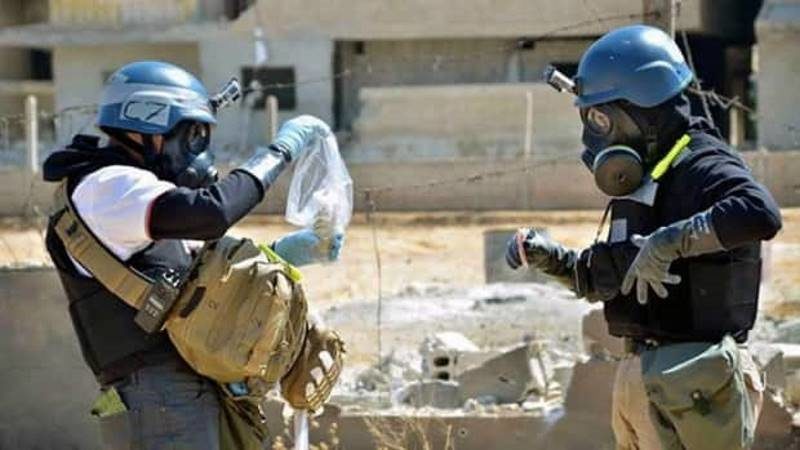
© Yousef Albostany/Local Committee of Arbeen/Associated PressOPCW inspectors
The United States sees signs the Syrian government may be using chemical weapons, including an alleged chlorine attack on Sunday in northwest Syria, the State Department said on Tuesday, warning that Washington and its allies would respond "quickly and appropriately" if this were proven.

"Unfortunately, we continue to see signs that the Assad regime may be renewing its use of chemical weapons, including an alleged chlorine attack in northwest Syria on the morning of May 19," State Department spokeswoman Morgan Ortagus said in a statement.

"We are still gathering information on this incident, but we repeat our warning that if the Assad regime uses chemical weapons, the United States and our allies will respond quickly and appropriately," she said.

Comment: This comes less than 36 hours after a leaked OPCW report confirmed that the Douma 'chemical weapons attack' that 'justified' F.UK.US. airstrikes against Syrian military and state targets fighting ISIS/Al-Qaeda last year was STAGED.

The reason, as always, why they're launching another chemical attack propaganda blitz now is because the Syrian government forces are moving in on the concentrated pocket of terrorists remaining in Idlib province...


Light Saber

Trey Gowdy says if secret FBI transcripts from Russia probe were released it could be a 'game-changer'

trey gowdy
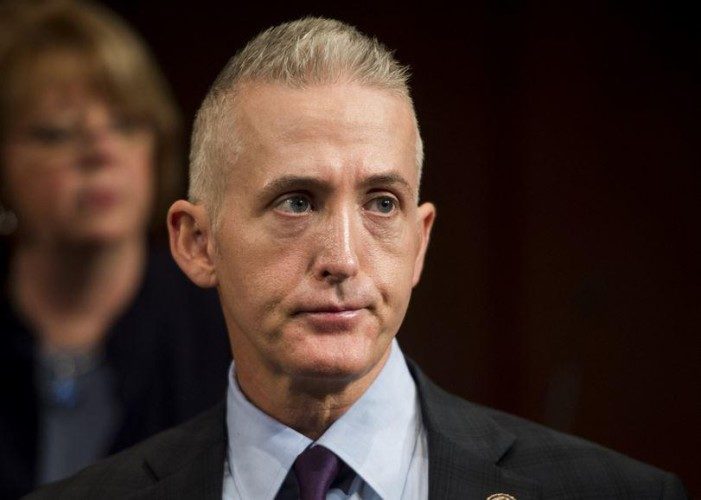
Former Rep. Trey Gowdy
Unreleased transcripts from secretly recorded conversations between FBI informants and ex-Trump campaign aide George Papadopoulos could be game-changing if the public were ever allowed to see them, according to former Rep. Trey Gowdy.

The Republican made the explosive claim during an appearance on Fox News' Sunday Morning Futures, suggesting it is likely the FBI would have transcripts of discussions between informants and Papadopoulos.

"If the bureau's going to send in an informant in, the informant's going to be wired, and if the bureau is monitoring telephone calls, there's going to be a transcript of that," he said.

Stop

The disinformationists are plentiful - and working overtime to shape your thoughts about Russia

disinformation peddlers

Comment: Readers not used to the tone of C.J. Hopkins' essays would do well to keep in mind that he often makes his points with tongue firmly held in cheek!


So, the election-meddling Putin-Nazi disinformationists are at it again! Oh yes, while Americans have been distracted by Russiagate, Obstructiongate, Redactiongate, or whatever it's being called at this point, here in Europe, we are purportedly being bombarded with Russian "disinformation" aimed at fomenting confusion and chaos in advance of the upcoming EU elections, which are due to take place in less than two weeks.

The New York Times reports that an entire "constellation" of social media accounts "linked to Russia and far-right groups" is disseminating extremist "disinformation," "encouraging discord," and "amplifying distrust in the centrist parties that have governed for decades." These accounts share some of the same "digital fingerprints," and are engaging in "tactics" similar to the "tactics used in previous Russian attacks," notably the Kremlin's notorious mass-brainwashing of millions of defenseless African Americans with those deceptive anti-masturbation memes during the 2016 elections.

Now, this is not just a bunch of nonsense dressed up with authoritative-sounding lingo. No, The Times spoke to "analysts" and "advocacy groups," which informed them that certain websites in Italy "share the same signatures" as certain other websites sharing certain "pro-Kremlin views." Moreover, two "political groups" in Germany used the same Internet service providers as those "Russian hackers" who attacked our democracy by stealing those Democratic Party emails that transformed Americans overnight into a nation of Trump-loving white supremacists!

Bizarro Earth

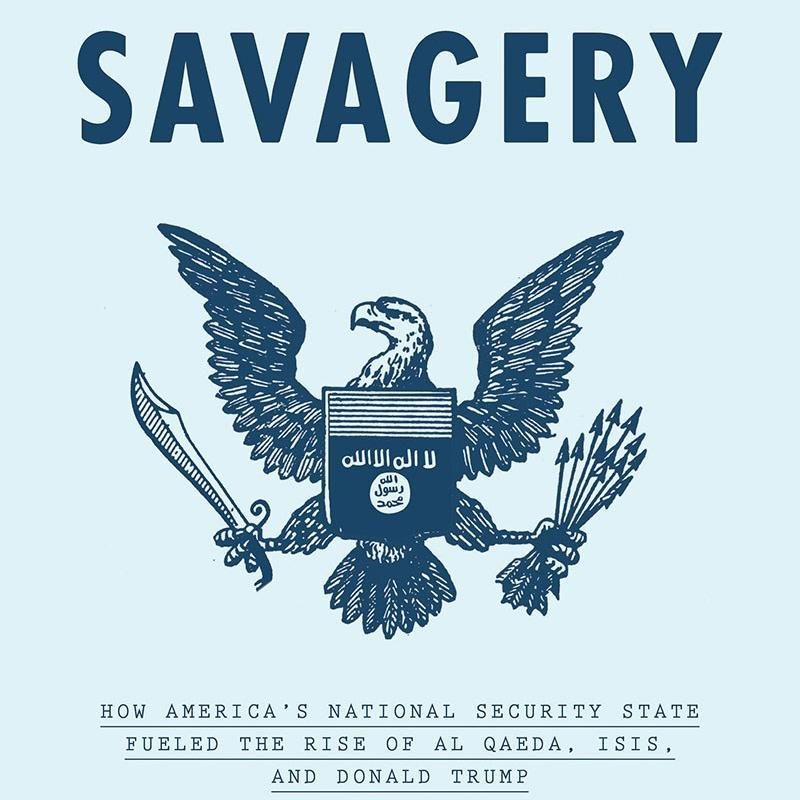
The management of savagery: How US foreign policy spawned terror and Trump

The Management of Savagery
© Verso Books
"AQ [al-Qaida] is on our side in Syria," US Secretary of State Hillary Clinton was advised in a February 2012 email from her deputy chief of staff. Journalist Max Blumenthal opens his latest book, The Management of Savagery, with this telling epigraph.

The statement to Clinton reveals the kinship between US military interventionist policy in the Middle East and the rise of radical Islamist forces like al-Qaida and Islamic State. It also captures one of the essential themes of this startling study that spans decades of events in Afghanistan, Iraq, Libya and Syria.

Blumenthal's principal thesis is that the election of President Donald Trump and the rise of Islamophobic white nationalism in both Europe and the United States are a direct result of US intervention in Afghanistan from 1979 to 1989 through arming the mujahideen and, following the 11 September 2001 terrorist attack on the World Trade Center, the subsequent invasions of both Afghanistan and Iraq.

Comment: See also:


Network

Why capturing Huawei is no victory in tech war

chess war
© iStockChinese firm is a queen on tech chessboard, but Beijing will just tell its whiz-kids to reach the next level
It's geopolitical, geoeconomic war. Cold, so far, but now about to descend to deep freeze. The US National Security Strategy unmistakably spells it out. China is a strategic competitor and must be contained, no holds barred, on all fronts: economic, military and most of all, technological.

Enter the current, concerted offensive across the spectrum, from 5G and AI to moves attempting to prevent the coming of globalization 2.0. Add to it maximum pressure all over the world to prevent nations from joining the New Silk Roads, or Belt and Road Initiative (BRI), the organizing foreign policy concept for China in the foreseeable future and the strategic road map for Eurasian integration up to 2049.

It's all interconnected; the Trump administration's trade war, Google blocking Huawei from the enhanced Android OS, the demonization of Belt and Road. It's all about control of global supply chains and technological infrastructure.

Comment: See also: And check out SOTT radio's: Objective:Health #15 - The Dangers of 5G & WiFi - With Scott Ogrin of Scottie's Tech.Info