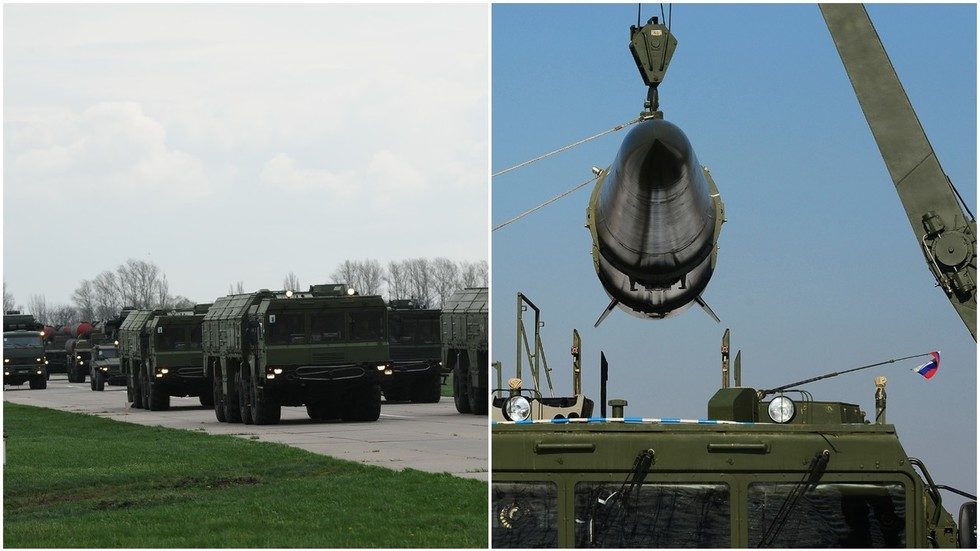
© RIA Novosti / Sergey Pivovarov; Sergey OrlovIskander missile launchers on the move and during military drills
Russia says it won't sit idle after the US tested a missile that was banned by the INF. As a response,
Moscow has an ace up its sleeves and it won't need to enter into a Cold War-style arms race, military analysts have told RT.
No longer bound by the milestone Intermediate-Range Nuclear Forces Treaty (INF) - which the US unilaterally scrapped - Washington recently
tested a ground-launched version of its Tomahawk cruise missile.
On Friday, Russian president Vladimir Putin said he is not up for an all-out arms race, but ordered the military to evaluate and find reciprocal answers. So, what is Russia likely to have in store to counter the emerging threat?
Viktor Murakhovsky, a military analyst and retired army officer, reminds us that there was
an array of weapons whose capabilities were deliberately curtailed to meet the requirements of the INF treaty, which banned missiles with ranges of 500-1,000km (short to medium-range) and 1,000-5,500km (intermediate range).
"[Russia's] existing Iskander system, which has been in use with the rocket brigades of our Ground Troops, had a range limitation [under the treaty]," he told RT. Its range "was artificially reduced to under 500km - to 480km, to be precise - and now, when the shackles are gone,
nothing prevents our weapons designers from reviving their technological groundwork."













Comment: What better signature of being an intelligence asset than being unperturbed at destroying an innocent bystander's life in pursuit of one's own goals?
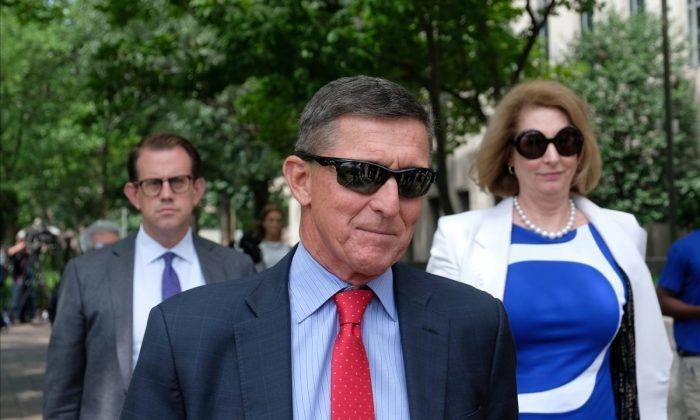
- Russian historian says she was manipulated into helping FBI, Stephan Halper to entrap General Flynn
- Collateral damage: Cambridge academic on being set up by 'Spygate' figure Stephen Halper
More on the excrable Mr. Halper: