© Corbett Report
An incredible event took place this week: A Russian tanker
docked at the Port of Jiangsu on China's east-central coast, offloading its cargo of liquefied natural gas from the Yamal LNG plant in Russia's north.
Now, I know what you're thinking: "James, that's not so incredible. Tankers regularly carry LNG from Russia to Asia via the Suez Canal in the winter months!"
Oh, yes, of course, my dear, well-informed reader. But here's the rub: This was no ordinary tanker, but the
Christophe de Margerie, an ice class LNG tanker designed to transport gas along the summer route across the Arctic.
"But James, the summer route doesn't open until July!"
Exactly. This was a test to see whether the trip could be started nearly two months early. The
Christophe de Margerie launched from the Port of Sabetta in Russia's frozen north on May 18th and
hooked up with the Yamal, a nuclear icebreaker, which escorted it through the Arctic passage. Together, the ships were able to trim nearly 4,000 nautical miles off the
regular winter shipping route, which takes the cargo on a circuitous journey around Europe and through the Suez Canal before arriving in Asia.
Make no mistake: This event may not have received as much coverage as the other groundbreaking stories of 2020 (or any coverage at all, other than the reports in a
handful of sites specializing in such matters), but it
is important.
In fact, it speaks to the fact that the Arctic is increasingly becoming a geopolitical prize . . . and a potential flashpoint for future military conflict between the superpowers.The latest sign that the Arctic is the next up-and-coming geopolitical hotspot comes from the chambers of the Arctic Council. While "the Arctic Council" sounds like the fictional body overseeing Santa's North Pole operations, it is in fact a very real intergovernmental forum that brings together eight Arctic states (Canada, Denmark, Finland, Iceland, Norway, Russia, Sweden and the US) to discuss regional issues. Although the council's
website likes to highlight the group's work in "enhancing cooperation in the circumpolar North,"
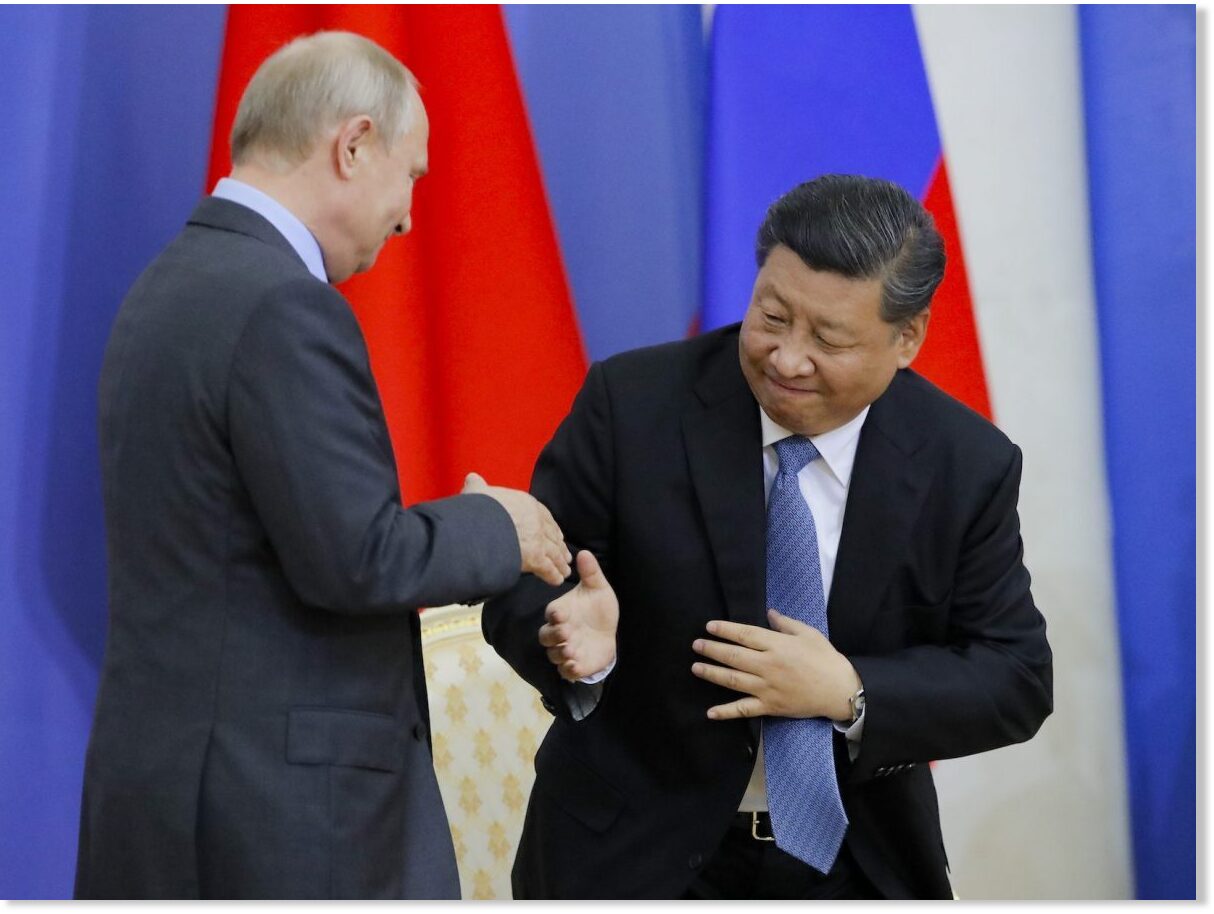
it has increasingly become a place for the US and Russia to ramp up their Cold War 2.0 rhetoric.


















Comment: You'd think by now that the American political elite might have learned a thing or two about Russia. But in its insane drive to demonize, ostracize and oppress the great eastern nation with "extreme prejudice", elements of the US Congress and allied neocons and neoliberals will continue to deny reality and further push itself away from the new multi-polar world that can be seen emerging. So be it. The Russian Federation will continue to do what it has always done: vie for peace, establish new economic and military alliances, and continue building the social, cultural and religious strength of its people - that puts it in a much better place from which to meet the future.
At this stage of the story all we can do is watch and share the truth of this titanic struggle as we see it.