Science & TechnologyS


Control Panel

Best of the Web: Science Shock: U.K. Met Office is "inventing" temperature data from 100 non-existent stations

UK Met office
© UnknownU.K. Met Office
Shocking evidence has emerged that points to the U.K. Met Office inventing temperature data from over 100 non-existent weather stations. The explosive allegations have been made by citizen journalist Ray Sanders and sent to the new Labour Science Minister Peter Kyle MP. Following a number of Freedom of Information requests to the Met Office and diligent field work visiting individuals stations, Sanders has discovered that 103 stations out of 302 sites supplying temperature averages do not exist. "How would any reasonable observer know that the data was not real and simply 'made up' by a Government agency," asks Sanders. He calls for:
"An 'open declaration' of likely inaccuracy of existing published data, to avoid other institutions and researchers using unreliable data and reaching erroneous conclusions."
In his home county of Kent, Sanders charges that four of the eight sites identified by the Met Office, namely Dungeness, Folkestone, Dover and Gillingham - which all produce rolling temperature averages to the second decimal place of a degree - are "fiction". Sanders notes that there has been no weather station at Dungeness since 1986. The Daily Sceptic is able to confirm that none of the four stations appear in the list of Met sites with a classification from the World Meteorological Organisation (WMO). The Met Office directs online inquiries about Dover to the "nearest climate station" at Dover Harbour (Beach) and provides a full set of rolling 30-year averages.

Comment: Agenda-driven: Rigged data and false conclusions regarding 'climate change' have taken place around the globe for decades.


Archaeology

17,000-year-old DNA reveals Ice Age infant had blue eyes and was a product of cousin relationship

ice age infant heart condition
© Higgins, O.A., Modi, A., Cannariato, C. et al. Life history and ancestry of the late Upper Palaeolithic infant from Grotta delle Mura, Italy.The remains were discovered in Grotta delle Mura, Grotta delle Mura, near Monopoli in Italy
He also had dark skin, curly hair, and a congenital heart condition.

Ancient DNA from the skeleton of a baby who lived and died in southern Italy 17,000 years ago has painted a fascinating picture of the ill-fated infant and offers a rare snapshot into ancient life. His remains were found in such good nick that, all these millennia later, researchers have been able to reconstruct details of his life and death with unprecedented precision.

Discovered in a cave in southern Italy in 1998, the "infant of Grotta delle Mura" died at around 7.5 months to 1.5 years of age. He was 82 centimeters (32 inches) tall and likely had blue eyes, curly dark hair, and brown skin - a combination quite common in central and southwestern Europe in the Upper Paleolithic.

Igloo

Climate researchers warn: Warmer climate could lead to 'Cold waves across Northern Europe'!

In a recent open letter, researchers warned that a warmer Arctic could lead to cold waves across Northern Europe - due to "complex feedback mechanisms".

According to Forschung & Wissen here, an international group of renowned scientists recently published an open letter (PDF) stating that the melting of ice in the Arctic could disrupt ocean currents in the Atlantic, and thus have "devastating and irreversible impacts especially for Nordic countries, but also for other parts of the world."

Open Letter
According to their publication in the journal Nature Communications, October 2024, doi: 10.1038/s41467-024-53401-3, melting of sea ice during the last interglacial significantly impacted the density and salinity of seawater, and thus led to significant changes in ocean currents and heat distribution in the oceans.

Dig

How ancient Roman concrete has been able to last thousands of years finally revealed

Kuppel Pantheon Rom
© Architas (via WikimediaCommon) / CC BY-SA 4.0The dome of the Pantheon in Rome
The ancient Romans were masters of building and engineering, perhaps most famously represented by the aqueducts. And those still functional marvels rely on a unique construction material: pozzolanic concrete, a spectacularly durable concrete that gave Roman structures their incredible strength.

Even today, one of their structures - the Pantheon, still intact and nearly 2,000 years old - holds the record for the world's largest dome of unreinforced concrete.

The properties of this concrete have generally been attributed to its ingredients: pozzolana, a mix of volcanic ash - named after the Italian city of Pozzuoli, where a significant deposit of it can be found - and lime. When mixed with water, the two materials can react to produce strong concrete.

Comment:


Attention

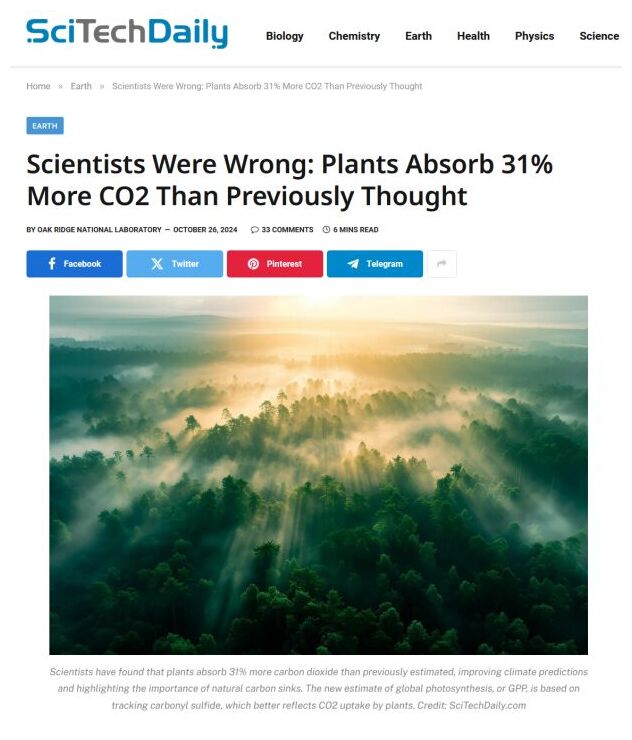
Oops, science was 'settled' — until it wasn't: Plants absorb 31% more CO₂ than we thought

Settled Science
© WattsUpwithThat
A new study reveals that plants have been absorbing 31% more CO₂ than previously believed. Yes, 31% — a glaring error that casts serious doubt on climate models, emissions scenarios, and policy prescriptions like Net Zero. For years, we were told that the "science was settled," and that urgent action was needed to avoid catastrophic warming. But this discovery suggests that our models have been dramatically underestimating nature's ability to manage CO₂. This revelation not only upends the rationale behind aggressive policies but also raises broader questions about the supposed certainty of climate science.

The Myth of "Settled Science"

The phrase "settled science" has been the bedrock of climate advocacy for decades. We've been told that if we don't make rapid, costly changes, we'd face imminent disaster. Skeptics were treated as heretics, while the so-called consensus was portrayed as unquestionable. Yet, it turns out we were 31% wrong about something as fundamental as plant CO₂ absorption. This isn't a minor correction; it's a massive revision that undermines the credibility of models driving policy.

The Unraveling of Climate Models

Climate models are the tools used to predict warming and guide policy. They've been treated as scientific scripture, driving policies from emissions reductions to renewable energy mandates. But with a key assumption proven wrong, the models' projections are called into question:
  1. Overblown Emissions Impact: Climate models predicted rapid CO₂ buildup, assuming limited natural absorption. This inflated the urgency of drastic emissions cuts. Correcting for higher CO₂ absorption rates means that CO₂ accumulates in the atmosphere slower than models predicted, weakening the case for urgent, economy-wrenching measures.
  2. Questionable Feedback Loops: Many models rely on dramatic feedback loops — such as reduced plant CO₂ absorption at higher temperatures — to justify emergency interventions. But this new data shows plants can handle more CO₂ than anticipated, making these feedback loops look less inevitable and more speculative.
  3. Policy Implications: If the models guiding climate policy have been this far off, then the entire framework behind policies like Net Zero becomes shaky. Policies driven by these models were never proven to be beneficial, but were only assumed to be so. The discovery that plants are absorbing significantly more CO₂ undermines the supposed need for extreme measures.

Comet 2

Comet ATLAS (C/2024 S1) burns up as it flies into the sun

Comet C/2024 S1 (ATLAS) is no more.

On Monday (Oct. 28), the comet evaporated as it was heading toward perihelion, the closest point to the sun in its orbit. There were earlier hopes that the comet, officially designated C/2024 S1 (ATLAS), could become a "Halloween treat" visible to the naked eye, but these were ultimately just wishful thinking; astronomers had already begun observing the cosmic snowball beginning to disintegrate earlier this month.


Now, thanks to the Solar and Heliospheric Observatory (SOHO), a spacecraft jointly operated by NASA and the European Space Agency, we know for sure how and when comet ATLAS met its demise.

Comet C/2024 S1 (ATLAS) passed its closest point to Earth on Oct. 23, reaching a magnitude of 8.7, far too dim to be seen with the naked eye. Still, telescopes were able to catch a glimpse of the icy visitor from the outer solar system.

After that approach, the comet began flying toward the sun, making it difficult to see by anything other than specialized instruments designed for solar observations.

Gear

Kinesins: Nanoscale molecular motors, each built for a purpose

kinesin molecular machinary
© Discovery Science/YouTubeA kinesin "walks" along a cellular microtubule
Motors of any kind are a testament to intelligent design. While pondering motors, I went downstairs and asked my eight-year-old son, "What is the difference between a screwdriver and a power drill?" He promptly replied, "A screwdriver is something you turn with your hand. A drill is something you pull the trigger on and a motor turns it." Isn't that fascinating? Even at a young age, he is able to recognize similarities and differences in structure and function. He knew right away that both tools needed to move in order to function, and he correctly identified the difference in how the movement of each tool is achieved. Wow, it's incredible how motors are engineered to accomplish specific tasks!

Consider the multitude of motors we encounter daily. From the simple motor that wiggles our fancy automatic toothbrush back-and-forth, to the complex motor that powers our vehicle as we commute to work. How about the motor that turns the carousel in our microwave, or the powerful electric motor that rotates an impeller at high speed to generate low pressure inside our vacuum cleaner. Linear actuators move our electric car seat forward, backward, up, and down. What about those sliding automatic doors at the grocery store (yes, my eight year old still pretends he is Luke Skywalker every time). These motors work in different ways because they have been designed for specific purposes...to get different types of work done. It is relatively easy for us to see these motors in action and appreciate their intricate design.

Comment: The engineered components of a living cell are endlessly fascinating


Warning

Terrawatch: mystery of Siberian explosive craters solved

crater
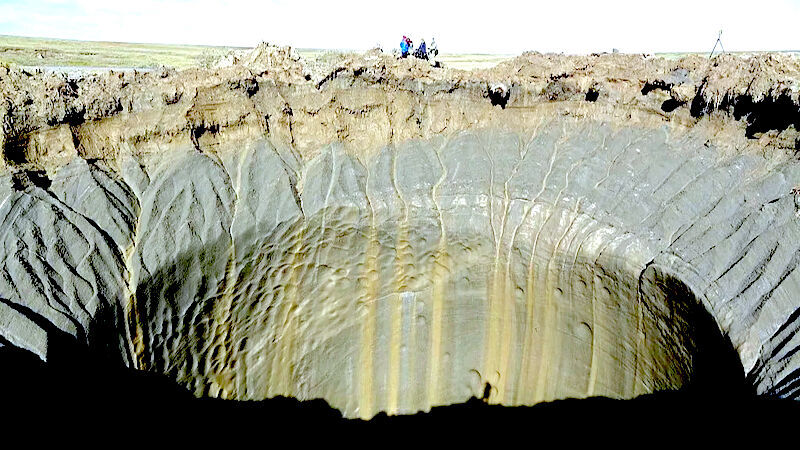
© Vasily Bogoyavlensky/AFP/Getty ImagesImage taken in 2014 showing one of the craters on Russia's Yamal peninsula
Giant exploding craters only known to exist on Russia's permafrost-covered Yamal and Gydan peninsulas may result from a specific set of conditions not found elsewhere in the Arctic.

Eight giant, 160-foot-deep (50 meters) craters in the Siberian permafrost have baffled scientists since their discovery more than a decade ago — but a new theory may finally explain how they formed.

The craters are unique to Russia's northern Yamal and Gydan peninsulas and are not known to exist elsewhere in the Arctic, suggesting the key to this puzzle lies in the landscape, according to a preprint paper published Jan. 12 to the EarthArXiv database.

Comment:
Study finds craters come from forceful releases of methane gas from underground ponds as temperatures warm.

In 2014 a mysterious crater suddenly appeared on the Yamal peninsula in north-west Siberia. The debris surrounding this 50-metre-deep hole suggested it had been produced by an explosive process. Since then, scientists and local people have discovered several more craters on the Yamal and nearby Gydan peninsulas and a multitude of explanations have been put forward, ranging from meteor impacts to natural gas explosions. Now a new study has revealed the cause.

Drill down through the seasonally frozen soil in this region and you reach a thick clay permafrost layer. Sandwiched between the soil and permafrost lie unusual metre-thick ponds of very salty water known as cryopegs, which are underlain by crystalised methane-water solids, kept stable by the high pressure and low temperature.

Researchers found that warmer temperatures and longer summers in recent decades had resulted in the soil layer defrosting to greater and greater depths. Their results, published in Geophysical Research Letters, show that when the thaw reaches a cryopeg, the pressure from added meltwater forces cracks to open in the soil above. The new cracks create a sudden drop in pressure, which destabilises the methane hydrate and releases an explosive bubble of methane gas.

Although infrequent, the explosions release large amounts of methane and could have a significant warming impact.
See also:


Arrow Up

Soil treated with organic fertilizers stores more carbon, study finds

soil and farming
© Pixabay/CC0 Public DomainSoil studies
With carbon dioxide levels in the atmosphere increasing in recent decades, there is a growing urgency to find strategies for capturing and holding carbon. Researchers from Kansas State University (K-State) are exploring how different farming practices can affect the amount of carbon that gets stored in soil. Using the Canadian Light Source (CLS) at the University of Saskatchewan (USask) and the Advanced Light Source in Berkeley, California, they analyzed soil from a cornfield in Kansas that had been farmed with no tilling for the past 22 years.

During that time, the farm used a variety of different soil nitrogen management practices, including no fertilizer, chemical fertilizer, and manure/compost fertilizer. The results are published in the Soil Science Society of America Journal.

Dr. Ganga Hettiarachchi, professor of soil and environmental chemistry at Kansas State University, said:
"We were trying to understand what the mechanisms are behind increasing soil carbon storage using certain management practices. We were looking at not just soil carbon, but other soil minerals that are going to help store carbon."
As has been shown in other studies, the K-state researchers found that the soil enhanced (treated) with manure or compost fertilizer stores more carbon than soil that received either chemical fertilizer or no fertilizer. More exciting though, says Hettiarachchi, the ultrabright synchrotron light enabled them to see how the carbon gets stored: they found that it was preserved in pores and some carbon had attached itself to minerals in the soil.


Bizarro Earth

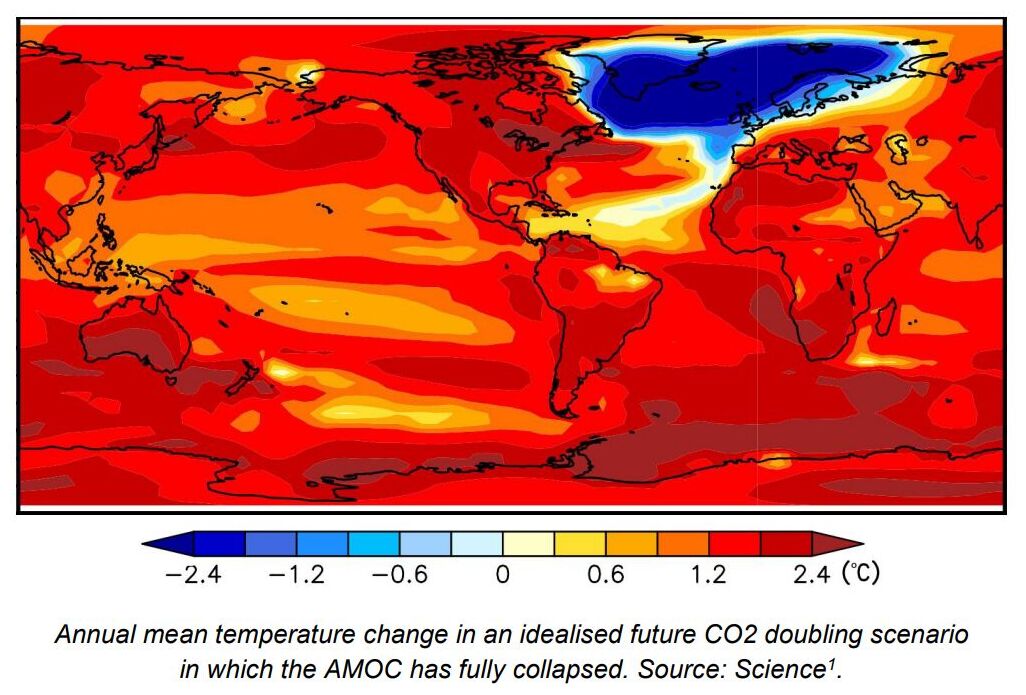
Heads up! Key Atlantic current could collapse soon, 'impacting the entire world for centuries to come'

amoc ocean currents climate collapse Atlantic Meridional Overturning Circulation
© NOAALeading climate scientists signed an open letter warning about the collapse of the Atlantic Meridional Overturning Circulation (AMOC), which includes the Gulf Stream.
Forty-four of the world's leading climate scientists have called on Nordic policymakers to address the potentially imminent and "devastating" collapse of key Atlantic Ocean currents.

In an open letter published online Monday (Oct. 21), University of Pennsylvania climatologist Michael Mann and other eminent scientists say the risks of weakening ocean circulation in the Atlantic have been greatly underestimated and warrant urgent action.

The currents in question are those forming the Atlantic Meridional Overturning Circulation (AMOC), a giant ocean conveyor belt that includes the Gulf Stream and transports vital heat to the Northern Hemisphere. Research shows the AMOC is slowing down and could soon reach a tipping point due to global warming, throwing Earth's climate into chaos.

Comment: Ignore the climate claptrap of the last four paragraphs. Global warming leads to global cooling through the injection of massive amounts of fresh water into the oceans which disrupts the AMOC current pattern depicted above. This millennial-old cyclical process is driven on a scale that puny man does not affect and has been quietly reported on for years.