Science & TechnologyS


Fireball 5

4 large asteroids, including a skyscraper-size 'city killer,' will zoom past Earth in a 12-hour span on October 24th

Four "potentially hazardous" space rocks, which are between 100 and 580 feet across, will all make their closest approaches to Earth within less than 12 hours of one another on Thursday (Oct. 24). Two of them were only discovered earlier this month.
Asteroids
© Getty ImagesFour large space rocks, between 100 and 580 feet across, will reach their closest points to Earth in quick succession on Thursday (Oct. 24).
A quartet of particularly hefty asteroids, including two that were discovered earlier this month and another that is as tall as a skyscraper, will make their closest approaches to Earth on Thursday (Oct. 24) — all within 12 hours of one another. The "potentially hazardous" space rocks will all get similarly close to our planet, but pose zero threat to life on Earth.

The first asteroid to make its closest approach will be 2015 HM1, also the smallest of the four space rocks at around 100 feet (30 meters) across. It will reach its closest point to our planet at around 4:36 a.m. UTC (0:36 a.m. EDT) when it reaches a minimum distance of 3.4 million miles (5.5 million kilometers) from us, according to NASA's Asteroid Watch dashboard. (That's roughly 14 times the average distance between Earth and the moon.)

The next visitor will be the roughly 170-foot-wide (52 m) space rock 2024 TP17, which will make its closest approach at around 8:20 a.m. UTC (4:20 a.m. EDT) and will get to within 2.9 million miles (4.7 million km) of our planet.

The final two asteroids — 2002 NV16 and 2024 TR6 — will make their closest approaches within just four minutes of each other. 2002 NV16, which is around 580 feet (177 m) across, making it the largest of the four, will reach a minimum distance of 2.8 million miles (4.5 million km) at around 15:47 p.m. UTC (11:47 a.m. EDT). It will be quickly followed by the 150-foot-wide (46 m) asteroid 2024 TR6, which will come within 3.5 million miles (5.6 million km) of Earth at 15:51 p.m. UTC (11:51 a.m. EDT).


X

Scientists find no change in global warming rate since 1970 despite 'Hottest Year Ever' in 2023

thermometer
© screenshotThe long red line
A sensational science paper has blown holes in alarmist claims that global temperatures are surging. Just published results in Nature show "limited evidence" for a warming surge. The paper says:
"In most surface temperature time series, no change in the warming rate beyond the 1970s is detected despite the breaking record temperatures observed in 2023."
Written by an international group of mathematicians and scientists, it is unlikely to be acknowledged in the mainstream media where general hysteria reigns over the anomalous 2023 experience. As we have seen, constant misinformation is published to scare the general public and this is exemplified by climate comedy-turn Jim 'jail the deniers' Dale forecasting almost daily Armageddon and exhorting people to "join up the dots".

Comment: The Earth is primarily ocean with variable currents interrupted by landmass. A scattering of temp checks on only landmass would seem insufficient to formulate global projections.


Nebula

The Milky Way could be part of a much larger 'cosmic neighborhood' than we realize

milky way
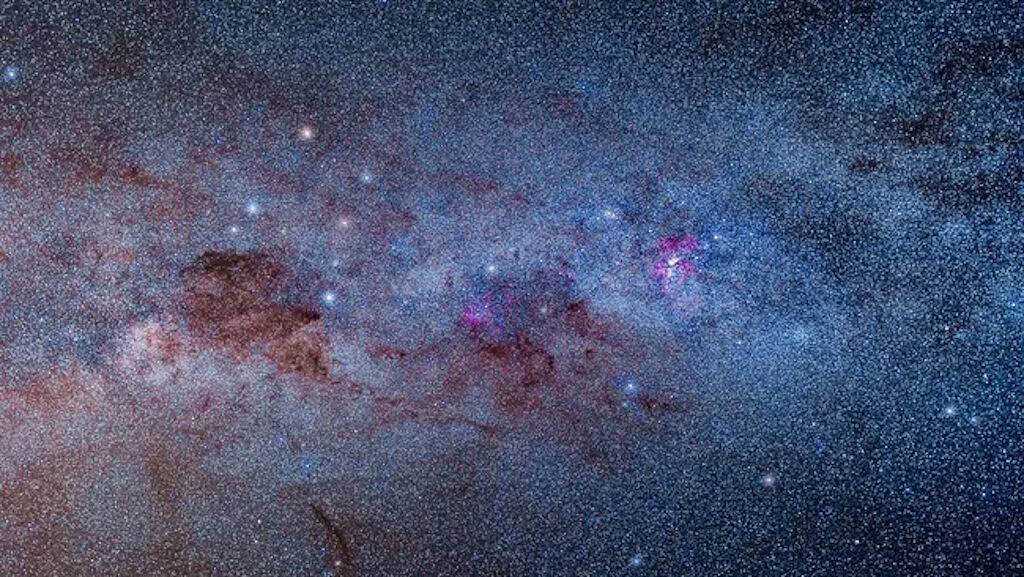
© AlamyThe Milky Way could be part of an even larger "basin of attraction" than we realized. This image shows a section of our home galaxy's more than 100 billion stars.
A probabilistic new map of the universe surrounding the Milky Way reveals that our galaxy is likely part of an even larger "basin of attraction" than we previously assumed.

The Milky Way could be part of an even larger "basin of attraction" than we realized. This image shows a section of our home galaxy's more than 100 billion stars. (Image credit: Alamy)

The region of the universe we live in may be significantly bigger than we thought. A new study reveals that the intergalactic supercluster holding the Milky Way may be part of an even bigger "basin of attraction" that's up to 10 times larger than the one we currently call home.

The universe is full of basins of attraction (BOAs) — regions within which everything is being pulled inward by the gravity of a massive object. BOAs can stack inside one another like nesting dolls. For example, the moon circles Earth, which in turn orbits the sun along with the rest of the solar system, which is itself spiraling around the supermassive black hole at the heart of our galaxy.

Sun

Solar flare warning issued as Earth in crosshairs of explosive new sunspot

sunspot solar flare stock image
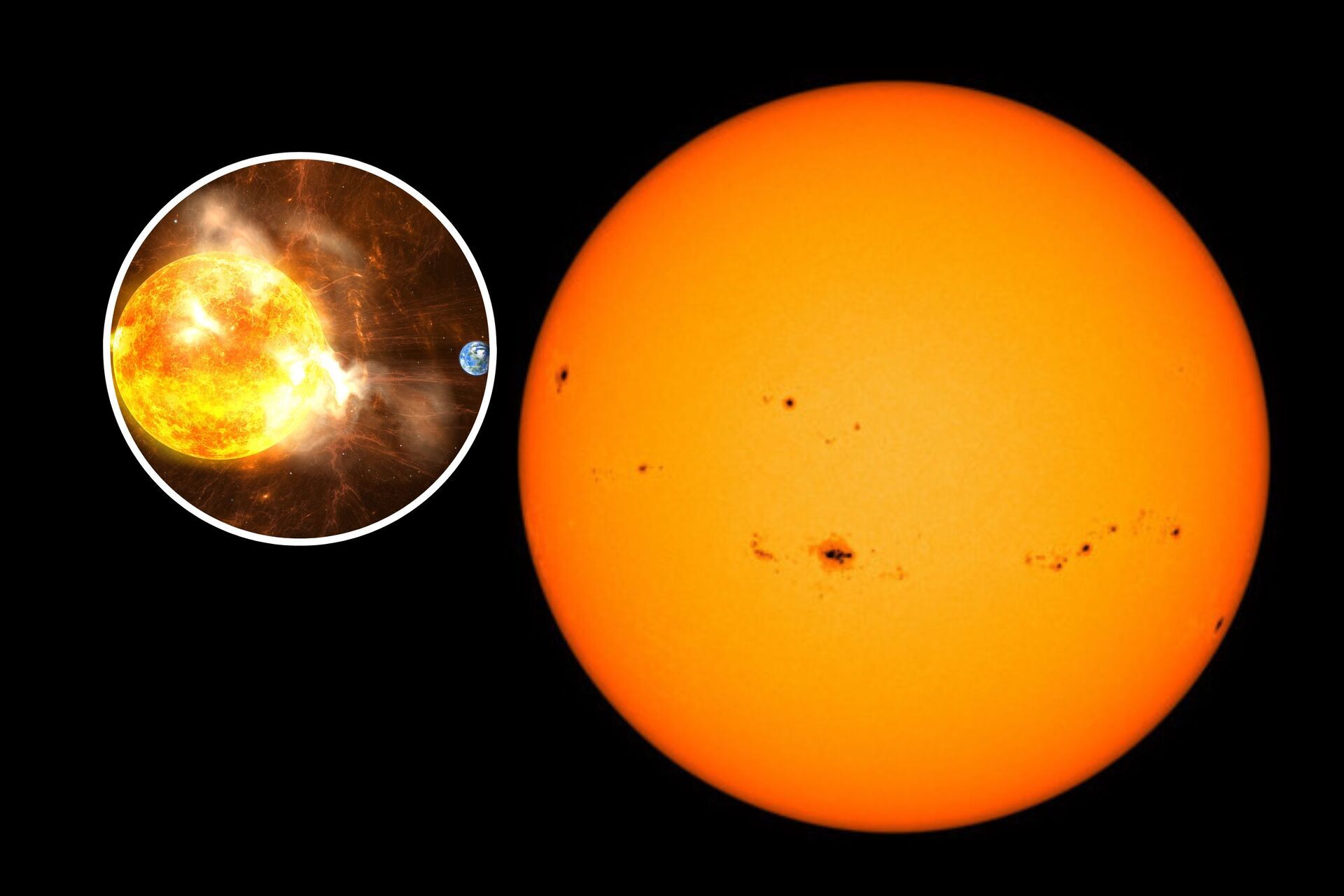
© NASA/SDO / ISTOCK / GETTY IMAGES PLUSVisible light images from NASA’s Solar Dynamics Observatory highlight the appearance of the sun in August 2024, with numerous sunspots on its surface (main) and stock illustration of a solar flare (inset). A new sunspot with a 'beta-gamma-delta' magnetic field has a high chance of releasing powerful solar flares.
A new sunspot forming on the surface of the sun might be about to fling solar flares in our direction.

The sunspot, named 3856, is facing Earth and has developed a volatile type of magnetic field known as a "beta-gamma-delta" field, meaning that it has a greater chance of releasing powerful solar flares.

According to National Oceanic and Atmospheric Administration forecasts, there is an 80 percent chance of the sunspot producing an M-class solar flare on October 17 and a 20 percent chance of an X-class flare.

On October 18, there is a 75 percent chance of M-class flares and a 15 percent chance of X-class flares.

Comet 2

Best of the Web: Comet ATLAS sprouts "seemingly impossible 2nd tail" after closest approach to Earth for 80,000 years


Comment: It's not an optical illusion, you numpties, it's a sunward spike, an electrical-plasma phenomenon!


comet
© Michael JägerComet Tsuchinshan-ATLAS was spotted with a thin streak of light, known as an anti-tail, pointing in the complete opposite direction to its bright streaming tail • Monday, Oct. 14, 2024
New photos of comet Tsuchinshan-ATLAS appear to show a faint "anti-tail" pointing away in the wrong direction. The puzzling extra limb is the result of a rare illusion that is only possible when our planet is in a certain position.

The "once-in-a-lifetime" comet Tsuchinshan-ATLAS looks like it has grown a physics-defying second tail after reaching its closest point to Earth for more than 80,000 years, new photos reveal. However, in reality, the extra limb is a visual illusion that occurs thanks to the position of our planet relative to the naked-eye object.

C/2023 A3, more commonly known as Tsuchinshan-ATLAS, is an unusually bright comet that likely originates from the Oort Cloud — a reservoir of icy objects in the outer reaches of the solar system. It was first discovered in early 2023 barreling between Saturn and Jupiter as it headed toward the inner planets. Follow-up observations revealed that the comet likely orbits the sun once every 80,660 years — and suggested that it may have been disintegrating, which later turned out to be inaccurate.

Microscope 2

Fossil Friday: The Avalon Explosion and the power of 'maybe'

fossil charnia fronds avalon explosion
© Verisimilus at English Wikipedia, CC BY-SA 3.0 , via Wikimedia Commons.569-556-million-year-old frond-like fossil Charnia from Charnwood Forest in Leicestershire (UK)
This Fossil Friday features the 569-556-million-year-old frond-like fossil Charnia from Charnwood Forest in Leicestershire (UK), an example of the abrupt appearance of the so-called Ediacaran biota in the latest Precambrian. During this event, which has been called the Avalon Explosion (see Bechly 2024) and preceded the famous Cambrian Explosion, we find in three distinct assemblages the emergence of strange organisms that looked like aliens from a remote planet. They were very much unlike any of the organisms that roamed our planet after the Cambrian Explosion and certainly did not represent the ancestors of the Cambrian bilaterian animal phyla. The Ediacaran organisms generally exhibited a quilted body like an air mattress, a glide symmetry, a fractal growth pattern, and lacked any visible organs for feeding or locomotion or any internal structure. A genuine enigma for biologists and paleontologists.

A New Study

In a brand new study by Bowyer et al. (2024), three distinguished scientists from the University of Edinburgh analyzed the geological evidence for sea level changes (mainly changes in sedimentary rock volume as proxy), and compared them with the reconstructed biodiversity in terms of genus richness during different phases of the Ediacaran period, correlated according to a global age framework of high-precision radiometric datings. They found that "each successive rise of metazoan morphogroups that define the Avalon, White Sea, and Cambrian assemblages appears to coincide with global shallow marine oxygenation events at δ13Ccarb maxima, which precede major sea level transgressions" and concluded that "while the record of biodiversity is biased, early metazoan radiations and oxygenation events are linked to major sea level cycles."

Galaxy

Rare, ultra-luminous nova spotted in the Small Magellanic Cloud

The X-ray outburst from the nova, observed by the Neil Gehrels Swift Observatory, is one of the brightest ever produced by a white dwarf star.
Small Magellanic Cloud
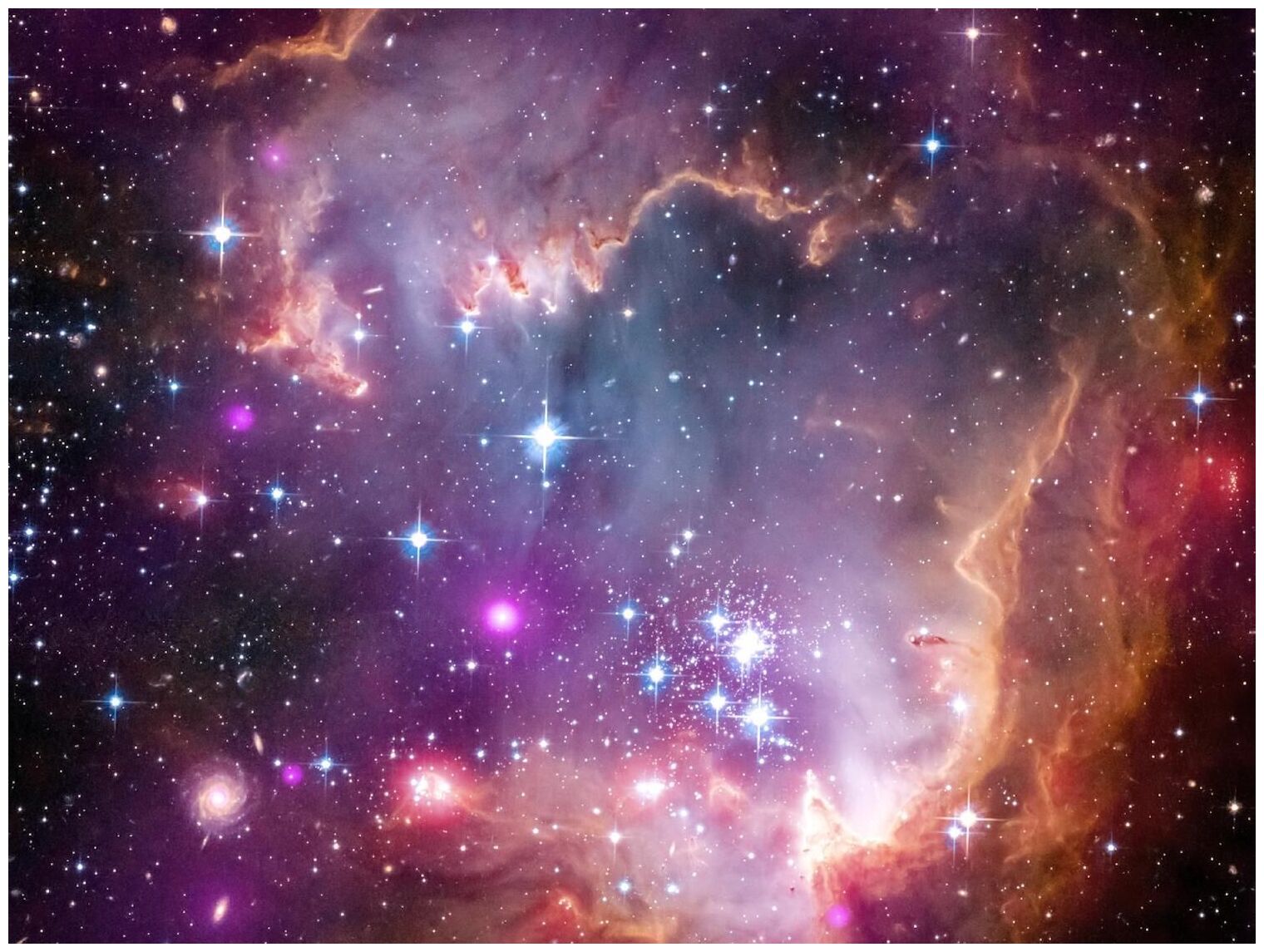
© Space.comSmall Magellanic Cloud
A rare, extremely luminous X-ray outburst has been observed in the Small Magellanic Cloud, a dwarf galaxy that is a close neighbor of our own Milky Way galaxy. The observations, made by the Neil Gehrels Swift Observatory and other telescopes, were described by an international team of astronomers led Penn State scientists on the Swift team. The researchers attribute the outburst to a nova eruption produced by a white dwarf binary star system. The researchers attributed the outburst to one of the most luminous nova eruptions ever produced by a white dwarf binary star system.

The observations were described in a paper recently published in the Monthly Notices of the Royal Astronomical Society.

"This is only the second time that we have observed such a bright outburst from this type of white dwarf binary system," said Thomas Gaudin, a graduate student at Penn State and the first author of the paper. "We hope that this event will provide more insight into how these outbursts are produced and help us to better understand this mysterious class of binary."

The system that produced this outburst is referred to as CXOU J005245.0-722844. It was recently identified by members of the Einstein Probe team and confirmed by the Swift team as the seventh-known example of a Be/White Dwarf X-ray binary. Be/White Dwarf binaries are binary systems in which a white dwarf star orbits a hot young star surrounded by a disk of stellar material. Astronomers expect these binaries to be commonly observed, Gaudin said, and the lack of known examples is a mystery.

Question

'Mysterious black balls' wash ashore, close Sydney beaches

tar balls beach coogee australia
© Photo / Randwick CouncilCoogee Beach is closed until further notice after Lifeguards this afternoon discovered mysterious, black, ball-shaped debris washed along the length of the beach on October 15, 2024.
Hundreds of mysterious black tar-like balls have washed up on a popular Sydney beach, prompting lifeguards to close the strand to swimmers. "Mysterious, black, ball-shaped debris" began appearing on Coogee Beach on October 15 in the afternoon the local mayor said, leaving flummoxed authorities scrambling to find out what they might be, and where they may have come from.

Hundreds of mysterious black tar-like balls have washed up on two popular Sydney beaches, prompting lifeguards to close the strands to swimmers.

"Mysterious, black, ball-shaped debris" began appearing on Coogee Beach on Tuesday afternoon the local mayor said, leaving flummoxed Australian authorities scrambling to find out what they might be, and where they may have come from.

Meteor

'2nd Moon' orbits Earth after getting stuck in planet's gravity—here's where it came from

An illustration by The Epoch Times shows an asteroid orbiting the Earth.
© Shutterstock/ buradaki/ Rawhi302/ Mikael DamkierAn illustration by The Epoch Times shows an asteroid orbiting the Earth.
It appears that planet Earth has assumed babysitting duties for a minor space object that came too close to our world and chose to stay for a few weeks. The traveling object fell into Earth's orbit in September and will remain there until late November. Rocky in disposition and roughly the size of a school bus, the object is an asteroid, yet scientists are calling it a "second moon."

How the Earth Came to Have Two Moons

Traveling along a horseshoe-shaped path through the solar system, this asteroid is classified as a near-Earth object, or NEO. There are many NEOs in outer space. While making a flyby close to Earth, this particular object's gravitational energy temporarily fell to negative levels, according to a study published by the American Astronomical Society. This implied that it was in Earth's orbit.On Sept. 29, it became official. The NEO got caught in Earth's orbit, technically making it a second moon. It was named 2024 PT5. However, it won't last long; the rock won't even revolve once around the Earth before hurtling off in a few weeks.

Rainbow

Even a single bacterial cell can sense Earth's changing seasons

cyno bacteria sense change temperature
© Carlos Arrojo for Quanta MagazineCyanobacteria can connect the experience of shorter days, like those that encroach in fall, to the onset of winter — and prepare for cold weather.
Though they live only a few hours before dividing, bacteria can anticipate the approach of cold weather and prepare for it. The discovery suggests that seasonal tracking is fundamental to life.

Introduction

Every year, in latitudes far enough north or south, a huge swath of life on Earth senses that winter is coming. Leaves fall from trees, sparrows fly to the tropics, raccoons grow thick winter coats, and we unpack our sweaters from storage. Now scientists have shown that this ability to anticipate shorter days and colder temperatures is more fundamental to life than anyone thought: Even short-lived, single-celled organisms can sense day length and get themselves ready for winter.

Lab experiments, recently published in Science, show that cyanobacteria — a type of bacteria that produces energy from sunlight through photosynthesis — anticipate the change (opens a new tab) by bundling up in their own way. They turn on a set of seasonal genes, including some that adjust the molecular composition of their cell membranes, to improve their odds of survival.