Science & TechnologyS


Question

A NASA experiment is going to light up US East coast sky with beautifully colored clouds tonight

NASA Experiment_1
© Gizmodo
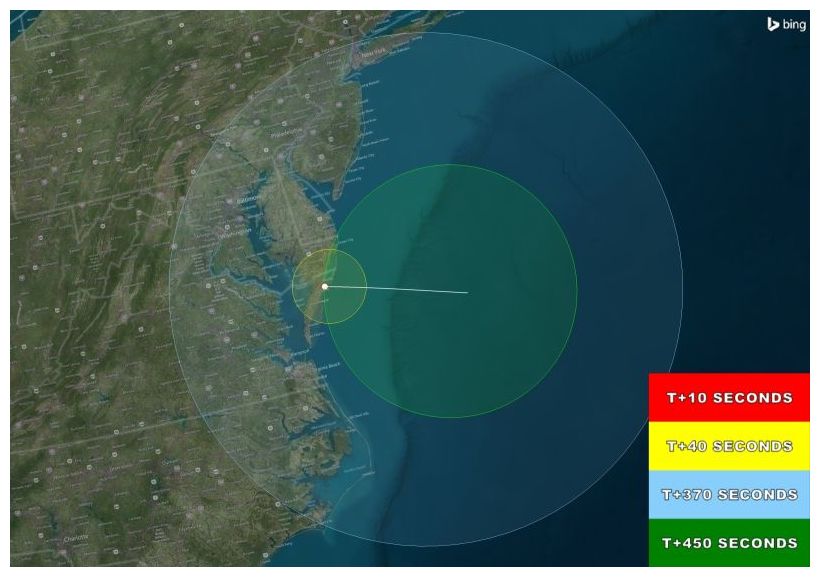
If you're on the east coast tonight, keep an eye on the sky between 7pm and 9pm: NASA is launching a test of some new tech that will include releasing colorful vapor tracers 130 miles above the Earth. It sounds like it's going to be beautiful.

The vapors will be ejected from a sounding rocket launched from Wallops Flight Facility in Virginia. NASA explains that it has actually been injecting various vapor tracers into the atmosphere since the 1950s—these trails help scientists understand "the naturally occurring flows of ionized and neutral particles" in the upper atmosphere by injecting color tracers and tracking the flow across the sky.

Tonight, NASA says it's ejecting four different payloads of a mix of barium and strontium, creating "a cloud with a mixture of blue-green and red color."

Binoculars

Researchers capture rare beautiful kingfisher in the Solomon Islands - then KILL it for 'study purposes'

Image
© UNIVERSITY OF KANSASUS researchers discovered the moustached kingfisher last month
The male moustached kingfisher was caught on camera for the first time ever by US scientists two weeks ago.

But they decided to slaughter the elusive blue bird - which was apparently in good health - to research it further.

Paul Sweet from the American Museum of Natural History said its population was substantial enough to withstand the loss.

But it is thought there are as few as 250 of the birds left, according to experts.

Alarm Clock

Does time exist? Quantum physics says no

warped clock
"We choose to examine a phenomenon which is impossible, absolutely impossible, to explain in any classical way, and which has in it the heart of quantum mechanics. In reality, it contains the only mystery." Richard Feynman, a Nobel laureate of the twentieth century (Radin, Dean. Entangled Minds: Extrasensory Experiences In A Quantum Reality. New York, Paraview Pocket Books, 2006)

The concept of "time" is a weird one, and the world of quantum physics is even weirder. There is no shortage of observed phenomena which defy our understanding of logic, bringing into play thoughts, feelings, emotions - consciousness itself, and a post-materialist view of the universe. This fact is no better illustrated than by the classic double slit experiment, which has been used by physicists (repeatedly) to explore the role of consciousness and its role in shaping/affecting physical reality. (source) The dominant role of a physical material (Newtonian) universe was dropped the second quantum mechanics entered into the equation and shook up the very foundation of science, as it continues to do today.

Info

Study finds volcanic eruptions affect flow of world's major rivers

Image
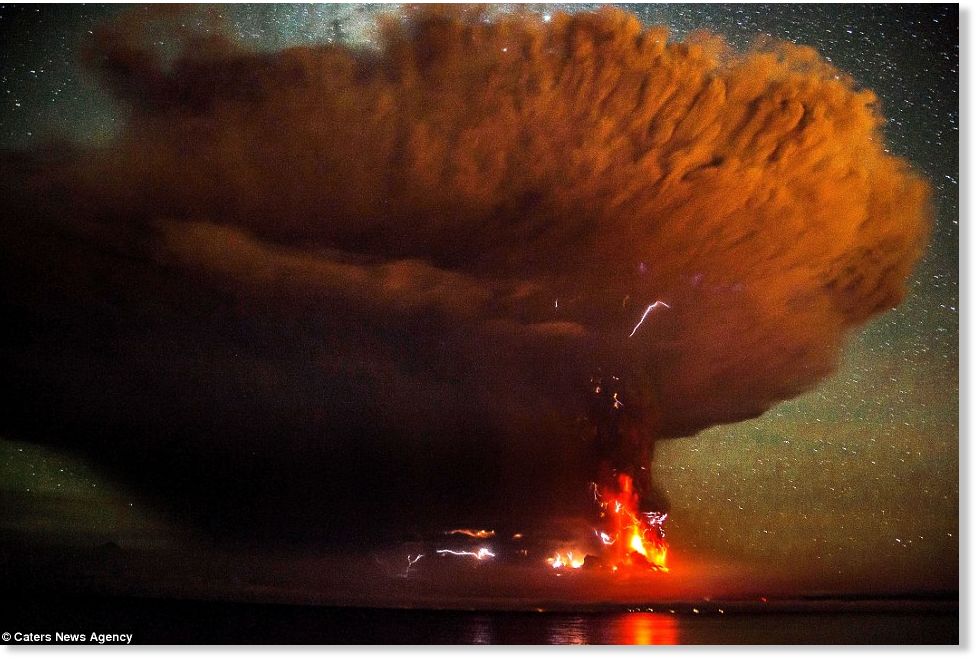
Up in smoke: This is the incredible moment that Volcano Calbuco blew its top sending a huge cloud of ash into the sky
Major volcanic eruptions can have a significant effect on the flow of the biggest rivers around the world, research shows.

In the first study of its kind, scientists sought to better understand how big volcanic eruptions, which can trigger a shortage of rainfall in many regions of the world, can impact on rivers. Their findings could help scientists predict how water availability in regions throughout the world might be affected by future eruptions.

Researchers sought to learn more about the impact of a process in which volcanoes give off aerosol particles that reflect sunlight, cooling the atmosphere and leading to reduced rainfall.

A team from the University of Edinburgh analysed records of flow in 50 major rivers. Their study spanned the dates of major eruptions, from Krakatoa in 1883 to Pinatubo in 1991. The team grouped rivers by region to help identify the influence of volcanoes, and used computer models linking rainfall with eruptions to predict where rivers were likely to be affected.

Comment: Increasing cometary and volcanic dust loading of the atmosphere (one indicator is the intensification of noctilucent clouds we are witnessing) is accentuating electric charge build-up, whereby we can expect to observe more extreme weather and planetary upheaval as well as awesome light shows and other related mysterious phenomena.

The importance of atmospheric dust loading, the winning Electric Universe model, Global cooling, and much more related information, are explained in the book Earth Changes and the Human Cosmic Connection by Pierre Lescaudron and Laura Knight-Jadczyk.
The accumulation of cometary dust in the Earth's atmosphere plays an important role in the increase of tornadoes, cyclones, hurricanes and their associated rainfalls, snowfalls and lightning.


Airplane

Pentagon's F-35 deathtrap: Jet's ejection seat could snap pilot's neck

ejection
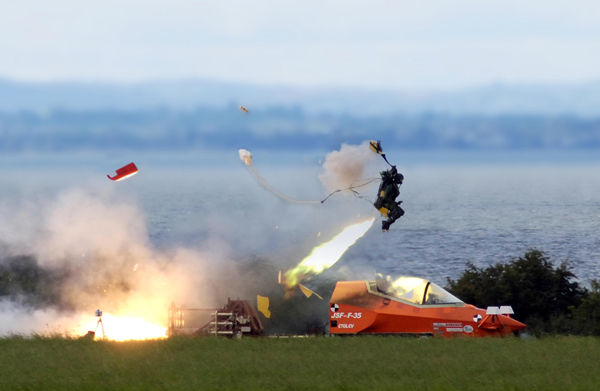
© www.martin-baker.comPilot's ejection from F-35, could be a big pain in the neck.
Tests on the Pentagon's troubled F-35 fighter jet have exposed a potentially life-threatening blunder as its ejection seat could snap a slender pilot's neck when attempting to save his life, Defense News reports, citing a source close to the program.

Ejection tests performed in slow flying speed mode in August revealed that the pilot's US16E seat constructed by contractor Martin-Baker has an excessive forward rotating momentum, which - combined with the force of the ejected seat shot out of the aircraft - snapped a lightweight dummy's neck.


Comment: The standard ejection is a two-stage event. First, an explosive charge or rocket motor integrated with the seat breaches the windscreen canopy. Second, the seat and pilot are launched upward via a rail system through the opening at a jarring rate of 12-14 Gs. In addition, the added weight of the new Generation 3 helmet aggravates the ejection seat issue.


The US Air Force has already barred pilots weighing less than 61 kilograms from flying 5G aircraft until the problem is fixed, Defense News reports.

"The bottom line is, they have to get into the realm where the seat allows that weight of a pilot less than 136 pounds [approx. 61 kg] [to] safely eject out of the airplane," Major General Jeffrey Harrigian, F-35 integration office director, told Defense News. "They found some areas that particularly at slower speeds they were concerned about, so that drove the restriction that we have right now."

There are not many military pilots weighing 60 kilograms, yet even a beefier pilot could face spondylolisthesis (dislocation of the vertebra) in an ejection situation. Consequently, at this stage, an emergency evacuation from F-35 in distress might become a risky game of Russian roulette for pilots.


Comment: The House Armed Services Committee slammed the Pentagon for rushing tests to field the plane prematurely and said it was another example of procurement malpractice that should be avoided.

Flying by the seat of their pants, it looks like the US Air Force has yet another case of jet lag.


Binoculars

Experiment using magnets proves that reed warblers use a geomagnetic map

Image
Researchers have used a magnet to deliberately send Eurasian reed warblers (shown) off course
Long-distance songbirds perform incredible feats of navigation during their spring migration.

While scientists know the birds use the sun or stars as a 'map,' the idea that birds use magnetic compasses has been difficult to prove.

Now a group of researchers have used a magnet to deliberately send Eurasian reed warblers off course, to show they rely on a geomagnetic map cues to point them in the right direction.

In the experiment, the birds were captured at Rybachy, Russia, during their spring migration.

Moon

Scientists puzzled over mysterious deep holes on the Moon

Moon
© ESA / SPACE-X
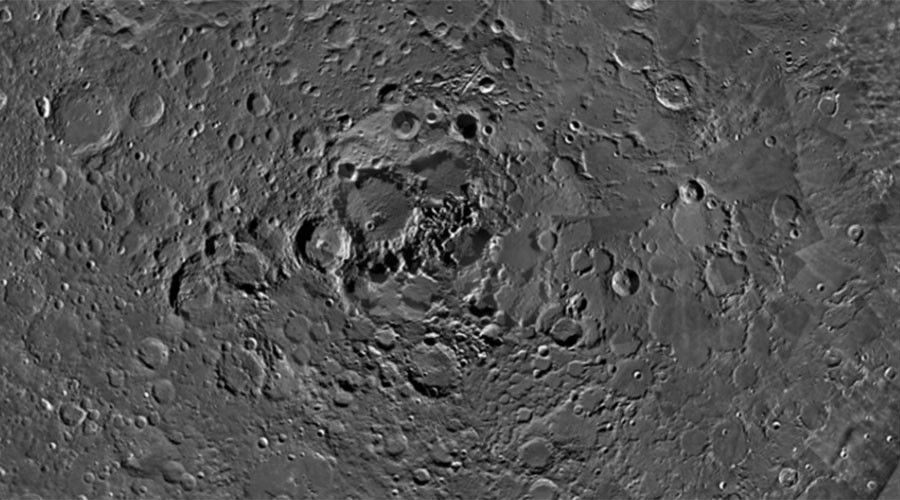
Look closely at these shadows on the Moon's surface: they might mean there are mysterious deep holes on the Moon, the holes that have never seen light at all, and could even reveal secrets about our solar system's history.

The European Space Agency took about 32,000 pictures of the Moon's North Pole from every possible angle, and there are mysterious areas of constant shadow there.

It means that there are some extremely deep holes on the Moon we had never known about before.

An official press release by the ESA says there might be lunar water in the form of ice stored deep inside the Moon.

What's more, the dark deep holes could hold answers to the history of our solar system.

It comes just a day after NASA released about 10,000 stunning snapshots of the Moon from the Apollo mission.

A week ago, the Moon also gave stargazers the reasons to gasp in amazement: the supermoon and combined eclipse at the end of September caused a social media storm.

Moon

NASA releases trove of over 10,000 images from Apollo mission

Apollo moon landing
© projectapolloarchive / Flickr
NASA has uploaded dozens of galleries containing over 10,000 photos from the manned Apollo missions. Blurry astronaut faces, stunning lunar vistas and iconic moonwalking photos - they are all there.

The high-res images are untouched and unprocessed, showing exactly what the astronauts were facing on their trips to the final frontier.
Apollo moon missions
© projectapolloarchive / Flickr

Footprints

Human activity driving genetic differences among monkeys in Tanzania

Image
An endangered monkey species in Tanzania is living in geographical pockets that are becoming isolated from one another. The situation, researchers say, is mostly driven by the monkeys' proximity to villages and the deliberate burning of forests to make way for crops and pastures.

An international team, led by Maria Jose Ruiz-Lopez, a postdoctoral researcher at the University of Oregon, combed five distinct forested areas from 2011 to 2012. Gathered were 170 fecal samples of the Udzungwa red colobus monkey (Procolobus gordonorum), for DNA analyses. These monkeys are considered an indicator species of ecological change.

The region studied has fertile soils and forests scattered in valleys and along mountain ridges in the Eastern Arc Mountains, part of a vast region known as the Eastern Afromontane Hotspot. It is home to many plants and animals that live nowhere else in the world.

The team employed a landscape-genetics approach not commonly used in tropical zones to probe genetic differences in 121 different monkeys and see if human activity is playing a role in ecological changes occurring in the region, said corresponding author Nelson Ting, a professor of anthropology and member of the UO's Institute of Ecology and Evolution.

Landscape genetics relies on geographic information systems and combines landscape ecology with population genetics. Alone, population genetics allows researchers to see such differences but not explicitly explain why they exist. In this study, the largest genetic differences were found between monkeys that were separated by villages and areas that experienced the highest densities of fires, based on fire data spanning 2000-2007.


"We found that human activities are driving genetic differentiation in these monkeys across this landscape," Ting said. "This ecosystem is an important one for conservation in general because of the high level of diversity in it. This research is showing that this ecosystem is in a precarious state. This monkey is a forest-adapted species that lives in the trees. We really thought that the best explanation for what is driving genetic differentiation would be forest coverage."

Comment: Animals across the planet are dying off in mass. Sadly, humanity is creating a monstrous void in Mother Nature. Are humans next?


Galaxy

Earth-like planets orbiting near small stars may have protective magnetic fields

exoplanet
Earth-like planets orbiting close to small stars probably have magnetic fields that protect them from stellar radiation and help maintain surface conditions that could be conducive to life, according to research from astronomers at the University of Washington.

A planet's magnetic field emanates from its core and is thought to deflect the charged particles of the stellar wind, protecting the atmosphere from being lost to space. Magnetic fields, born from the cooling of a planet's interior, could also protect life on the surface from harmful radiation, as the Earth's magnetic field protects us.

Low-mass stars are among the most common in the universe. Planets orbiting near such stars are easier for astronomers to target for study because when they transit, or pass in front of, their host star, they block a larger fraction of the light than if they transited a more massive star. But because such a star is small and dim, its habitable zone—where an orbiting planet gets the heat necessary to maintain life-friendly liquid water on the surface—also lies relatively close in.