
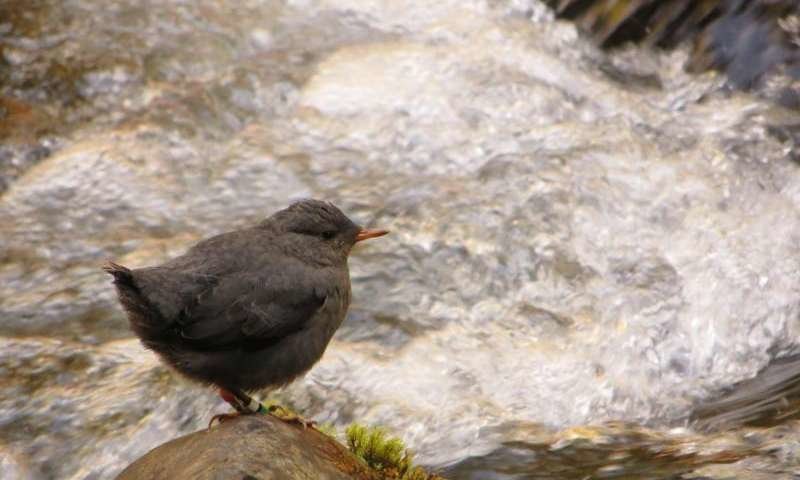
© Ohio State University An American dipper in a mountain stream is shown.
But the songbird and the rest of the divided ecosystem rebounds, faster than some experts expected, when dams come down and rivers are allowed to resume their natural flow.
Two new studies led by Christopher Tonra, assistant professor of avian wildlife ecology at The Ohio State University, illustrate the stress dams impose on species that rely on salmon and the impact of dam removal on the well-being of that wildlife.
The areas previously depleted of salmon are on a fast track to recovery in a shorter time than he ever expected after the dam removal, Tonra said.
"It's exciting to be able to show a real positive outcome in conservation. We don't always get that," he said. "That these rivers can come back within our own generation is a really exciting thing."
During his time conducting the studies in Washington, Tonra watched reservoir beds that looked like moonscapes return to vibrant, rich habitat and cascades emerge where none had been, at least for the last century.
















Comment: The secret intelligence of plants