
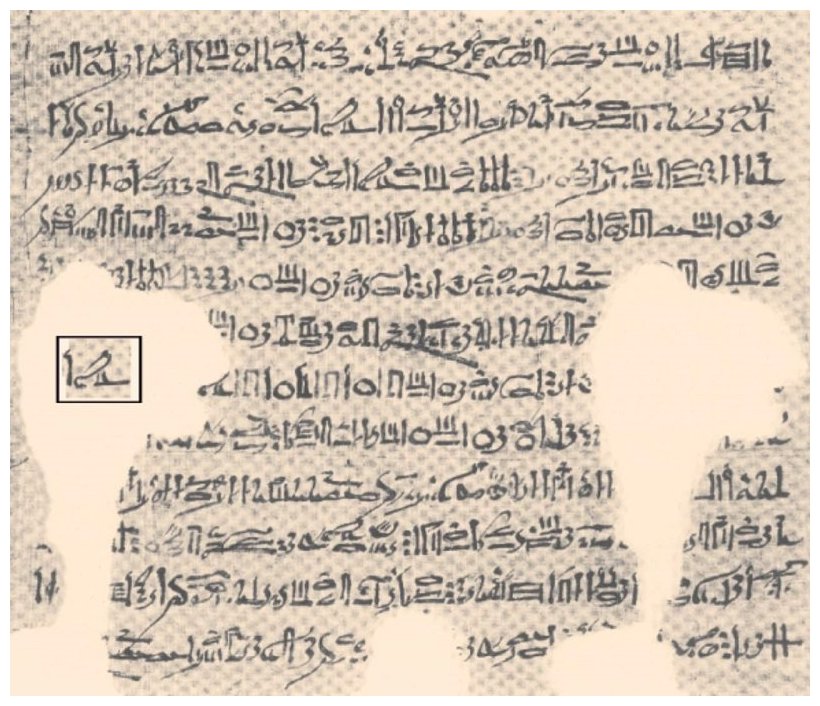
© Jetsu L. / Porceddu S., doi: 10.1371/journal.pone.0144140.s001Text of Cairo Calendar page rto VIII; inside the superimposed rectangle is the hieratic writing for the word Horus. A passage in this document dates it to the reign of Ramses II in the Nineteenth Dynasty.
The Egyptian Museum of Cairo purchased this unique hieratic papyrus from an antiquities dealer in 1943. Twenty three years later, Egyptian scientist Abd el-Mohsen Bakir published it as the Cairo Calendar No. 86637.
The document is divided into three sections (Books I, II and III). Its largest part, Book II, consists of 365 passages, one for each day of the 360-day Egyptian year plus five epagomenal days. The passages seem to concern religious feasts, mythological incidents, favorable or adverse days, forecasts, and warnings.
University of Helsinki researchers Lauri Jetsu and Sebastian Porceddu have now performed a statistical analysis of the texts of this document.
"Our statistical analysis leads us to argue that the mythological texts of the Cairo Calendar contain astrophysical information about Algol," the scientists said.
The analysis revealed that the periods of the variable star Algol (2.85 days) and the Moon (29.6 days) strongly regulate the actions of deities in this calendar.

















Comment: Also see: