Science & TechnologyS


Magnify

Pathogens found in ice man's stomach

Scientists discover Helicobacter pylori in the contents of Otzi's stomach -- along with some unexpected insights into the coexistence of man and bacterium

ice man
© Reconstruction by Kennis South Tyrol Museum of Archaeology, Foto OchsenreiterThis is a picture of the Iceman (reconstruction by Adrie and Alfons Kennis)
Scientists are continually unearthing new facts about Homo sapiens from the mummified remains of Ötzi, the Copper Age man, who was discovered in a glacier in 1991. Five years ago, after Ötzi's genome was completely deciphered, it seemed that the wellspring of spectacular discoveries about the past would soon dry up. An international team of scientists working with paleopathologist Albert Zink and microbiologist Frank Maixner from the European Academy (EURAC) in Bozen/Bolzano have now succeeded in demonstrating the presence of Helicobacter pylori in Ötzi's stomach contents, a bacterium found in half of all humans today. The theory that humans were already infected with this stomach bacterium at the very beginning of their history could well be true. The scientists succeeded in decoding the complete genome of the bacterium.

Comment:


Laptop

Siberian scientists one step closer to building faster optical computer

circuit board
© Flickr/ Carl Drougge
Russian scientists from the Siberian Institute of Geology and Mineralogy have succeeded in growing modified diamonds, in what is a step closer to faster computers run on light, the head of the institute said Monday.

Optical computing, also called photonic computing, uses photons in light beams to transfer information rather than slower electric current.

"We have learned to grow diamond crystals with germanium defect centers. This material is key to building next-generation computers, so called photon computers," Institute's Director Nikolai Pokhilenko told reporters.

Info

Newly discovered class of sound wave could change drug delivery

Acoustic wave
© WikiSurface acoustic wave in crystal substrate.
Acoustics experts have created a new class of sound wave - the first in more than half a century - in a breakthrough they hope could lead to a revolution in stem cell therapy.

The team at RMIT University in Melbourne, Australia, combined two different types of acoustic sound waves called bulk waves and surface waves to create a new hybrid: "surface reflected bulk waves".

The first new class of sound wave discovered in decades, the powerful waves are gentle enough to use in biomedical devices to manipulate highly fragile stem cells without causing damage or affecting their integrity, opening new possibilities in stem cell treatment.

Dr Amgad Rezk, from RMIT's Micro/Nano Research Laboratory, said the team was already using the discovery to dramatically improve the efficiency of an innovative new "nebuliser" that could deliver vaccines and other drugs directly to the lung.

"We have used the new sound waves to slash the time required for inhaling vaccines through the nebuliser device, from 30 minutes to as little as 30 seconds," Rezk said.

"But our work also opens up the possibility of using stem cells more efficiently for treating lung disease, enabling us to nebulise stem cells straight into a specific site within the lung to repair damaged tissue.

Padlock

How to log into any backdoored Juniper firewall - hard-coded password published

The access-all-areas backdoor password hidden in some Juniper Networks' Netscreen firewalls has been published.

Last week it was revealed that some builds of the devices' ScreenOS firmware suffer from two severe security weaknesses: one allows devices to be commandeered over SSH and Telnet, and the other allows encrypted VPN communications to be monitored by eavesdroppers.

An analysis by security firm Rapid 7 of the firmware's ARM code has uncovered more details on that first vulnerability - specifically, a hardcoded password that grants administrator access. And that password is: <<< %s(un='%s') = %u.

Arrow Down

Human organs grown in pigs and sheep by US research farm

Pig Used for Organ Growing
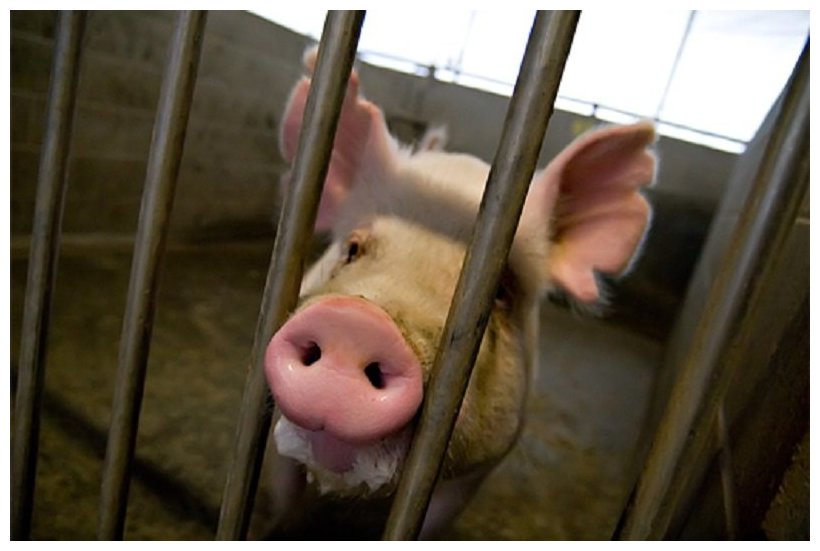
© MIT Technology ReviewA pig at the swine unit of the University of California, Davis. Scientists hope to grow human organs in such animals.
United States Research Farms are moving ahead with attempts to grow human organs inside living animals such as pigs and sheep.

United States Research Farms have decided to continue their efforts to grow live human organs inside animals like pigs and sheep. The process has been under fire regarding the issue's ethics and concerns stemming from crossing animal DNA with human organs. The human-animal Chimeras are stirring ethical and health debates in many venues regarding the studies. The term Chimera was coined after years of experiments have taken place, as explained in the 2013 article on the Slate website by Daniel Engber.

The recent MIT Technology Review article details efforts to grow organs like hearts, livers, and lungs. According to the article at least 20 pig pregnancies containing human DNA have been confirmed. Although the pregnancies took place, no experimental publications have been published and none of the pregnancies have made it to full term.

Light Saber

Flashback Top scientist resigns from post - admits Global Warming is a scam

Image
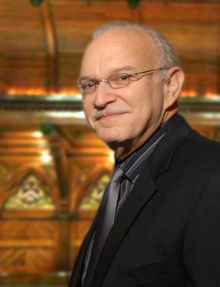
Hal Lewis, Professor Emeritus UCSB
As reported by the Gateway Pundit: Top US scientist Hal Lewis resigned this week from his post at the University of California at Santa Barbara. He admitted global warming climate change was nothing but a scam in his resignation letter.

From the Telegraph (because for some reason the Liberal Media here in the U.S don't like this stuff getting out).

The following is a letter to the American Physical Society released to the public by Professor Emeritus of physics Hal Lewis of the University of California at Santa Barbara

Sent: Friday, 08 October 2010 17:19 Hal Lewis
From: Hal Lewis, University of California, Santa Barbara
To: Curtis G. Callan, Jr., Princeton University, President of the American Physical Society
6 October 2010

Dear Curt:

When I first joined the American Physical Society sixty-seven years ago it was much smaller, much gentler, and as yet uncorrupted by the money flood (a threat against which Dwight Eisenhower warned a half-century ago).

Comment: The Earth is certainly going through a number of changes, many of which are influencing the climate and weather, however we're not going into a warming period; it seems that we are heading into another ice age. See more: As well as the book: Earth Changes and the Human Cosmic Connection: The Secret History of the World - Book 3 by Pierre Lescaudron and Laura Knight-Jadczyk


2 + 2 = 4

'Infectious Madness': The surprising science of how we 'catch' mental illness

mental illness art
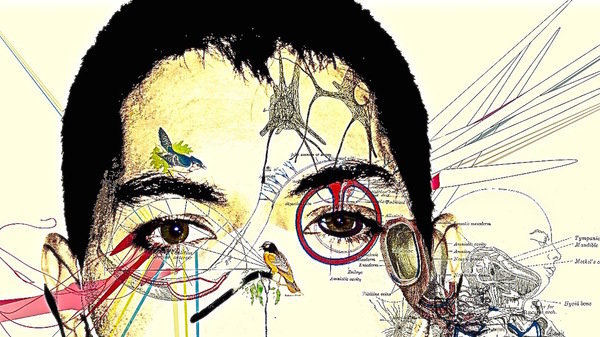
One hundred and sixty odd years ago, Ignaz Semmelweis realized that physicians who didn't wash their hands were carrying tiny germs from bedside to bedside and causing the childbed fever that killed many women. After doctors began washing their hands, fewer women died. The series of realizations in the 19th century that germs — bacteria and viruses — caused diseases like cholera and tuberculosis and influenza ushered in modern medicine. Mortality rates declined; children lived longer. Germ theory had a dramatic clarity to it. It pushed medicine away from holistic conceptions of illness as imbalance toward conceptions of illness as a specific entity. You get the germ, you fall sick, you take antibiotics or fight it off (or die). Ironically, though, the tidiness of this relationship helped obscure cases where germs may have less direct but still devastating effects — a complex reality we are now beginning to understand better.

Comment: While there are likely many factors at play in developing mental illness, there is a growing body of evidence that suggests that microbial pathogens of various sorts (bacteria, viruses, parasites, and fungi) do influence people's thinking to various degrees. When you consider that these pathogens are alive and their evolution is intimately linked with the human species, it seems almost impossible for them to not have some level of influence over a person's thinking, at the very least by virtue of them taking substances from the body while releasing their own waste into a person's blood stream. They also have the goal, like all life, of reproducing and spreading their genetics and, therefore, may have developed ways through evolution of influencing human behavior to meet their own goals while they occupy their human host.

Sound a little far-fetched? How about an example from nature:
So what to do about it? Consider iodine: Some additional related information:


Telescope

Visible light spotted from black hole by telescope for the first time

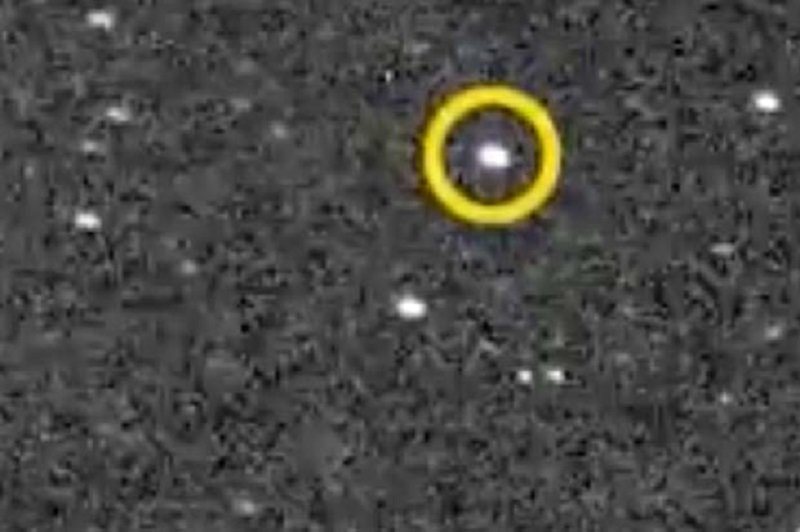
For the first time, astronomers have seen dim flickers of visible light from near a black hole, researchers with an international science team said. In fact, the light could be visible to anyone with a moderate-size telescope.

These dramatically variable fluctuations of light are yielding insights onto the complex ways in which matter can swirl into black holes, scientists added. The researchers also released a video of the black hole's light seen by a telescope. In a statement, they added that such light from an active black hole could be spotted by an observer with a 20-cm telescope.
Visible Light from Black Hole_1
© Michael Richmond/Rochester Institute Of TechnologyThis image still from a video by scientists studying the black hole V404 Cygni located about 7,800 light-years from Earth shows visible light that could be viewable by stargazers with a medium-size telescope.
Anything falling into black holes cannot escape, not even light, earning black holes their name. However, as disks of gas and dust fall or accrete onto black holes — say, as black holes rip apart nearby stars — friction within these accretion disks can superheat them to 18 million degrees Fahrenheit (10 million degrees Celsius) or more, making them glow extraordinarily brightly.

Scientists discovered accreting black holes in the Milky Way more than 40 years ago. Previous research suggested that the accretion disks of black holes can have dramatic effects on galaxies. For instance, streams of plasma known as relativistic jets that spew out from accreting black holes at near the speed of light can travel across an entire galaxy, potentially shaping its evolution. However, much remains unknown about how accretion works, since matter can behave in very complex ways as it spirals into black holes, said study lead author Mariko Kimura, an astronomer at Kyoto University in Japan, and her colleagues.


Magnify

Scientist claims to have found the source of gravity

science ether
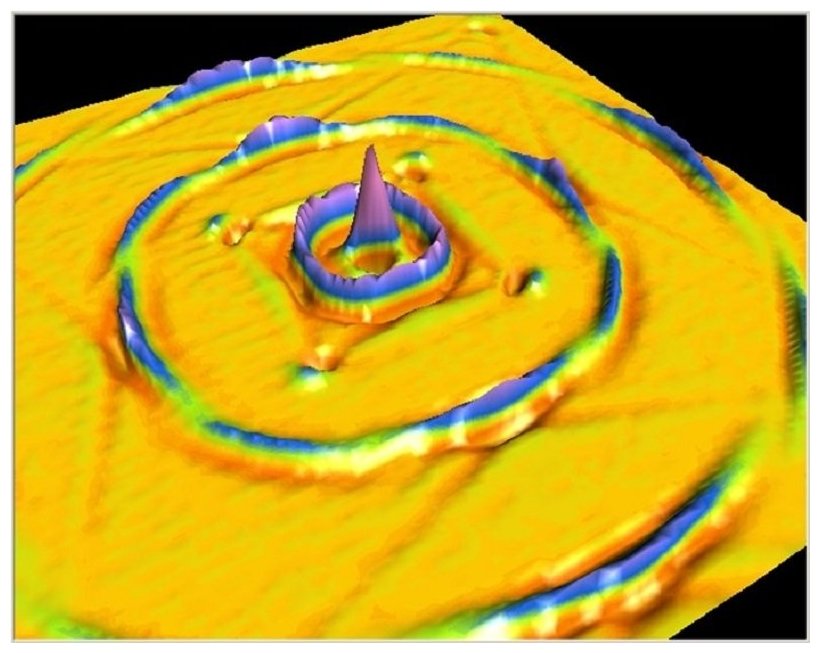
Source of Gravity Defined in Quantized Ether?

Throughout the history of modern physics, scientists have theorized about the existence of "dark energy" or "ether," a substance that, if it exists, envelops and fills everything - all space and all reality. Ether has often been theorized to be the substance which is the conduit for the life-giving force of the universe.

Yet physicists throughout the years have argued about this concept without ever reaching a consensus even regarding its existence, much less its makeup or nature. Those who argue in favor of the existence of this "ether" run into the problem of a lack of an ability to "quantize" it. Those who argue against it run into the problem of the conventional mainstream understanding of physics which is unable to account for many aspects of reality - both quantum and physical.

Info

Researchers find link between low-stress environments and healthier more diverse microbiomes

red squirrels microbiome
© Ryan Taylor - University of Guelph Researchers of a University of Guelph-led study found a link between healthier communities of micro-organisms and low stress in wild squirrels
Red squirrels living in a low-stress environment harbour healthier communities of micro-organisms, a result that might hold implications for human health, according to a new University of Guelph-led study.

Researchers tested squirrel microbiomes and analyzed the animals' stress hormones. Their study appears in the journal Biology Letters.

Microbiomes are communities of micro-organisms living in and on the bodies of all living things, including people. Found in the mouth and gut and on the skin, microbiomes consist of a mix of beneficial and potentially harmful bacteria that changes constantly and can affect their host's health.

"A diverse microbiome is generally a good thing for your health - it's why people take probiotics," said lead researcher Mason Stothart, a former undergraduate student in the Department of Integrative Biology.

"We wanted to understand the relationship between the microbiome and stress. The greater the stress in the squirrels, the less bacterial diversity they had, which can be an indicator of poor health."

Comment: