Science & TechnologyS


Fireball

Chelyabinsk meteor: A wake-up call for humanity

Chelyabinsk meteor
© Neuromainker via YouTube/Screenshot by Irene Klotz for Discovery NewsThis is the trail of Chelyabinsk asteroid which exploded about 14 miles above ground with a force nearly 30 times more powerful than the Hiroshima atomic bomb in 2013.
A small asteroid broke up over the city of Chelyabinsk, Russia, on Feb. 15, 2013. The shock wave it generated shattered glass and injured about 1,200 people. Some scientists think the meteor may have briefly outshone the sun. The blast was stronger than a nuclear explosion, triggering detections from monitoring stations as far away as Antarctica.

The incident was another reminder to space agencies about the importance of monitoring small bodies in space that could pose a threat to Earth. The same day Chelyabinsk happened, the U.S. House of Representative's Science, Space, and Technology Committee said it would hold a hearing to discuss asteroid threats to Earth, and how to mitigate them on top of NASA's currentefforts.

Coincidentally, the explosion came on the same day that an asteroid was flying by Earth. Called 2012 DA14, it passed within 17,200 miles (27,000 kilometers) of Earth. NASA quickly pointed out the asteroid was travelling in the opposite direction to the small body that exploded over Chelyabinsk.

Comment: Indeed, something wicked this way comes. For further reading on the problem humanity is now facing see:

Celestial Intentions: Comets and the Horns of Moses


Cassiopaea

1987 Supernova used to understand stellar evolution

Supernova flare
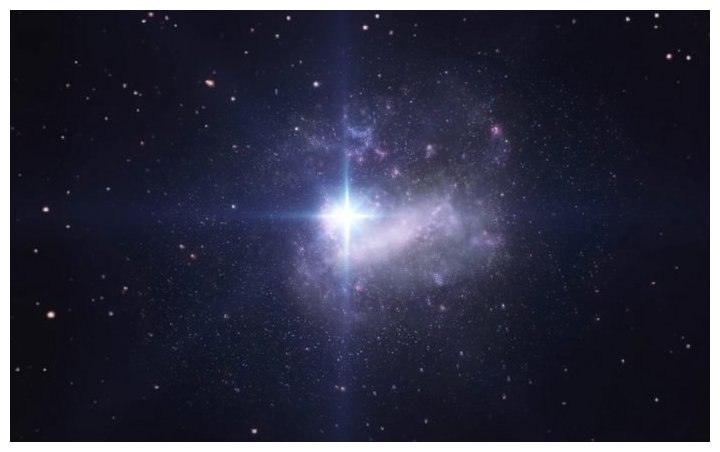
© CAASTRO / Mats Björklund (Magipics)Artist’s impression of the supernova flare seen in the Large Magellanic Cloud on February 23rd, 1987.
Thirty years ago, a star that went by the designation of SN 1987A collapsed spectacularly, creating a supernova that was visible from Earth. This was the largest supernova to be visible to the naked eye since Kepler's Supernova in 1604. Today, this supernova remnant (which is located approximately 168,000 light-years away) is being used by astronomers in the Australian Outback to help refine our understanding of stellar explosions.

Led by a student from the University of Sydney, this international research team is observing the remnant at the lowest-ever radio frequencies. Previously, astronomers knew much about the star's immediate past by studying the effect the star's collapse had on the neighboring Large Magellanic Cloud. But by detecting the star's faintest hisses of radio static, the team was able to observe a great deal more of its history.

The team's findings, which were published yesterday in the journal Monthly Notices of the Royal Astronomical Society, detail how the astronomers were able to look millions of years farther back in time. Prior to this, astronomers could only observe a tiny fraction of the star's life cycle before it exploded - 20,000 years (or 0.1%) of its multi-million year life span.

As such, they were only able to see the star when it was in its final, blue supergiant phase. But with the help of the Murchison Widefield Array (MWA) - a low-frequency radio telescope located at the Murchison Radio-astronomy Observatory (MRO) in the West Australian desert - the radio astronomers were able to see all the way back to when the star was still in its long-lasting red supergiant phase.

Butterfly

Microbial communities: Another reason green spaces are important for human health

nature, parks
New research finds that airborne bacterial communities differ from one urban park to the next but those of parking lots are alike—and differ from those of parks in subtle but potentially important ways.

At a glance, such findings seem intuitive. Parks often have different vegetation in them, and asphalt-covered parking lots are much the same—barren asphalt bombarded by solar radiation as well as heavy metals and fuel from motor vehicles.

The importance, according to University of Oregon researchers, is that this pilot study describes not only the differences in microbial communities but also how far from a park the influence may extend.

Recent studies suggest that the composition of the bacterial communities may be important to human health—and not in the ways you think, says Gwynne Mhuireach, a doctoral student in landscape architecture who led the new study that is online ahead of print in the journal Science of the Total Environment. There is a reason, she says, to believe that healthy air depends not just on the absence of bad things like pollutants, but the presence of good things such as bacteria with which humans have co-evolved.

"We're starting to build larger and more complex cities," Mhuireach said. "I am interested in ways to help maintain people's health and happiness as we do so. Some studies say that as we are building these denser cities we are losing green space. I am looking for mechanisms that explain why vegetation helps people and how we can design for it."

Battery

Chemists create vitamin B-2 driven battery

Dwight Seferos
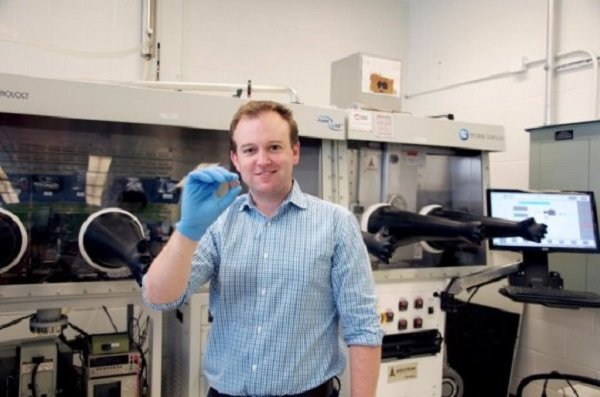
© Diana Tyszko/University of TorontoUniversity of Toronto chemist Dwight Seferos and colleagues created a lithium-ion battery that stores energy in a biologically-derived unit, using flavin from Vitamin B2 as the cathode.
A team of University of Toronto chemists has created a battery that stores energy in a biologically derived unit, paving the way for cheaper consumer electronics that are easier on the environment.

The battery is similar to many commercially-available high-energy lithium-ion batteries with one important difference. It uses flavin from vitamin B2 as the cathode: the part that stores the electricity that is released when connected to a device.

"We've been looking to nature for a while to find complex molecules for use in a number of consumer electronics applications," says Dwight Seferos, an associate professor in U of T's Department of Chemistry and Canada Research Chair in Polymer Nanotechnology.

"When you take something made by nature that is already complex, you end up spending less time making new material," says Seferos.

Comment: Other novel battery ideas:


Eye 2

Napping on the wing: Researchers discover birds can sleep in flight

frigatebird, birds sleep flying
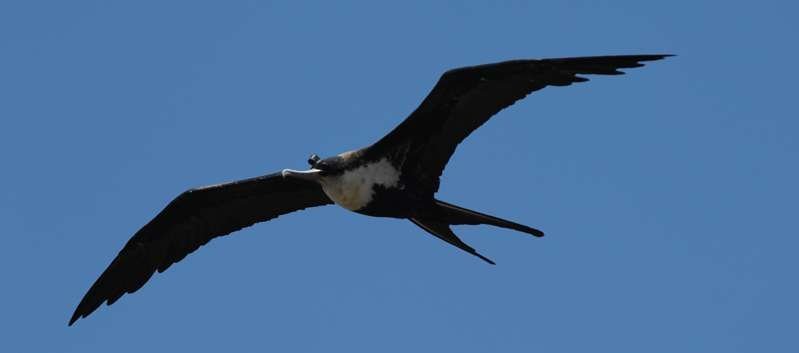
© B. VoirinFrigatebirds reaches a wingspan of over two metres. They are excellent gliders and can cover several hundred kilometers a day.
For the first time, researchers have discovered that birds can sleep in flight. Together with an international team of colleagues, Niels Rattenborg from the Max Planck Institute for Ornithology in Seewiesen measured the brain activity of frigatebirds and found that they sleep in flight with either one cerebral hemisphere at a time or both hemispheres simultaneously. Despite being able to engage in all types of sleep in flight, the birds slept less than an hour a day, a mere fraction of the time spent sleeping on land. How frigatebirds are able to perform adaptively on such little sleep remains a mystery.

It is known that some swifts, songbirds, sandpipers, and seabirds fly non-stop for several days, weeks, or months as they traverse the globe. Given the adverse effect sleep loss has on performance, it is commonly assumed that these birds must fulfill their daily need for sleep on the wing.

Half-awake or fully awake in flight?

How might a bird sleep in flight without colliding with obstacles or falling from the sky? One solution would be to only switch off half of the brain at a time, as Rattenborg showed in mallard ducks sleeping in a dangerous situation on land. When sleeping at the edge of a group, mallards keep one cerebral hemisphere awake and the corresponding eye open and directed away from the other birds, toward a potential threat. Based on these findings and the fact that dolphins can swim while sleeping unihemispherically, it is commonly assumed that birds also rely on this sort of autopilot to navigate and maintain aerodynamic control during flight.

R2-D2

Computer algorithms are increasingly shaping and filtering our experience of the real world

computer algorithms shape reality
The use of algorithms to filter and present information online is increasingly shaping our everyday experience of the real world, a study published by Information, Communication & Society argues.

Associate Professor Michele Willson of Curtin University, Perth, Australia looked at particular examples of computer algorithms and the questions they raise about personal agency, changing world views and our complex relationship with technologies.

Algorithms are central to how information and communication are located, retrieved and presented online, for example in Twitter follow recommendations, Facebook newsfeeds and suggested Google map directions. However, they are not objective instructions but assume certain parameters and values, and are in constant flux, with changes made by both humans and machines.

Embedded in complex amalgams of political, technical, cultural and social interactions, algorithms bring about particular ways of seeing the world, reproduce stereotypes, strengthen world views, restrict choices or open previously unidentified possibilities.

As well as shaping what we see online, algorithms are increasingly telling us what we should be seeing, the study argues. For example, an algorithm that claims to spot beauty and tell you which selfies to delete implies we should trust technology more than ourselves to make aesthetic choices. Such algorithms also carry assumptions that beauty can be defined as universal and timeless, and can be easily reduced to a particular combination of data.

Chalkboard

Scientists suggest modern man's immunity to toxic smoke led to evolutionary advantage against Neanderthals

neanderthal man
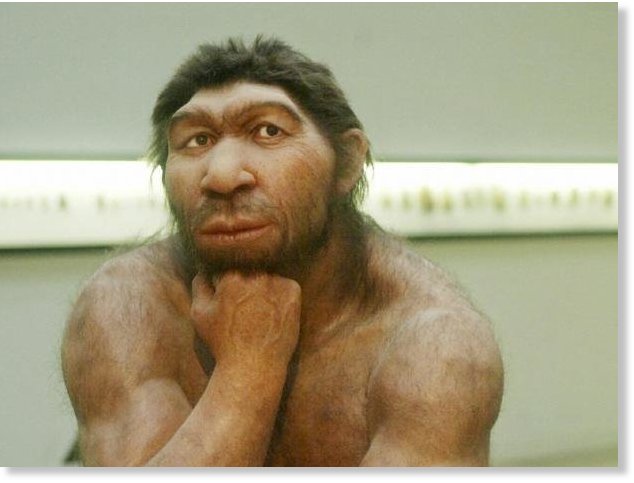
© SEBASTIAN WILLNOW/AFP/Getty ImagesA reconstruction of a Neanderthal man at the Prehistoric Museum in Halle, eastern Germany
Modern humans might have beaten the neanderthals because because they couldn't stand the heat and had to get out of the kitchen, scientists have suggested.

Our ancestors may have had an evolutionary advantage in the kitchen because they were more immune to the effects of toxic chemicals that came from cooking meat and burning wood, according to a new study.

We got that power because of a genetic mutation, the study says. And since modern humans from our species, the Homo sapiens, are the only primates carrying it, it would probably have helped them get the advantage in the evolutionary war.

As such it might help why modern humans were able to flourish as their Neanderthal cousins died out, about 40,000 years ago.

But it might also explain why we took up smoking, since the same mutation helps people enjoy breathing in toxic smoke.

Moon

Moon landing rights granted to a private company for the first time ever

moon landing
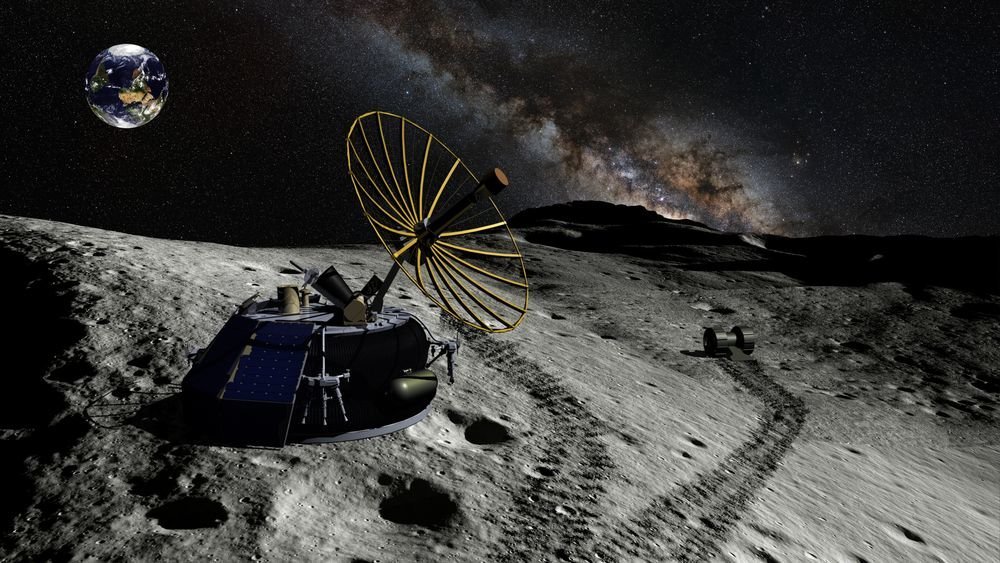
© Moon ExpressAn artistic rendering of the MX-1 lander on the surface of the Moon.
Spaceflight venture Moon Express wants to be the first private company ever to land on the Moon in 2017 — and now the company has been granted approval by the United States government to launch to the lunar surface. It's the first time the government has granted regulatory approval for a private mission beyond Earth orbit. And Moon Express came very close to being denied permission to go.

No regulatory framework currently exists for a commercial space missions to another world. Lawmakers are working on a permanent solution, but it likely won't be ready in time for Moon Express' 2017 mission. So the company came up with its own temporary framework — a regulatory patch — that the US government could use to oversee the company's mission. And after a meeting between the Federal Aviation Administration, the White House, and the State Department, Moon Express has been given the approval it needs to launch to the Moon.

So far, commercial companies have mostly just launched satellites into space; all specialized private missions, like launching cargo to the space station, have been overseen by NASA. That means Moon Express could be the first private company to land on the Moon, as well as the company that travels the farthest away from our planet.

Moon

China's Chang'e 3 lunar probe confirms there is no liquid water on the moon

Moon, Chang'e 3 telescope
The latest data from Chang’e 3's onboard optical telescope has confirmed that there is no liquid water on the Moon.
For anyone holding out hope that life as we know it might exist on our terrestrial satellite, China just burst that bubble.

The unmanned lunar lander Chang'e 3 left Earth in December 2013 and arrived at the Moon a few days later, touching down in Mare Imbrium. With its primary mission focused on exploration, the spacecraft announced a major discovery last year, uncovering a new type of basaltic rock.

The latest data from Chang'e 3 points to a new discovery - or, at least, a kind of anti-discovery. Its onboard optical telescope has confirmed that there is no liquid water on the Moon.

Bulb

Self-reliant off-grid village in the Netherlands will produce all of its own energy and organic food

RenGen village
We only have one planet, and so we should use it wisely. You know, kind of like that saying about our health. Well, some of you may have heard that one, and if not, I believe you still get the gist of it. Think about this: our planet and its resources are like our body in a way, and so harsh treatment will eventually wear it out... Unless, of course, we change our mindset about almost everything. So, what should we do about it?

The Netherlands may have an answer to our predicament. It isn't a new concept, mind you, but it's certainly a rather renovated idea. Like the Amish, this project provides the means to be self-reliant, but unlike the simplicity of the Amish, this concept retains high-tech capabilities.

Self-sustainability

When it comes to being self-reliant, we're talking about whole villages, not just one home. After all, self-sustainable living can be accomplished more efficiently by working together, family with family, friend with friend. That's why, a community pilot project, the brainchild of ReGen Villages, a California-based developer, will see its completion in 2017. We will see entire villages which will operate from within! How amazing is that! This concept starts just outside of Amsterdam, but plans are to share these innovations with Sweden, Denmark, Germany and Norway.