© The Daily Galaxy
"It's amazing, shocking," said Glyn Collinson, a scientist at NASA's Goddard Space Flight Center on June 20th.
"We never dreamt an electric wind could be so powerful that it can suck oxygen right out of an atmosphere into space. This is something that has to be on the checklist when we go looking for habitable planets around other stars."
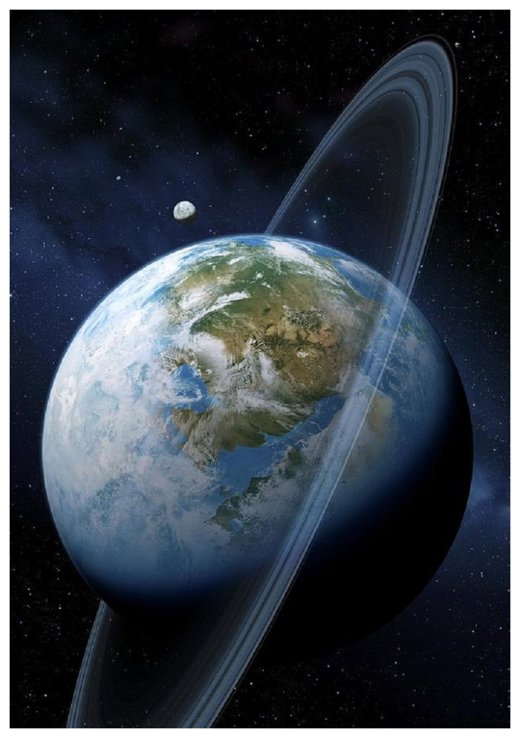
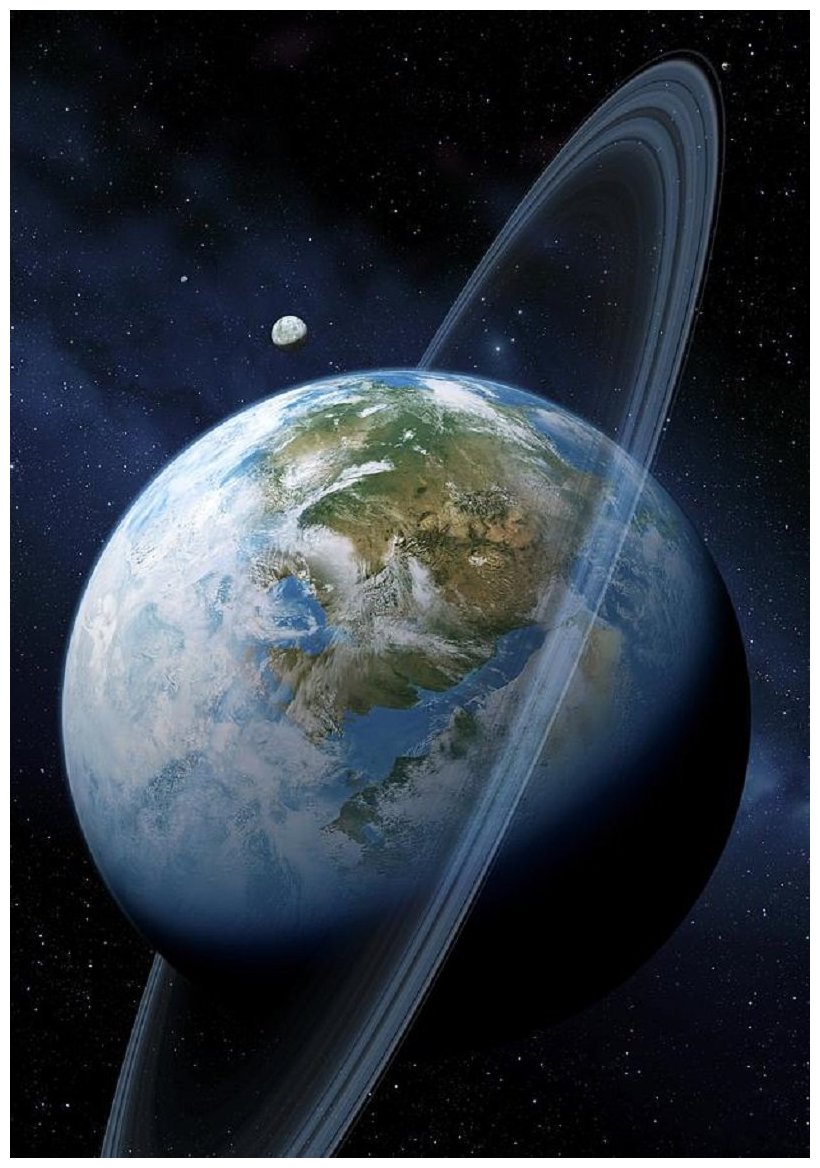
Venus has an "electric wind" strong enough to remove the components of water from its upper atmosphere, which may have played a significant role in stripping Earth's twin planet of its oceans, according to new results from ESA's (European Space Agency) Venus Express mission by NASA-funded researchers.
Taking the electric wind into account will also help astronomers improve estimates of the size and location of habitable zones around other stars. These are areas where the temperature could allow liquid water to exist on the surface of alien worlds, making them places where life might be found. Some stars emit more ultraviolet light than the sun, so if this creates stronger electric winds in any planets orbiting them, the habitable zone around such stars may be farther away and narrower than thought.
Venus is in many ways the most like Earth in terms of its size and gravity, and there's evidence that it once had oceans worth of water in its distant past. However, with surface temperatures around 860 F (460 C), any oceans would have long since boiled away to steam and Venus is uninhabitable today.
Yet Venus' thick atmosphere, about 100 times the pressure of Earth's, has 10,000 to 100,000 times less water than Earth's atmosphere. Something had to remove all that steam, and the current thinking is that much of the early steam dissociated to hydrogen and oxygen: the light hydrogen escaped, while the oxygen oxidized rocks over billions of years.
Also the solar wind -- a million-mile-per-hour stream of electrically conducting gas blowing from the sun -- could have slowly but surely eroded the remainder of an ocean's worth of oxygen and water from Venus' upper atmosphere.
"We found that the electric wind, which people thought was just one small cog in a big machine, is in fact this big monster that's capable of sucking the water from Venus by itself," said Collinson.
Just as every planet has a gravity field, it is believed that every planet with an atmosphere is also surrounded by a weak electric field. While the force of gravity is trying to hold the atmosphere on the planet, the electric force (the same force that sticks laundry together in a drier and pushes electricity through wires) can help to push the upper layers of the atmosphere off into space. At Venus, the much faster hydrogen escapes easily, but this electric field is so strong that it can accelerate even the heavier electrically charged component of water -- oxygen ions -- to speeds fast enough to escape the planet's gravity. When water molecules rise into the upper atmosphere, sunlight breaks the water into hydrogen and oxygen ions, which are then carried away by the electric field.












Comment: Listen before you speak, and networking is important when solving difficult tasks. Scientists haven't even cracked the language code of dolphins, and we're already learning how to have more meaningful and effective communication from them.