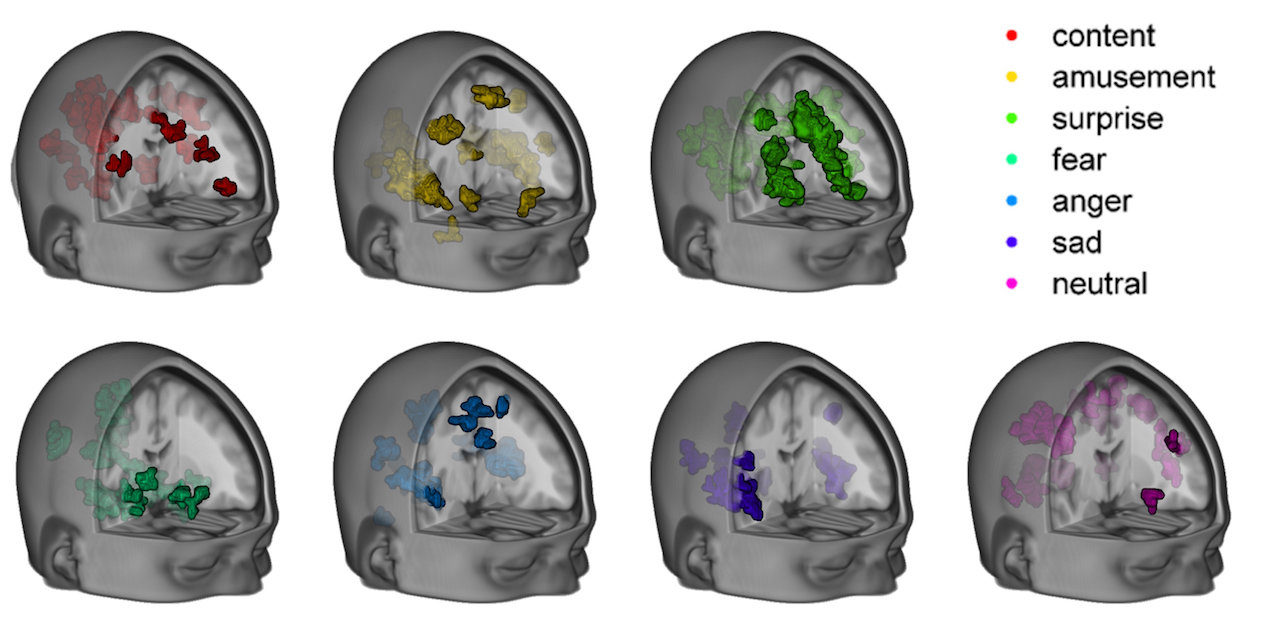
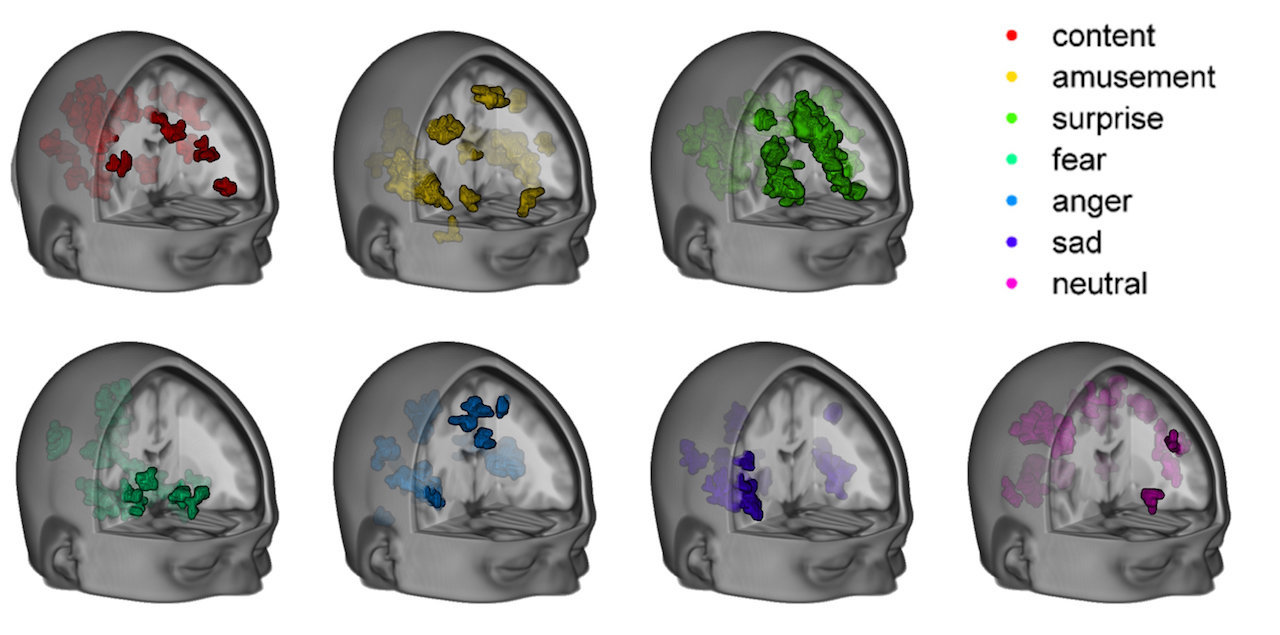
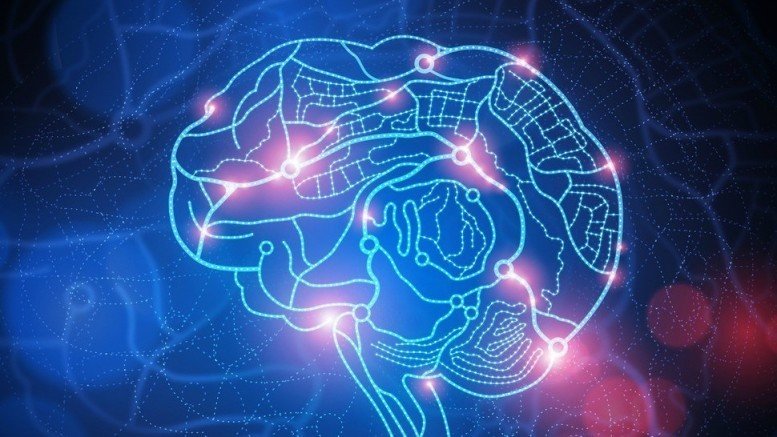
© Philip Kragel, Kevin LaBar, Duke UniversityA Duke team has mapped the distinct patterns of brain activity that correspond to seven different emotional states. The brain anatomy presented here is an average of data from 32 study subjects.
As you relax and let your mind drift aimlessly, you might remember a pleasant vacation, an angry confrontation in traffic or maybe the loss of a loved one.
And now a team of researchers at Duke University say they can see those various emotional states flickering across the human brain.
"It's getting to be a bit like mind-reading," said Kevin LaBar, a professor of psychology and neuroscience at Duke. "Earlier studies have shown that functional MRI can identify whether a person is thinking about a face or a house.
Our study is the first to show that specific emotions like fear and anger can be decoded from these scans as well."The data produced by a functional MRI hasn't changed, but the group is applying new multivariate statistics to the scans of brain activity to see different emotions as networks of activity distributed across areas of the conscious and unconscious brain.
These networks were first mapped by the team in a March 2015 paper in the journal
Social, Cognitive and Affective Neuroscience. They identified seven different patterns of brain activity reflecting contentment, amusement, surprise, fear, anger, sadness and neutrality.
To build these maps, they had put 32 research subjects into the scanner and exposed them to two music clips and two film clips that had been shown to induce each of the seven emotions. The subjects also completed self-report questionnaires on their mood states for further validation.

















Comment: Researchers discover cold plasma has ability to kill norovirus