Science & TechnologyS


Beaker

New spacesuit unveiled for Starliner astronauts

New NASA spacesuit
© NASA
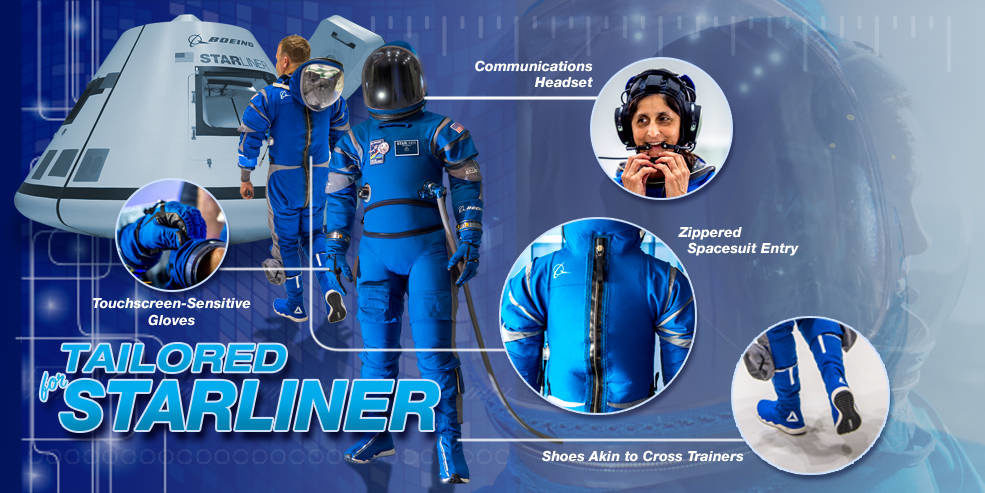
Astronauts heading into orbit aboard Boeing's Starliner spacecraft will wear lighter and more comfortable spacesuits than earlier suits astronauts wore. The suit capitalizes on historical designs, meets NASA requirements for safety and functionality, and introduces cutting-edge innovations. Boeing unveiled its spacesuit design Wednesday as the company continues to move toward flight tests of its Starliner spacecraft and launch systems that will fly astronauts to the International Space Station.

A few of the advances in the design:
  • Lighter and more flexible through use of advanced materials and new joint patterns
  • Helmet and visor incorporated into the suit instead of detachable
  • Touchscreen-sensitive gloves
  • Vents that allow astronauts to be cooler, but can still pressurize the suit immediately
The full suit, which includes an integrated shoe, weighs about 20 pounds with all its accessories - about 10 pounds lighter than the launch-and-entry suits worn by space shuttle astronauts.

Light Saber

Scientists develop 'world's most powerful' laser

Lasers
© Carlos Jasso / Reuters
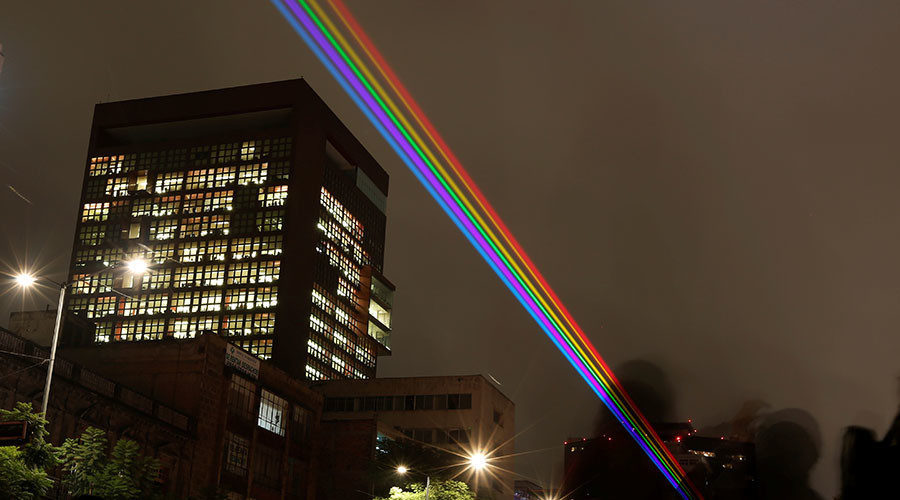
A team of British and Czech scientists have developed a laser costing €44 million that they say is 10 times more powerful than any other on the planet and has the potential to revolutionize engineering in aeronautics, power and automotive industries.

The 20-ton so-called "Super Laser" has an average power output of 1,000 watts, in what is seen as a benchmark in sustained high energy pulses - far greater than the world's other high-power beams in Osaka and Texas.

Info

Not sci-fi anymore: Paris introduces first autonomous buses

Self-driving electric minibuses
© Jacky Naegelen / ReutersTwo self-driving electric minibuses are seen on the 130-metre (142-yard) test route between Gare de Lyon and Austerlitz train stations, the first regular line opened by the Paris transport company RATP, in Paris, France, January 24, 2017.
The first self-driving buses have taken to the streets of Paris on a route between two train stations.

There are now two such buses, each of which can take up to six people the 200 meters over a bridge between the Lyon and Austerlitz train stations.

Info

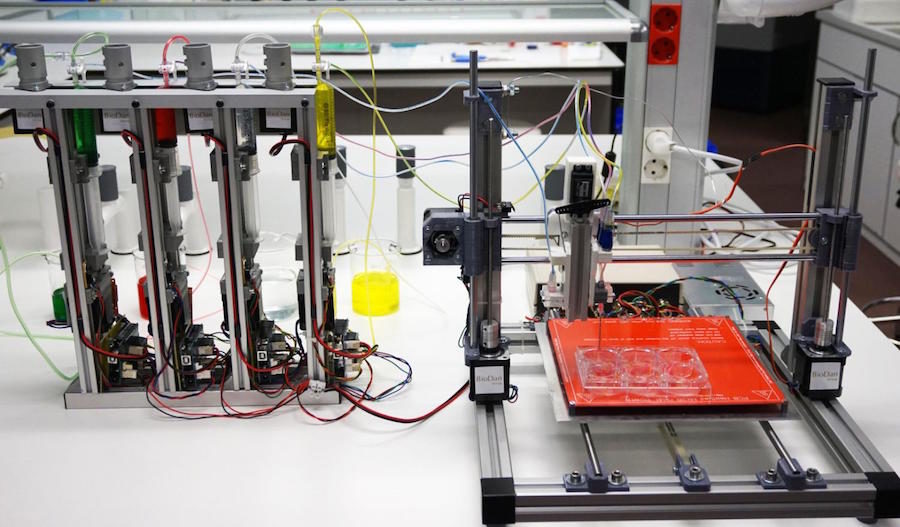
3D bioprinter can now print human skin

3D bioprinter prototype
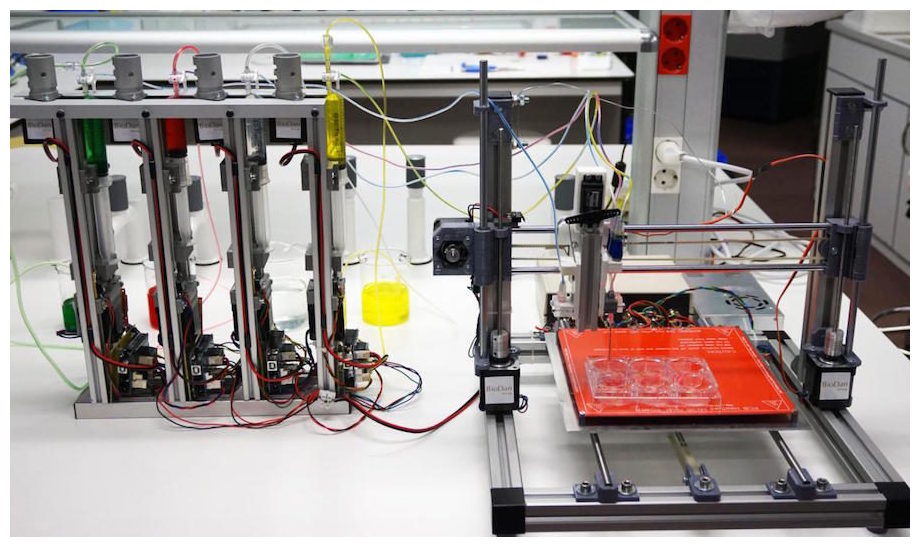
© Universidad Carlos III de Madrid3D bioprinter prototype capable of making functional human skin.
Spanish scientists have unveiled a 3D bioprinter that can create functional human skin.

The scientists, from the Universidad Carlos III de Madrid, CIEMAT (Center for Energy, Environmental and Technological Research) and the Hospital General Universitario Gregorio Marañón, report that doctors can transplant the 3D-printed skin onto patients or that cosmetic, chemical, or pharmaceutical manufacturers can use it to test their products.

According to the research published in the journal Biofabrication, the bioprinted skin mimics skin's natural structure, with an external layer meshed with a thicker, deeper layer. The first layer, or epidermis, acts as protection against the external environment, while the second, the dermis, lends elasticity and strength to the skin.

They were able to create this highly realistic skin using bioinks made from living human cell ingredients, which these scientists believe are the key to 3D bioprinting. Instead of using typical ink from regular printer cartridges, the bioprinter uses bioinks made of biological components.

Satellite

A new satellite view of the blue mists over the Great Smoky Mountains

Smokey Mts. US
© NASA EARTH OBSERVATORYThis image of the Great Smoky Mountains is a mosaic that was stitched together from the most cloud-free pixels snapped by the satellites Landsat 5 and Landsat 7 between 1986 and 2013.
A new satellite view of the Smoky Mountains shows the blue mist that gives the region its name.

The image, shared by NASA's Earth Observatory, is a best-pixel image of Great Smoky Mountains National Park in east Tennessee. That means that it's made up of the most cloud-free pixels taken from the Landsat 5 and Landsat 7 satellites between 1986 and 2013.

Gatlinburg, the town hit hard by a fast-moving wildfire in November, is visible in this view as a grayish blur tucked between ridges. East of Gatlinburg is Clingman's Dome, the highest point in Great Smoky Mountains National Park at 6,643 feet. Clingman's Dome is also the highest point in all of Tennessee. The body of water just right of the center of the image is Lake Fontana in North Carolina, a reservoir on the Little Tennessee River.

Comment:


Beaker

Scientists create 'semi-synthetic life' by adding extra letters to DNA

DNA model
© Garry Moore / www.globallookpress.com
Scientists have created a new "unnatural" organism by expanding the letters in the genetic alphabet. Unlike previous attempts, this bacteria-based lifeform turned out to be more "life-like."

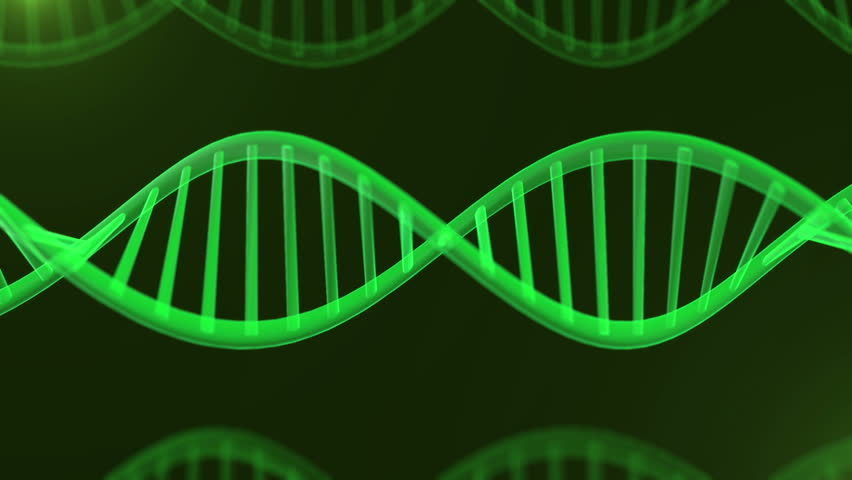
The genetic alphabet encodes the biological information of all types of life on Earth. It is made up of four letters that form two base pairs - the DNA double helix.

However, a team of scientists from the Scripps Research Institute in La Jolla, California have created a lab organism that has been modified to add two more letters, giving it a genetic code of six letters.

The team, whose work is published in the Proceedings of the National Academy of Sciences (PNAS) journal, have shown that their single-celled organism can hold on indefinitely to the synthetic base pair as it divides.

"We've made this semisynthetic organism more life-like," senior author of the study Professor Floyd Romesberg said in a statement.

At the moment, the new technology cannot be put to very much use. Romesberg likened the new "flawed" organism to an infant. It had some learning to do before it was ready for real life. But it is hoped that it could be used to create new kinds of single-celled organisms that could lead to the discovery of new drugs.

Meteor

An asteroid is about to slip between Earth and the moon — the second near miss in 3 weeks

asteroid
© Shutterstock
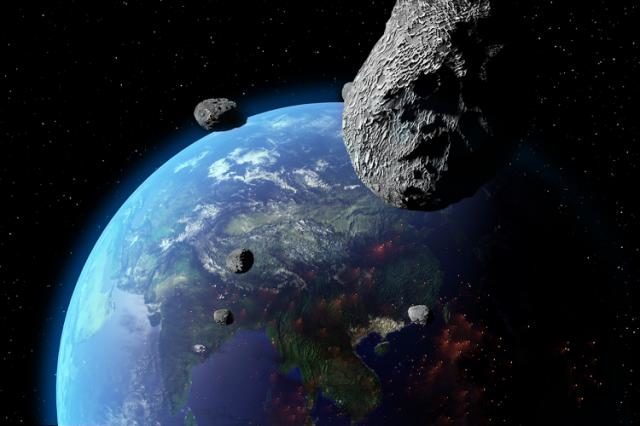
Less than 3 weeks ago, while America was getting the kids to school and arriving at work, an asteroid the size of a building slipped past Earth from a distance about halfway to the moon.

Now a similar space rock is about to zoom by our helpless planet.

The new near-Earth object (NEO), dubbed asteroid 2017 BX, was only discovered a few days ago, on Friday, January 20. It's slated to swing by Tuesday night at 11:54 p.m. ET at a distance of about 162,000 miles (261,000 kilometers) — roughly two-thirds the way to the moon.

We first heard about it via an email from Slooh, a company that airs live views of space, and they're hosting a broadcast about 2017 BX — which they've nicknamed "Rerun" — starting at 5:30 p.m. ET on Tuesday.

Comment: Here is the partial list of fireballs observed during the last year alone.

See also:

Asteroid or Comet? NASA detects two space rocks heading towards Earth

Another close shave: Asteroid discovered 4 days ago whizzes past Earth


Beaker

New science says DNA begins as a quantum wave form

DNA molecule
© stockclip
One strand of DNA from one single cell contains enough information to clone an entire organism. Obviously, understanding DNA allows us to understand much about life and the universe around us. A deeper understanding of the new science tell us that DNA beings not as a molecule, but as a wave form. Even more interestingly, this wave form exists as a pattern within time and space and is coded throughout the entire universe.

We are surrounded by pulsating waves of invisible genetic information, whose waves create microscopic gravitational forces that pull in atoms and molecules from their surrounding environment to construct DNA.

One scientist who caught these microgravitational forces in their action is Dr. Sergey Leikin. In 2008, Leikin put different types of DNA in regular salt water and marked each type with a different fluorescent color and the DNA molecules were then scattered throughout the water. In the experiment's major surprise, matching DNA molecules were found pairing together. After a short time, entire clusters of the same colored DNA molecules had formed. Leikin believes some sort of electromagnetic charge allowed the same colored molecules to cluster. However, other experiments show that this is not the case. That it is most likely to be gravity. Let us explain.

In 2011, Nobel Prize winner Dr. Luc Montagnier demonstrated that DNA can be spontaneously formed out of merely hydrogen and oxygen. He started out with a hermetically sealed tube of pure sterilized water and then placed another sealed tube next to it, which had small amounts of DNA floating in water. Montagnier then electrified both tubes with a weak, 7 hertz electromagnetic field and waited. 18 hours later, little pieces of DNA had grown in the original tube, which consisted of only pure sterilized water.

Smoking

Why do so many people with schizophrenia smoke? It eases sluggish brain function

smoking
© Shannon Holman/Flickr
Daily nicotine normalizes genetically-induced impairments in brain activity associated with schizophrenia, suggests new research. The finding helps clarify what causes the disease and why those who have it tend to smoke heavily.

The work could ultimately lead to new non-addictive, nicotine-based treatments for some of the 51 million people worldwide who suffer from the disease, the authors of the study envision.

Jerry Stitzel, a researcher at the University of Colorado Boulder Institute for Behavioral Genetics (IBG) and one of four CU Boulder researchers involved in the study, said:
"Our study provides compelling biological evidence that a specific genetic variant contributes to risk for schizophrenia, defines the mechanism responsible for the effect and validates that nicotine improves that deficit."
Surprising Nicotine Effect

The study found that when mice with schizophrenic characteristics were given nicotine daily, their sluggish brain activity increased within two days. Within one week it had normalized.

Comment: Why spend all that time and money creating a new drug that works like nicotine? Just use nicotine!


People 2

UK scientists discover 'Sex hormone' that boosts arousal & romantic love

love locks
© Charles Platiau / Reuters
Scientists are trialing a hormone linked to feelings of sexiness and romance as a potential cure for psychological sexual problems.

Researchers at Imperial College London believe an injection of the hormone, called 'kisspeptin,' could stimulate sexual arousal and romance in the brain after early-stage trials yielded positive results.

They speculate the naturally occurring hormone, which is essential to the body's reproductive system, could help people overcome psychosexual problems in the future.

Scientists gave kisspeptin injections to 29 healthy young men and found the hormone increased the brain's response to pictures of couples in romantic or sexual situations.