© tsagi.ru
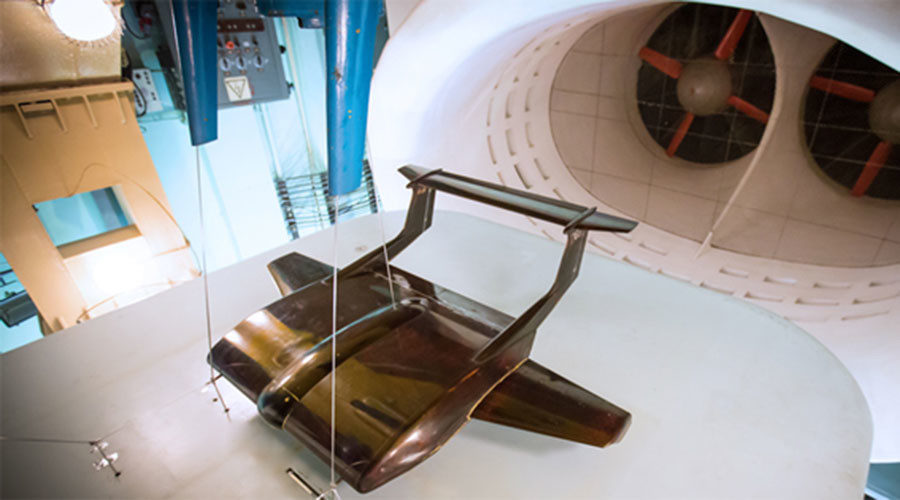
A ground-effect vehicle is a combination of a maritime vessel and an aircraft. It can only travel over a more or less smooth surface like the ground, water, or ice, flying several meters above it to produce more lift force and less drag than any fixed-wing aircraft generates close to the ground. This makes it more fuel efficient and allows it to make longer journeys.
The Soviet military had several heavy GEVs built in the 1970s and 1980s, including the famous, but now-retired, Lun - a 243-ton anti-ship missile carrier. While the Navy was more interested in the ability of such vehicles to avoid radar detection, as well as their high speed, a leading Russian aviation research institution believes it can build a GEV capable of competing with freighter vessels and transport planes for a niche market.