Science & TechnologyS


Info

Life in space stops aging says NASA

Aging
© Pixabay
NASA experts summed up the first results of their experiment involving astronaut twin brothers Mark and Scott Kelly. It turned out that life in space affects human health and stops the aging process.

Scott Kelly and Mark Kelly, as described by NASA, were involved in an unusual experiment in which experts tried to assess how life on orbit affects human health. Scott and Mark are identical twins and their life was spent in a similar manner — both of them are astronauts.

The experiment was based on the observation of health conditions of both brothers. The only difference between them was that Kelly lived for over a year aboard the ISS, while his brother Mark spent his time on earth.

At the end of the experiment, the scientists came to a surprising conclusion. It turned out that telomeres — essential parts of human health that protect chromosomes from deterioration — became longer in Scott Kelly's white blood cells over the period of time he spent in space. Usually, telomeres on the contrary shorten with time as people get older, space.com wrote.

Experts assume that such changes in Scott's blood "could be linked to increased exercise and reduced caloric intake during the mission." However, they also noted that "upon his return to Earth, they began to shorten again."

In other words, this was the first experiment that showed that life in space for some yet unknown reason leads to a condition when cellular aging process is completely stopped or even reversed. Who knows, maybe it is the first step toward resolving the mystery of human aging and creating an elixir of life.

Moon

Solar winds might be carrying oxygen from Earth to the moon

moon sun
© NASA
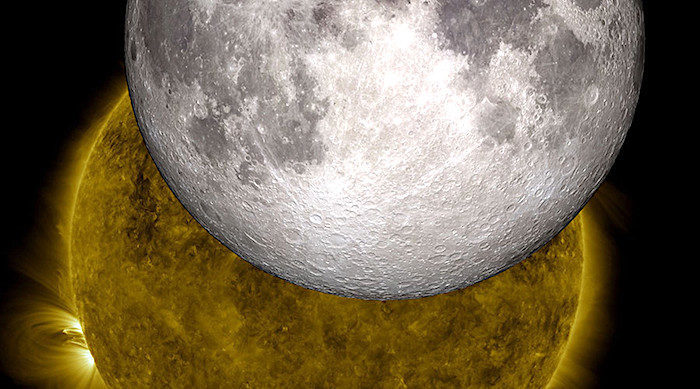
The desolate moon environment may not be so alien to us humans after all, with new analysis of Japanese spacecraft data suggesting oxygen ions rain down from Earth to the lunar surface periodically. The study was carried out by a team from Japan's Osaka University and involved investigating data collected by Japan's lunar orbiter Kaguya.

Kaguya, also known as the Selenological and Engineering explorer, mapped the surface of the moon before dropping to its surface in June 2009.

As the Moon lays in the earth's magnetosphere, which is an area hit by the sun particles commonly referred to as solar winds, the craft picked up evidence of oxygen ions, according to the Nature Journal study.


HAL9000

Quantum supercomputer could 'change life completely' in a decade

quantum computer
© Professor Winfried Hensinger of Sussex University
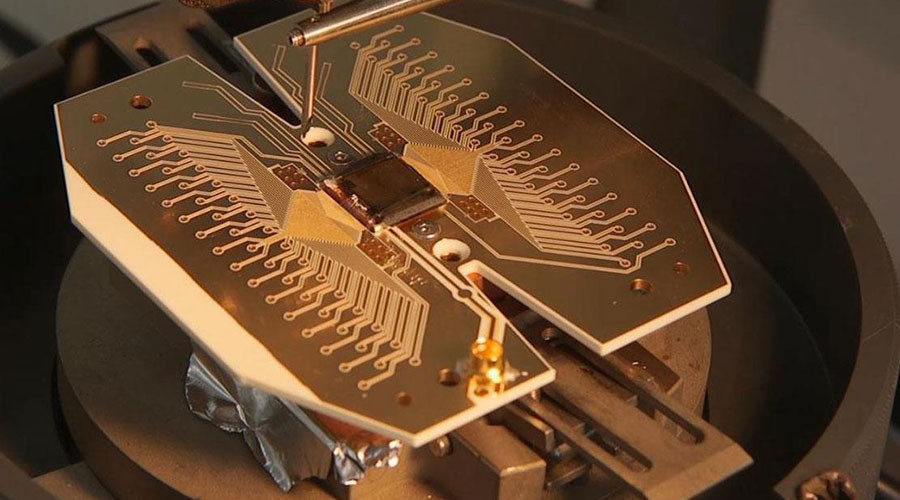
Physicists have produced the first-ever blueprints for a large-scale quantum computer that could herald a technological revolution in computing.

If the industrial blueprint works, it could see the first super-fast quantum machine being built within a decade at a cost of tens of millions of pounds.

Quantum computers have long been seen as the next stage in computing technology. Scientists believe this next generation machine could be many millions of times faster than contemporary computers.

An international team the University of Sussex published the new blueprint in the academic journal Science Advances.

Fireball 2

Asteroid attack? Yet another asteroid to give Earth a close shave

Another close shave
© ESASpace rock block party!
For the fourth time since the start of 2017, a small celestial body will pass closer to Earth than the distance between us and the moon. Recently discovered asteroid 2017 BS32 zips by around midday Thursday.

This latest narrow shave comes just a few days after the closest such flyby in months, prompting observers and some astronomers to wonder if the apparent blitz of tiny planetoids could be more than mere coincidence.

According to astronomer Paul Cox at the Slooh observatory, the apparent bursts of small, close-approaching asteroids were first spotted just before buzzing us initially sparked discussion in 2016.

"One possibility sprang to mind -- that these clusters of smaller asteroids making close approaches to Earth over relatively short periods of time were in fact the fragments from larger asteroids that had broken up," Cox said via email. "However, when we reviewed the orbits of each of the asteroids, we found no correlation between them -- showing clearly they weren't associated in any way."

Cox said the scientists also looked for a connection to seasonal changes or to weather at observatories that might reduce discoveries of nearby asteroids, but there was no conclusive data to be found.

Camera

Scientists have photographed light moving faster than the speed of light

speed of light
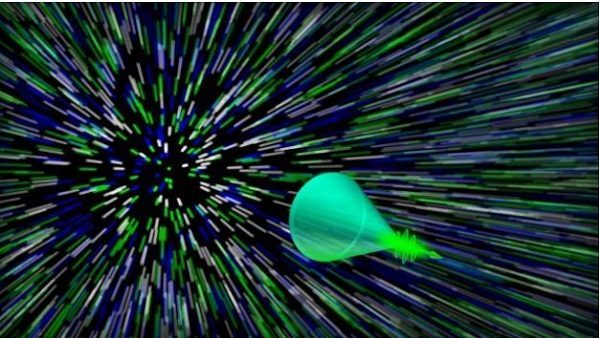
A team of researchers at Washington University in St. Louis has taken images of a laser pulse generating an optical Mach cone: the equivalent of a sonic boom, but for light. To make an optical Mach cone, a pulse of light would need to be traveling faster than the waves it's emitting can propagate forward. But the researchers were able to peel apart the properties of a laser beam, interacting separately with velocity, wavelength, and frequency. They directed the beam through a layered confection of silicone panels, aluminum oxide powder, and dry ice. The source of the light waves was moving faster than the waves themselves as they passed through the layers, leaving behind the optical Mach cone.

Attention

Bees suffering from 'deformed wing virus'

Bee deformity
© Science NewsA mite-virus alliance attacks bee populations.
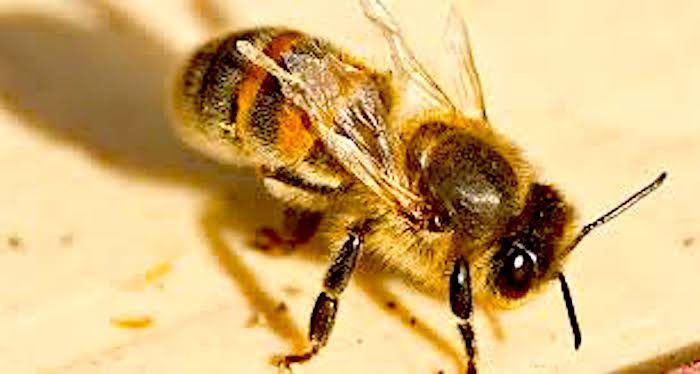
A wing-deforming virus shortens the lifespan of wild honeybees already contending with a startlingly long list of existential threats, researchers said Wednesday. Spread by microscopic mites, the microbe disrupts bees' foraging and curtails their lives, experiments confirmed for the first time.

"Deformed wing virus strongly reduced the chances for workers to survive to foraging age," scientists reported in the Royal Society journal Proceedings B [sic][Proceedings of the Royal Society, Series B]. It also "reduced the life expectancy and total activity span" of infected bees, they found.

Bees around the world -- especially in Europe and North America -- have been decimated in recent years by a mysterious blight called "colony collapse disorder", in which entire populations disappear or die out. Research has pointed an accusing finger at agricultural pesticides, viruses, fungi, parasites, malnutrition because of fewer flowers -- or some combination of the above.

More than just the survival of the bees is at stake. Scientists recently calculated that 1.4 billion jobs, and three-quarters of crops, depend on pollinators, mainly bees. All told, there are some 20,000 bee species that fertilise more than 90 percent of the world's 107 major crops. At the same time, the United Nations estimates that 40 percent of invertebrate pollinators -- mostly bees and butterflies -- are at risk of extinction.

Comment: See also: Mystery surrounds virus which is devastating bee colonies


Info

Traces of a lost continent found in Indian Ocean

Indian Ocean topography
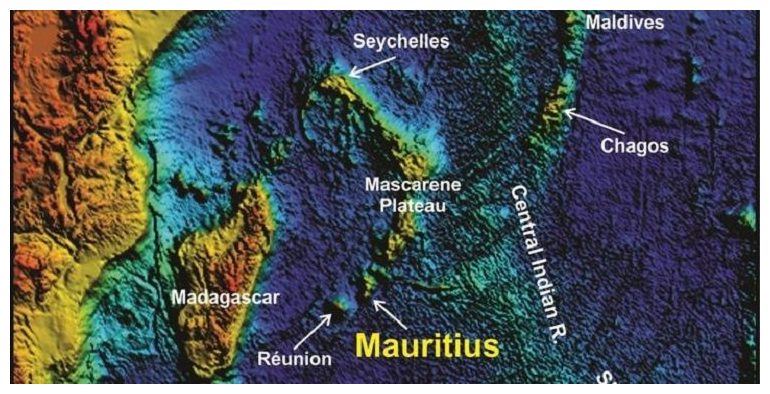
© SeekerIndian Ocean topography shows Mauritius as part of a chain of progressively older volcanoes that extend from the active hot-spot of Réunion toward the 65-million-year-old Deccan Traps in India.
A piece of an ancient continent, running from India to Madagascar, has been discovered under the tiny island of Mauritius off the East Coast of Africa.

The "lost continent" was formed in the breakup of the supercontinent, Gondwana, which began pulling apart about 200 million years ago. The small piece of crust was later covered by lava from volcanic eruptions on the island, researchers said, after the breakup of Africa, India, Australia and Antarctica, which formed the Indian Ocean.

The scientists, who published the study in the journal Nature Communications, said there are many pieces of the undiscovered continent, which they call Mauritia, found around the Indian Ocean, from the breakup of Gondwana.

"According to the new results, this break-up did not involve a simple splitting of the ancient super-continent of Gondwana," said Wits University geologist Lewis Ashwal, in a statement. "But rather, a complex splintering took place with fragments of continental crust of variable sizes left adrift within the evolving Indian Ocean basin."

Beaker

The end of fillings? Researchers develop drug that regrows damaged teeth

tooth anatomy
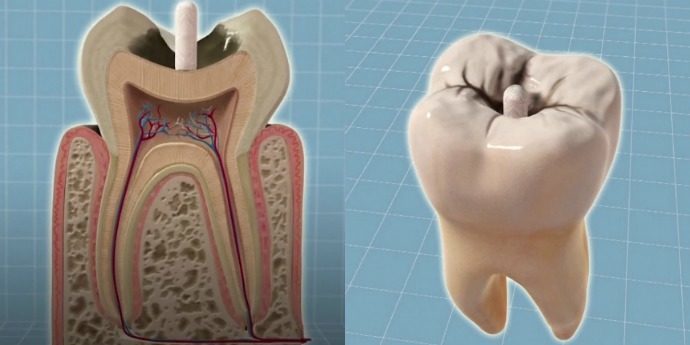
Researchers at King's College London in the United Kingdom have discovered that Tideglusib, a drug designed to regrow brain cells in patients living with neurological disorders such as Alzheimer's, can stimulate the stem cells contained in the pulp of teeth. This discovery generates enough dentine - the hard, calcified tissue beneath the outer enamel surface in teeth - and naturally regenerates the damaged teeth, substantially reducing the need for artificial fillings.

Previous work by the team has shown that Tideglusib stimulates stem cells in the center of the tooth, triggering them to develop into odontoblasts (specialized tooth cells) and boosting the production of dentine, allowing larger defects to be reversed. Professor Paul Sharpe, lead author of the study, commented:

"The simplicity of our approach makes it ideal as a clinical dental product for the natural treatment of large cavities, by providing both pulp protection and restoring dentine. In addition, using a drug that has already been tested in clinical trials for Alzheimer's disease provides a real opportunity to get this dental treatment quickly into clinics."

Bizarro Earth

Chimps attack and murder former tyrant

chimps kill tyrant
© Jill D. Pruetz A violent end
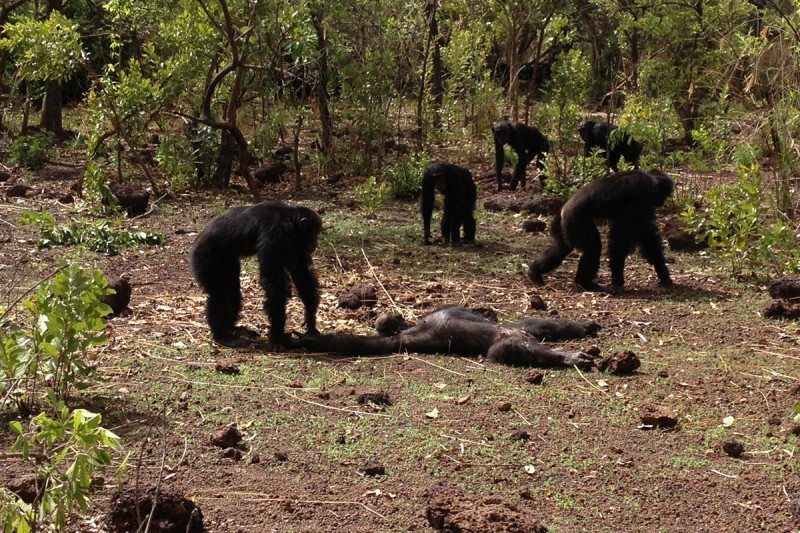
It was a gruesome scene. The body had severe wounds and was still bleeding despite having been lying for a few hours in the hot Senegalese savanna.

The murder victim, a West African chimpanzee called Foudouko, had been beaten with rocks and sticks, stomped on and then cannibalised by his own community.

This is one of just nine known cases where a group of chimpanzees has killed one of their own adult males, as opposed to killing a member of a neighbouring tribe.

These intragroup killings are rare, but Michael Wilson at the University of Minnesota says they are a valuable insight into chimp behaviour such as male coalition building.

"Why do these coalitions sometimes succeed, but not very often? It's at the heart of this tension between conflict and cooperation, which is central to the lives of chimpanzees and even to our own," he says.

Microscope 2

Growth of bacteria can be stimulated by antibiotics

drug resistant E.Coli
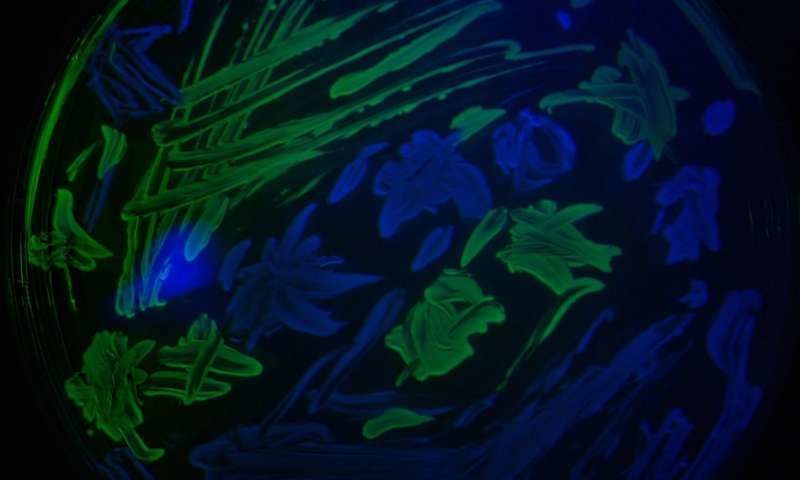
© The University of Exeter Two types of lab E. coli smeared across an agar plate. The green ones are drug resistant and the blue ones are not
The growth of bacteria can be stimulated by antibiotics, scientists at the University of Exeter have discovered.

The EPSRC-funded researchers exposed E.coli bacteria to eight rounds of antibiotic treatment over four days and found the bug - which can cause severe stomach pain, diarrhoea and kidney failure in humans - had increased antibiotic resistance with each treatment.

This had been expected, but researchers were surprised to find mutated E.coli reproduced faster than before encountering the drugs and formed populations that were three times larger because of the mutations.

This was only seen in bacteria exposed to antibiotics - and when researchers took the drug away, the evolutionary changes were not undone and the new-found abilities remained.

"Our research suggests there could be added benefits for E.coli bacteria when they evolve resistance to clinical levels of antibiotics," said lead author Professor Robert Beardmore, of the University of Exeter.

"It's often said that Darwinian evolution is slow, but nothing could be further from the truth, particularly when bacteria are exposed to antibiotics.

"Bacteria have a remarkable ability to rearrange their DNA and this can stop drugs working, sometimes in a matter of days.