Science & TechnologyS


Better Earth

Stunningly beautiful and detailed images have just arrived from new GOES-16 satellite

NOAA GOES-16 satellite image
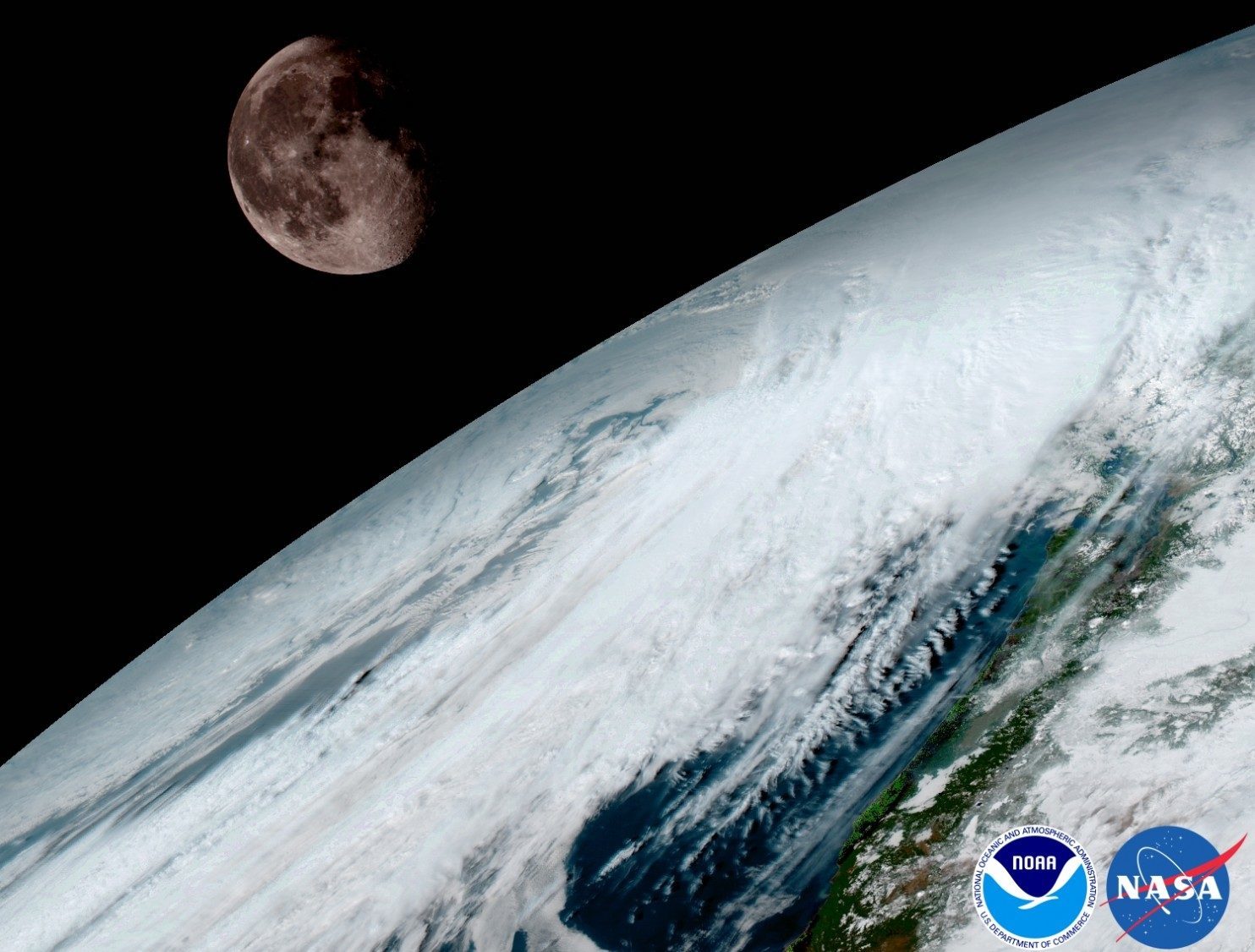
© NOAA / NASAGOES-16 captured this view of the moon, as it looks across the Pacific Northwest on Jan. 15. As with earlier GOES spacecraft, GOES-16 will use the moon for calibration.
The satellite formerly known as GOES-R (so Prince, right?) has transmitted its first images back to Earth, and they are flooring. From the details on the face of the moon to the incredible resolution of cumulus over the Caribbean, these first pixels portend a sunny future for NOAA's new GOES-16 satellite.

Meteorologists are drooling. This release coincides with the first day of the American Meteorological Society's annual meeting. There are thousands of weather geeks in Seattle this week, and — at least on Monday — they're all looking at this next-gen satellite imagery.

As we've written before, GOES-R satellite has six instruments, two of which are weather-related. The Advanced Baseline Imager, developed by Harris Corp., is the "camera" that looks down on Earth. The pictures it sends back will be clearer and more detailed than what's created by the current satellites.

Microscope 1

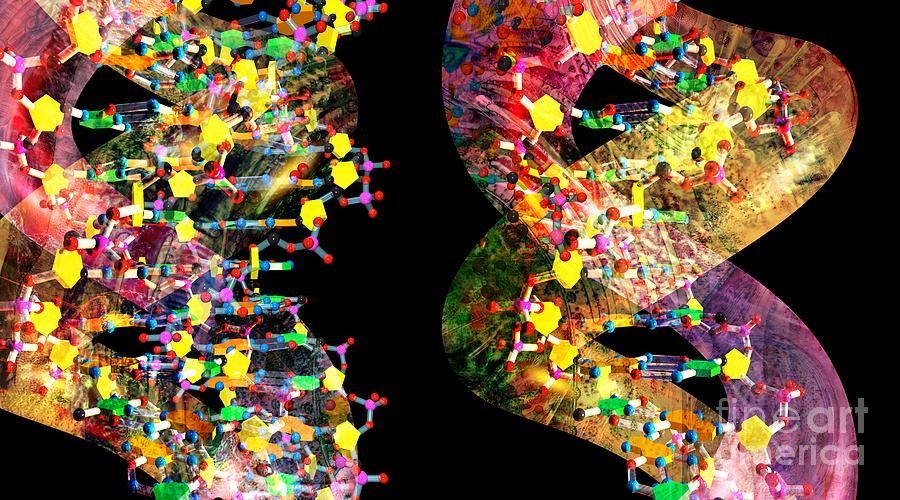
Synthetic DNA paves way for creation of entirely new life forms

DNA gene genetics
© Russell Kightley
E coli microbes have been modified to carry an expanded genetic code which researchers say will ultimately allow them to be programmed

From the moment life gained a foothold on Earth its story has been written in a DNA code of four letters. With G, T, C and A - the molecules that pair up in the DNA helix - the lines between humans and all life on Earth are spelled out.

Now, the first living organisms to thrive with an expanded genetic code have been made by researchers in work that paves the way for the creation and exploitation of entirely new life forms.

Document

Chinese scientists develop paper that can survive Hell or high water (VIDEO)

Chinese paper
© AFP 2016/ Jean-Christophe Verhaegen
Scientists from China, where paper was first invented about 2,000 years ago, say they have developed a new form of the material that is fire and water-resistant.

A research team at the Shanghai Institute of Ceramics led by Professor Zhu Yingjie developed the world's first kind of paper that can resist both water and fire, even if its surface is scratched or physically damaged.

The scientists added a form of calcium called hydroxyapatite, found in animal tooth enamel and bone, to change the structure of paper and give it special properties, the Hong Kong newspaper South China Morning Post reported.

The paper looks similar to the conventional product but has a slightly smoother surface. The researchers say it can repel coffee, juice or tea, and withstand heat of up to 200 degrees Celsius. They also claim the paper can be wiped clean with water without smudging what is written on it.

Galaxy

Dark matter may be killing galaxies across the Universe

ram-pressure stripping killing galaxies
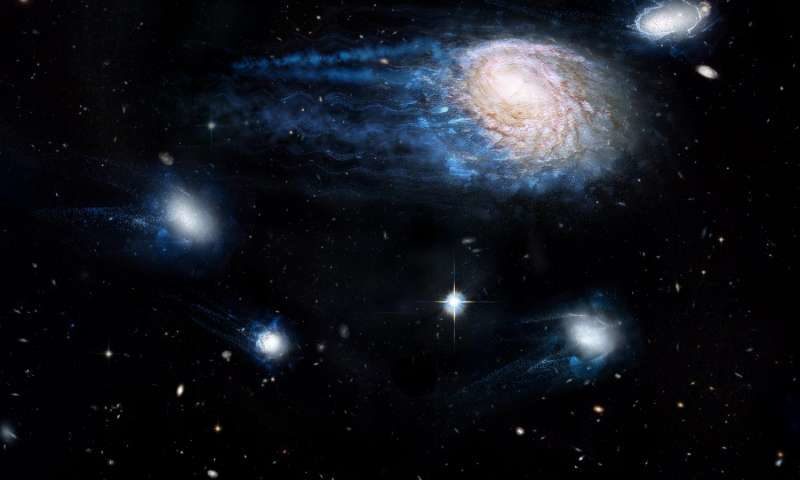
© ICRAR, NASA, ESA, the Hubble Heritage Team (STScI/AURA)An artist's impression showing the increasing effect of ram-pressure stripping in removing gas from galaxies, sending them to an early death.
It's the big astrophysical whodunnit. Across the Universe, galaxies are being killed and the question scientists want answered is, what's killing them?

New research published today by a global team of researchers, based at the International Centre for Radio Astronomy Research (ICRAR), seeks to answer that question. The study reveals that a phenomenon called ram-pressure stripping is more prevalent than previously thought, driving gas from galaxies and sending them to an early death by depriving them of the material to make new stars.

The study of 11,000 galaxies shows their gas—the lifeblood for star formation—is being violently stripped away on a widespread scale throughout the local Universe.

Toby Brown, leader of the study and PhD candidate at ICRAR and Swinburne University of Technology, said the image we paint as astronomers is that galaxies are embedded in clouds of dark matter that we call dark matter halos.

Dark matter is the mysterious material that despite being invisible accounts for roughly 27 per cent of our Universe, while ordinary matter makes up just 5 per cent. The remaining 68 per cent is dark energy.

Microscope 1

Chatty stealth invaders: Viruses communicate with one another helping them decide how to proceed with process of infection

viruses communicate with each other
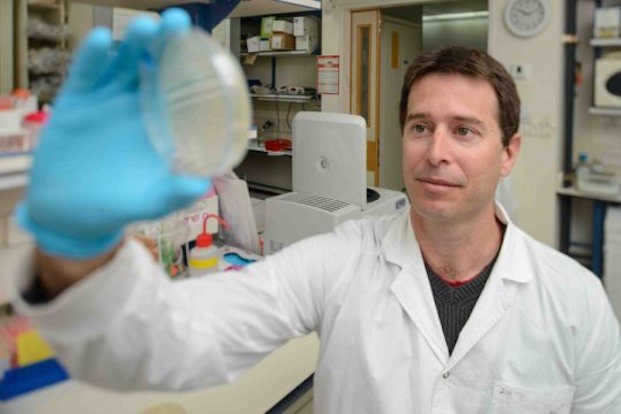
© Weizmann Institute of ScienceProf. Rotem Sorek uncovered a virus code.
Viruses may be stealthy invaders, but a study at the Weizmann Institute of Science reveals a new, chatty side of some: for the first time, viruses have been found communicating with one another. This communication -- short "posts" left for kin and descendants -- helps the viruses reading them to decide how to proceed with the process of infection. The research was reported in Nature.

Many viruses face a choice after they have infected their hosts: to replicate quickly, killing the cell in the process, or to become dormant and lie in wait. HIV, herpes, and a number of other human viruses behave this way and, in fact, even the viruses that attack bacteria -- phages -- face similar decisions when invading a cell. What causes a virus to choose dormancy over immediate gratification? Prof. Rotem Sorek and his group in the Weizmann Institute's Department of Molecular Genetics have now discovered that, during infection, viruses secrete small molecules into their environment that other viruses can pick up and "read." In this way, they can actually coordinate their attack, turning simple messages into a fairly sophisticated strategy.

Comet 2

Antonio Zamora in Geomorphology: Carolina Bays are shock liquefaction impact features from hypersonic ice boulders launched from glacial ice sheet by cosmic impact at Younger Dryas

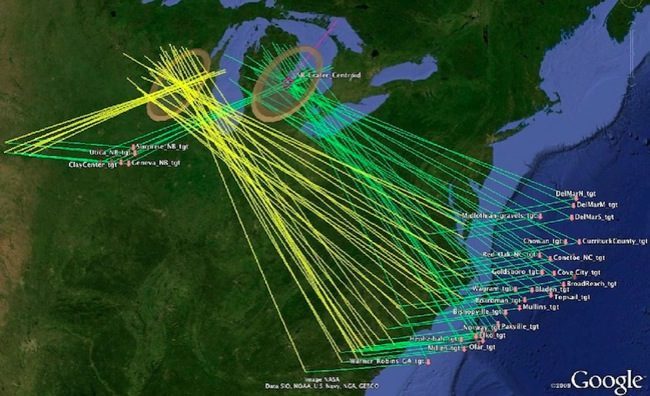
Carolina Bay impact direction map
The Tusk was absolutely thrilled to see the publication last week of a paper concerning Carolina Bays in the distinguished journal, Geomorphology, A Model for the Geomorphology of Bays. Other than a brief role for the Carolina bays in the early papers of the Comet Research Group, and a much longer series of Geological Society of America posters laboriously researched and determinedly published by Michael Davias et. al, Zamora's journal article is the only peer-reviewed and published 'ET origin' work on bays in the last two decades — and it is a doozy.

Zamora builds on the modern work of Davias and David Kimbel, and Willam Prouty and Melton and Schriver of the first half of the 20th century, with an assist from Eyton and Parkhurst in the 70's. Each of the researchers maintained that the bays were formed at once by a barrage of material from the midwest. But, just as the early researchers ultimately decided, those alive today dismiss bays as direct impacts of ET fragments of a comet or asteroid, and consider them to be the remnant features of secondary impacts from the ejecta and ballistic shockwaves of northerly catastrophe. They are wise to do so. The correct theory must account for ALL the easily observed, unique characteristics of bays. [See list of 16 from Eyton and Parkhurst here] The "wind and wave," gradual formation, theories that continue to hold sway in classrooms and publications from Ivestor and Brooks fail miserably to account for all the observed phenomena, while Zamora checks each off with ease.

Map

A terrible rift in the American Midwest

gravity highs map
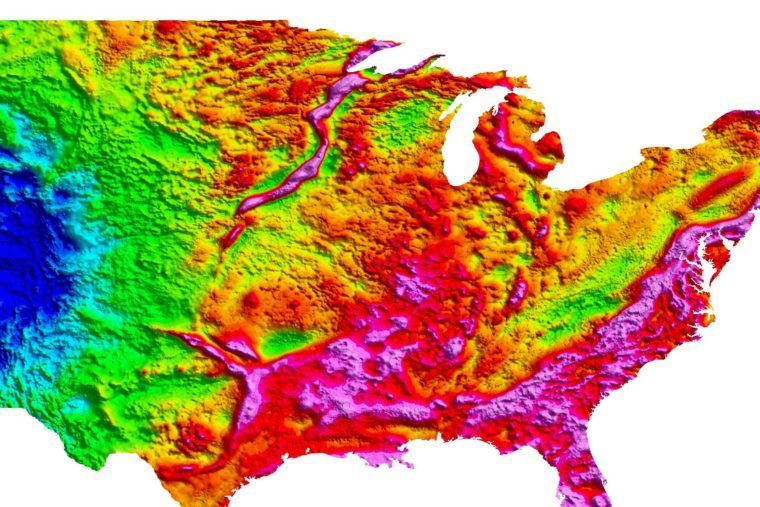
© USGSMost of the gravity highs on this map (hot colors for high; cool ones for low) correspond with mountains or other topographical features. But the long snake-like gravity high heading south from the tip of Lake Superior is another story. There's nothing on the surface to explain its buried presence.
When Doug Wiens approached Minnesota farmers to ask permission to install a seismometer on their land, he often got a puzzled look. "You could tell they were thinking 'Why are you putting a seismometer here?,' " said Wiens, professor of earth and planetary sciences in Arts & Sciences at Washington University in St. Louis. "'We don't have earthquakes and we don't have volcanoes. Do you know something we don't?' "

Actually, he did. Deep beneath the fertile flat farmland, there is a huge scar in the Earth called the Midcontinent Rift. This ancient and hidden feature bears silent witness to a time when the core of what would become North America nearly ripped apart. If the U-shaped rip had gone to completion, the land between its arms — including at least half of what is now called the Midwest — would have pulled away from North America, leaving a great ocean behind.

Mars

Dazzling ESA images reveal dramatic Mars frost blanket

frost on Mars
© esa.int
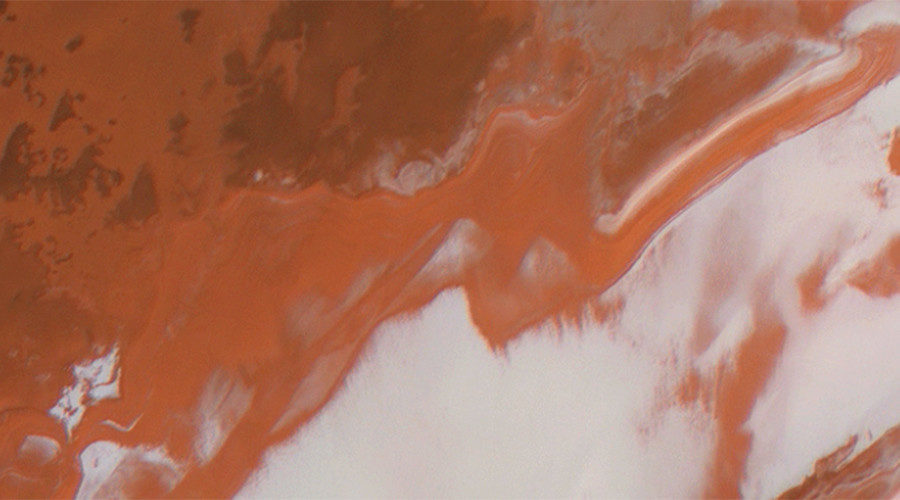
Despite it's 'Red Planet' moniker, Mars is looking pretty frosty. The planet is experiencing an extensive build-up of frost on its north pole, the magnitude of which can be seen in the European Space Agency's (ESA) new timelapse video.

The images were taken by a high-res camera onboard the ESA's Mars Express between November 23 and December 30, 2004. When run together, the images show the build-up of frost in a 73x41km (45x25 mile) section of the red planet's north polar ice cap.

Mars is located about 50 million miles farther away from the sun than Earth so, while it's 'Red Planet' nickname may suggest a warm climate, the surface is actually comprised mostly of layers of water-ice - which can build to a depth of 2km around its north pole.

Sheeple

FDA proposes tighter regulation of gene-edited animals

sheep
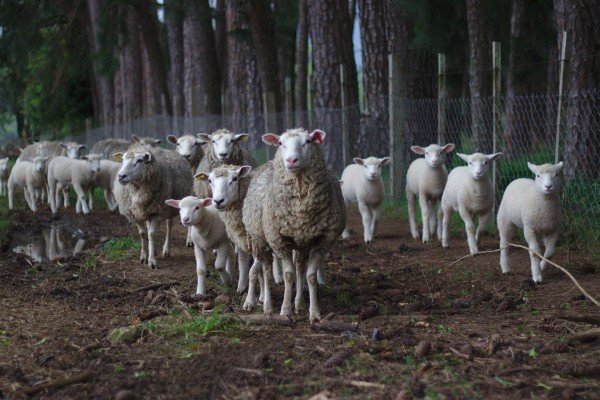
Animals could retain their unedited genomes for longer if the new FDA rules are enacted.
The regulator has suggested that it treat every edit of an animal's genome like a new drug, but some scientists think it could slow progress.

If newly proposed U.S. Food and Drug Administration regulations were to go into practice, research labs around the U.S. could find it harder to pursue their work editing the genomes of animals.

Gene-editing of animals, one of our 10 Breakthrough Technologies in 2014, is already underway in many labs around the world. Researchers have used the CRISPR-Cas9 technique, for instance, to heal mice of muscular dystrophy, breed extra-muscular beagles, and create hornless cows (they're safer to farm).

2 + 2 = 4

Our senses can't learn under stress

Summary: Stress may impede perceptual learning and performance, a new study reports.

Passive finger stimulation
To make training comparable across all participants, the researchers employed the well-established approach of passive finger stimulation. Previous studies and several therapy approaches have shown that this method leads to an improved tactile acuity.
Stress is part of our everyday lives - while some thrive on it, it makes others sick. But what does stress do to our senses?

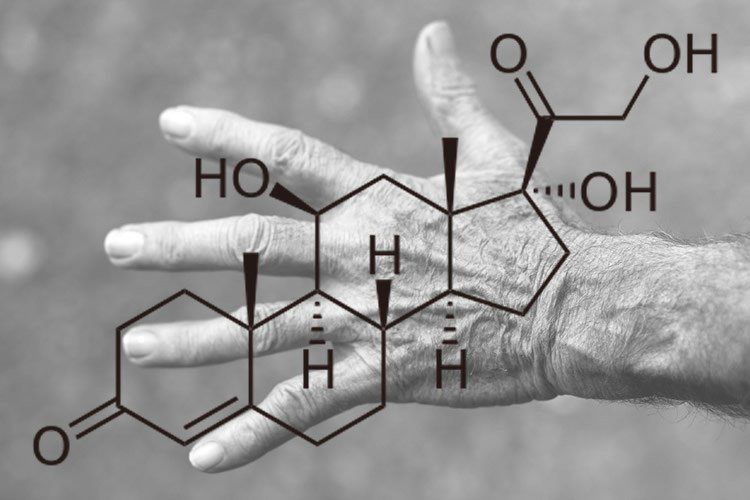
When we train them, we can sharpen our senses thereby improve our perceptual performance. The stress hormone cortisol completely blocks this important ability. In the current issue of "Psychoneuroendocrinology" neuroscientists of the Ruhr University Bochum (RUB) report on this finding.