Science & TechnologyS


Comet 2

Hubble finds big brother of Halley's Comet ripped apart by white dwarf

Comet from Halley
© NASA/ESA Comet falling into white dwarf (artist's impression)
Scientists using the NASA/ESA Hubble Space Telescope have observed, for the first time, a massive, comet-like object that has been ripped apart and scattered in the atmosphere of a white dwarf. The destroyed object had a chemical composition similar to Halley's Comet, but was 100,000 times more massive than its famous counterpart.

The international team of astronomers observed the white dwarf WD 1425+540, about 170 light-years from Earth in the constellation Boötes (the Herdsman) [1]. While studying the white dwarf's atmosphere using both the NASA/ESA Hubble Space Telescope and the W. M. Keck Observatory the team found evidence that an object rather like a massive comet was falling onto the star, getting tidally disrupted while doing so.

The team determined that the object had a chemical composition similar to the famous Halley's Comet in our own Solar System, but it was 100 000 times more massive and had twice the proportion of water as its local counterpart. Spectral analysis showed that the destroyed object was rich in the elements essential for life, including carbon, oxygen, sulphur and even nitrogen [2].

Clipboard

Russian scientists to test liquid breathing techniques with mice, hamsters and dogs

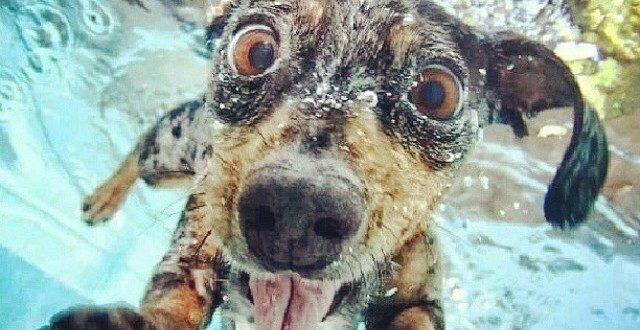
dog under water
© Get Up And Do SomethingC'mon in...it's breathtaking!
Russia's Foundation for Advanced Research (FAR) is opening a laboratory in Moscow to conduct 'liquid breathing' tests with animals, in the hope of applying the results to human medicine and the development of emergency evacuation technology for submarine crews.

Liquid breathing involves using biomedical technology to ventilate the lungs of air-breathing organisms with an oxygen-rich liquid. The technology "allows the animals to breathe underwater and stay there for long periods of time," the Foundation for Advanced Research (FAR) press service told Izvestia newspaper.

Mice, hamsters and dogs will become test subjects during the study, the scientists told the paper. During the liquid breathing experiments, "the lungs of the animal are filled with a special liquid, after which it's immersed in water for a period of time. After the test, the animal is examined and then it remains under supervision for prolonged periods of time" to study the long-term effects of the technology, FAR said.

Such tests have already been carried out successfully, with a dachshund that experienced liquid breathing two years ago still alive and well, and being looked after by one of the foundation's employees.

Saturn

Move over Jupiter: Saturn acts equally as Earth's bodyguard from planetoids

Saturn
© NASA / JPL-Caltech / Space Science Institute
New research has found that Saturn may play a crucial role in shielding the Earth from asteroids, challenging the theory that Jupiter acts as our sole protector by steering scuttling planetoids off-course and into the far reaches of the galaxy.

Experiments conducted by planetary physicist Kevin Grazier of NASA's Jet Propulsion Laboratory suggest Saturn plays an equally important role in shielding Earth from harmful asteroids.

Grazier's findings also suggest that Jupiter, previously considered to be the Earth's only shield, could have played a part in the formation of all life on our blue planet by aiding the delivery of the building blocks for organic existence.

Magnify

Russian scientists developing best ever invisibility cloak

Invisible man
© Flickr/ Bill Smith
Russian scientists have developed a unique membrane that will keep out tiny harmful particles, including viruses, and will also make people invisible, Future Research Fund's general director Andrei Grigoryev told Sputnik.

"The obtained filter material by far exceeds all existing analogues in its ability to stop the most dangerous aerosol particles such as viruses, toxins, allergens. This technology could usher in a wide variety of protective materials for medical, military and other purposes," Grigoryev explained.

Key

Study identifies a key to preventing disruptive behavior in preschool classrooms

Curry Professor Amanda Wiliford
Curry Professor Amanda Wiliford says preschoolers whose teachers used better classroom management practices at the beginning of the year experienced the most significant reduction in disruptive behavior.
Young children who display disruptive behavior reduce those behaviors when their teacher spends extra time playing individually with them, according to a new University of Virginia study published in December in the journal Child Development.

Children who display early disruptive behaviors such as being impulsive, oppositional and/or aggressive are at risk for short- and long-term negative outcomes - even being expelled from preschool. According to the study's lead author, Amanda Williford, a research associate professor at UVA's Curry School of Education, research has shown that if these children can form a strong, positive relationship with their teachers, they tend to show better social-emotional and behavioral skills over time. The reality, however, is that children who are disruptive are much more likely to have conflictual teacher-child interactions.

Mars

Red dwarf flares jeopardize habitability of planet Proxima b

volcano planet
© NASA
The habitability of planets orbiting young red dwarf stars is threatened by frequent stellar eruptions that likely deplete atmospheric oxygen levels, according to new NASA research.

The findings, published in the Astrophysical Journal Letters, concern 'habitable zones', the region around a star where conditions could potentially allow life-sustaining liquid water.

The research has implications for the recently-discovered Proxima b planet in the "habitable zone" of red dwarf, Proxima Centauri. Proxima b, which is 1.3 times the size of Earth, was previously found to be the planet most likely to harbor life.

Telescope

Stargazer's triple treat: Eclipse, comet, full moon all coming Friday night

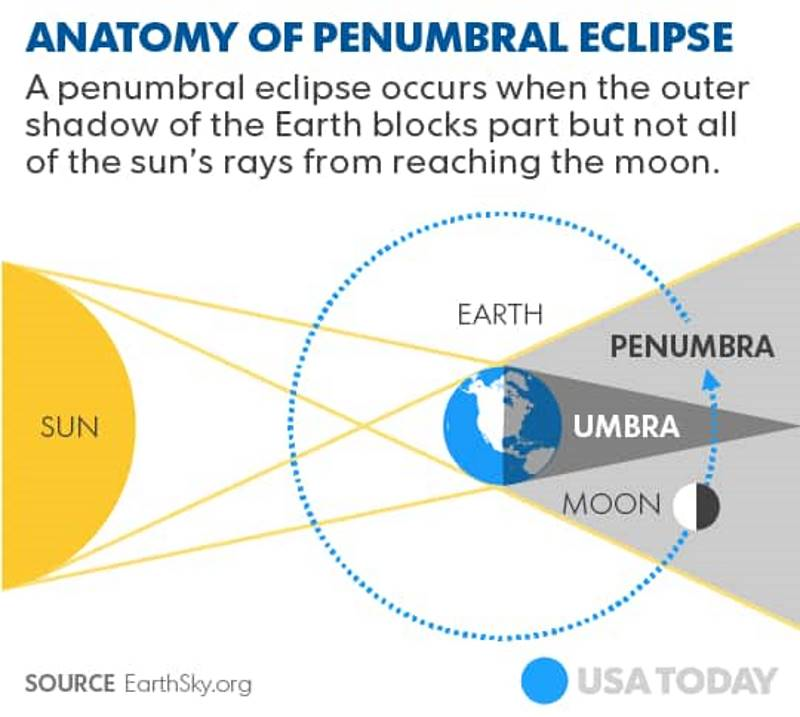
Skywatchers will enjoy a rare space triple-header Friday night and early Saturday morning: A "penumbra" lunar eclipse during the full "snow" moon — and the flyby of a comet.
Penumbral moon eclipse
© NASA/USA Today
Here's a look at what you will see if you set your eyes to the night sky:

Eye 1

Anonymous no more: Google's new AI system unscrambles pixelated faces

pixilated photo
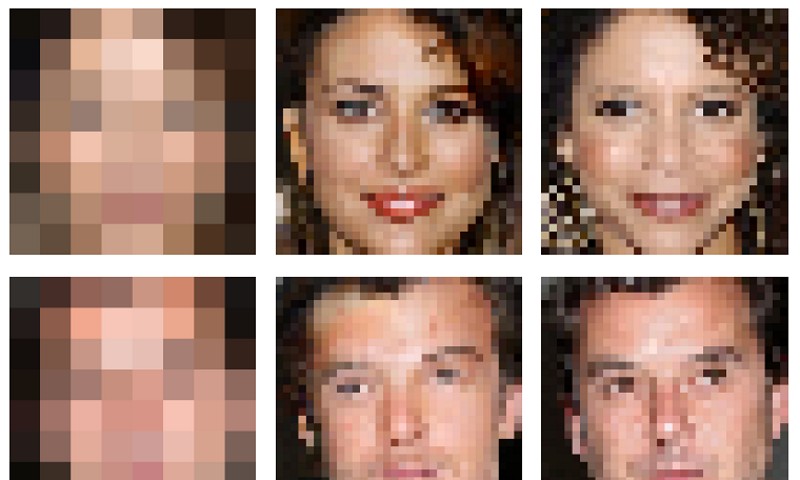
© GoogleOn the left, 8x8 images; in the middle, the images generated by Google; and on the right, the original 32x32 faces.
Company reveals technology capable of increasing picture resolution 16-fold, effectively restoring lost data - but results still an educated guess

Google's neural networks have achieved the dream of CSI viewers everywhere: the company has revealed a new AI system capable of "enhancing" an eight-pixel square image, increasing the resolution 16-fold and effectively restoring lost data.

The neural network could be used to increase the resolution of blurred or pixelated faces, in a way previously thought impossible; a similar system was demonstrated for enhancing images of bedrooms, again creating a 32x32 pixel image from an 8x8 one.

Google's researchers describe the neural network as "hallucinating" the extra information. The system was trained by being shown innumerable images of faces, so that it learns typical facial features. A second portion of the system, meanwhile, focuses on comparing 8x8 pixel images with all the possible 32x32 pixel images they could be shrunken versions of.

Blue Planet

Genetic study of North Americans suggests we are even more diverse than we thought

DNA databases
© Getty
As individuals, our DNA offers insight into things like our personalities, our health and where we come from. But taken together, all those individual portraits can add up to paint a detailed history of humankind.

A study published this week in Nature Communications led by the DNA testing company Ancestry.com presents exactly this kind of bird's eye view. Last month, Ancestry surpassed 3 million customers in its DNA databases. That's an awful lot of DNA, and now the company has set its sites on figuring out exactly what it might learn from all of it.

In the new study, Ancestry's scientists set out to build a picture of how North America's population moved across the country over the past few hundred years. Using genotype data from over 700,000 individuals who have purchased the company's DNA kits, scientists created a network of genetically-identified relationships and then used network analysis techniques to identify clusters of individuals.

Question

The reasons why, once we start worrying, some of us just can't stop

woman worrying
A certain amount of worrying is a normal part of life, especially these days with barely a moment passing without some disconcerting headline landing in your news feed. But for some people, their worrying reaches pathological levels. They just can't stop wondering "What if ...?". It becomes distressing and feels out of control. In the formal jargon, they would likely be diagnosed with Generalised Anxiety Disorder, but excessive worrying is also a part of other conditions like panic disorder. There are many factors that contribute to anxiety problems in general, but a new review in Biological Psychology homes in on the cognitive and emotional factors that specifically contribute to prolonged bouts of worry. Its take-home points make an interesting read for anyone who considers themselves a worrier, and for therapists, the review highlights some approaches to help anxious clients get a hold of their excessive worrying.

The review authors, Graham Davey and Frances Meeten at the University of Sussex and the Institute of Psychiatry, Psychology and Neuroscience, explain that what gets many pathological worriers worrying in the first place is that they seem to be highly vigilant to any sources of threat and danger, and if there's any ambiguity about whether a situation is threatening or not, they will tend to interpret it as being dangerous. If they haven't yet heard from their daughter today, for instance, the problem worrier will not only notice this fact, they will also contemplate that it's because she's in trouble, rather than simply busy.