Science & TechnologyS


Microscope 1

U.S. researchers guilty of misconduct go on to win more than $100 million in NIH grants, study finds

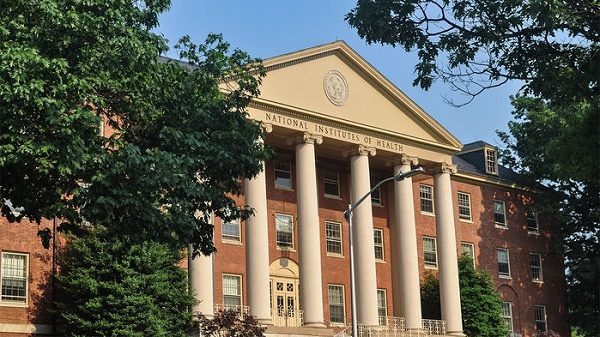
National Institutes of Health
© Lydia PolimeniNational Institutes of Health
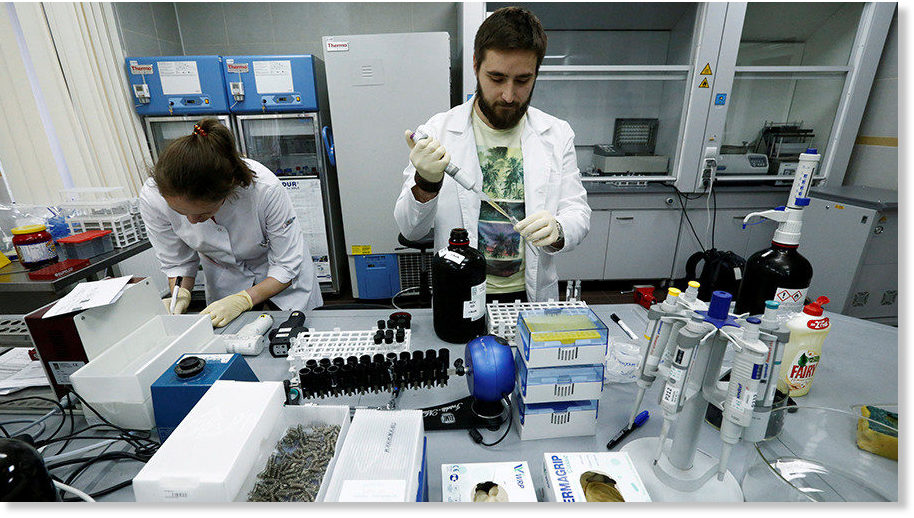
Many believe that once a scientist is found guilty of research misconduct, his or her scientific career is over. But a new study suggests that, for many U.S. researchers judged to have misbehaved, there is such a thing as a second chance.

Nearly one-half of 284 researchers who were sanctioned for research misconduct in the last 25 years by the Department of Health and Human Services (HHS), the largest U.S. funder of biomedical research, ultimately continued to publish or work in research in some capacity, according to a new analysis.

And a small number of those scientists—17, to be exact—went on to collectively win $101 million in new funding from the National Institutes of Health (NIH).

Those numbers "really surprised" Kyle Galbraith, research integrity officer at the University of Illinois in Urbana and author of the new study, published earlier this month by the Journal of Empirical Research on Human Research Ethics. "I knew from my work and reading other studies that careers after misconduct were possible. But the volume kind of shocked me," he says.

Music

Cymatics, the science of visible sound, has just taken a giant leap into the future

cymatics researcher
Cymatics--the science of visible sound--has just taken a giant leap into the future, with profound implications for medical science

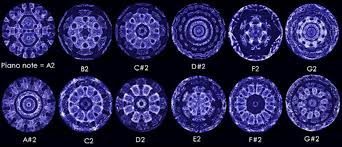
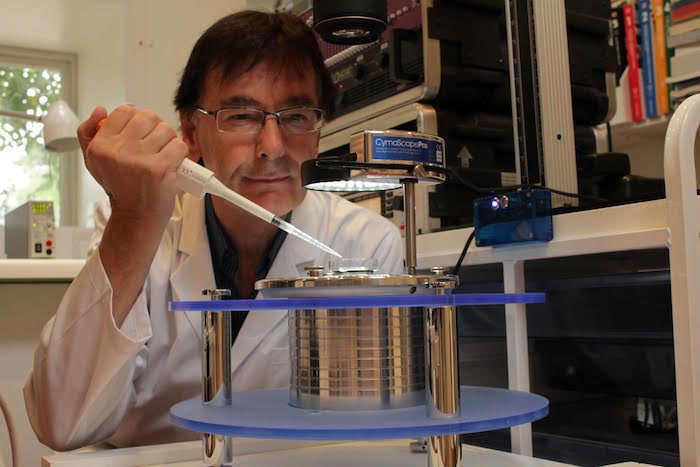
The CymaScope is a new type of analog scientific instrument that makes sound visible, allowing scientists to see sound's vibrations. Within the instrument the surface of pure water offers a kind of super-sensitive membrane and by imprinting sounds onto the liquid surface, unique patterns of sound energy are created for every unique sound.

Just as the invention of the microscope and telescope revealed aspects of the world and Universe that we didn't even know existed, the CymaScope allows the once hidden realm of sound to become visible. And since everything in the Universe is in a state of vibration a tool that shows the structures within sound and vibration can provide important new scientific insights.
piano note sounds
Visualizations of piano note sounds via the Cymascope.
But now, American scientist, Dr. Sungchul Ji, has developed a novel method to digitize the CymaScope, permitting the sound patterns to be analyzed with digital tools, effectively creating the world's first Digital CymaScope.

Attention

Bug in content delivery network Cloudflare exposes secure data for major websites

cloudflare logo
© Cloudflare / YouTube
A major bug in software used by content delivery network Cloudflare has exposed sensitive, encrypted data - including passwords - from its' customers' websites, the company says. There are no signs that hackers have exploited the bug.

Beginning as early as September 22, hundreds of thousands webpages among websites hosted by Cloudflare, Inc. have leaked sensitive data, including passwords, cookies and software keys, the company said Thursday in a blog post. The period most affected period was between February 13 and the bug's discovery on February 18.

Of the six million sites that Cloudflare hosts, 3,400 were leaking data, according to reports. The content delivery and internet security company hosts websites of popular services like Uber, Fitbit and OkCupid, all three of which were affected.

Microscope 1

New breakthrough in Parkinson's research holds hope for cure

Parkinson's research
© Sergey Karpukhin / Reuters
Scientists have made a breakthrough in the understanding of how Parkinson's disease spreads in the brain, prompting hopes of potential new treatments for the degenerative disorder.

The research, published in Scientific Reports Nature, provides the first strong evidence of how Parkinson's evolves in the brain and offers the possibility of stopping it in its tracks.

A team at the University of Auckland, New Zealand led by Professor Maurice Curtis discovered that pathological proteins (known as 'Lewy bodies') in Parkinson's disease could be spread from cell to cell.

The researchers examined human brain cells cultured from brains donated for the study. It was previously known that Lewy bodies accumulated in susceptible cells, but not that they could spread.

Comment: It's always so interesting to see how the official voices in science and medicine make these pronouncements in the fields of research when the less acknowledged or alternative fields of healing have come so far already.


Beaker

Researchers link chronic fatigue syndrome to faulty cell receptors

Chronic fatigue sleeping woman tired
Chronic fatigue syndrome (CFS) or Myalgic Encephalomyelitis (ME) is one of the most perplexing conditions out there. It affects up to 1 million Americans and as much as 2.6 percent of the global population, often triggering exhaustion so severe that patients can't work or study.

But for decades, researchers have struggled to find an underlying cause, leading to an assumption by many doctors that it's 'not a real disease'. Now, Australian researchers have blown that myth wide open, showing for the first time that CFS is linked to a faulty cell receptor in immune cells.

"This discovery is great news for all people living with Chronic Fatigue Syndrome (CFS) and the related Myalgic Encephalomyelitis (ME), as it confirms what people with these conditions have long known - that it is a 'real' illness - not a psychological issue," said Leeanne Enoch, the Science Minister of Queensland - the Australian state that's supporting the research.

Network

Google launches tool to identify trolls and 'toxic comments'

troll, computer troll button
Google is using machine learning to go after online trolls.

In partnership with Alphabet subsidiary Jigsaw, Google has launched Perspective, a tool intended to identify toxic online comments. It's available as an API, so news organizations and publishers can use it to weed out abuse.

Perspective will score comments on how likely they are to be abusive, comparing them to comments that have been rated by human reviewers. "Each time Perspective finds new examples of potentially toxic comments, or is provided with corrections from users, it can get better at scoring future comments," Jigsaw President Jared Cohen wrote in a blog post.

Publishers that use Perspective can decide how to handle comments the system identifies as toxic.

Comment: A double edged sword that will also likely be used to minimize the probability that readers will see dissenting opinions or anything publishers deem threatening.


Blue Planet

Silicon dioxide crystals at Earth's core provide insights into energy source of magnetic field

Silicon dioxide crystals
© Wikimedia CommonsSilicon dioxide crystals
Scientists at the Earth-Life Science Institute at the Tokyo Institute of Technology report in Nature (22 February 2017) unexpected discoveries about the Earth's core. The findings include insights into the source of energy driving the Earth's magnetic field, factors governing the cooling of the core and its chemical composition, and conditions that existed during the formation of the Earth.

The Earth's core consists mostly of a huge ball of liquid metal lying at 3,000 km beneath its surface, surrounded by a mantle of hot rock. Notably, at such great depths, both the core and mantle are subject to extremely high pressures and temperatures. Furthermore, research indicates that the slow creeping flow of hot buoyant rocks—moving several centimeters per year—carries heat away from the core to the surface, resulting in a very gradual cooling of the core over geological time. However, the degree to which the Earth's core has cooled since its formation is an area of intense debate amongst Earth scientists.

In 2013 Kei Hirose, now Director of the Earth-Life Science Institute (ELSI) at the Tokyo Institute of Technology (Tokyo Tech), reported that the Earth's core may have cooled by as much as 1,000 ℃ since its formation 4.5 billion years ago. This large amount of cooling would be necessary to sustain the geomagnetic field, unless there was another as yet undiscovered source of energy. These results were a major surprise to the deep Earth community, and created what Peter Olson of Johns Hopkins University referred to as, "the New Core Heat Paradox", in an article published in Science.

Whistle

Score! Bees learn to play ball by watching other bees

bee on a ball
© Clint Perry, Queen Mary University of London
Bumblebees can learn how to manoeuvre a ball just by watching others carry out the task, researchers have discovered in the latest study to shed light on the insects' surprising talents.

While bees have already been shown to be able to learn how to pull on strings, push caps and even rotate a lever to access food, researchers say the new study shows that bees are better at problem solving than we thought.

"Previous [research] has found that bumblebees can do complex tasks but those tasks have always been really close to natural behaviour," said Olli Loukola, first author of the research from Queen Mary University of London, pointing out that bees often have to manipulate different parts of a flower to access nectar. "Now we have shown that they can learn something that is totally unnatural, like moving balls."

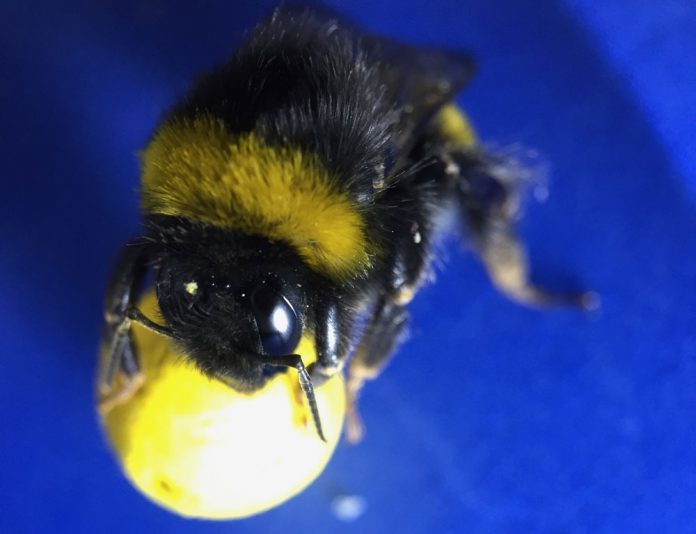
In the first part of the study, published in the journal Science, bees were presented with a platform, a yellow ball and a target area containing a concealed reservoir of sucrose.

The bees were repeatedly shown how to manoeuvre the ball over the target area to gain access to the sweet treat by means of fake bee on a stick. They were then tested on their abilities. While 10 bees who were not shown a demonstration almost never managed to succeed in the task, the nine that were all succeeded. What's more, they improved over test trials, taking less time and shorter paths.

Blue Planet

ISS astronaut diffuses conspiracy theorists with space walk selfie (PHOTO)

Astronaut
© Kirill Kudryavtsev / ReutersPesquet joined the ISS in November.
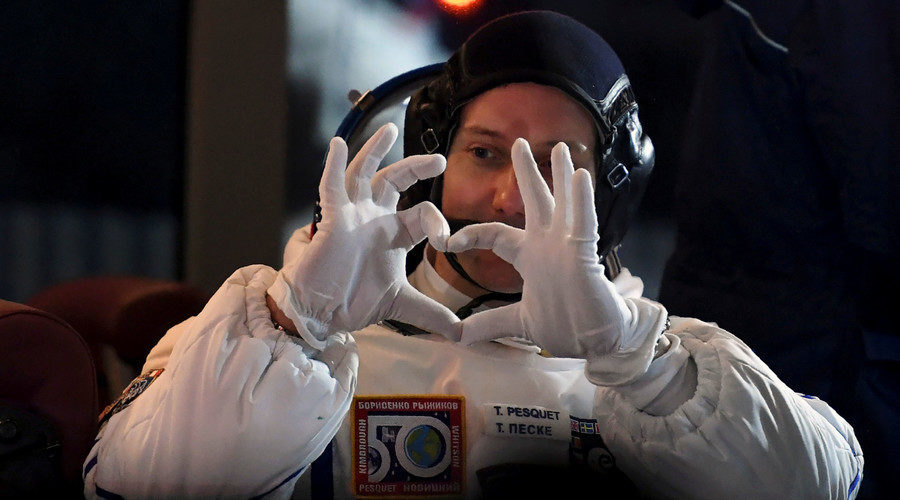
In space no-one can hurt your feelings, unless you're astronaut Thomas Pesquet who appears a little hurt by conspiracy theorists' lack of belief in his work. Tweeting a selfie from space, Pesquet admitted naysayers would probably think the photo is fake.

Taken from outside the International Space Station (ISS), the photo shows the French astronaut conducting a space walk. Speaking directly to those who believe "we are in a hangar, on a fake Space Station," Pesquet admitted they would also probably dispute the veracity of this image.

One theory - as far out there as the ISS itself - claims the station is a hoax, nicknaming it the "International Fake Station". Some theorists believe the ISS does exist but is an empty orbiting tin can with space walks faked on Earth inside a swimming pool.

Comment: See also: The real conspiracy: Flat earth is a psyop


Info

Rare nebula, ELAN discovered - No obvious source of power for the light it is emitting

MAMMOTH-1
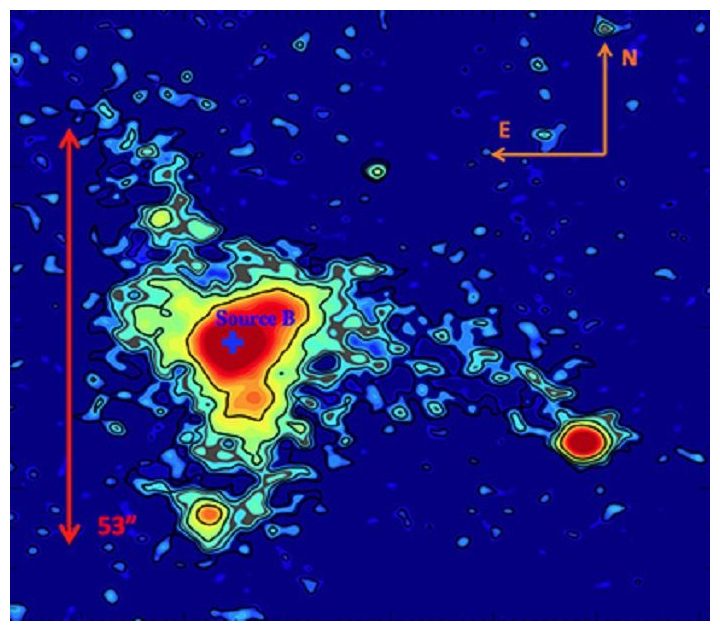
© Figure 2 of Cai et al., Astrophysical JournalMAMMOTH-1 is an extended blob of gas in the intergalactic medium called an enormous Lyman-alpha nebula (ELAN). The color map and contours denote the surface brightness of the nebula, and the red arrows show its estimated spatial extent.
Astronomers have found an enormous, glowing blob of gas in the distant universe, with no obvious source of power for the light it is emitting. Called an "enormous Lyman-alpha nebula" (ELAN), it is the brightest and among the largest of these rare objects, only a handful of which have been observed.

ELANs are huge blobs of gas surrounding and extending between galaxies in the intergalactic medium. They are thought to be parts of the network of filaments connecting galaxies in a vast cosmic web. Previously discovered ELANs are likely illuminated by the intense radiation from quasars, but it's not clear what is causing the hydrogen gas in the newly discovered nebula to emit Lyman-alpha radiation (a characteristic wavelength of light absorbed and emitted by hydrogen atoms).

The newly discovered nebula was found at a distance of 10 billion light years in the middle of a region with an extraordinary concentration of galaxies. Researchers found this massive overdensity of early galaxies, called a "protocluster," through a novel survey project led by Zheng Cai, a Hubble Postdoctoral Fellow at UC Santa Cruz.

"Our survey was not trying to find nebulae. We're looking for the most overdense environments in the early universe, the big cities where there are lots of galaxies," said Cai. "We found this enormous nebula in the middle of the protocluster, near the peak density."