Science & TechnologyS


Robot

Get ready for robots with human flesh

Robot with Human Flesh
© 123rf
Two University of Oxford biomedical researchers are calling for robots to be built with real human tissue, and they say the technology is there if we only choose to develop it. Writing in Science Robotics, Pierre-Alexis Mouthuy and Andrew Carr argue that humanoid robots could be the exact tool we need to create muscle and tendon grafts that actually work.

Right now, tissue engineering relies on bioreactors to grow sheets of cells. These machines often look like large fish tanks, filled with a rich soup of nutrients and chemicals that cells need to grow on a specialized trellis. The problem, explain Mouthuy and Carr, is that bioreactors currently "fail to mimic the real mechanical environment for cells."

In other words, human cells in muscles and tendons grow while being stretched and moved around on our skeletons. Without experiencing these natural stresses, the tissue grafts produced by researchers often have a broad range of structural problems and low cell counts.

That's where robots come in. The researchers propose a "humanoid-bioreactor system" with "structures, dimensions, and mechanics similar to those of the human body." As the robot interacted with its environment, tissues growing on its body would receive the typical strains and twists that they would if they grew on an actual human. The result would be healthy tissue, grown for the exact area on the body it was destined to replace. Mouthuy and Carr note that this would be especially helpful for "bone-tendon-muscle grafts... because failure during healing often occurs at the interface between tissues."

What would this humanoid-bioreactor system look like? It could possibly be built on top of a humanoid robot with "soft robotics" muscles made from electroactive polymers, and the growing muscles could piggyback on those to get their exercise. It would also need to be covered in soft, stretchable sensors to monitor the health of the growing tissues.

The result might look a bit like the University of Tokyo's Kenshiro robot, whose actuators make realistically human movements. Its body would be covered in squishy, fluid-filled bags of engineered tissue. Patients needing tendon replacements in their hands might be able to shake hands or play piano with a robot who is wearing their future tendon grafts.


Laptop

Researchers reveal DNA-based super fast computer that 'grows as it computes'

DNA based superfast computer
© ReutersResearchers from The University of Manchester in the UK showed the feasibility of engineering a universal Turing machine (UTM) – a computer that can be programmed to compute anything any other device can process.(
Researchers from The University of Manchester have shown it is possible to build a new super-fast form of computer that "grows as it computes".

Professor Ross D King and his team have demonstrated for the first time the feasibility of engineering a nondeterministic universal Turing machine (NUTM), and their research is to be published in the prestigious Journal of the Royal Society Interface.

The theoretical properties of such a computing machine, including its exponential boost in speed over electronic and quantum computers, have been well understood for many years - but the Manchester breakthrough demonstrates that it is actually possible to physically create a NUTM using DNA molecules.

"Imagine a computer is searching a maze and comes to a choice point, one path leading left, the other right," explained Professor King, from Manchester's School of Computer Science. "Electronic computers need to choose which path to follow first.

"But our new computer doesn't need to choose, for it can replicate itself and follow both paths at the same time, thus finding the answer faster.

"This 'magical' property is possible because the computer's processors are made of DNA rather than silicon chips. All electronic computers have a fixed number of chips.

Meteor

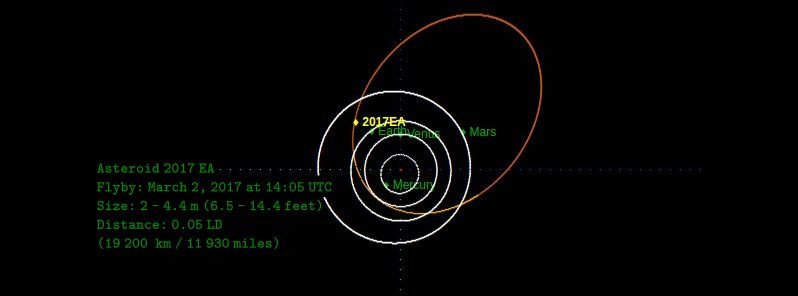
Asteroid 2017 EA flew past Earth at 0.05 LD - 7th, and closest, known NEA to flyby Earth within 1 lunar distance since January 9, 2017

Asteroid 2017 EA
© ESA/NEO Coordination Centre
A newly discovered asteroid named 2017 EA flew past Earth at an extremely close distance of 0.05 LD (19 200 km / 11 930 miles) from the surface of our planet at 14:05 UTC on March 2, 2017. This is the 7th known asteroid to flyby Earth within 1 lunar distance since January 9, 2017.

2017 EA has an estimated diameter between 2 and 4.4 m (6.5 to 14.4 feet) and belongs to the Apollo group of asteroids. It was first observed at Catalina Sky Survey just a couple of hours before its close approach.

It flew past Earth at 14:05 UTC today at a speed (relative to the Earth) of 18.43 km/s.

This is the 7th, and the closest, known asteroid to flyby Earth within 1 lunar distance since January 9, 2017:

Asteroid 2017 DR34 - Distance: 0.57 LD - February 25

Asteroid 2017 DG16 - Distance: 0.34 LD - February 23

Asteroid 2017 BS32 - Distance: at 0.41 LD - February 2

Asteroid 2017 BH30 - Distance: 0.17 LD - January 30

Asteroid 2017 BX - Distance: 0.68 LD - January 25

Asteroid 2017 AG13 - Distance: 0.53 LD - January 9

Fish

Deep ocean expedition spots mysterious 'cosmic' jellyfish

jellyfish discovered
© NOAA
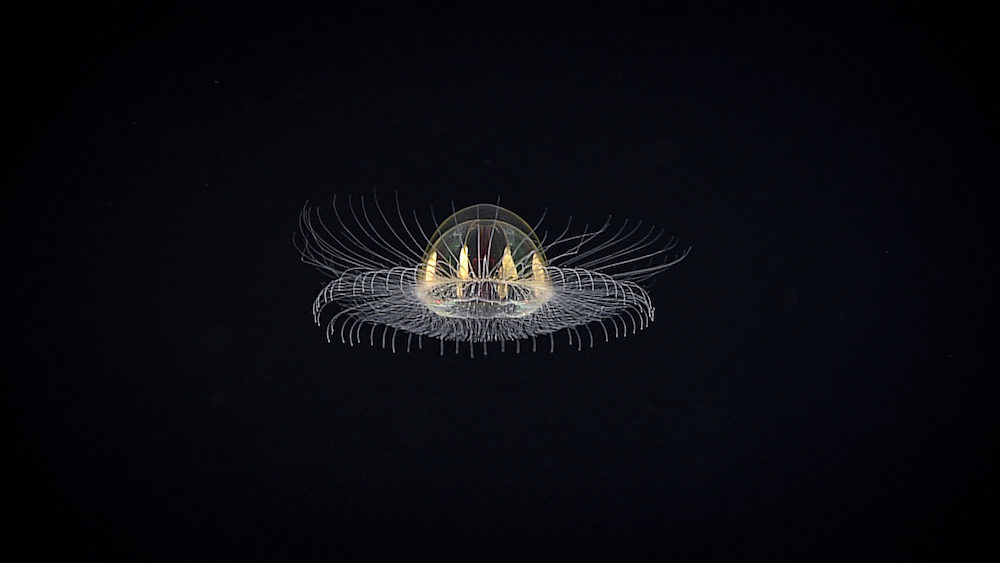
A bizarre, UFO-looking jellyfish was spotted floating in the ocean depths near American Samoa on Feb. 21, 2017.
An ethereal, 'cosmic' jellyfish was spotted in some of the deepest reaches of the ocean, hovering near a previously unexplored seamount.

The luminous sea creature, which may be a completely new species, was spotted by a remotely operated underwater vehicle (ROV) roughly 9,800 feet (3,000 meters) below sea level in a remote region of the Pacific Ocean near American Samoa. The creature was discovered at the previously unexplored seamount, called Utu Seamount, by the members of the National Oceanic and Atmospheric Administration's (NOAA) 2017 American Samoa Expedition.

After the dive, Allen Collins, an invertebrate zoologist with NOAA's National Systematics Lab, initially identified the creature as Benthocodon hyalinus. Still, there's a possibility that the jellyfish could be a species previously unknown to science, Collins said.

Archaeology

Oldest fossil ever discovered on Earth provides strongest evidence yet that similar organisms could have evolved on Mars

 microscopic image earliest lifeforms
© Dominic PapineauA microscopic image of one of the earliest lifeform ever found
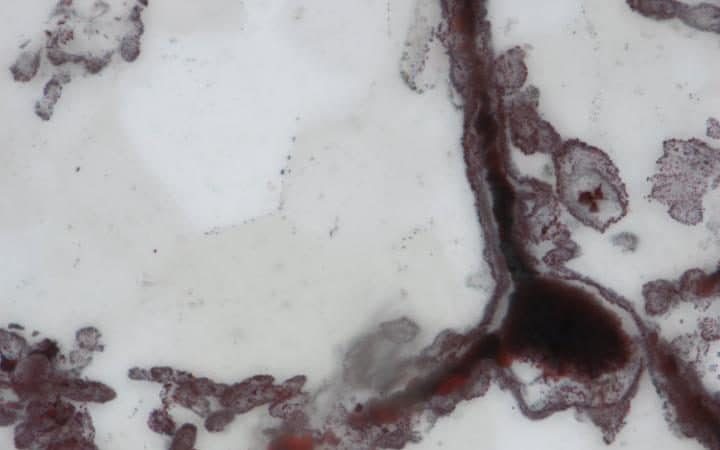
It's life, but not as we know it. The oldest fossil ever discovered on Earth shows that organisms were thriving 4.2 billion years ago, hundreds of millions of years earlier than previously thought.

The microscopic bacteria, which were smaller than the width of a human hair, were found in rock formations in Quebec, Canada, but would have lived in hot vents in the 140F (60C) oceans which covered the early planet.

The discovery is the strongest evidence yet that similar organisms could also have evolved on Mars, which at the time still had oceans and an atmosphere, and was being bombarded by comets which probably brought the building blocks of life to Earth.

Info

Asthma? Your gut microbes could be the cause

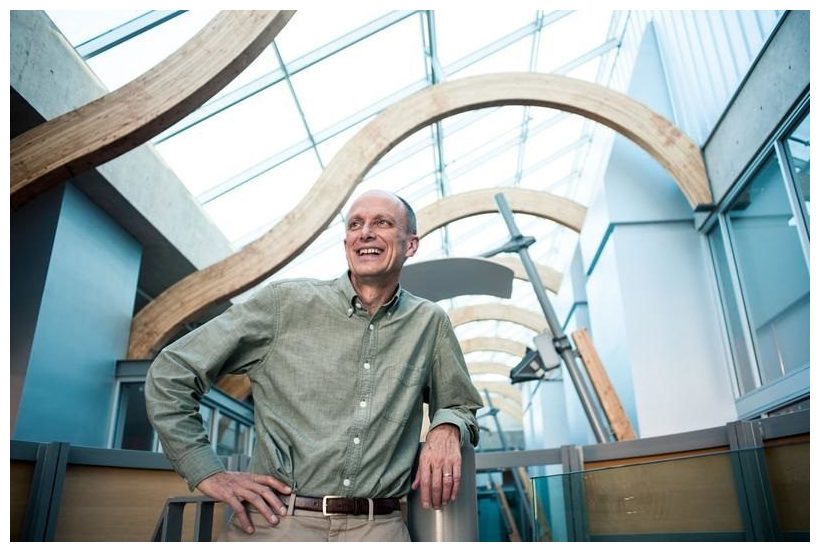
 Dr. Brett Finlay
© Kosta Prodanovic Dr. Brett Finlay.
Asthma was once a rare disease. Now it's the most common chronic paediatric disease in the world and a leading cause for hospitalization of kids in Canada.

"This change happened in a short two-generation time period and it's not because we evolved in this time. That kind of change takes hundreds of generations. We've done something to our world," said Dr. Brett Finlay, professor of microbiology and author of the book, Let Them Eat Dirt.

Asthma is traditionally thought to be caused by a combination of environmental and genetic factors, but the emerging field of microbiome research offers an alternative explanation.

The human microbiome is the collection of all the microbes, like bacteria and fungi, living in and on our bodies. These near-invisible specs of life help digest our food, break down chemicals, dictate how we develop, influence our immune responses and much more.

When humans discovered in the late 1920s that penicillin could kill infection-causing microbes, an antibiotic-fueled campaign against bacteria ensued. The decrease in infectious diseases heralded by the antibiotic era was paired with a rise in immune disorders such as diabetes, inflammatory bowel disease and asthma.

"We see much higher rates of asthma among those who take antibiotics in the first year of life," said Finlay. "What do antibiotics do? They affect microbes."

Last year, Finlay and his colleagues discovered that when four particular bacteria were present in the guts of infants, their chance of developing asthma later in life went down. Infants without the four bacteria were more likely to develop asthma.

Dig

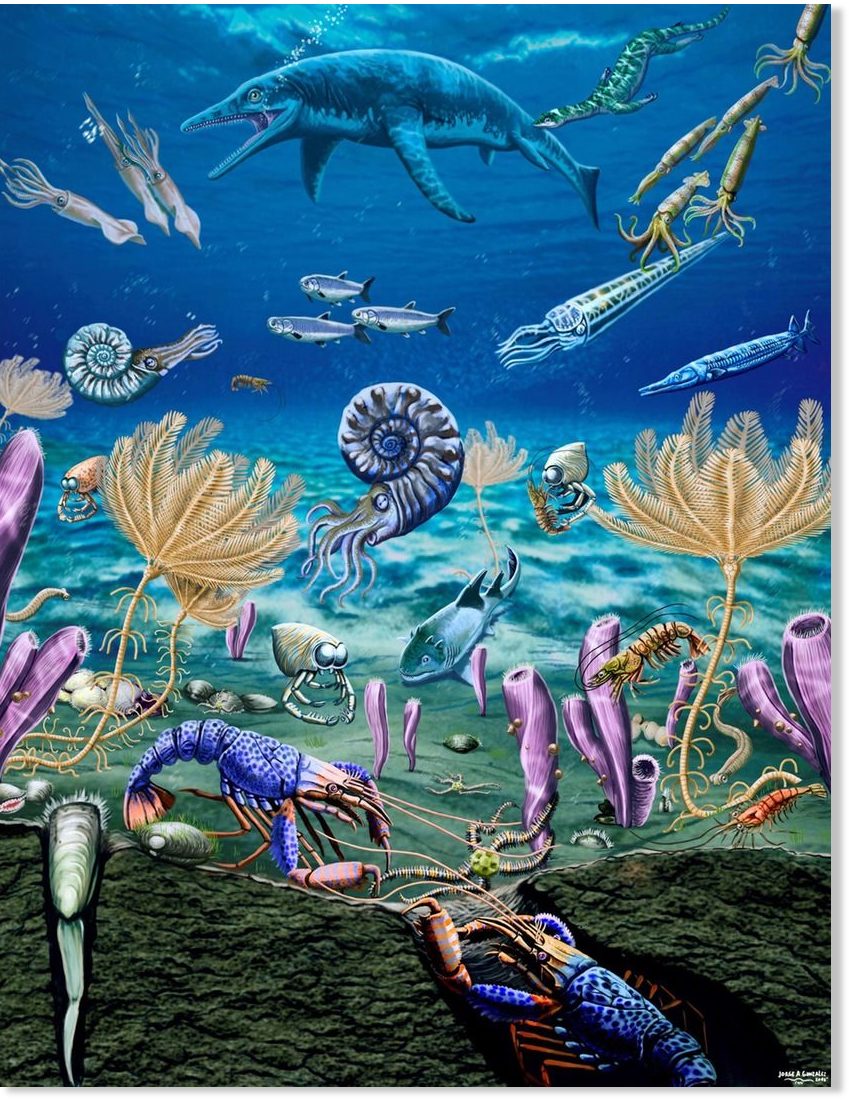
Fossil trove discovery hints at quick recovery following end-Permian mass extinctions, challenging conventional thinking

Early Triassic marine ecosystem
© JORGE GONZALEZArtistic view of the diversified and complex Early Triassic marine ecosystem of southeastern Idaho as revealed by the Paris Biota.
The palaeontological orthodoxy that the world took millions of years to recover from the end-Permian mass extinction has been powerfully challenged by the discovery of a rich and varied ecosystem dating to just after the event.

A research team led by Arnaud Brayard at University of Burgundy - Franche-Comté in France analysed a large haul of fossils uncovered near the town of Paris in Idaho, US, and found "a phylogenetically diverse, functionally complex, and trophically multileveled marine ecosystem" - including a type of sponge thought to have gone extinct 200 million years before.

The haul - dubbed the Paris Biota - dates from about 250 million years ago - almost immediately after the end of what evolutionary historians call "the great dying".

Question

Strange life forms found in giant, underground crystals

crystal cave
Trapped inside massive crystals deep in a Mexican cave, creatures have been discovered that subsist on iron, sulfur, and other chemicals. The researchers say the microbial lifeforms are new to science, but have been tucked away for tens of thousands of years.

Should the discovery be verified, it will add to evidence that "microbial life on Earth can endure harsher conditions in isolated places than scientists previously thought possible."

"These organisms have been dormant but viable for geologically significant periods of time, and they can be released due to other geological processes," explains NASA Astrobiology Institute director Penelope Boston."This has profound effects on how we try to understand the evolutionary history of microbial life on this planet."

However, such a discovery does raise concerns about our search for life beyond this planet, despite the rigorous sterilization spacecraft undergo before a mission. "How do we ensure that life-detection missions are going to detect true Mars life or life from icy worlds rather than our life?" Boston questions. "Aspects of my work illustrate the extreme toughness of life on Earth and the restrictions that places on us."

Cell Phone

Chinese tech firm Xiaomi to take on leading global smartphone makers

Lei Jun  Xiaomi
© Stringer / ReutersLei Jun, founder and CEO of China's mobile company Xiaomi
Beijing-based electronics company Xiaomi says it's ready to challenge the world's smartphone market dominated by Apple, Samsung and Huawei.

Xiaomi has just become the fourth smartphone manufacturer to introduce its own self-designed processors as well as the first smartphone to be powered by a custom chipset.

"The ability to create its own chipsets is the pinnacle achievement for any smartphone company," said Lei Jun, Xiaomi's CEO and co-founder at a launch event at the China National Convention Center in Beijing.

Alarm Clock

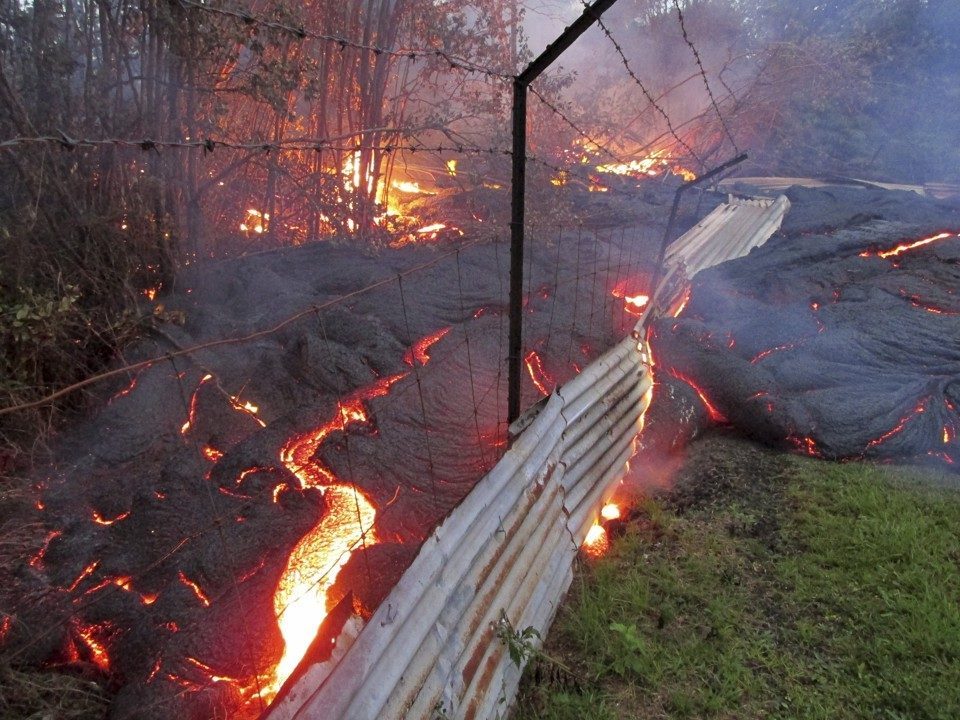
The alarming state of volcano monitoring in the U.S.

Lava flow from Kilauea volcano
© USGS/ReutersThe lava flow from the Kilauea volcano moves over a fence on private property near the village of Pahoa, Hawaii, in 2014.
One of the most volcanically active countries in the world is not ready for a devastating eruption

Thirteen days before Christmas, somewhere in the frigid waters of the Bering Sea, a massive volcano unexpectedly rumbled back to life.

Just like that, Bogoslof volcano began its first continuous eruption since 1992, belching great plumes of ash tens of thousands of feet into the cold sky over the Aleutian islands, generating volcanic lightning, and disrupting air travel—though not much else. The volcano is on a tiny island about 60 miles west of Unalaska, which is the largest city in the Aleutians. It has a population of about 5,000 people.

Bogoslof hasn't quieted yet. One explosion, in early January, sent ash 33,000 feet into the air. Weeks later, another eruption lasted for hours, eventually sprinkling enough ash on the nearby city to collect on car windshields and dust the snow-white ground with a sulfurous layer of gray. Over the course of two months, Bogoslof's intermittent eruptions have caused the island to triple in size so far, as fragments of rock and ash continue to pile atop one another.

Geologists don't know how long the eruption will last. In 1992, the activity at Bogoslof began and ended within weeks. But more than a century ago, it erupted continuously for years. In the 1880s, volcano observers in the Aleutians had little but their own senses to track what was happening. Today, scientists use satellite data and thermal imagery to watch Bogoslof—signs of elevated temperatures in satellite data indicate that lava has bubbled to the surface, for example. But monitoring efforts are nowhere near what they could be. For the relatively remote Bogoslof, the absence of ground-level sensors is inconvenient, perhaps, but not necessarily alarming. Elsewhere, the dearth of volcano sensors poses a deadly problem.

There are at least 169 active volcanoes in the United States, 55 of which are believed to pose a high or very high threat to people, according to a 2005 U.S. Geological Survey report.