Science & TechnologyS


Info

Shock finding: P-T mass extinction was due to an ice age

From the UNIVERSITÉ DE GENÈVE

The cold exterminated all of them

Through age determinations that are using the radioactive decay of uranium,scientists have discovered that one of the greatest mass extinctions was due to an ice age and not to a warming of Earth temperature.
Permian-Triassic boundary
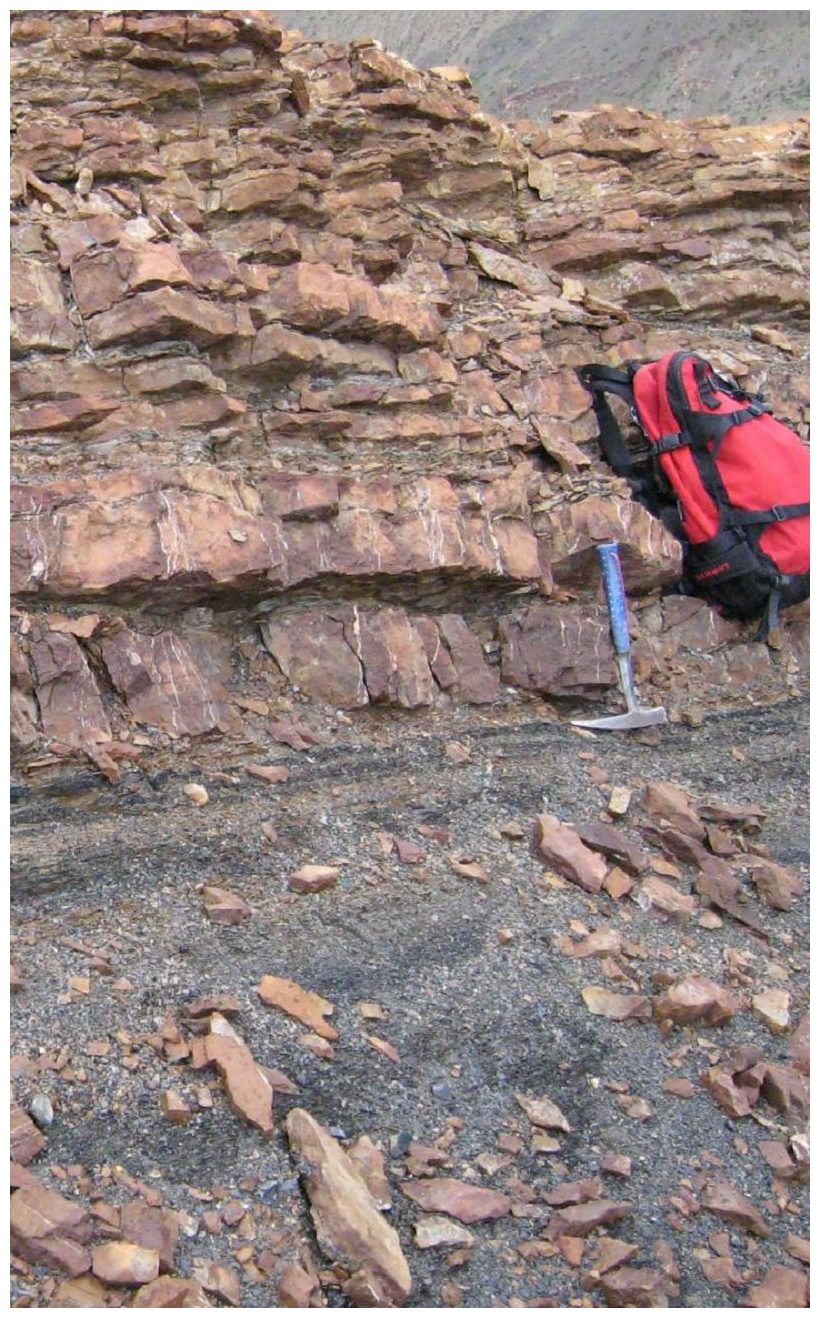
© H. Bucher, ZürichPermian-Triassic boundary in shallow marine sediments, characterised by a significant sedimentation gap between the black shales of Permian and dolomites of Triassic age. This gap documents a globally recognized regression phase, probably linked to a period of a cold climate and glaciation.
The Earth has known several mass extinctions over the course of its history. One of the most important happened at the Permian-Triassic boundary 250 million years ago. Over 95% of marine species disappeared and, up until now, scientists have linked this extinction to a significant rise in Earth temperatures. But researchers from the University of Geneva (UNIGE), Switzerland, working alongside the University of Zurich, discovered that this extinction took place during a short ice age which preceded the global climate warming. It's the first time that the various stages of a mass extinction have been accurately understood and that scientists have been able to assess the major role played by volcanic explosions in these climate processes. This research, which can be read in Scientific Reports, completely calls into question the scientific theories regarding these phenomena, founded on the increase of CO2 in the atmosphere, and paves the way for a new vision of the Earth's climate history.

Teams of researchers led by Professor Urs Schaltegger from the Department of Earth and Environmental Sciences at the Faculty of Science of the UNIGE and by Hugo Bucher, from the University of Zürich, have been working on absolute dating for many years. They work on determining the age of minerals in volcanic ash, which establishes a precise and detailed chronology of the earth's climate evolution. They became interested in the Permian-Triassic boundary, 250 million years ago, during which one of the greatest mass extinctions ever took place, responsible for the loss of 95% of marine species. How did this happen? for how long marine biodiversity stayed at very low levels ?

Mars

Bold plan: NASA scientists want to launch giant magnetic field into space to make Mars habitable for future generations

NASA magetic field mars
© NASA Goddard Space Flight Centre
NASA scientists have proposed a bold plan that could give Mars its atmosphere back and make the Red Planet habitable for future generations of human colonists.

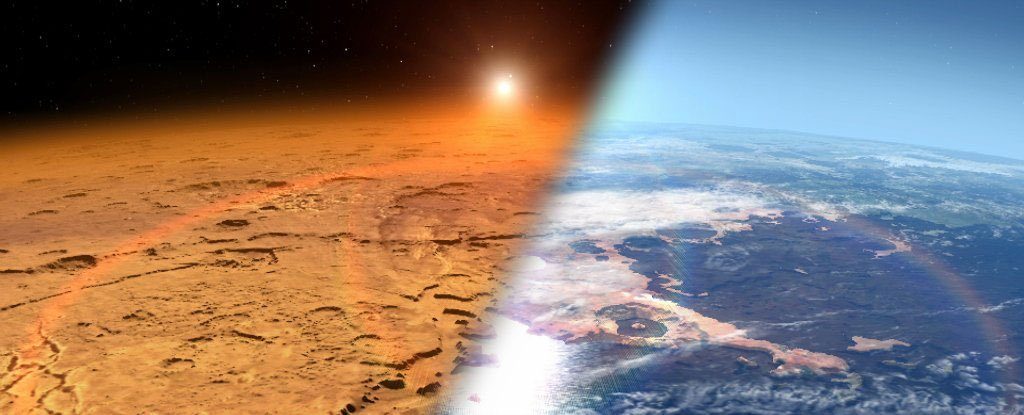
By launching a giant magnetic shield into space to protect Mars from solar winds, the space agency says we could restore the Red Planet's atmosphere, and terraform the Martian environment so that liquid water flows on the surface once again.

Mars may seem like a cold, arid wasteland these days, but the Red Planet is thought to have once had a thick atmosphere that could have maintained deep oceans filled with liquid water, and a warmer, potentially habitable climate.

Scientists think Mars lost all of this when its protective magnetic field collapsed billions of years ago, and solar wind - high-energy particles projected from the Sun - has been stripping the Red Planet's atmosphere away ever since.

Cloud Lightning

First-of-its-kind satellite promises a 'quantum leap' in storm forecasting

Lightning strikes from space
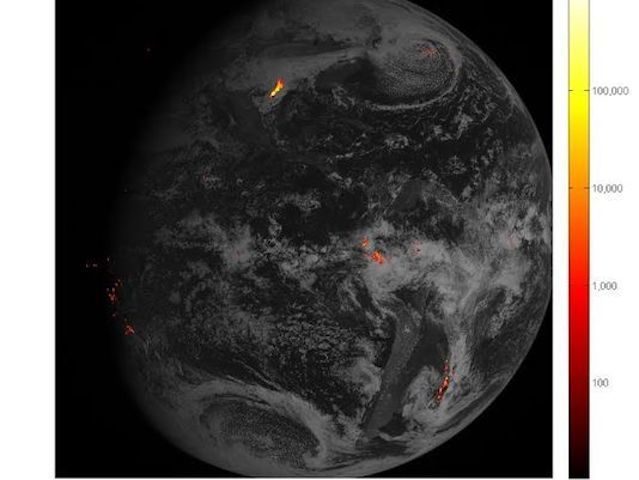
© NOAALightning strikes (yellow and red flashes) over the course of one hour on Feb. 14, 2017.
Every second, dozens of bolts of lightning crack across the sky with flashes that can have a temperature of 50,000 degrees — five times as hot as the surface of the sun.

Pinpointing exactly where and when these dangerous bolts hit the Earth is key for forecasting severe weather outbreaks. Now, for the first time, thanks to a new satellite instrument, forecasters are getting the best views ever of where lightning flashes.

The first images from the Geostationary Lightning Mapper, a new instrument onboard the recently launched GOES-16 satellite, were released Monday. The instrument is "transmitting data never before available to forecasters," the National Oceanic and Atmospheric Administration (NOAA) said.

They're not only spectacular images, they will also help meteorologists increase lead times for severe storm warnings. It's "a quantum leap in forecasting severe weather such as tornadoes," said engineer Tim Gasparrini of Lockheed Martin, which designed and built the instrument.


Cassiopaea

To infinity and beyond! Jeff Bezos to announce plans for space exploration

rocket launch
© Joe Skipper / Reuters
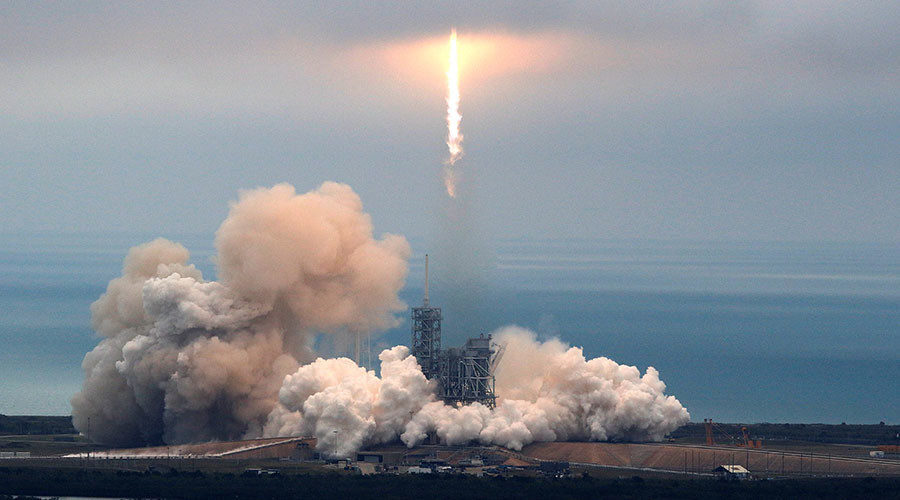
Private aerospace company Blue Origin set up by Amazon's CEO Jeff Bezos is expected to unveil plans this week for future space explorations, according to industry officials.

It is part of the company's ambitious plan to create rockets powerful enough to reach the outermost corners of the solar system.

Unnamed officials said Bezos might reveal details of Blue Origin's project to build a family of reusable rockets to conduct both manned and robotic missions to the Moon and other planets.

The company may announce plans for heavy-lift boosters amid growing competition with powerful rockets already under development by Elon Musk's SpaceX. The test flight of the long-delayed Falcon Heavy developed by Musk's corporation is slated for this year.

Eye 1

McGurk Effect: Do your eyes override your ears?

Eye McGurk
© Martin Fütterer.
Seeing is not always believing -- visual speech (mouth movements) mismatched with auditory speech (sounds) can result in the perception of an entirely different message. This mysterious illusion is known as the McGurk effect. In new research, published in PLOS Computational Biology, neuroscience researchers have created an algorithm to reveal key insight into why the brain can sometimes muddle up one of the most fundamental aspects of the human experience.

The findings will be useful in understanding patients with speech perception deficits and in building computers able to understand auditory and visual speech.

"All humans grow up listening to tens of thousands of speech examples, with the result that our brains contain a comprehensive mapping of the likelihood that any given pair of mouth movements and speech sounds go together," said Dr. Michael Beauchamp, professor of neurosurgery at Baylor College of Medicine and senior author on the paper with John Magnotti, postdoctoral research fellow at Baylor. "In everyday situations we are frequently confronted with multiple talkers emitting auditory and visual speech cues, and the brain must decide whether or not to integrate a particular combination of voice and face."

"Even though our senses are constantly bombarded with information, our brain effortlessly selects the verbal and nonverbal speech of our conversation partners from this cacophony," Magnotti said.

The McGurk effect is an example of when this goes wrong. It happens when mouth movements that are seen can override what is heard, causing a person to perceive a different sound than what is actually being said. Only when the eyes are closed, and when the sound is being heard, can the correct message be perceived. For example, the visual "ga" combined with the auditory "ba" results in the perception of "da."

Comet 2

New Comet: C/2017 E1 (Borisov)

CBET nr. 4369, issued on 2017, March 04, announces the discovery of a comet (magnitude ~17) by Gennadii Vladimirovich Borisov on three unfiltered 120-s exposures obtained on Mar. 1.10 UT with a 0.4-m f/2.3 astrograph at the "Mobil Astronomical Robotics Genon" Observatory (MARGO) near Nauchnij. The new comet has been designated C/2017 E1 (Borisov).

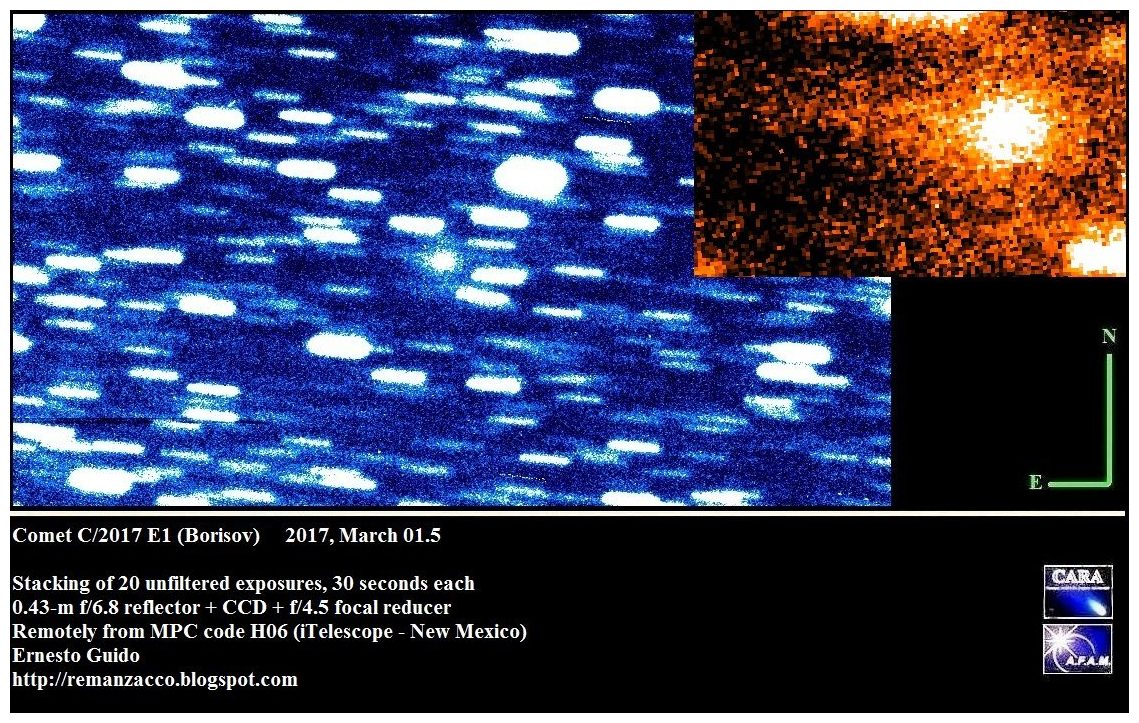
I performed follow-up measurements of this object, while it was still on the neocp. Stacking of 20 unfiltered exposures, 30 seconds each, obtained remotely on 2017, March 1.5 from H06 (iTelescope network) through a 0.43-m f/6.8 reflector + CCD + f/4.5 focal reducer, shows that this object is a comet with a diffuse coma nearly 30 arcsec in diameter.

My confirmation image (click on it for a bigger version)
Comet Borisov
© Remanzacco Blog
M.P.E.C. 2017-E42 assigns the following preliminary parabolic orbital elements to comet C/2017 E1: T 2017 Apr. 9.8; e= 1.0; Peri. = 151.90; q = 0.90; Incl.= 14.54

Brain

A giant neuron has been found wrapped around the entire circumference of the brain

giant neuron

For the first time, scientists have detected a giant neuron wrapped around the entire circumference of a mouse's brain, and it's so densely connected across both hemispheres, it could finally explain the origins of consciousness.

Using a new imaging technique, the team detected the giant neuron emanating from one of the best-connected regions in the brain, and say it could be coordinating signals from different areas to create conscious thought.

This recently discovered neuron is one of three that have been detected for the first time in a mammal's brain, and the new imaging technique could help us figure out if similar structures have gone undetected in our own brains for centuries.

At a recent meeting of the Brain Research through Advancing Innovative Neurotechnologies initiative in Maryland, a team from the Allen Institute for Brain Science described how all three neurons stretch across both hemispheres of the brain, but the largest one wraps around the organ's circumference like a "crown of thorns".

Beaker

Scientists create artificial mouse embryos; humans could be next

human clone
© Simon Katzer / Global Look Press
Human life could soon be replicated in a laboratory after scientists at the University of Cambridge successfully created artificial mouse embryos.

Scientists developed a mouse embryo structure using stem cells grown in the lab. The cells grew into primitive embryos that had identical internal structures to those that emerge during normal development in the womb.

The purpose of the research is to gain deeper insight into an embryo's development just prior to implantation.

It marks a significant step forward, as previous attempts to grow embryo-like structures using only embryonic stem cells have only had limited success.

"I'm looking at it as a miracle of nature as well as trying to understand the process. It's incredibly beautiful that we can begin to understand those forces that give rise to self-organization during the earliest stage of development," Professor Zernicka-Goetz told the Guardian.

The researchers used a combination of genetically modified mouse cells, known as "master cells," and a 3D scaffold, known as an extracellular matrix, on which the cells could grow. The resulting "embryo" looks almost identical to a natural mouse embryo.

Solar Flares

New research on solar storms reveal surprising removal of electrons from large portions of Earth's atmosphere

solar storms lose electrons data
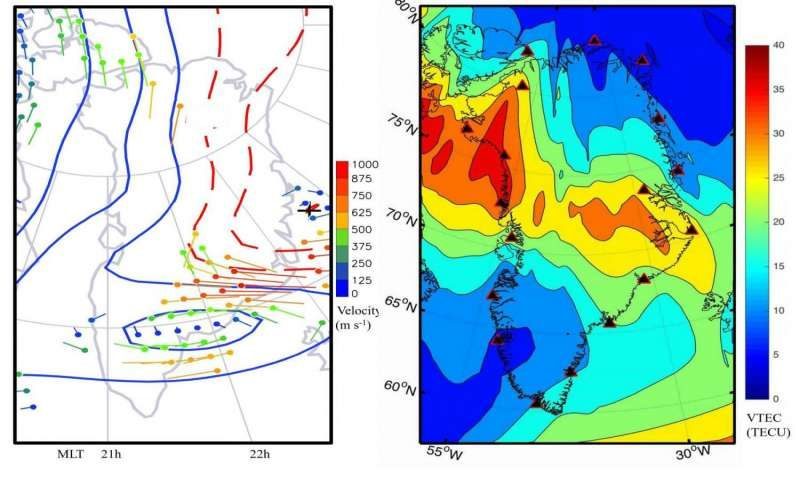
© DTU SpaceIn connection with violent solar eruptions, large variations occur in electron density in the ionosphere over Greenland, which interferes with GPH navigation signals as well as flight and satellite communication. The figure (right) shows large electron density in red and small density in blue. This phenomenon gives rise to high electron speeds in the ionosphere, exceeding 1,000 metres per second (left) and resulting in violent energy bursts. For the first time ever, researchers from DTU have demonstrated the phenomenon which cannot yet be explained.
Eruptions on the Sun's surface send clouds of electrically charged particles towards Earth, producing solar storms that—among other things—can trigger the beautiful Northern Lights over the Arctic regions.

But the storms may also have a strong impact on the efficiency of communication and navigation systems at high latitudes. It is therefore important to study the phenomena.

New research from DTU Space and University of New Brunswick (Prof. Richard Langley), NASA Jet Propulsion Laboratory (Dr. Attila Komjathy) and University of Illinois (Dr. Mark D. Butala) shows that, apparently, there is a surprising and unknown mechanism in play during solar storms. During solar storms, large bursts of electrons are usually sent into the part of Earth's atmosphere called the ionosphere, which starts about 80 kilometres above the Earth.

This phenomenon occurs especially at high latitudes. It happens because the magnetic field created by the eruption on the Sun interferes with the Earth's magnetic field. It opens, so to speak, up to allow particles and electrons—that would otherwise be reflected—to penetrate the ionosphere.

It is a known phenomenon. But it turns out that electrons at the same time disappear from large areas, which has not been demonstrated earlier.

"We made extensive measurements in connection with a specific solar storm over the Arctic in 2014, and here we found that electrons in large quantities are virtually vacuum-cleaned from areas extending over 500 to 1,000 kilometres. It takes place just south of an area with heavy increases in electron density, known as patches," says Professor Per Høeg from DTU Space.

The results of the research were recently published on the front page of the renowned scientific journal Radio Science. The discovery is an important piece in the jigsaw puzzle of understanding solar storms and their impact on the Earth's ionosphere.

Info

Brain activity at the moment of death

What happens in the brain when we die?

Canadian researchers Loretta Norton and colleagues of the University of Western Ontario examine this grave question in a new paper: Electroencephalographic Recordings During Withdrawal of Life-Sustaining Therapy Until 30 Minutes After Declaration of Death

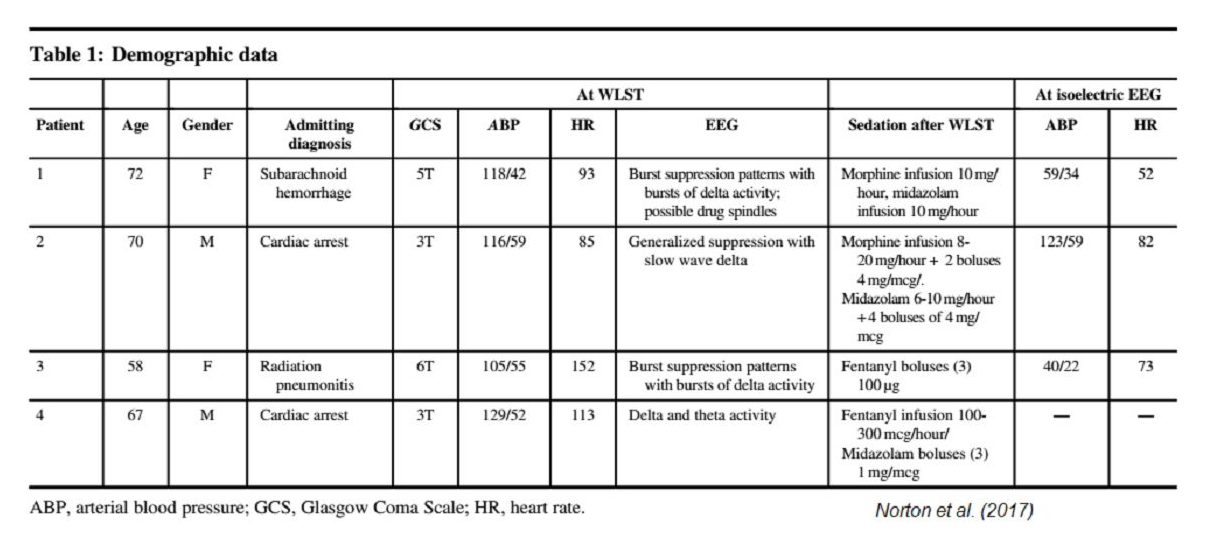
Norton et al. examined frontal EEG recordings from four critically ill patients at the point where their life support was withdrawn. Here are some details on the four:
Demographic Data
© Norton et al (2017)
Here's the EEG recordings. None of the patients met criteria for brain death at baseline. Time 0 represents the moment of clinical death, namely when arterial blood pressure (ABP) became constant, indicating that the heart had stopped. This occured a few minutes after life support had been withdrawn.