Science & TechnologyS


Pi

Black holes and super-cooled helium atoms follow same physics law

cold helium black  holes
© Adrian Del MaestroScientists have discovered that a sphere of cold helium atoms (in green)—interacting with a surrounding larger container of the same kind of atoms (in blue)—follows a bizarre law of physics also observed in black holes. This discovery points to a “deeper reality,” says UVM physicist Adrian Del Maestro and may be a step toward using this “superfluid” helium as the fuel of a new generation of ultra-fast quantum computers.
A team of scientists has discovered that a law controlling the bizarre behavior of black holes out in space—is also true for cold helium atoms that can be studied in laboratories.

"It's called an entanglement area law," says Adrian Del Maestro, a physicist at the University of Vermont who co-led the research. That this law appears at both the vast scale of outer space and at the tiny scale of atoms, "is weird," Del Maestro says, "and it points to a deeper understanding of reality."

The new study was published March 13 in the journal Nature Physics—and it may be a step toward a long-sought quantum theory of gravity and new advances in quantum computing.

Arrow Down

'Boom - it would drop': Earthquake could cause California land to sink rapidly, up to 3 feet

Scientists looking for charcoal
© fullerton.eduScientists look for microscopic charcoal to radiocarbon date mud samples collected from the Seal Beach wetlands.
Land within major California seismic faults could sink by between 1.5 and 3 feet in a matter of seconds, causing catastrophic devastation, says a new study. It also shows that the Newport-Inglewood fault is more active than previously thought.

"It's not just a gradual sinking. This is boom — it would drop. It's very rapid sinking," Robert Leeper, lead author of a new study published in Nature, carried out with the help of the US Geological Survey, told the LA Times.

Leeper's team took 55 samples at the Seal Beach National Wildlife Refuge in southern Los Angeles, by submerging 20-feet pipes that collected samples of the sediment, initially looking for evidence for a prehistoric tsunami.

Instead, the team from Cal State Fullerton found an identical pattern, of living vegetation suddenly dropping and being buried underneath the ground. "We identified three of these buried layers composed of vegetation or sediment that used to be at the surface," said Leeper.

Mars

Trump signs NASA funding bill to send astronauts to Mars

Donald Trump
© Kevin Lamarque / Reuters
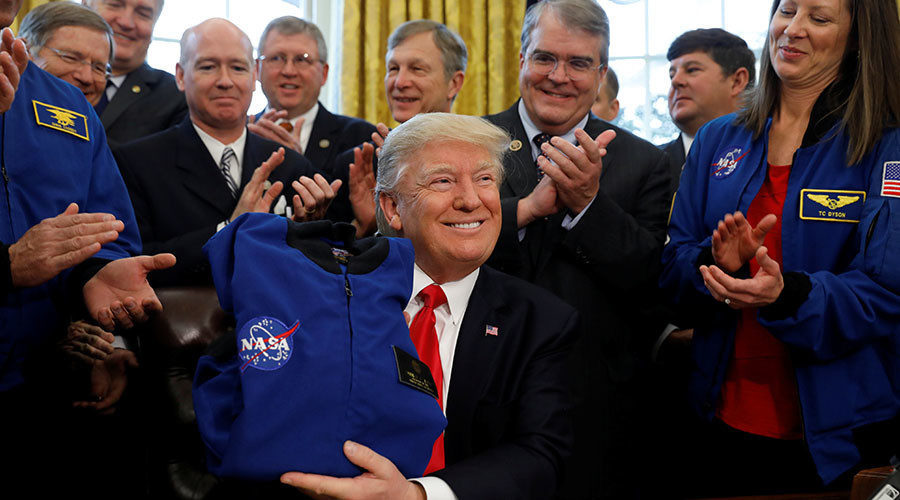
President Donald Trump has signed a bill authorizing $19.5 billion in funding for NASA, which includes an increased focus on deep space exploration and a new goal of a manned mission to Mars.

The NASA Transition Authorization Act of 2017, or S. 442, provides funding for fiscal year 2018, which begins October 1. It specifically appropriates money for NASA's deep space exploration, including the Space Launch System and the Orion spacecraft, as well as for the ongoing medical monitoring and treatment of astronauts. It builds on the current public-private partnership for space, with commercial companies transporting American astronauts to the International Space Station (ISS) and NASA focusing on deep space and the mission to Mars.

"For almost six decades, NASA's work has inspired millions and millions of Americans to imagine distant worlds and a better future right here on Earth. I'm delighted to sign this bill," Trump said. "With this legislation, we support NASA's scientists, engineers, astronauts and their pursuit of discovery. We support jobs. It's about jobs, also."

Brain

Stanford scientists find a previously unknown role for the cerebellum

Researchers long believed that the cerebellum did little more than process our senses and control our muscles. New techniques to study the most densely packed neurons in our brains reveal that it may do much more.

cerebellum’s granule cells
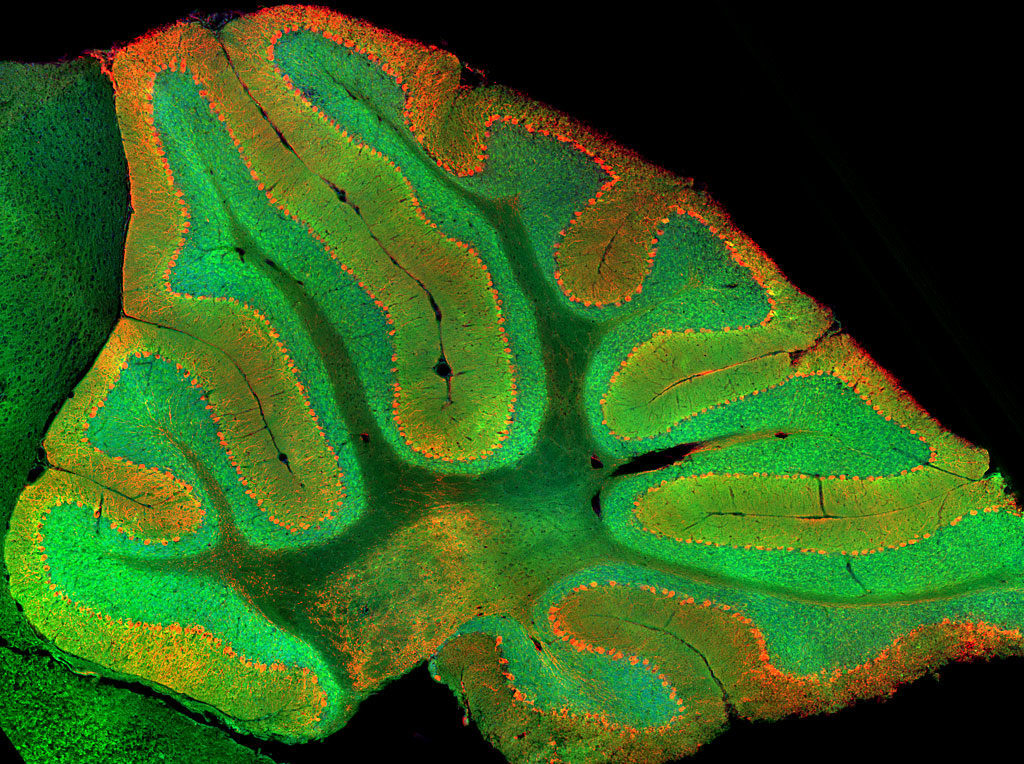
© Mark WagnerStanford researchers have found a previously unknown, cognitive role for the cerebellum’s granule cells, which show up as green in this image.
Pity the cerebellum, tucked in the back of the brain mostly just keeping our muscles running smoothly. Its larger neighbor, the cerebrum, gets all the attention. It's the seat of intelligence, the home of thinking and planning. It's what separates humans from our less quick-witted ancestors. The cerebellum - which literally means "little brain" - is thought to just sit there helping us balance and breathe, like some kind of wee heating and ventilation system.

But maybe not for long. In a series of experiments published March 20 in Nature, Stanford researchers show that neurons within the cerebellum respond to and learn to anticipate rewards, a first step toward a much more exciting future for the cerebrum's largely overlooked little brother and one that could open up new avenues of research for neuroscientists interested in the roots of cognition.

Comment:


Bulb

Engineers develop inexpensive bio-friendly material that generates electricity through thermoelectric process involving heat and cold air

bio-friendly material generates electricity
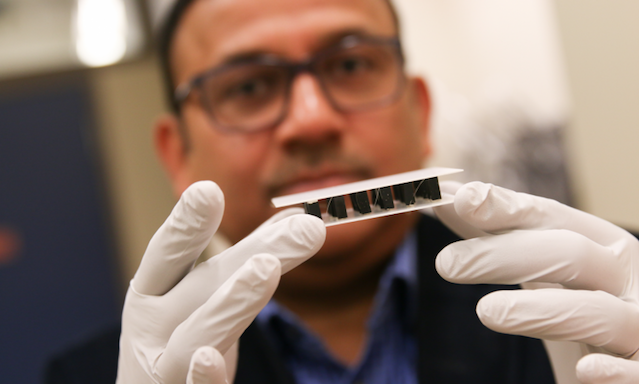
© Dan Hixson/University of Utah College of Engineering University of Utah materials science and engineering professor Ashutosh Tiwari and his team have an inexpensive and bio-friendly material that can generate electricity through a thermoelectric process involving heat and cold air. The material (the black blocks between the two plates pictured) could be used with cooking pots to charge phones or jewelry to power health sensors.
Thanks to the discovery of a new material by University of Utah engineers, jewelry such as a ring and your body heat could generate enough electricity to power a body sensor, or a cooking pan could charge a cellphone in just a few hours.

The team, led by University of Utah materials science and engineering professor Ashutosh Tiwari, has found that a combination of the chemical elements calcium, cobalt and terbium can create an efficient, inexpensive and bio-friendly material that can generate electricity through a thermoelectric process involving heat and cold air.

Their findings were published in a new paper March 20 in the latest issue of Scientific Reports. The first author on the paper is University of Utah materials science and engineering postdoctoral researcher, Shrikant Saini.

Fireball

Lunar impact event sighted

Lunar Impact event
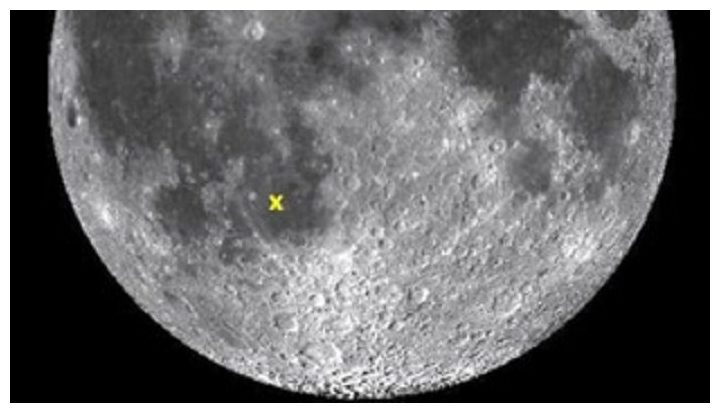
© Aberystwyth UniversityX marks the spot where the meteorite hit the moon.
Space scientists at Aberystwyth University have reported what they believe to be the first confirmed sighting in the British Isles of a meteorite hitting the Moon.

A Lunar Impact Flash - a flash of light when something hits the Moon's surface - was recorded on the southern hemisphere of the Moon and probably caused by a small meteorite the size of a golf ball.

Lasting less that one tenth of a second, the image was caught on New Year's Day 2017 on a remotely operated telescope at Aberystwyth University.
Lunar Impact Flashes are notoriously difficult to record. The meteorite would be travelling at anywhere between 10 to 70 km per second as it hit the surface of the Moon. That is the equivalent of travelling from Aberystwyth to Cardiff in just a few seconds, and the resulting impact would be over in a fraction of a second.

A similar meteorite hitting the Earth's atmosphere would produce a beautiful shooting star, but as the Moon has no atmosphere it slams into the surface, causing a crater the size of very large pot hole. Just under 1% of the meteorite's energy is converted into a flash of light, which we were able to record here in Aberystwyth.

- Dr Tony Cook, Aberystwyth University
Scientists estimate the Moon is hit by similar sized meteorites as often as once every 10 to 20 hours.

Airplane Paper

Interceptors: Counter-drone systems emerge in new aerial frontier

Interceptor drone
© Reuters/Stephen LamJaz Banga, co-founder and chief executive of Airspace Systems, stands next to an Interceptor autonomous aerial drone his company developed to capture enemy drones during a product demonstration in Castro Valley, California March 6, 2017.
The enemy drone whined in the distance. The Interceptor, a drone-hunting machine from Silicon Valley startup Airspace Systems, slinked off its launch pad and dashed away in hot pursuit.

The hunter twisted through the air to avoid trees, homed in on its target, fired a Kevlar net to capture it, and then carried the rogue drone back to its base like a bald eagle with a kill.

Airspace is among some 70 companies working on counter-drone systems as small consumer and commercial drones proliferate. But unlike others, it aims to catch drones instead of disabling them or shooting them down.

A demonstration at Airspace headquarters in San Leandro, California, showed a compact aircraft just a few feet wide, yet capable of sophisticated, autonomous navigation and accurate targeting of a drone in motion.

It is still early days in the drone-defense business. Security professionals both public and private worry about dangerous drones at military sites, airports, data centers, and public venues like baseball stadiums. But counter-measures carry risk, too.

Blue Planet

Study offers new theories about nature of Earth's iron

Earth's iron formation theory
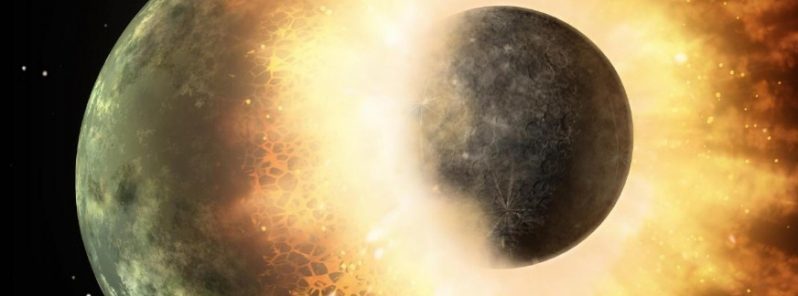
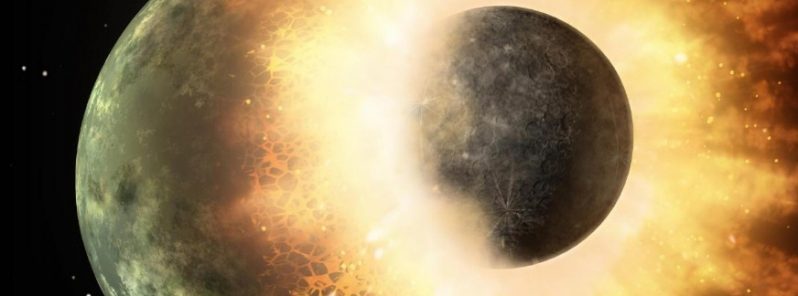
© NASA/JPL-CaltechThis artist's concept shows a high-speed collision in the early stages of planetary formation.
In a study published March 20, 2017 in Nature Communications, an international team of scientists challenges the prevailing theory that the unique nature of Earth's iron was the result of how its core was formed billions of years ago. The study opens the door to competing theories about why levels of certain heavy forms of iron, known as isotopes, are higher on Earth than in other bodies in the Solar System.

The prevailing view attributes the Earth's anomalous iron composition to the formation of the planet's core, but this new study suggests that the peculiar iron's isotopic signature developed later in Earth's history, possibly created by a collision between Earth and another planetary body that vaporized the lighter iron isotopes, or the churning of Earth's mantle, drawing a disproportionate amount of heavy iron isotopes to Earth's crust from its mantle.

Iron is one of the most abundant elements in the solar system, and understanding it is key to figuring out how Earth and other celestial bodies formed. The researchers compared the ratio of the heavier iron isotope Fe-56 to the lighter Fe-54 for Earth and extraterrestrial rocks, including those from the moon, Mars and ancient meteorites. They found that the ratio is significantly higher for Earth rocks than for extraterrestrial rocks, all of which have an identical ratio. Their research attempts to explain how that happened.

"The Earth's core formation was probably the biggest event affecting the Earth's history," said Jung-Fu Lin, professor of geosciences at the University of Texas at Austin and co-author of the paper. "In this study, we say that there must be other origins than the Earth's formation for this iron isotopic anomaly."

Co-author Nicolas Dauphas, the Louis Block Professor of Geophysical Sciences at the University of Chicago, called the research groundbreaking "because of the synthesis of the materials analyzed, the technique to take the measurements and the data treatment."

Beaker

U.K. moves forward with three-parent IVF

The country's fertility regulator has approved the first application to carry out mitochondrial replacement therapy, which uses biological material from two women and one man to create an embryo.

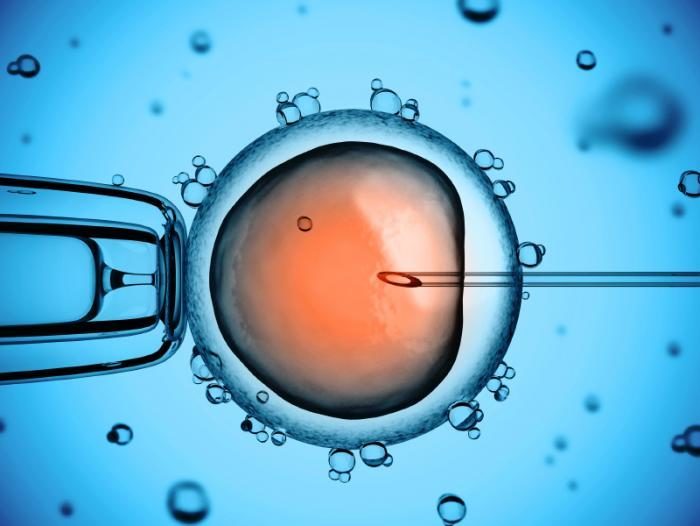
in vitro fertilization
Mitochondrial replacement therapy (MRT), also known as three-parent in vitro fertilization, is set to make its way to the clinic in the U.K. Last week (March 16), the country's Human Fertilisation and Embryo Authority (HFEA) approved the first application for license to perform the procedure. The HFEA granted a license to Newcastle University, where researchers have been studying the technique for several years.

"I can confirm today that the HFEA has approved the first application by Newcastle Fertility at Life for the use of mitochondrial donation to treat patients," HFEA Chair Sally Cheshire told CNN. "Patients will now be able to apply individually to the HFEA to undergo mitochondrial donation treatment at Newcastle, which will be life-changing for them, as they seek to avoid passing on serious genetic diseases to future generations."

Comment:


Sun

The Sun has been blank for two weeks straight

The Sun
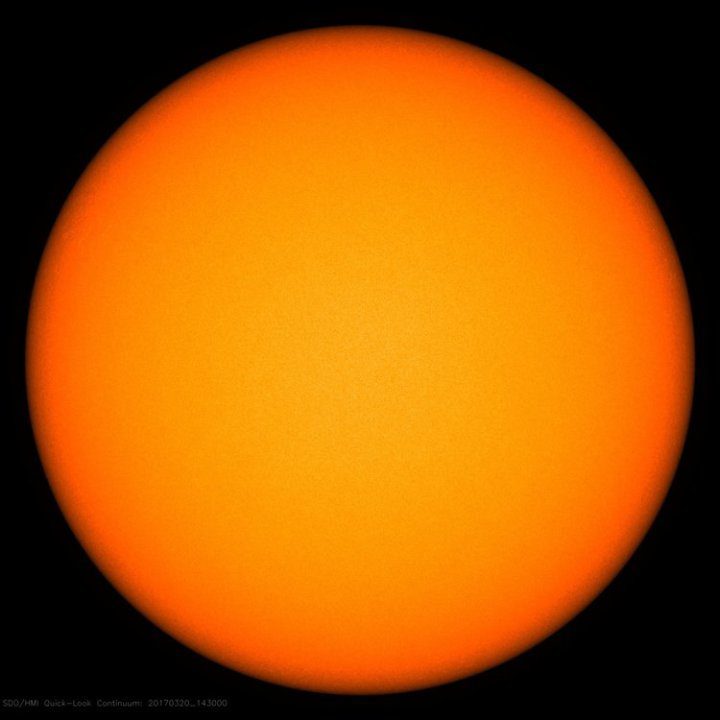
© NASA/GSFCA blank look to the sun on Monday, March 20, and it has now been blank for two weeks straight;
Over the weekend, we reviewed the state of the solar data for March 2017. Now, there's a two week straight lack of sunspots, the longest stretch since 2010.

Overview

The sun is currently blank with no visible sunspots and this is the 14th straight day with a blank look which is the longest such stretch since April 2010 according to spaceweather.com. Historically weak solar cycle 24 continues to transition away from its solar maximum phase and towards the next solar minimum.

In April 2010 - the last time there was a two week stretch with no visible sunspots - the sun was emerging from the last solar minimum which was historically long and deep. There have already been 26 spotless days in 2017 (34% of the entire year) and this follows 32 spotless days last year which occurred primarily during the latter part of the year. The blank look to the sun will increase in frequency over the next couple of years leading up to the next solar minimum - probably to be reached in late 2019 or 2020.

By one measure, the current solar cycle is the third weakest since record keeping began in 1755 and it continues a weakening trend since solar cycle 21 peaked in 1980. One of the impacts of low solar activity is the increase of cosmic rays that can penetrate into the Earth's upper atmosphere and this has some important consequences.