Science & TechnologyS


Arrow Down

The weird world of cyborg bugs and animals

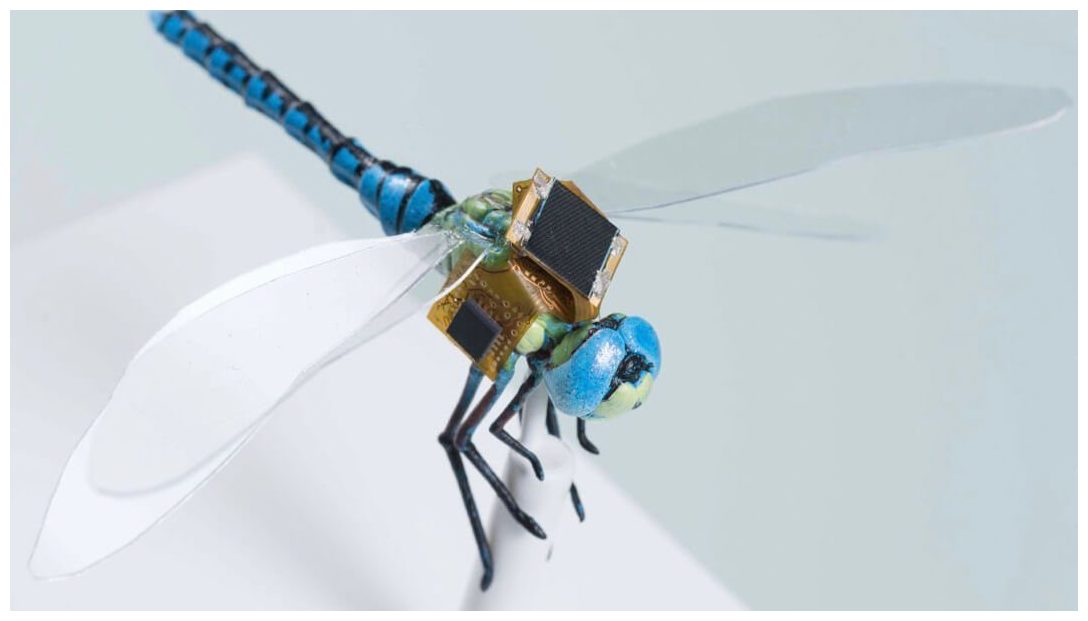
Cyborg Dragonfly
© Draper
Roboticists frequently turn to nature for inspiration for their inventions, reverse engineering the traits that evolution has developed over millennia. Others are taking a shortcut by simply integrating modern technology with living animals.

The idea may seem crazy, but animals and machines are not so different. Just as a network of wires carry electrical signals between a robot's sensors, processing units and motors, the flow of action potentials around our nervous system connects our sensory organs, brain and muscles.

But while there are similarities, the natural world has come up with some intricate solutions to problems that engineers are nowhere near replicating in silicon. That has prompted some scientists to try and piggyback on evolution's innovations by building part-animal, part-machine cyborgs. Here's a rundown of some of the most eye-catching examples.

Laptop

Windows 10 has been logging everything you type — here's how to stop it

windows10
© The Free Thought Project
According to a startling new report, if you use Windows 10, every, single keystroke you've ever entered on your computer has been logged.

If that weren't alarming enough to the privacy-minded among us, all of that information is being sent directly to Microsoft.

All of which begs the question, is this why Microsoft was so insistent its users download Windows 10 as soon as it became available?

Question

Does a portal, link standard model to dark physics?

Portal
© Jurik Peter/Shutterstock
Theoretical physicists have put forward a new hypothesis that aims to connect the world of visible physics to the hidden forces of our Universe: what if there's a portal that bridges the gap between the standard model to dark matter and dark energy?

The idea is that the reason we struggle to understand things such as dark matter and dark energy isn't because they don't exist - it's because we've been oblivious to a portal through which regular particles and these 'dark particles' interact. And it's something that could be tested experimentally.

The idea of portals in the Universe might sound pretty crazy, but let's be clear for a second: we're talking portals on the quantum, teeny-tiny scale here - nothing that you could drive a spacecraft through.

And it's not the first time these kinds of portals have been explored in the world of theoretical physicists.

The concept exists because there's a big gap in physics between what can be referred to as 'visible physics' - stuff we can measure and directly detect, such as electromagnetism and photons - and 'dark physics', which is made up of things we can feel the effects of but can't actually interact with, such as dark matter and dark energy.

Portals are our attempt to explain how these two seemingly separate worlds interact to form the Universe we live in.

The visible side of physics hinges on 17 catalogued types of particles that make up the standard model - including electrons, photons, and the Higgs boson.

But unfortunately, the standard model can't explain everything we see happening in the Universe. Crucially, it can't explain gravity or the rate of expansion of the Universe.

Bizarro Earth

New Zealand's earthquake most complex ever studied

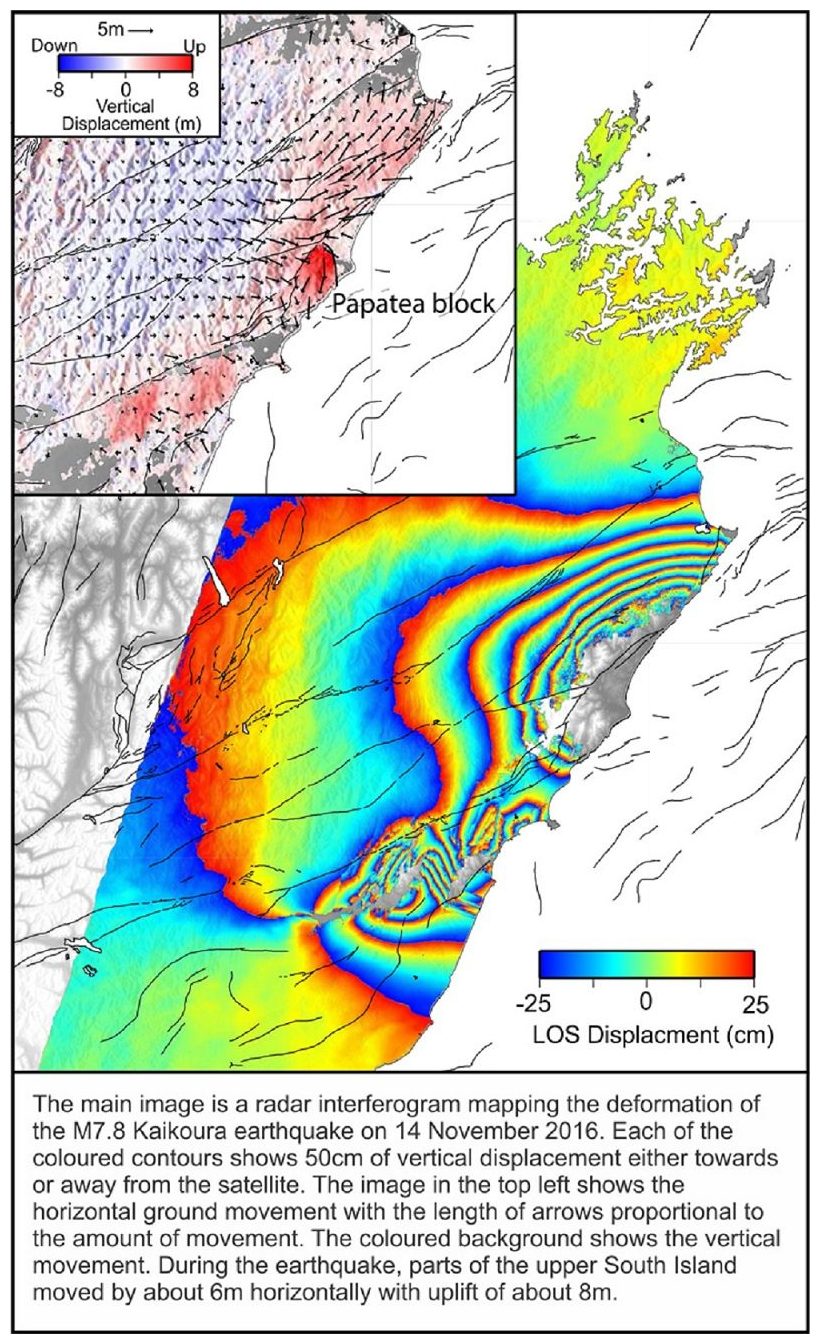
Interferogram Kaikoura
© GNS New Zealand
Last November's magnitude 7.8 Kaikoura earthquake was so complex and unusual that it is likely to lead to changes in the way scientists think about earthquake hazards in plate boundary zones worldwide, a new study says.

Not only was it a record-setter for its complexity, but it was also one of the best recorded large earthquakes anywhere in the world. This latter feature has enabled scientists to undertake analysis in an unprecedented level of detail.

The paper is the first of a number of studies to be published on the rich array of data collected during and immediately after the earthquake revealing its astonishingly complex nature.

Published today in the journal Science, the paper is titled 'Complex multi-fault rupture during the 2016 M7.8 Kaikoura earthquake, New Zealand'. Led by GNS Science and with 29 co-authors from 11 national and international institutes, it reports on the analysis of a range of quake data including satellite radar imagery, field observations, GPS data and coastal uplift data.

The authors say the quake has underlined the importance of re-evaluating how rupture scenarios are defined for seismic hazard models in plate boundary zones worldwide.

The study shows the quake moved parts of the South Island more than 5 metres closer to the North Island in addition to being uplifted by up to 8m.

Question

Scientists search for proof that Tasmanian tigers are living in outback Queensland, Australia

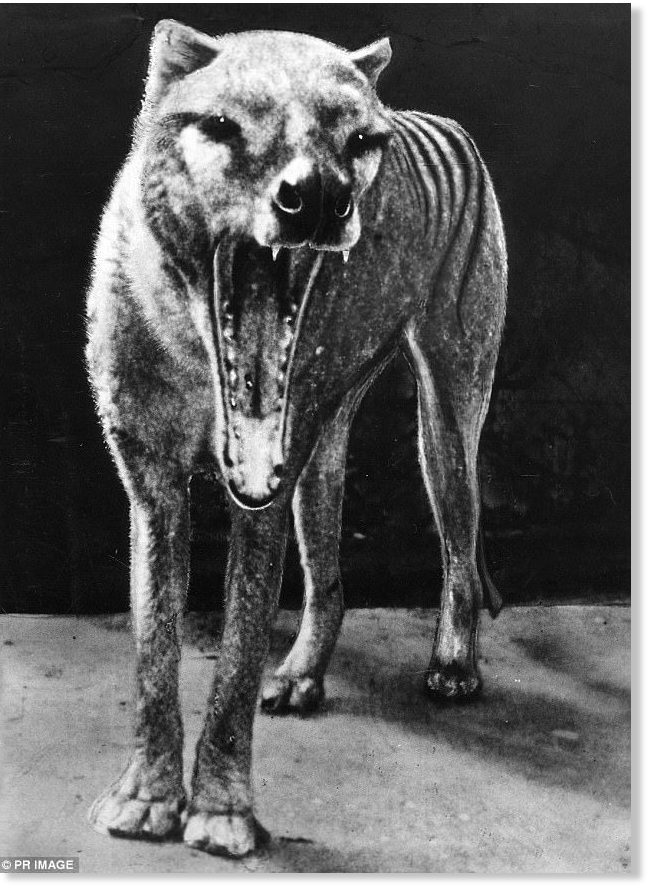
The last known Tasmanian tiger (pictured) died in Hobart zoo in September 1936
Scientists will search for the long-lost Tasmanian tiger in Far North Queensland after two promising sightings of what could be the extinct predator.

Experts hold high hopes of re-discovering the Thylacine, based on descriptions of sightings which they believe are 'detailed and plausible'.

Dr Sandra Abell from James Cook University - who recently discovered a second population of the near-extinct northern bettong in the same area, will lead the field survey, Australian Geographic reports.

The search was first instigated after the ABC asked co-investigator Professor Bill Laurance, also from JCU, to respond to a description of a sighting by former tourism operator Brian Hobbs of Ravenshoe.

Mr Hobbs gave Professor Laurance a detailed account of seeing a pack of animals matching the description of Tasmanian tigers while spotlighting in the Cape York Peninsula.

Magnify

A new lung function has been discovered - they make blood

lungs
© Puwadol Jaturawutthichai/Shutterstock.com
Researchers have discovered that the lungs play a far more complex role in mammalian bodies than we thought, with new evidence revealing that they don't just facilitate respiration - they also play a key role in blood production.

In experiments involving mice, the team found that they produce more than 10 million platelets (tiny blood cells) per hour, equating to the majority of platelets in the animals' circulation. This goes against the decades-long assumption that bone marrow produces all of our blood components.

Researchers from the University of California, San Francisco also discovered a previously unknown pool of blood stem cells that makes this happen inside the lung tissue - cells that were incorrectly assumed to mainly reside in bone marrow.

"This finding definitely suggests a more sophisticated view of the lungs - that they're not just for respiration, but also a key partner in formation of crucial aspects of the blood," says one of the researchers, Mark R. Looney.

Beaker

New kind of matter: Scientists create a self-propelling liquid

new matter
Imagine a liquid that could move on its own. No need for human effort or the pull of gravity. You could put it in a container flat on a table, not touch it in any way, and it would still flow.

Brandeis researchers report in a new article in Science that they have taken the first step in creating a self-propelling liquid. The finding holds out the promise of developing an entirely new class of fluids that can flow without human or mechanical effort. One possible real-world application: Oil might be able to move through a pipeline without needing to be pumped.

The researchers work at Brandeis' Materials Research Science and Engineering Center (MRSEC), part of a National Science Foundation initiative to create a revolutionary new class of materials and machines made from biological components.

The breakthrough reported in the journal Science was achieved by reproducing in the lab the incredibly complex series of processes that allow cells to change shape and adapt to their environment. Cells can do this because the building blocks of its scaffolding—hollow cylindrical tubes called microtubules—are capable of self-transformation. The microtubules grow, shrink, bend and stretch, altering the cell's underlying structure.

Mars

Purest, most massive brown dwarf discovered by astronomers

brown dwarf
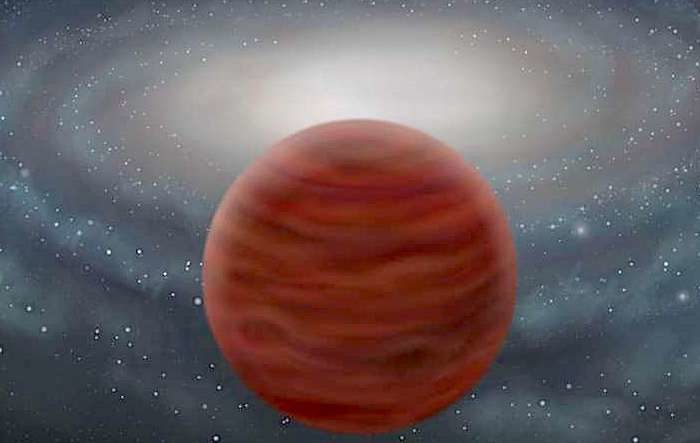
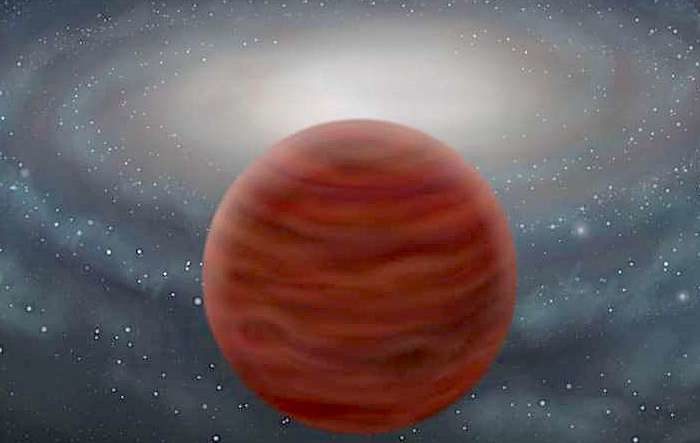
© John PinfieldAn artist's impression of the new pure and massive brown dwarf.
An international team of astronomers has identified a record breaking brown dwarf (a star too small for nuclear fusion) with the 'purest' composition and the highest mass yet known. The object, known as SDSS J0104+1535, is a member of the so-called halo - the outermost reaches - of our Galaxy, made up of the most ancient stars. The scientists report the discovery in Monthly Notices of the Royal Astronomical Society.

Brown dwarfs are intermediate between planets and fully-fledged stars. Their mass is too small for full nuclear fusion of hydrogen to helium (with a consequent release of energy) to take place, but they are usually significantly more massive than planets.

Located 750 light years away in the constellation of Pisces, SDSS J0104+1535 is made of gas that is around 250 times purer than the Sun, so consists of more than 99.99% hydrogen and helium. Estimated to have formed about 10 billion years ago, measurements also suggest it has a mass equivalent to 90 times that of Jupiter, making it the most massive brown dwarf found to date.

It was previously not known if brown dwarfs could form from such primordial gas, and the discovery points the way to a larger undiscovered population of extremely pure brown dwarfs from our Galaxy's ancient past.

The research team was led by Dr ZengHua Zhang of the Institute of Astrophysics in the Canary Islands. He said: "We really didn't expect to see brown dwarfs that are this pure. Having found one though often suggests a much larger hitherto undiscovered population —I'd be very surprised if there aren't many more similar objects out there waiting to be found."

SDSS J0104+1535 has been classified as an L type ultra-subdwarf using its optical and near-infrared spectrum, measured using the European Southern Observatory's Very Large Telescope (VLT). This classification was based on a scheme very recently established by Dr Zhang.

Galaxy

Ripples in space-time just got violent - a monster black hole has been kicked from its galactic core in a bizarre cosmic collision

tell-tale quasar and its host galaxy
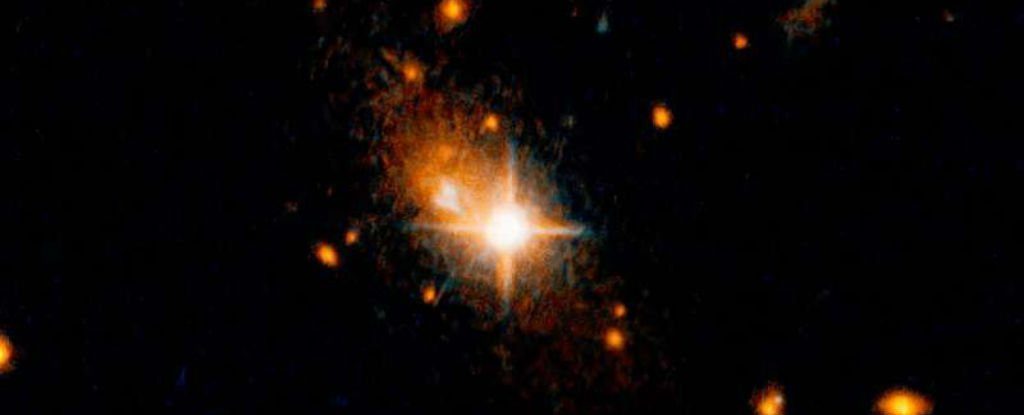
© NASA, ESA, M. Chiaberge (STScI/ESA)The tell-tale quasar and its host galaxy.
Scientists have identified a runaway supermassive black hole that appears to have been dislodged from its galactic centre by the extraordinary force of gravitational waves - ripples in space-time that were first predicted by Einstein more than a century ago.

This black hole is thought to weigh more than 1 billion Suns, and is tearing through its galaxy at speeds of roughly 7.6 million km/h (4.7 million mph). It's so far cleared an intimidating 35,000 light-years, and there's no telling where it's going to end up.

"We estimate that it took the equivalent energy of 100 million supernovae exploding simultaneously to jettison the black hole," says one of the team, Stefano Bianchi from the Roma Tre University in Italy.

Attention

Port Canaveral: Mysterious equipment on SpaceX drone ship

Space X equip
© Florida Today
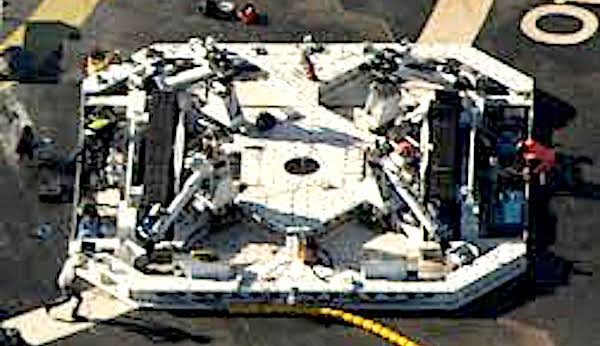
Stephen Marr had his suspicions when he photographed a mysterious piece of equipment atop SpaceX's drone ship at Port Canaveral on Monday. "I knew there was something different there," Marr, 34, said.

So he did what any lover of space and social media would do: He posted it online. Reddit users quickly propelled Marr's clear, high-resolution photo to the top of the website's SpaceX community and so began discussion that the object was likely a highly anticipated robot that would interact with Falcon 9 first stages.

whats on top
© Florida TodayWhich of these does not belong!
"Optimus Prime," as some have nicknamed it, could one day secure first stages after they land on SpaceX's autonomous spaceport drone ships. Like previous upgrades, it could cut down on costs, number of required personnel and turnaround time between launches. It could also improve safety. "Optimus Prime" refers to a character from Transformers.

Ricky Lim, senior director of launch operations for SpaceX, told Florida Today the device is "in the testing phase" and is a "future capability" that SpaceX plans to introduce as soon as it passes the test regimen. "I don't think it's very far away" from being used, Lim said. "But it's new."

SpaceX did not comment when asked about its functionality and features.