Science & TechnologyS


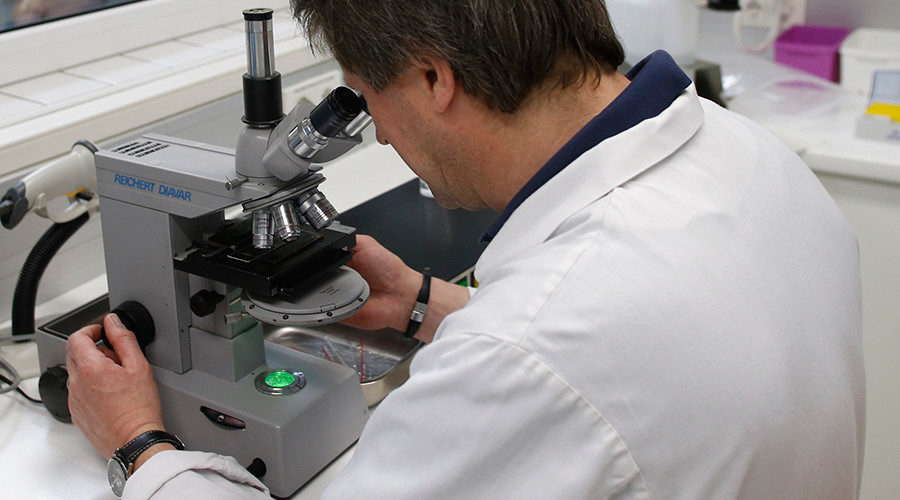
Microscope 1

UK's top universities producing hundreds of fake research studies

researcher
© Leonhard Foeger / Reuters
Hundreds of allegations of "fake research" conducted at some of the UK's top universities were reported between 2011 and 2016, figures show.

According to figures released by 23 of Britain's 24 Russell Group universities following Freedom of Information (FoI) requests submitted by the BBC, the scale of fraudulent research is much higher than official Research Councils UK (RCUK) statistics suggest.

The figures reveal at least 300 allegations including plagiarism and fabrication.

Official data, however, suggests about 30 cases were reported between 2012 and 2015.

In response, the House of Commons Science and Technology Committee has launched an inquiry to reassure the public that its monitoring system is "robust."

Committee Chairman Stephen Metcalfe stressed the importance of reassuring people that public funds are being invested in accurate and trustworthy research.

"Where research has been found to be fraudulent at a later point it has a big impact on the public - it leads to mistrust," he told the BBC.

Comment: These allegations go a long way in explaining this phenomenon: Reproducibility crisis: New data shows that most scientists can't replicate the findings of their peers


Nebula

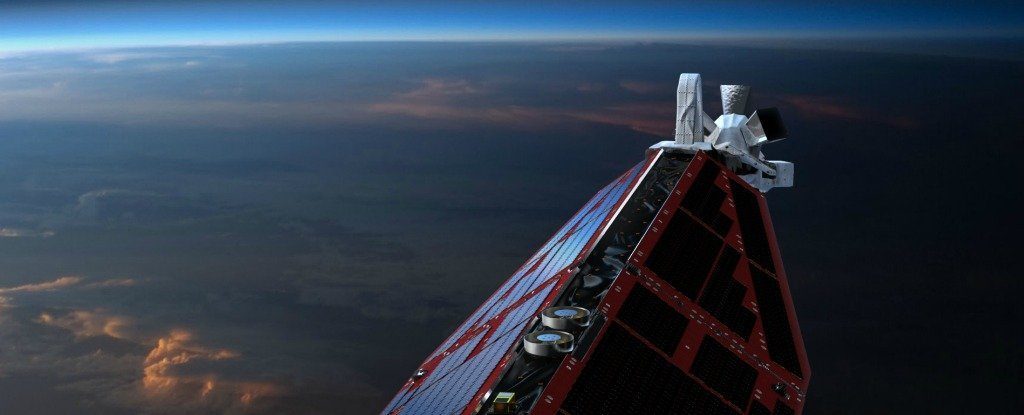
Earth's rapidly changing atmosphere: 'Swarm' mission discovers supersonic plasma jets pushing ionosphere out into space

Earth space
© ESA/ATG medialab
For the first time, researchers have discovered supersonic plasma jets in Earth's upper atmosphere, and they're responsible for some pretty extreme conditions, including temperatures near 10,000°C (18,032°F).

These jets not only appear to be changing the chemical composition of Earth's ionosphere - they're actually pushing this atmospheric layer so far up, some of the planet's atmospheric materials are being leaked out into space.

More than a century ago, Norwegian scientist Kristian Birkeland proposed that vast electric currents powered by solar wind were travelling through Earth's ionosphere by the planet's magnetic field.

The ionosphere is an atmospheric layer spanning 75 to 1,000 km (46 to 621 miles) above Earth's surface, and once scientists finally figured out how to get satellites up there in the 1970s, the existence of these electric currents was confirmed.

Comment: The planet is 'opening up' and 'warming up' in more ways than one!


Brain

Not just filler: Astrocytes in the brain help regulate circadian body clock

neurons
© LPDWiki
Scientists have discovered that brain cells that were once considered to be simple place-holders for neurons could actually play an important role in helping to regulate our circadian behaviour.

Astrocytes are a kind of glial cell - the support cells that are often called the glue of the nervous system, as they provide structure and protection for neurons. But a new study shows that astrocytes aren't just gap-fillers, and may be crucial for keeping time in our inner body clock.

Scientific consensus has long regarded our internal clock as being controlled by the suprachiasmatic nuclei (SCN), a brain region in the hypothalamus made up of around 20,000 neurons. But there's about 6,000 star-shaped astrocyte cells in the same area, the exact function of which has never been fully explained.

Now, a team from Washington University in St. Louis has figured out how to independently control astrocytes in mice - and by altering the astrocytes, the scientists were able to slow down the animals' sense of time.

Evil Rays

5G, AI and graphene: Three developments that will drive us into a technocracy

next element
The latest technological revolution will make existing technology look like the Stone Age, yet few people outside of academia and industry are even aware of it. Many, if not most, of the people who are driving these technologies are Technocrats who intend to connect the world into a single global entity. Think, 'hive mind', 'global city' and 2030 Agenda.

Three particular technologies were prominently featured at the prestigious 2017 Mobile World Congress in Barcelona, Spain from February 27 through March 2.

The first disruptive technology is 5G, or Fifth Generation, cell phone communication protocol. The first keynote speaker was Mats Granryd (Director-General of the Groupe Spéciale Mobile Association, or GSMA). His bio on the Mobile World website states,
Mats is a strong proponent of sustainability and led the mobile industry in becoming the first sector to broadly commit to the United Nations Sustainable Development Goals (SDGs) in 2016. He is now spearheading initiatives to amplify and accelerate the mobile industry's impact on all 17 of the SDGs, across both developed and developing markets.
5G is widely expected to power the Internet of Everything (IoE), which includes all citizens of the world as well as all devices in the Internet of Things (IoT). This new standard will be common by 2020 and ubiquitous by 2025. It improves current 4G performance by orders of magnitude.

Monkey Wrench

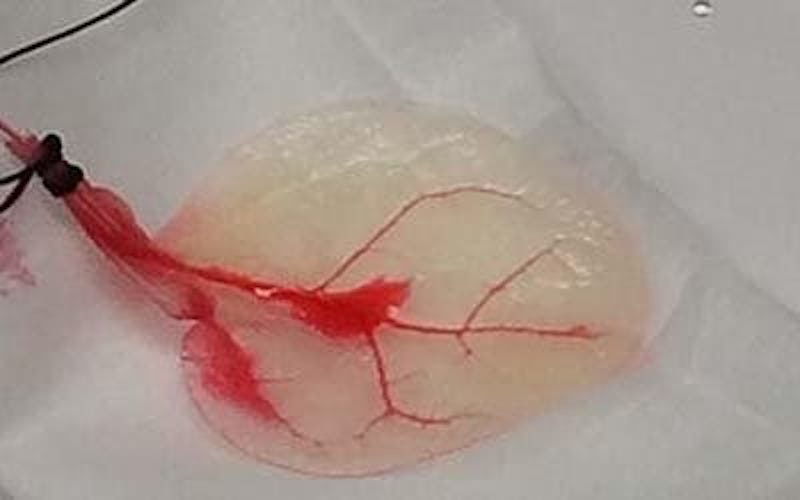
Tissue engineering: Scientists turn spinach leaf into working heart tissue

spinach
© CREDIT: WORCESTER POLYTECHNIC INSTITUTESpinach is good for your heart
Researchers have managed to turn a spinach leaf into working heart tissue and are on the way to solving the problem of recreating the tiny, branching networks of blood vessels in human tissue.

Until now, scientists have unsuccessfully tried to use 3D printing to recreate these intricate networks.

Now, with this breakthrough, it seems turning plants with their delicate veins into human tissue could be the key to delivering blood via a vascular system into the new tissue.

Scientists have managed in the past to create small-scale artificial samples of human tissue, but they have struggled to create it on a large scale, which is what would be needed to treat injury.

Researchers have suggested that eventually this technique could be used to grow layers of healthy heart muscle to treat patients who have suffered a heart attack.

Mars

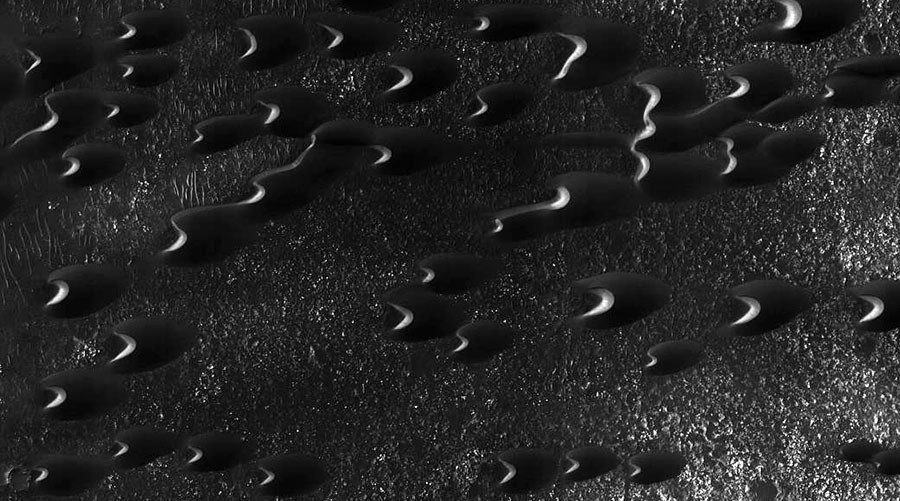
New Mars photo shows countless worm-like dunes on red planet

Mars worm sand dunes
© NASA
A newly released image from the surface of Mars has revealed an abundance of odd, squiggly worm-shaped dunes around the red planet's southern hemisphere.

Dunes are scattered across Mars' sandy surface, and the newly-released NASA photo shows just how odd the formations look when snapped from above.

The picture, taken by the space agency's Mars Reconnaissance Orbiter, shows a huge collection of dunes just west of the Hellas impact basin, one of the red planet's largest and most recognizable impact basins.

"The Hellespontus region features numerous collections of dark, dune formations that collect both within depressions such as craters, and among 'extra-crater' plains areas," NASA said in a statement.

Cloud Grey

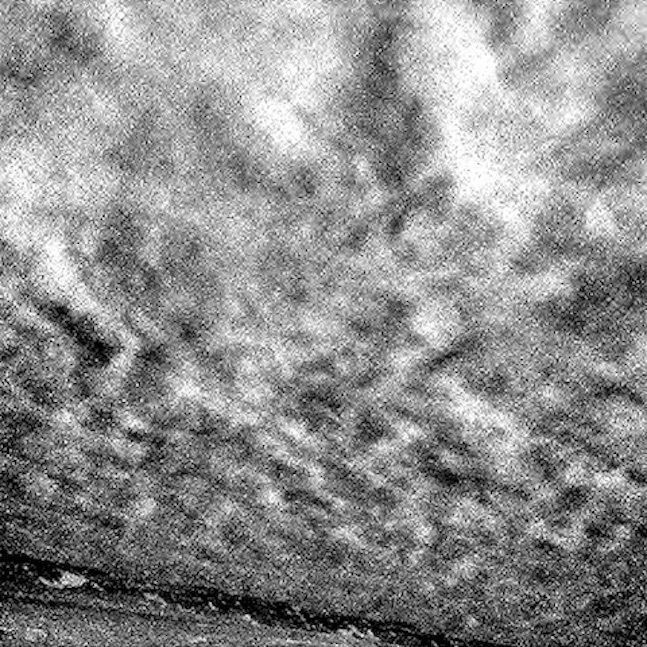
NASA's Curiosity spots clouds possibly shaped by gravity waves

Early morning clouds on Mars
© NASA/JPL-Caltech/York UniversityWhile driving across the Naukluft plateau, a gnarly terrain riven with rock shards, last summer, Curiosity captured these early morning clouds.
NASA's Curiosity rover usually keeps its instruments firmly focused on Mars's ground, zapping grit with its laser or drilling cores in bedrock. But every few days, the SUV-sized robot, like any good dreamer, shifts its sights upward to the clouds.

Well into its fifth year, the rover has now shot more than 500 movies of the clouds above it, including the first ground-based view of martian clouds shaped by gravity waves, researchers reported here this week at the Lunar and Planetary Science Conference. (Gravity waves, common atmospheric ripples on Earth that result from air trying to regain its vertical balance, should not be confused with gravitational waves, cosmological ripples in spacetime.) The shots are the best record made so far of a mysterious recurring belt of equatorial clouds known to influence the martian climate.

Understanding these clouds will help inform estimates of ground ice depth and perhaps recurring slope lineae, potential flows of salty water on the surface, says John Moores, a planetary scientist at York University in Toronto, Canada, who led the study with his graduate student, Jake Kloos. "If we wish to understand the water story of Mars's past," Moores says, "we first need to [separate out] contributions from the present-day water cycle."

The observations seem likely to constrain fine-grained models of martian clouds, which have been built in the past with limited information, says Nicholas Heavens, a planetary scientist at Hampton University in Virginia, who is unaffiliated with the study. "These cloud videos are not just pretty pictures."

Comment: See also: Solar system-wide climate change: 'Physically impossible' clouds appeared over Mars in 2012 - NASA has no clue what's going on


Black Magic

DARPA: The imagineers of war by any means

game playing computer War games, Darpa
© AlamyThe game-playing computer in the film War Games was not all fiction
Shortly after arriving at the Advanced Research Projects Agency (ARPA) in April 1958, the new chief scientist presented a plan to the agency's director. Four months later, nine ships set off for the (mostly) uninhabited Gough Island deep in the South Atlantic, carrying 4500 personnel and three small nuclear weapons to launch into the magnetosphere.

This was Project Argus. The idea had germinated in the panic after the launch of the Soviet Union's Sputnik satellite. In light of these surprising new capabilities, the US had a problem: how could it protect the country from an incoming nuclear warhead?

Armed with some wild physics, Nicholas Christofilos hatched an equally wild plan: turn the upper atmosphere into a force field across the US that would fry the electronics of incoming missiles. How? Explode nuclear weapons in Earth's magnetosphere to create a long-lived radiation belt that would degrade the missiles.

The first atomic detonation set off a luminous fireball, triggering a staggering blue-green aurora that captivated its audience. But beyond the pretty lights, it was a failure. The bombs did indeed produce many high-energy electrons, but it turned out that Earth's magnetic field wasn't strong enough to keep the electron shield from decaying.

Comment: DARPA's dirty deeds
In many ways, DARPA (the Defense Advanced Research Projects Agency) is the engine of the military-industrial complex, the heart at the center of the Pentagon that keeps America in constant state of weapons innovation and defense spending. Even before the attacks of September 11, 2001, DARPA kept defense contractors lining their pockets; in our post 9/11 surveillance state, DARPA sits at the nexus of corporate war profits, national security, and military innovation.

Cloaked in clandestine secrecy, DARPA has been called the "Oh God Why" branch of the Department of Defense. In the fiscal year of 2015, their requested budget was $2.91 billion, which doesn't include classified and black budgets.
See also:


Jupiter

'Galaxy of swirling storms': Juno snaps stunning turbulence over Jupiter

Jupiter's storms, as photographed by Juno
© NASA / JPL-Caltech / SwRI/MSSS / Roman Tkachenko]Jupiter's storms, as photographed by Juno.
NASA has released a fresh photograph of an intense storm swirling across Jupiter as space probe Juno prepares for its fifth flyby of the Solar System's largest planet.

The picture was taken on February 2 as Juno flew 9,000 miles (14,500 kilometers) above the giant planet's clouds. It was given the title "dark spot" due to the unusual black mark in the middle ground of the photo.

Researchers were initially unable to fully explain the spot, but after enhancing the image it became clear that it was a dark and swirling storm. Just below it sits a bright oval-shaped storm with white clouds.

Life Preserver

Researchers have trained dogs to detect breast cancer from bandages

Kdog project, dogs detect cancer
© AFP / PASCAL LACHENAUDAssistant cynophilist Patrick Mairet, pictured in October 2016, and his dog Thor are part of the Kdog project, which aims to train dogs to detect breast cancer
Dogs can sniff out cancer from a piece of cloth which had touched the breast of a woman with a tumour, researchers said Friday, announcing the results of an unusual, but promising, diagnostic trial.

With just six months of training, a pair of German Shepherds became 100-percent accurate in their new role as breast cancer spotters, the team said.

The technique is simple, non-invasive and cheap, and may revolutionise cancer detection in countries where mammograms are hard to come by.

"In these countries, there are oncologists, there are surgeons, but in rural areas often there is limited access to diagnostics," Isabelle Fromantin, who leads project Kdog, told journalists in Paris.

This means that "people arrive too late," to receive life-saving treatment, she added. "If this works, we can roll it out rapidly."

Comment: See also: Rats can smell tuberculosis, dogs can smell cancer and now they're being trained to save our lives