Mainstream science has done its best to debunk the notion, but a belief in a world-changing series of prehistoric impacts continues to gain momentum.

© Photo illustration by Ricardo Tomás
In 2007, a group of researchers, led by a nuclear physicist named Richard Firestone, announced an astonishing discovery.
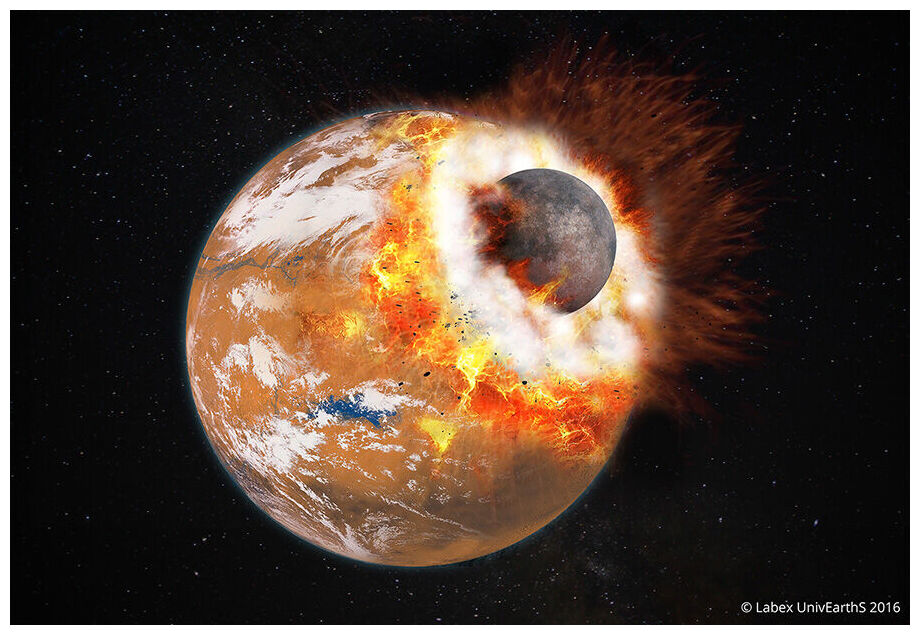
They had uncovered evidence, they said, that 12,900 years ago, a comet — or possibly a whole fleet of comets — struck Earth and changed the course of history. For the preceding two and a half million years, through the Pleistocene Epoch, the planet's climate fluctuated between frozen stretches, called glacials, and warm interglacials. At that time, Earth was warming again, and the ice sheets that covered much of North America, Europe and Asia were in retreat. Mammoths, steppe bison, wild horses and other enormous mammals still wandered the Americas, pursued by bands of humans wielding spears with fluted stone blades. Suddenly, somewhere over the Upper Midwest — an explosion.
Presenting their claim in the
Proceedings of the National Academy of Sciences, a top scientific journal, the researchers took the sober tone characteristic of such publications. But in
The Cycle of Cosmic Catastrophes, a book published around the same time, two of the researchers described the scene more vividly. The impact caused the ground to shake and the sky to glow, they wrote. A hail of tiny molten particles sank into flesh and set forests ablaze. Soot blotted out the sun. Earth's magnetic field wavered, and living things were bombarded by cosmic rays, confounding the navigational senses of turtles and porpoises, which beached themselves en masse. Addled birds plummeted from the sky.
Most disastrous of all, the impact shattered the ice dam holding back Lake Agassiz, a vast expanse of glacial meltwater that stretched across Manitoba, Ontario, Saskatchewan, Wisconsin and Minnesota. The lake cascaded into the Atlantic Ocean, where the freshwater pooled over the denser seawater, disrupting the convection current carrying warm water north from the tropics.
The Northern Hemisphere plunged back into full-glacial cold.For decades, scientists had puzzled over the cause of this rapid climatic reversal, which they marked by, among other things, the reappearance in southerly fossil deposits of tundra plants. These included the wildflower
Dryas integrifolia, which gives the 1,200-year time span its name: the Younger Dryas.
Here was an explanation: The impact caused the sudden cooling, the Firestone team argued, and contributed to the demise of the mammoths, steppe bison and other large Pleistocene mammals, along with the people who pursued them.















Comment: Betelgeuse isn't the only unusual or surprising discovery in space of late: