
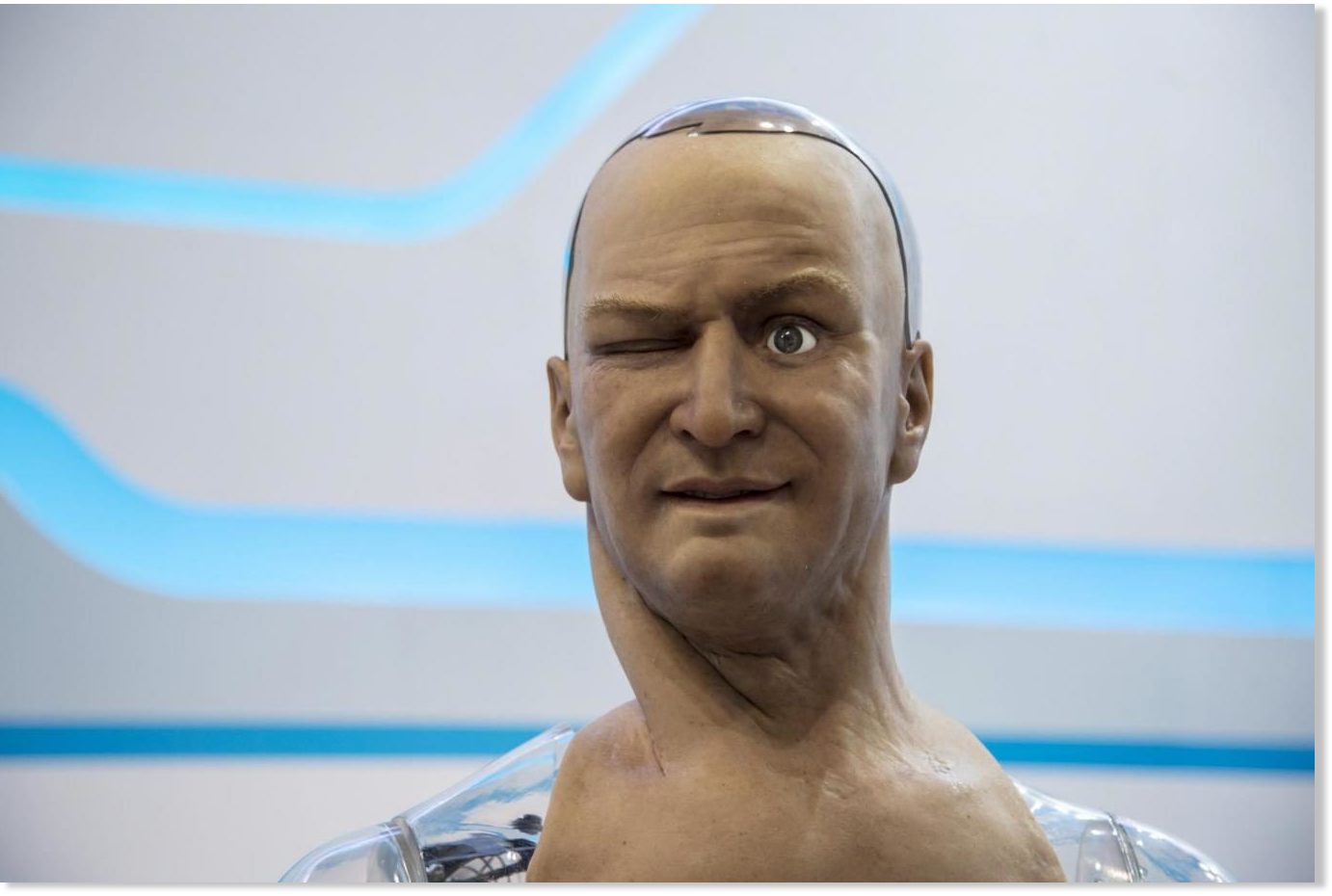
© REUTERS/Tyrone SiuA humanoid robot named Han developed by Hanson Robotics reacts as the controller commands it via a mobile phone to make a facial expression during the Global Sources spring electronics show in Hong Kong April 18, 2015
The two chatbots came to create their own changes to English that made it easier for them to work - but which remained mysterious to the humans that supposedly look after them.
The bizarre discussions came as Facebook challenged its chatbots to try and negotiate with each other over a trade, attempting to swap hats, balls and books, each of which were given a certain value. But they quickly broke down as the robots appeared to chant at each other in a language that they each understood but which appears mostly incomprehensible to humans.
The robots had been instructed to work out how to negotiate between themselves, and improve their bartering as they went along. But they were not told to use comprehensible English, allowing them to create their own "shorthand", according to researchers.













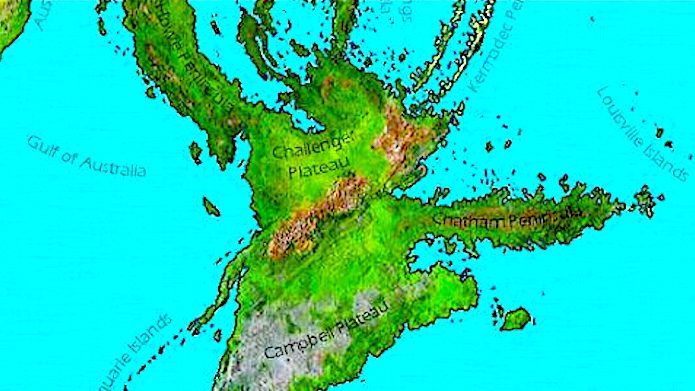



Comment: Bruce Luyendyk, a professor of marine geophysics at UC-Santa Barbara, first proposed the concept of Zealandia in 1995.