Science & TechnologyS


Beaker

What could possibly go wrong? Scientists creating custom man-made DNA to change function of living cells and create new life forms from scratch

NYU researchers creating man-made DNA
© AP Photo/Mary AltafferAssistant research technician Henri Berger, talks about live yeast cultures at a New York University lab in the Alexandria Center for Life Sciences in New York, where researchers are attempting to create completely man-made, custom-built DNA. The yeast genome is like a chain with 12 million chemical links, known by the letters, A, C, T and G. That's less than one-hundredth the size of the human genome, which has 3.2 billion links.
At Jef Boeke's lab, you can whiff an odor that seems out of place, as if they were baking bread here.

But he and his colleagues are cooking up something else altogether: yeast that works with chunks of man-made DNA.

Scientists have long been able to make specific changes in the DNA code. Now, they're taking the more radical step of starting over, and building redesigned life forms from scratch. Boeke, a researcher at New York University, directs an international team of 11 labs on four continents working to "rewrite" the yeast genome, following a detailed plan they published in March.

Their work is part of a bold and controversial pursuit aimed at creating custom-made DNA codes to be inserted into living cells to change how they function, or even provide a treatment for diseases. It could also someday help give scientists the profound and unsettling ability to create entirely new organisms.

The genome is the entire genetic code of a living thing. Learning how to make one from scratch, Boeke said, means "you really can construct something that's completely new."

Beaker

150 years of biology upended by guy from Montana trailer park

Lichen
© Conor Lawless/FlickerLichen
Biology textbooks tell us that lichens are alliances between two organisms-a fungus and an alga. They are wrong.

In 1995, if you had told Toby Spribille that he'd eventually overthrow a scientific idea that's been the stuff of textbooks for 150 years, he would have laughed at you. Back then, his life seemed constrained to a very different path. He was raised in a Montana trailer park, and home-schooled by what he now describes as a "fundamentalist cult." At a young age, he fell in love with science, but had no way of feeding that love. He longed to break away from his roots and get a proper education.

At 19, he got a job at a local forestry service. Within a few years, he had earned enough to leave home. His meager savings and non-existent grades meant that no American university would take him, so Spribille looked to Europe.

Thanks to his family background, he could speak German, and he had heard that many universities there charged no tuition fees. His missing qualifications were still a problem, but one that the University of Gottingen decided to overlook. "They said that under exceptional circumstances, they could enroll a few people every year without transcripts," says Spribille. "That was the bottleneck of my life."

Throughout his undergraduate and postgraduate work, Spribille became an expert on the organisms that had grabbed his attention during his time in the Montana forests-lichens.

Comet

Comets from oort cloud more common threat to Earth than previously thought

Comet
© NASA/JPL-Caltech
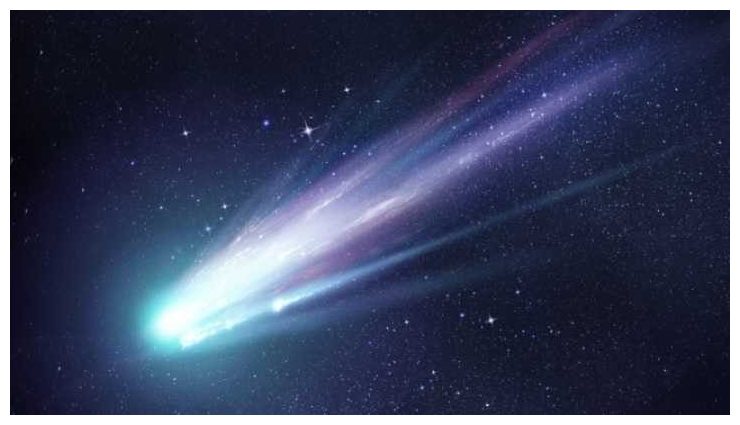
"Comets travel much faster than asteroids, and some of them are very big," said Amy Mainzer, co-author based at NASA's Jet Propulsion Laboratory, Pasadena, California, and principal investigator of the NEOWISE mission. "Studies like this will help us define what kind of hazard long-period comets may pose."

"The number of comets speaks to the amount of material left over from the solar system's formation," said James Bauer, lead author of the study and now a research professor at the University of Maryland, College Park. "We now know that there are more relatively large chunks of ancient material coming from the Oort Cloud than we thought."

Comets that take more than 200 years to make one revolution around the Sun are notoriously difficult to study. Because they spend most of their time far from our area of the solar system, many "long-period comets" will never approach the Sun in a person's lifetime. In fact, those that travel inward from the Oort Cloud -- a group of icy bodies beginning roughly 186 billion miles (300 billion kilometers) away from the Sun -- can have periods of thousands or even millions of years.

This illustration shows how scientists used data from NASA's WISE spacecraft to determine the nucleus sizes of comets. They subtracted a model of how dust and gas behave in comets in order to obtain the core size.

Nebula

Roger Penrose asks if a cyclic cosmology is lurking in LIGO gravitational-wave detector noise?

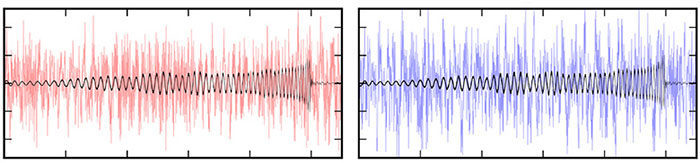
Cosmological noise: signals from both LIGO detectors
Cosmological noise: signals from both LIGO detectors.
Correlated noise in the two LIGO gravitational-wave detectors may provide evidence that the universe is governed by conformal cyclic cosmology (CCC). That is the claim of Roger Penrose of the University of Oxford, who is proposing that the apparent noise is actually a real signal of gravitational waves generated by the decay of hypothetical dark-matter particles predicted by CCC.

Last month, physicists at the Niels Bohr Institute pointed out that some of the noise in the two LIGO detectors appears to be correlated - with a delay that corresponds to the time it takes for a gravitational wave to travel the more than 3000 km between the instruments.

Writing in a preprint on arXiv, Penrose argues that a significant amount of this noise could be a signal of astrophysical or cosmological origin - and specifically CCC.

Cell Phone

Click farms and social media

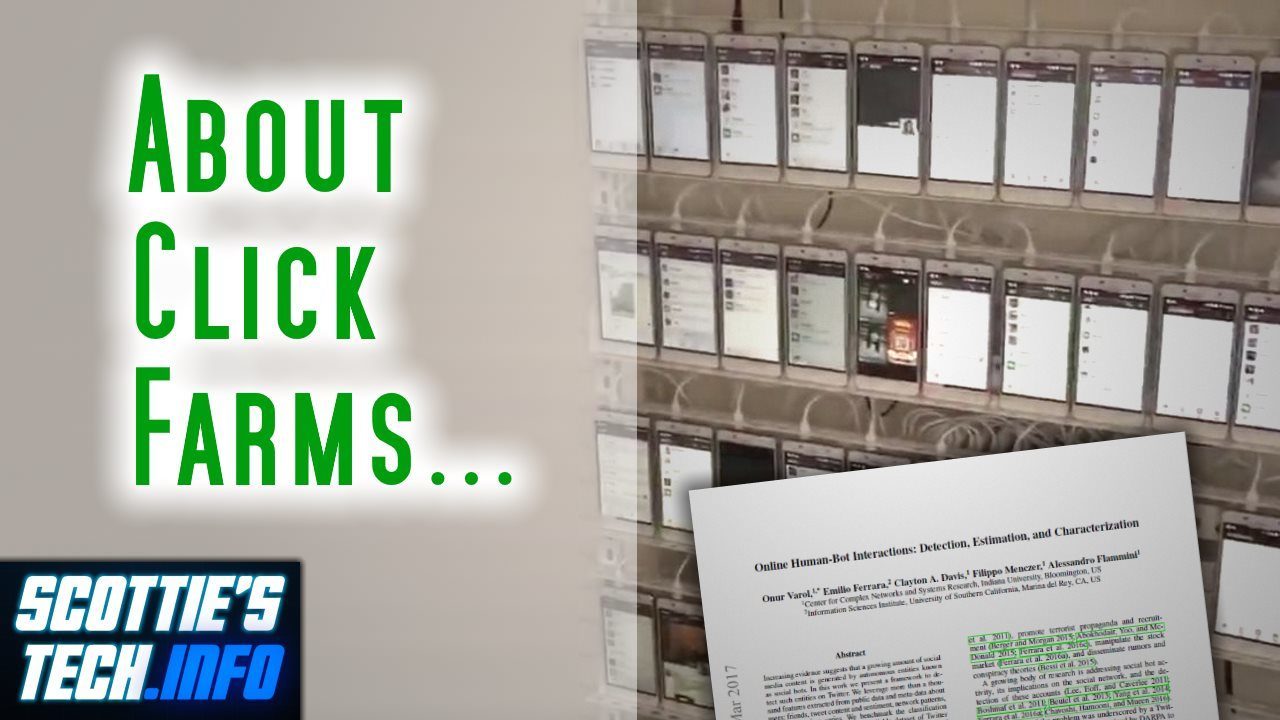
click farms scottie
Ah, click farms...

Click farms are organizations that you can pay to boost you or your product on social media.

They do their thing through the use of "bots" or semi-bots, which are automated systems to like, share, and otherwise promote something.

But hang on, is this real?

According to two US universities, it's very real...

SOTT Logo Media

Our interconnected forests: "A mother tree may be connected to hundreds of other trees"

Suzanne Simard
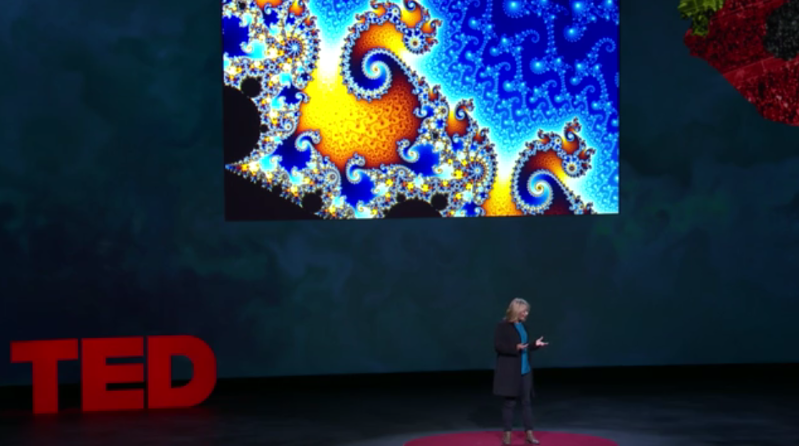
© TED (ss)Interconnected Forest Information Ecosystems
Have you ever stood among the trees — those tall, stoic, magnificent plants — listening to their leaves rustle in the wind and imagined quietly to yourself that they're communicating in some way? Perhaps in whispers, or hushed voices?

It turns out that your imagination isn't at wild as you might believe; Trees do, in fact, talk.

However, as forest ecologist Suzanne Simard discovered through her research, this communication happens not in the air but deep below our feet in an incredibly dense, complex network of roots and chemical signals.

"Trees are the foundation of a forest, but a forest is much more than what you see," says Simard. "Underground, there is this "other" other world of infinite biological pathways that connect trees and allow them to communicate."

Moon

Ocean of water beneath moon's surface could help create human colony

the moon
© Paul Hanna / Reuters
Scientists who retested mineral samples collected during the Apollo moon missions now believe there's a massive amount of water under the lunar surface - a discovery which may make manned missions to the moon easier than previously thought.

Researchers at Brown University in the US examined glass beads, a type of volcanic crystal gathered during the Apollo 15 and 17 missions in the 1970s, and found they contained similar volumes of water to Earth's basalt rock.

The leaders of the study, which has been published in Nature Geoscience, cite the parallels as evidence that parts of the moon contain a similarly large amount of water. This, they believe, could be useful for future lunar missions as it means water could potentially be extracted rather than carried from home.

Cassiopaea

Superluminous supernova discovered

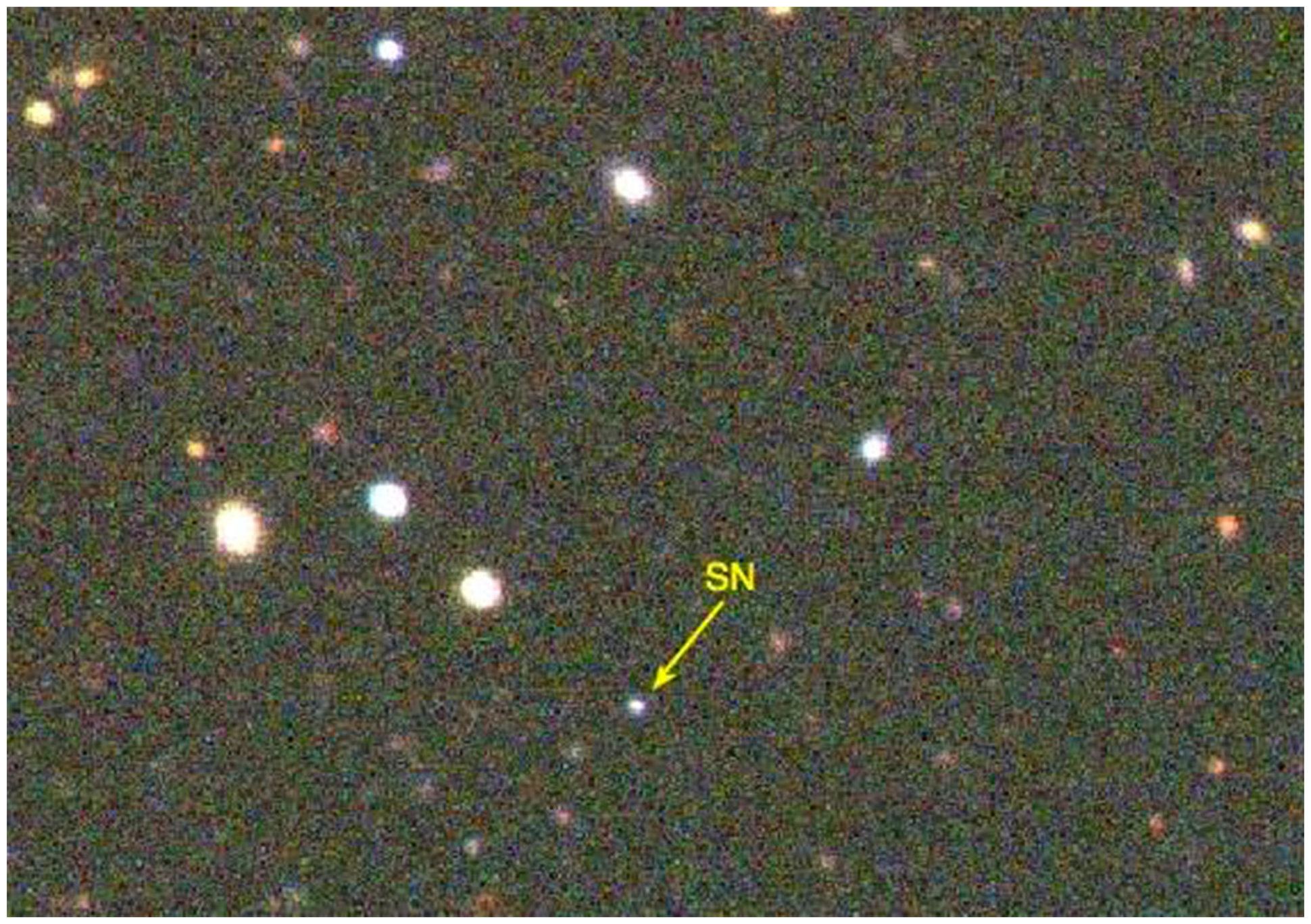
At a distance of 10 billion light-years, DES15E2mlf - a Type I superluminous supernova (SLSN-I) spotted by the Dark Energy Survey collaboration - is the most distant superluminous supernova confirmed to date. It also has one of the most massive host galaxies discovered for a SLSN-I.
DES15E2mlf Supernova
© D. Gerdes/S. Jouvel.This image of the superluminous supernova DES15E2mlf was taken with the Dark Energy Camera (DECam) gri-band filters mounted on the Blanco 4-m telescope at Cerro Tololo Inter-American Observatory in Chile on December 28, 2015, around the time when DES15E2mlf reached its peak luminosity.
Superluminous supernovae are 10 to 100 times brighter than a typical supernova resulting from the collapse of a massive star. But scientists still don't know exactly what kinds of stars give rise to their luminosity or what physical processes are involved.

DES15E2mlf is unusual even among the small number of superluminous supernovae astronomers have detected so far.

The explosion occurred about 3.5 billion years after the Big Bang at a period known as 'cosmic high noon,' when the rate of star formation in the Universe reached its peak.

It was more than three times as bright as the 100 billion stars of our Milky Way Galaxy combined.

Previous observations of superluminous supernovae found they typically reside in low-mass or dwarf galaxies, which tend to be less enriched in metals than more massive galaxies.

Jet2

Russian companies show off their futuristic planes in MAKS 2017 air show

Russian airshow
© Sergei Karpukhin / Reuters
The international MAKS 2017 Air Show has concluded in Zhukovsky, just outside Moscow. RT highlights the most stunning moments of the six-day event which included breathtaking flight performances and racing duels between planes and cars.

The airshow show turned out to be a landmark business event, surpassing the previous MAKS 2015 spectacle with regard to business activity and deals signed.

Some 800 airspace companies took part in the event, signing contracts and memorandums worth a staggering 394 billion rubles (roughly $6.6 billion). Potential business deals exceeded 600 billion rubles (over $10 billion), according to an official statement issued following the event's conclusion.

Solar Flares

Spectacular CME blasts from the farside of the sun

CME 23072017
© Space Weather
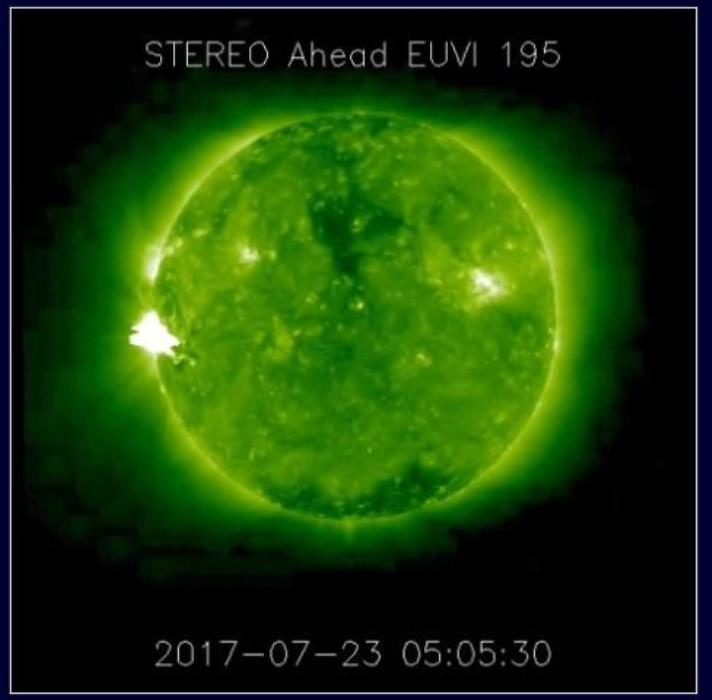
On Sunday July 23rd, a spectacular CME emerged from the farside of the sun. Coronagraphs onboard the orbiting Solar and Heliospheric Observatory (SOHO) tracked the fast-moving cloud as it billowed into space:

NASA's STEREO-A spacecraft, which has a partial view of the sun's farside, identified the source of the blast as active sunspot AR2665, familiar to readers of Spaceweather.com who watched the behemoth cross the Earthside of the sun earlier this month. STEREO-A observed an intense flash of extreme UV radiation from the sunspot's magnetic canopy: