Science & TechnologyS


Galaxy

It's not aliens: Astronomers figure out the source of mysterious radio signals emanating from Ross 128

Ross 128
© NASA / WikipediaRoss 128 in Celestia
Strange signals emanating from a dwarf star are not evidence of extraterrestrial life. That's according to astronomers who detected the unidentified radio signals, setting off public speculation that aliens were trying to making contact with Earth.

Scientists from the Arecibo Observatory in Puerto Rico revealed last week that they were baffled by signals detected on May 12 emanating from the star Ross 128.


The wide-band radio signal was considered unusual because not only did it repeat with time, it also slid down the radio dial, going from a higher note to a lower one.

While the team were quick to point out that it was highly unlikely the signals were from aliens, that didn't stop curious conjecture around their discovery.

Info

Synchronization of autonomic nervous system rhythms with geomagnetic activity found in humans

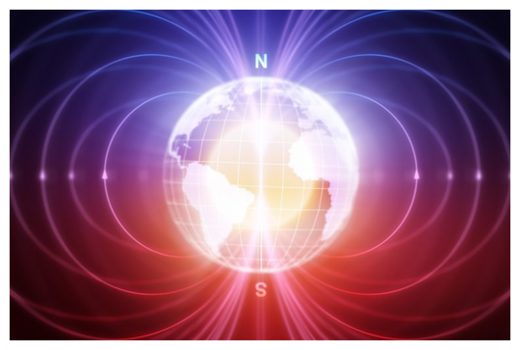
Magnetic Field
© Collective Evolution
Over the past few years, a number of publications have emerged from scientists and researchers all over the world regarding the human magnetic field. Not only have they been studying the human magnetic field, they've also been studying the magnetic field of the planet, and how all these fields, including our own, can impact ourselves and the people around us. It's similar to quantum entanglement, in that both show that everybody and every living thing is "connected" in ways we have yet to fully understand.

Leading the charge are the brilliant scientists over at the HearthMath Institute. An internationally recognized nonprofit research and education organization, it dedicates itself to helping people reduce stress, self-regulate emotions, and build energy and resilience for healthy, happy lives.

A large portion of their research has investigated heart and brain interaction. Researchers have examined how the heart and brain communicate with each other and how that affects our consciousness and the way in which we perceive our world. For example, when a person is feeling really positive emotions like gratitude, love, or appreciation, the heart beats out a certain message. Because the heart beats out the largest electromagnetic field produced in the body, it can yield significant data for researchers. You can read more about that here.

Now, the Institute has published new research which suggests that daily autonomic nervous system activity not only responds to changes in solar and geomagnetic activity, but also synchronizes with the time-varying magnetic fields associated with geomatic field-line resonances and Schumann resonances.

In 1952, German physicist and professor W.O. Schumann of the Technical University of Munich began attempting to answer whether or not the Earth itself has a frequency - a pulse. His assumption about the existence of this frequency came from his understanding that when a sphere exists inside of another sphere, an electrical tension is created. Since the negatively charged Earth exists inside the positively charged ionosphere, there must be tension between the two, giving the Earth a specific frequency. Following his assumptions, through a series of calculations he was able to land upon a frequency he believed was the pulse of the Earth. This frequency was 10hz.

Better Earth

Seafloor data from lost MH370 search publicly released

flight path
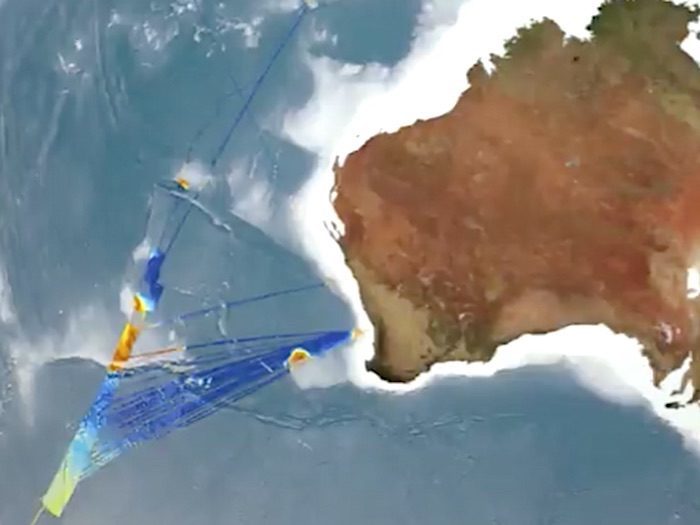
© Commonwealth of Australia (Geoscience Australia) 2017Strips and bands of color off the western coast of Australia indicate MH370 search area. Earth tone areas indicate higher-elevation seafloor features, blue areas are deeper features.
Detailed maps of the bottom of the Indian Ocean reveal deep canyons and landslides but no wreckage of Malaysia Airlines flight MH370, which went missing in 2014.

A vanished airliner rather than scientific curiosity prompted a recent extensive campaign to map a large swath of the seafloor, one of the last unexplored frontiers of our planet. Now these data have been publicly released for the first time and may offer a lasting boon to science.

On 8 March 2014, Malaysia Airlines flight MH370 took off from Kuala Lumpur en route to Beijing, lost contact with air traffic control, and disappeared. The Boeing 777, with 239 people on board, is presumed to have veered wildly off course, eventually crashing into a remote part of the southern Indian Ocean.


Sun

Is our Sun slowing down?

Spotless Sun
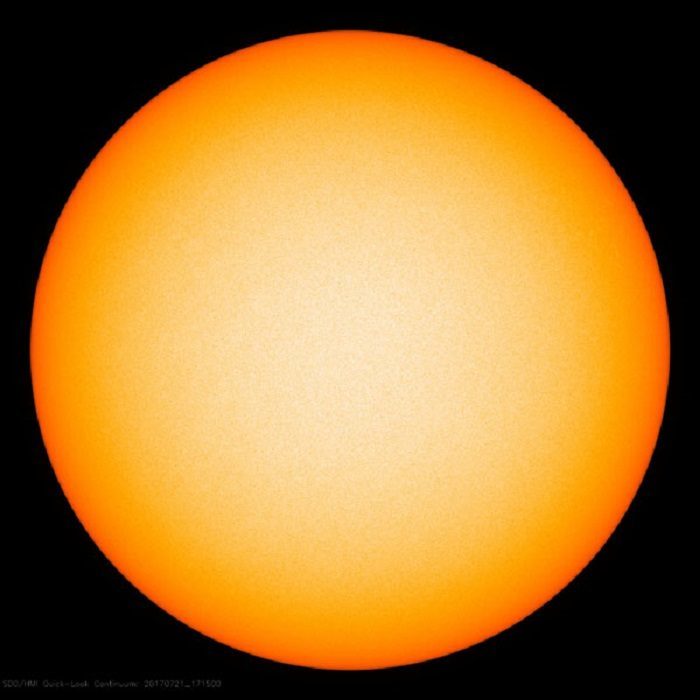
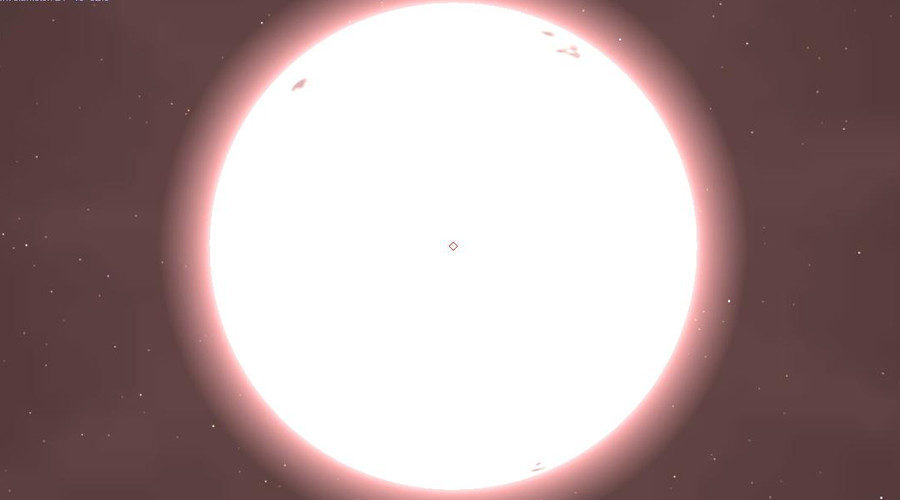
© NASA/SDO/HMIThe spotless Sun of July 21, 2017.
The Sun, now halfway through its life, might be slowing its magnetic activity, researchers say, which could lead to permanent changes in the sunspots and auroras we see.

The Sun has changed its figure, researchers say, and might keep it that way.

The structure of the Sun's surface, where sunspots live, appears to have changed markedly 23 years ago. That's when solar magnetic activity might have started slowing down, Rachel Howe (University of Birmingham, UK, and Aarhaus University, Denmark) and collaborators speculate in paper to appear in the Monthly Notices of the Royal Astronomical Society (full text here). Such a structural change might help explain the Sun's mysteriously weak cycles in recent years.

The interior of the Sun pulsates as rhythmically as a human heart. But while the heart pulses at one fairly steady frequency, the Sun reverberates at thousands of different frequencies.

Pressure changes inside the Sun create these reverberations, just like pressure changes in the air create sound. The sound waves inside the Sun are outside the range of human hearing - they're too low frequency - but if we sped them up, we could hear them just like any other sound.

Padlock

The biotech industry is taking over the regulation of GMOs from the inside

biotech take over
© Ensia
The British non-profit GMWatch recently revealed the agribusiness takeover of Conabia, the National Advisory Committee on Agricultural Biotechnology of Argentina. Conabia is the GMO assessment body of Argentina. According to GMWatch, 26 of 34 its members were either agribusiness company employees or had major conflicts of interest*.

Packing a regulatory agency with conflicted individuals is one way to ensure speedy GMO approvals and Conabia has certainly delivered that. A much more subtle, but ultimately more powerful, way is to bake approval into the structure of the GMO assessment process itself. It is easier than you might think.

Jet4

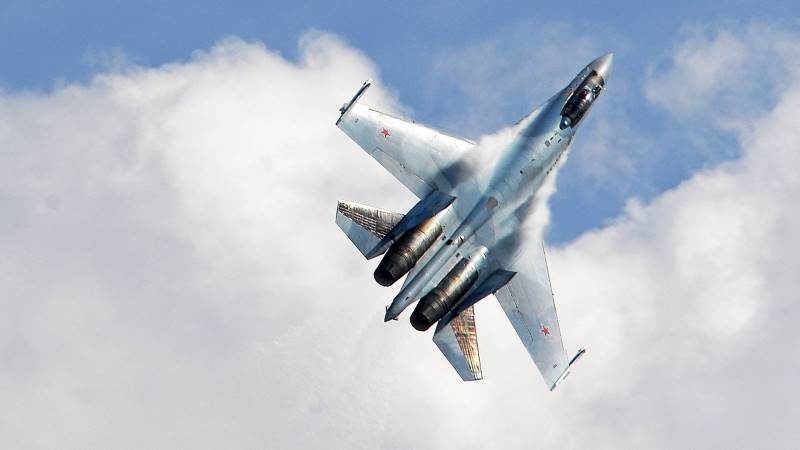
Leaf on the wind: Watch Su-35 Russian fighter jet's stunning flight maneuvers at MAKS 2017 (VIDEO)

Su-35
The titillating Su-35
The Russians demonstrate that you don't need to spend a gazillion dollars to make an amazing fighter jet

This is a story of two jets-and two air shows.

The Paris Air Show was supposed to put to rest the unpatriotic criticisms of Lockheed's "5th generation" 100-gazillion-dollar baby: The majestic F-35.

It didn't.

The jet performed mediocre at best. At worst, people were basically calling it a sack of 5th generation garbage:

Comment: The Russians also debuted their new Sukhoi T-50 PAK-FA fighter. This article hints at its technological innovations:
"For now, I'd say that no physical limits exist for pilots of the PAK-FA when mastering and exploiting the aircraft," Russian Air Force Commander Viktor Bondarev said on Saturday, as quoted by TASS.

The PAK-FA (Perspective Air Complex of Frontline Aviation) T-50 is a fifth-generation fighter jet, equipped with advanced radar-evading stealth technology and "electronic pilot" function.

"Engineers are working to allow the aircraft do the most for the pilot," Viktor Bondarev added, highlighting the aircraft's characteristics, including improved engine, bombload, and flight range.

Having performed its maiden flight in 2010, the PAK-FA was built to replace the Sukhoi Su-27 in frontline tactical aviation. The Russian Air Force is expected to receive the first batch of 12 T-50s by 2019.


While the defense ministry is still looking forward to the new aircraft, visitors to the MAKS 2017 Air Show got to see the jets up in the skies, performing breathtaking aerobatic maneuvers. The two T-50s flew alongside two other super-maneuverable jets - the Sukhoi Su-34 and Su-35, awing the audience at Zhukovsky Airfield.


Mars

Study suggests Mars volcano went dormant around same time dinosaurs went extinct

Arsia Mons
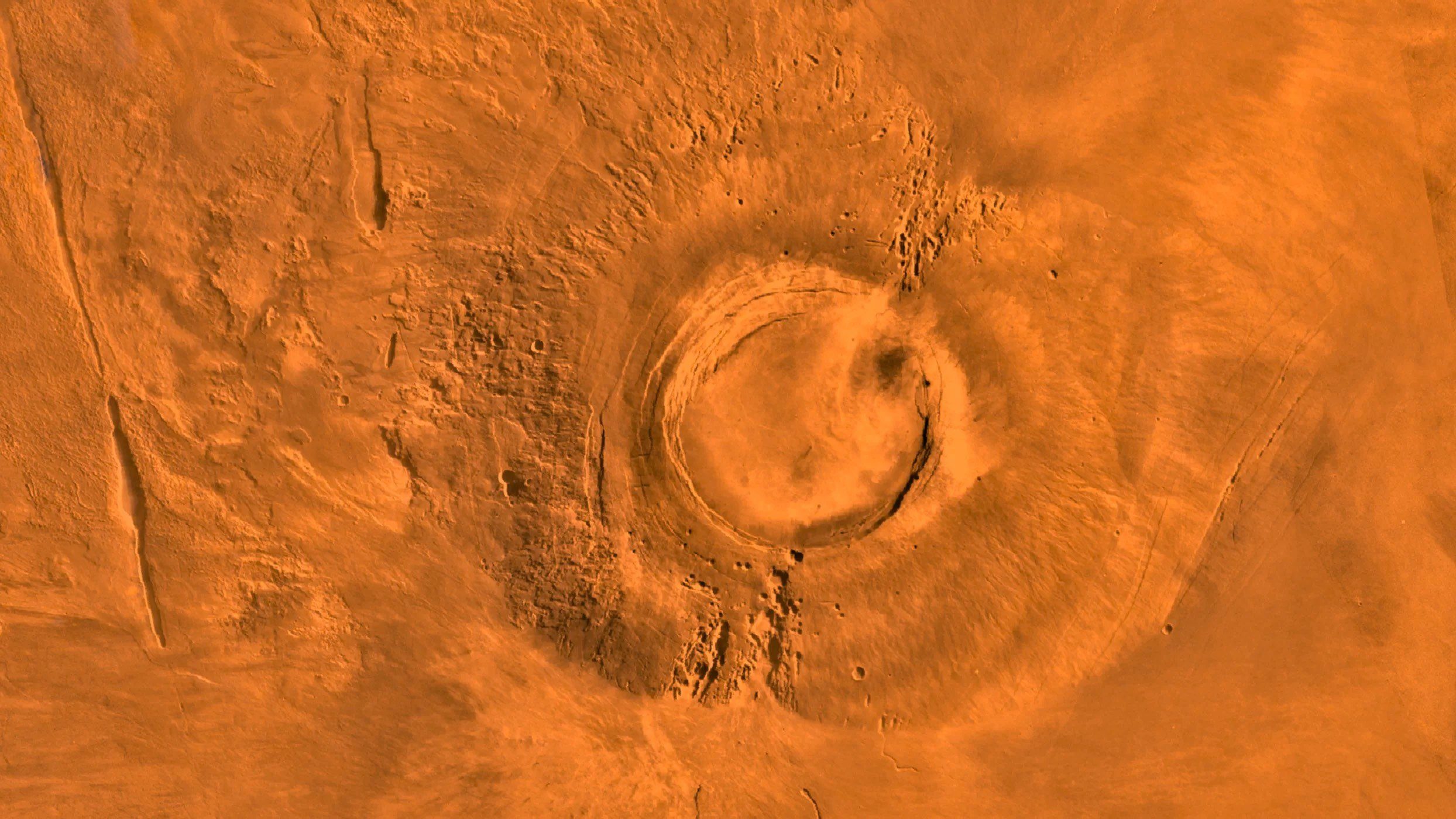
© NASA/JPL/USGSThis digital-image mosaic of Mars' Tharsis plateau shows the extinct volcano Arsia Mons. It was assembled from images that the Viking 1 Orbiter took during its 1976 to 1980 working life at Mars.
Around the same time that the dinosaurs became extinct on Earth, a volcano on Mars went dormant, NASA researchers have learned.

Arsia Mons is the southernmost volcano in a group of three massive Martian volcanoes known collectively as Tharsis Montes. Until now, the volcano's history has remained a mystery. But thanks to a new computer model, scientists were finally able to figure out when Arsia Mons stopped spewing out lava.

According to the model, volcanic activity at Arsia Mons came to a halt about 50 million years ago. Around that same time, Earth experienced the Cretaceous-Paleogene extinction event, which wiped out three-quarters of its animal and plant species, including the dinosaurs.

Jacob Richardson, a postdoctoral researcher at NASA's Goddard Space Flight Center in Maryland and co-author of the new study, presented the findings today (March 20) at the 48th annual Lunar and Planetary Science Conference, The Woodlands, Texas.

Comment: Speaking of impacts... If the proposed timing is close to correct, perhaps both Earth and Mars experienced similar "cosmic" events around the same time? It may more may not have had anything to do with the volcano, but it's an interesting question to ask: Did Mars also experience a major "event" all those millions of years ago? If so, what effects might it have had there?


Evil Rays

Neural network software: Cell phones are about to become more powerful than you could imagine

cell phone
Many people don't realize that some of the most significant technological breakthroughs in recent years, like voice and facial recognition software, autonomous driving systems, and image recognition software, have not actually been designed by humans, but by computers. All of these advanced software programs have been the result of neural networks, popularly referred to as "deep learning."

Neural networks are modeled loosely after the human brain and learn like them in similar ways by processing large amounts of data, along with algorithms fed to the networks by programmers. A neural net is then able to teach itself to perform tasks by analyzing the training data. "You essentially have software writing software," says Jen-Hsun Huang, CEO of graphics processing leader Nvidia.

Microscope 2

California scientists catch glimpse of hypothesized self-annihilating particle for first time

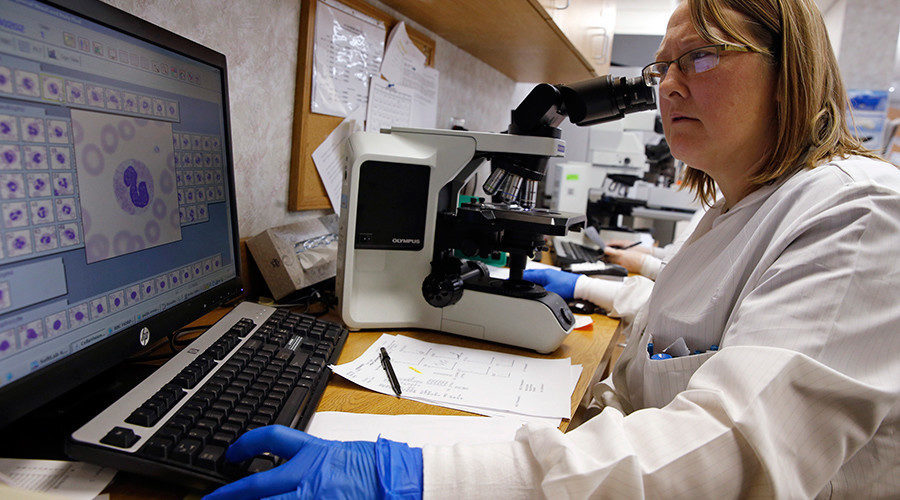
scientist lab
© Jim Young / Reuters
Physicists in California have discovered evidence of Majorana fermions, long-hypothesized particles that are their own antiparticles. Scientists hope that in the future, their discovery will help manufacture more robust quantum computers.

Antimatter has been the staple of science fiction for decades, since physicist Paul Dirac suggested in the late 1920s that every particle has its antiparticle and that the pair annihilates in case of a collision, producing lots of energy. A decade later Ettore Majorana hypothesized that there may be particles that serve as their own antiparticles.

For eight decades the existence of Majorana particles, or more precisely Majorana fermions, remained hypothetical, though there is strong evidence that neutrinos may be one. But over the past few years advances in material science allowed several new experiments to find evidence of the such particles.

Comment: Self-destructing particles? Maybe they should call them American empirions...


Mars

SpaceX ending development of propulsive landings for Dragon spacecraft missions to Mars over safety concerns

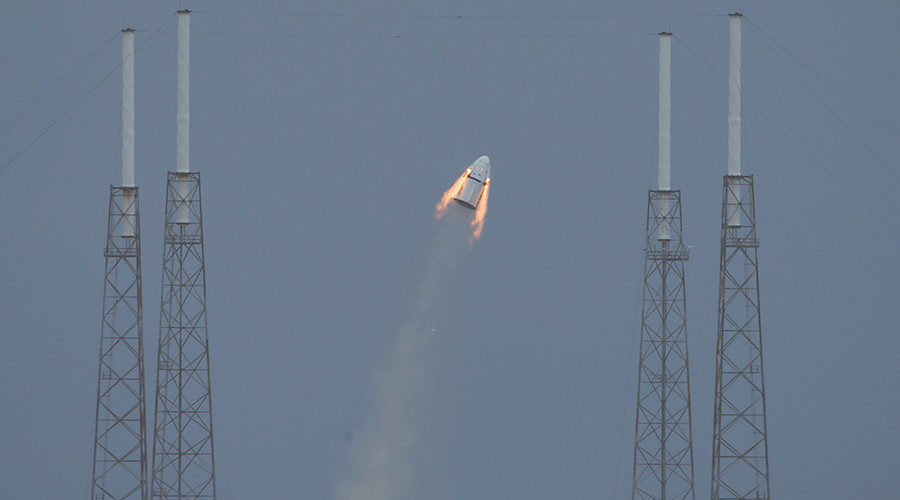
SpaceX Dragon spacecraft
© Scott Audette / Reuters
SpaceX will no longer produce the next version of their Dragon spacecraft capable of propulsive landings, altering their manned mission to Mars. CEO Elon Musk said they will eventually visit the red planet, but in "a vastly bigger ship."

Speaking at the International Space Station Research and Development Conference (ISS R&D) in Washington, DC Wednesday, SpaceX CEO Elon Musk sighed when he announced the company was ending development of Dragon propulsive landings, adding it was "a tough decision."

The decision means that SpaceX Dragon capsules will be forced to make splashdown landings with parachutes, just as capsules have traditionally landed in the past.