Science & TechnologyS


Microscope 2

In mimicking biological process, hydrogel signals and releases proteins

hydrogel
© Xin Zou/Jinping Lai (Penn State)
An artificial system using a DNA-laced hydrogel can receive a chemical signal and release the appropriate protein, according to Penn State researchers. Further stimulation by the chemical signal continues to trigger a response.

A hydrogel is a network of polymer chains that attract water and can be used to simulate biological tissue.

Many systems in cells and in the human body are set up with a signal and response pathway. One of the best known is that of glucose, a small sugar that triggers the release of insulin.

We've only done this recently in a petri dish," said Yong Wang, professor of biomedical engineering. "We did tests using smooth muscle cells, but we would of course like to do this in a living animal."

The researchers report in the November issue of Chemical Science, "With rational design, this biomimetic hydrogel system would constitute a general platform of controlling the output of signaling proteins for versatile potential applications such as drug delivery, cell regulation, molecular sensing and regenerative medicine."

The hydrogel, made of polyethylene glycol, is infused with two different types of DNA. One is an aptamer - a short strand of DNA that attaches to the chemical the researchers want to release into the cell. In the case of glucose and insulin, the aptamer would bind with insulin the "drug" the researchers want to release. The other type is a double-stranded helical molecule of DNA chosen to react with the metabolite signal - glucose - and initiate the chemical release.

Solar Flares

Computer simulation suggest the presence of a second Sun

Nemesis
© StopRu
Astronomer from Quebec Gilles Couture conducted a study using computer simulation. Because of this he was able to prove that early in the Solar system, stars, there was a "duet". But one of them left our galaxy and flew in the space provided, leaving the Sun in splendid isolation.

According to the study, conducted by the astronomer, the weight of the mysterious star was 2-3 times less than that of the Sun, and the speed of its movement ranged from 25 to 100 kilometers per second. The astronomer did not say when the second star was in the Solar system, although, in all probability, it could be a fairly short time.

Apparently, it is the presence of the second the stars in our galaxy were the cause of the unusual elongated shape of the orbits of some planets are in the Kuiper belt beyond Neptune, which contains a huge number of blocks of ice. To affect the orbits of the planets could have some kind of rogue planet, whose mass should be 16 times more than Earth. Previously it was thought that the gravitational pull the orbits of TRANS-Neptunian objects could be due to the existence of the ninth planet. This explained the location of other planets and celestial bodies. in addition, the researchers identified five factors proving the existence of the ninth account of the planet.

Thus, it is usual to all mankind the concept of the existence of one single star in the Solar system, undergoing change. Although scientists assume that the boundary of the Oort Cloud there is another star to watch that every 32 million years. Of course, given such a considerable period of time, it is not surprising that it is still tracking her, no one has.

Comment:
Nemesis - The Sun's Evil Twin Brother

Nemesis - The Sun's long-lost twin

Getting WISE About Nemesis

Dark Jupiter May Haunt Edge of Solar System

Study: Our sun probably has an evil twin called Nemesis

Sott Exclusive: Nemesis, not 'Nibiru' - Clarifying mainstream reports about 'a large ninth planet' that periodically sends comets our way


Comet

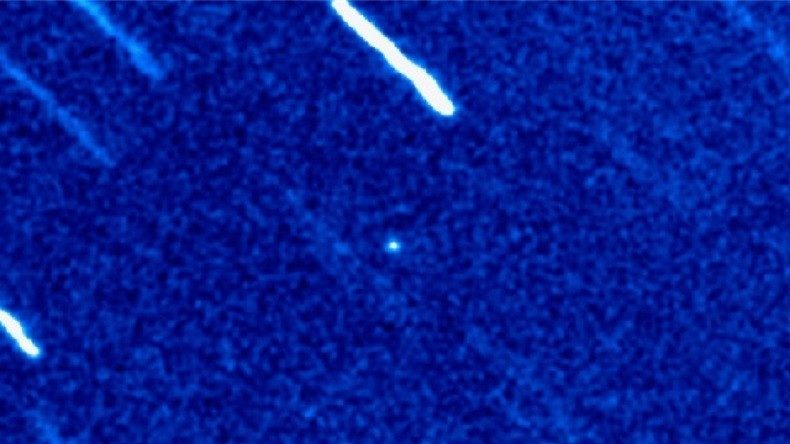
First sighting of 'alien' comet ever seen from beyond our solar system caught on camera

First human sighting of 'alien' comet
© Alan Fitzsimmons / Queen’s University Belfast / Isaac Newton Group La PalmaFirst human sighting of 'alien' comet
In a first for the whole of mankind, stunning images have been released of what is believed to be the first "alien" comet humans have ever seen in our solar system.

An international team of researchers, led by scientists from Queen's University Belfast, are using powerful telescopes to study the chemical make-up of the small rocky object, which was first identified through a telescope in Hawaii last week.

Professor Alan Fitzsimmons, from the School of Mathematics and Physics at Queen's, described the discovery as sending a "shiver down your spine." Commenting on the project, he said: "By Wednesday this week it became almost certain this object was alien to our solar system.

Jet1

Russia shows off its Su-30SM fighter jet in breathtaking action

russian fighter jets
© Минобороны России / YouTube
The Russian Defense Ministry has published a video showcasing the capabilities of the Sukhoi Su-30SM, an advanced multipurpose fighter jet. The Sukhoi aircraft are shown in detail performing aerobatics maneuvers and deploying weapons.

The highly-maneuverable generation 4+ warplane is the modern variant of the design equipped with thrust-vectoring engines. It was based on the Su-30MKI, the version made by Russia for the Indian Air Force. The SM version made its maiden flight in 2012.

Info

More than a pipe dream: Musk reveals first photo of LA Hyperloop underground transit system

Musk
© Peter Parks / AFP
Elon Musk has revealed the first photo of the Boring Company's tunnel beneath Los Angeles, as the billionaire industrialist continues his bid to develop a super-fast underground transit system in the city.

The picture shows the prototype tunnel's paneled walls, cables, and what appears to be a track running along the floor. The image also features a large upper conduit that snakes around the bend of a tunnel he believes will one day help alleviate urban traffic congestion.

Writing on Twitter, Musk revealed the tunnel is now around 500ft (150 meters) long and said that he had hopes that it would span the length of the north-south Interstate 405 highway by next year.

Jupiter

Juno mission finds that Jupiter's gravitational field is askew

jupiter cyclones
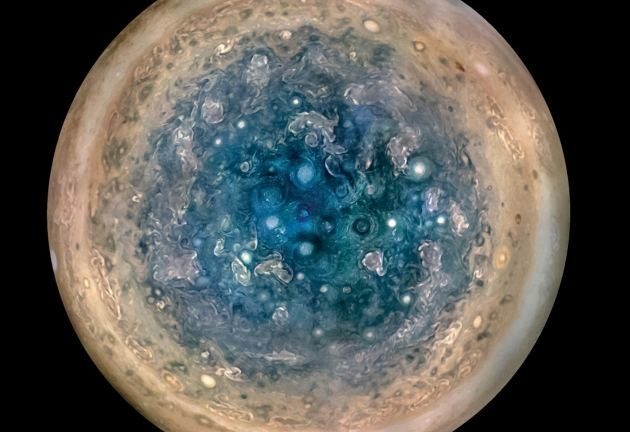
© NASA/JPL-Caltech/SwRI/MSSS/Betsy Asher Hall/Gervasio RoblesA ring of cyclones swirls around Jupiter's south pole.
Since it established orbit around Jupiter in July of 2016, the Juno mission has been sending back vital information about the gas giant's atmosphere, magnetic field and weather patterns. With every passing orbit - known as perijoves, which take place every 53 days - the probe has revealed more interesting things about Jupiter, which scientists will rely on to learn more about its formation and evolution.

During its latest pass, the probe managed to provide the most detailed look to date of the planet's interior. In so doing, it learned that Jupiter's powerful magnetic field is askew, with different patterns in it's northern and southern hemispheres. These findings were shared on Wednesday. Oct. 18th, at the 48th Meeting of the American Astronomical Society's Division of Planetary Sciencejs in Provo, Utah.

Ever since astronomers began observing Jupiter with powerful telescopes, they have been aware of its swirling, banded appearance. These colorful stripes of orange, brown and white are the result of Jupiter's atmospheric composition, which is largely made up of hydrogen and helium but also contains ammonia crystals and compounds that change color when exposed to sunlight (aka. chromofores).

Cassiopaea

Rare blue auroras seen in the Arctic Circle

blue aurora
© Daniel DrelciucTaken by on October 26, 2017, at Tromso, Norway
Around the Arctic Circle, people see green auroras almost every night. It's nothing to write home about. Blue auroras, on the other hand, are very unusual. That's why this photo taken on Oct. 26th by Oliver Wright in Abisko, Sweden, is so remarkable:

"It was totally blue," says Wright, a veteran aurora tour guide who has witnessed hundreds of geomagnetic storms. "I've never seen anything quite like it!" In Tromso, Norway, Daniel Drelciuc saw it, too--"a big blue mass next to the classic green aurora," he says.

In auroras, blue is a sign of nitrogen. Energetic particles striking ionized molecular nitrogen (N2+) at very high altitudes can produce a cold azure glow, most often seen during intense geomagnetic storms. On Oct. 26th, however, geomagnetic activity was not intense.

Maybe these weren't auroras, after all. Another theory is emerging for the blue apparition. On Oct. 26th, the Russian military staged a nuclear battle drill and test-launched a number of ballistic missiles from land, sea and air. At least one of them created a magnificent cloud of blue exhaust. Alexey Yakovlev photographed the display from Strezhevoy, Russia:

Comment: Perhaps the Russians did it, but perhaps we tend to blame the Russians a bit too much. They're not gods y'know!


Comet 2

A comet favorite whips by the Sun this week under scientists watchful eye

comet 96P/Machholz
Fans of the long-running Solar and Heliospheric Observatory have a special treat this week: A long-time cometary favorite of the SOHO spacecraft team will make a grand return to the spacecraft's images as it swings around the sun.

The comet, called 96P/Machholz, will start its fifth run through the spacecraft's field of view since SOHO launched in 1995. Its previous visits were in 1996, 2002, 2007 and 2012. This time around, it should enter the lower-right-hand corner of the imagery on Oct. 25 and then move along the right-hand edge of the field of view through Oct. 30. [Amazing Comet Photos from Earth and Space]

"96P is a fascinating comet," SOHO researchers said in a statement, calling 96P one of the team's favorites. "Amateur astronomer Don Machholz discovered the comet in 1986, and it was soon revealed to be short-period, meaning its orbit around the sun is less than 200 years. Comet 96P completes an orbit every 5.24 years, and has its closest approach to the sun at a rather toasty 0.12 AU (18 million kilometers or 11 million miles) [from the sun]. That's very close for a comet, and that alone makes it interesting."

Magnify

AI method to upscale low-resolution to higher resolution images

AI superresolution bird
© Max Planck Institute for Intelligent Systems GREnhanceNet-PAT is capable of upsampling a low-resolution image (left) to a high definition version (middle). The result is [almost] indistinguishable from the original image (right)
Scientists at the Max Planck Institute for Intelligent Systems in Tübingen have used artificial intelligence to create a high-definition version of a low resolution image. While not pixel-perfect, the system produces a better result.

Comment: The paper describing the method is accessible here.


Gear

CRISPR gene-editing technology unleashed on RNA as 'safer' method of repair

CRISPR gene-editing
© Molekuul / Spl / GettyThe CRISPR-Cas9 gene-editing complex, here shown editing DNA (in blue), has been modified to target RNA.
RNA-based diseases like Fragile X, myotonic dystrophy and ALS could be treated with this technique.

The CRISPR gene editing technique can be used for all sorts of amazing things by targeting your DNA. Scientists are using it in experimental therapies for ALS and Huntington's disease, ways to let those with celiac disease process gluten proteins and possibly assist in more successful birth rates. Now, according to a paper published in Science, researchers have found a way to target and edit RNA, a different genetic molecule that has implications in many degenerative disorders like ALS.