Science & TechnologyS


Comet 2

Newly discovered Comet Heinze (C/2017 T1) to zip past Earth in January

Just discovered, Comet Heinze (C/2017 T) will zoom by Earth in January and may just show up in your binoculars.

Comet Heinze (C/2017 T1)
© Mike OlasonComet Heinze (C/2017 T1) was only a tiny, 17th-magnitude patch of fuzz with a short, fan-shaped tail on October 22nd.
Ah, 2017. A year busy with binocular-bright comets has been on the quiet side lately. But the recent discovery of Comet Heinze (C/2017 T1) by the University of Hawaiʻi's Ari Heinze gives comet watchers hope for a bright and fuzzy start to the new year.

Heinze searches for near-Earth asteroids with the Asteroid Terrestrial-impact Last Alert System (ATLAS) project, and came across the comet in images taken on October 2nd. The survey uses two telescopes, one at Mauna Loa Observatory on Hawaiʻi Island, and a second on the summit of Haleakala on Maui, about 100 miles to the northwest. Among other benefits, two widely-spaced "eyes" allow for distance determination using parallax, which also helps in calculating a new object's orbit.

Cassiopaea

Thunderbolts Project: Big science and the impossibility of gravitational waves (VIDEO)

Gravitational waves
© PBS
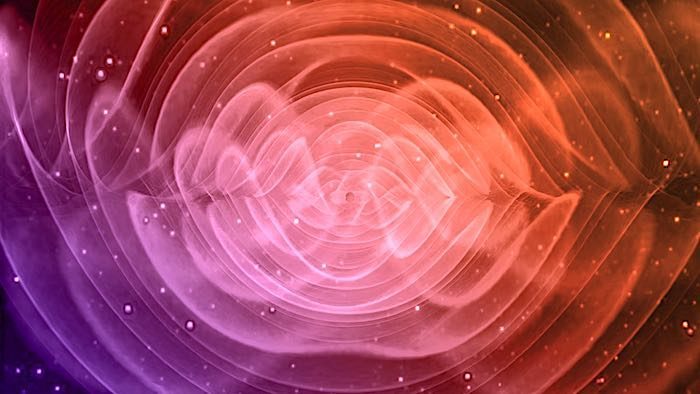
In Part 1 of this presentation, physicist Wal Thornhill began his analysis of the recent award of the Nobel Prize in Physics to scientists for their contributions to the so-called detection of gravitational waves. While science media has shown exactly zero skepticism of the gravitational waves pronouncements, Thornhill discussed some of the foundational mathematical problems that preclude the claimed detection of "two black holes colliding a billion years ago, and producing ripples in the fabric of space-time."

Today, in Part 2, Thornhill explores another fundamental cosmological question, and that is the existence of the required medium for the communication of waves in a vacuum - a medium called the aether.

Comment: See also:


Bulb

New research looks into the body instead of the brain for Alzheimer's treatment

lab mice
© The University of British Columbia ubc.ca
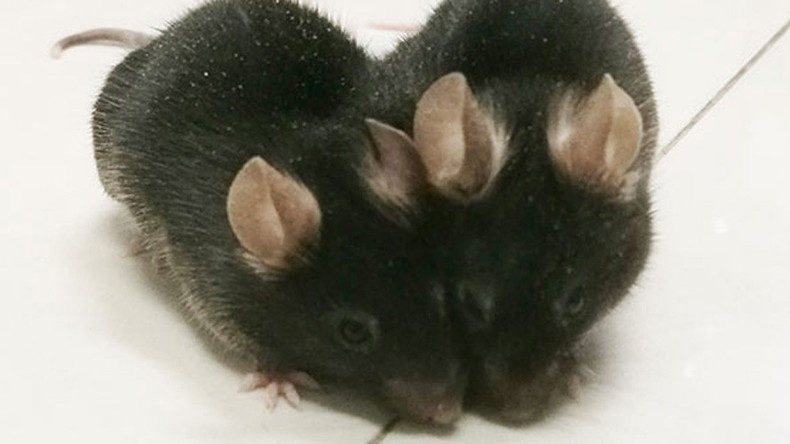
New research suggests that the key to combatting Alzheimer's may be to catch one of its toxic proteins where it originates in our bodies before it reaches and destroys our brains.

The brain is an extraordinarily complex organ on which to operate for surgeons. However, the international team of researchers from the University of British Columbia in Canada, along with colleagues in China's Third Military Medical University in Chongqing, believes that future therapies for Alzheimer's, a major precursor to dementia, may instead target other organs such as the liver or kidneys to provide a more effective treatment.

Grey Alien

Oxford scientists determine aliens would look much like humans

people dressed well
© David Oxberry / Global Look Press
When it comes to aliens it's hard to hazard an educated guess at what they might look like - given that we haven't actually proven their existence by finding them - but that hasn't stopped a group of scientists from Oxford University from having a go.

Over the years, science fiction movies, TV shows and books have portrayed a dazzling array of alien creatures, ranging from Ridley Scott's terrifying 'Alien' and John McTiernan's manhunting 'Predator' to 'Star Trek.' They're frequently shown as monster-like beasts, keen for humanity's destruction.

In a new paper published Wednesday in the International Journal of Astrobiology, a group of scientists from the University of Oxford have a different proposal, however, involving Darwin's Theory Of Evolution.

Laptop

Google Docs locks users out of their files due to "ToS violation"

Google Phone
© Loic Venance/AFP/Getty Images
Imagine you're working on a Google Doc when, seemingly out of nowhere, your ability to edit the online file gets revoked. What you see instead is an error message indicating that you've violated Google's terms of service.

For anyone who stores work in the cloud, suddenly being unable to access your data - especially due to a terms of service violation - may sound scary. And it's really happening to some people, according to reports on Twitter. Rachael Bale, a wildlife crime reporter for National Geographic, said Tuesday that a draft of her story was "frozen" by Google.


Others have reported similar errors.


In response to some of these reports, a Google employee tweeted that the team handling Google Docs was looking into the matter. Later Tuesday, Google said in a statement that it had "made a code push that incorrectly flagged a small percentage of Google Docs as abusive, which caused those documents to be automatically blocked. A fix is in place and all users should have full access to their docs."

Comment: With a stroke of a key it's that easy to lock users out of their accounts. Seems like a handy tool to implement when user pages need to be censored or people need to be controlled should they not toe the party line.


Brain

Scientists create computer program that could identify suicidal thoughts based on brain scans

brain scan
© James Bareham / The Verge
Scientists have trained a computer program to identify people with suicidal thoughts based on their brain scans. The study is small, but the method could one day be used for diagnosing mental health conditions, researchers say.

Nearly a million people worldwide die by suicide every year, and predicting suicide remains difficult, especially because many people feel uncomfortable talking about the issue. In a study published today in the journal Nature Communications, researchers observed the brain activity of two groups of adults - one who had suicidal thoughts and one who didn't - while they thought about words such as "evil" or "praise." They fed this data to an algorithm that learned to predict who had suicidal thoughts with 91 percent accuracy. It also predicted whether someone had attempted suicide before with 94 percent accuracy.

The algorithm isn't perfect - and a medical test would have to be. It may also not become widely used since brain scans are expensive. But "it'd be nice to have this additional method," says study author Marcel Just, a psychologist at Carnegie Mellon University.

Galaxy

Discovery of gas 'monster planet' orbiting companion star upends astronomy theories

gas giant star
© warwick.ac.uk
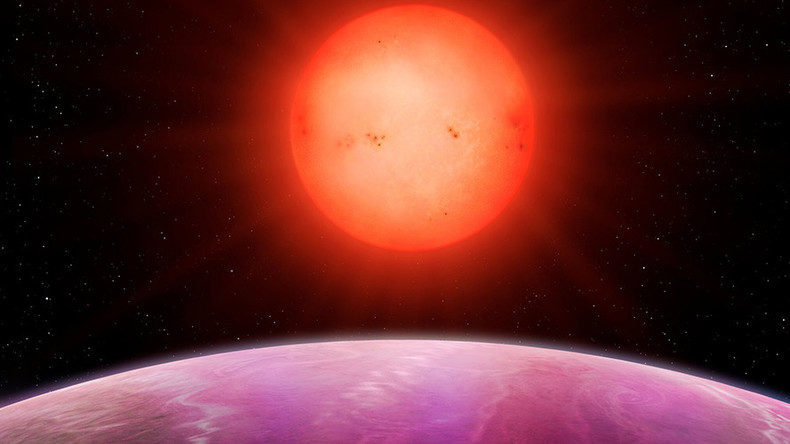
A team of researchers has discovered a gas giant roughly the size of Jupiter orbiting a companion star smaller than our own sun. The discovery has upended current thinking on the limitations of planet formation in the universe.

NGTS-1b is the largest planet relative to its star ever discovered in the universe and dispels pre-existing theories that average-sized stars could not form gas giant planets of such immense size. It's also the first planet discovered by the the Next-Generation Transit Survey observatory which hunts for new planets as they traverse their stars.

"The discovery of NGTS-1b was a complete surprise to us - such massive planets were not thought to exist around such small stars. This is the first exoplanet we have found with our new NGTS facility and we are already challenging the received wisdom of how planets form," said Daniel Bayliss, the lead author of the research said in the University's press release.

Syringe

Flu shot manufacturing causes influenza to mutate

Mutation
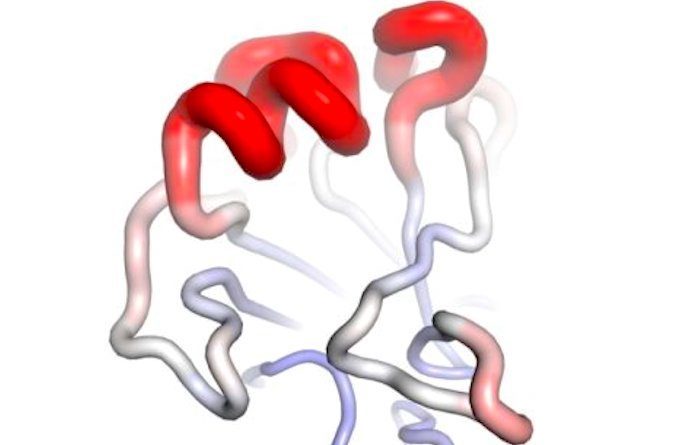
© Wilson LabThe L194P egg-adaptive mutation dramatically increases the motility of the major epitope on the hemagglutinin of influenza H3 viruses. Red: high motility; white: medium motility; blue: low motility.
According to a new study from scientists at The Scripps Research Institute (TSRI), the common practice of growing influenza vaccine components in chicken eggs disrupts the major antibody target site on the virus surface, rendering the flu vaccine less effective in humans.

"Now we can explain -- at an atomic level -- why egg-based vaccine production is causing problems," said TSRI Research Associate Nicholas Wu, Ph.D., first author of the study, published recently in the journal PLOS Pathogens.

For more than 70 years, manufacturers have made the flu vaccine by injecting influenza into chicken eggs, allowing the virus to replicate inside the eggs and then purifying the fluid from the eggs to get enough of the virus to use in vaccines.

The subtype of influenza in this study, called H3N2, is one of several subtypes shown to mutate when grown in chicken eggs, and the researchers say the new findings further support the case for alternative approaches to growing the virus.

Saturn

NASA: Photo of the 'Saturn hexagon' at its north pole

Saturn north pole
© NASA
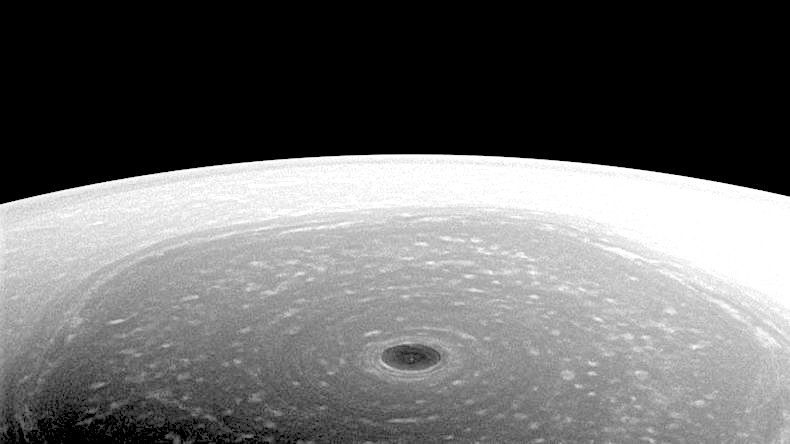
NASA's Cassini spacecraft has captured an awesome image of Saturn's northern hemisphere in full sunlight, revealing the planet's hexagonal storm clouds.

Cassini had been waiting 13 years to catch Saturn's north pole illuminated in all its glory as it neared the summer solstice. When the spacecraft first arrived in 2004, Saturn's northern hemisphere was shrouded in shadow.

Now, scientists can study the area with spacecraft's full arsenal of imagers, according to NASA's Jet Propulsion Laboratory, one of which captured Saturn's visible wavelengths (like in the image below).

The extraordinary view was taken about 34 degrees above Saturn's ring plane, approximately 274,000 miles (441,000 km) above Saturn. Cassini's wide-angle camera took the mesmerizing shot on April 25, 2017, using a spectral filter which preferentially admits wavelengths of near-infrared light.

Cassini ended its mission on September 15 by plunging into Saturn in a fiery finale.


Comment: See also:


Info

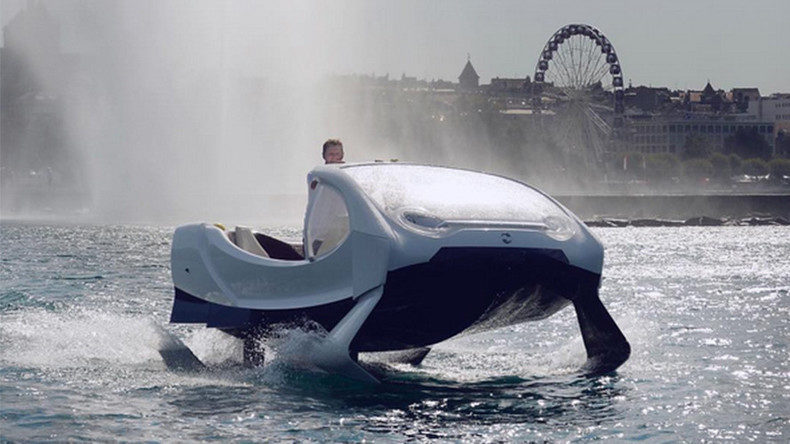
The world's first flying water taxis coming to Switzerland next year

Flying water taxis
© seabubbles_offi / Instagram
The world's first flying taxi service is expected to become operational in the Swiss city of Geneva transporting passengers to neighboring towns.

Five of the taxis known as SeaBubbles will start the service from Lake Geneva in April, the vehicle's creator Alain Thebault told the AFP. They will be able to transport four passengers plus a driver.

The electric-powered SeaBubble can float 70cm above the water, reaching a speed of 18 kilometers per hour. It makes contact with water via its four hydrofoils, which reduce resistance, and two small engines, powered by solar energy.