Science & TechnologyS


Pumpkin 2

Terrifying mystery creature turns out to be enormous moth normally found in Australia and Asia

Creatonotos gangis moth,
The Creatonotos gangis moth is found in Australia and parts of Asia.


This creature may look like an alien from a sci-fi movie - but, terrifyingly, it's completely real.


A brave eyewitness opted to film a short clip of the animal rather than fleeing for their life.


Bulb

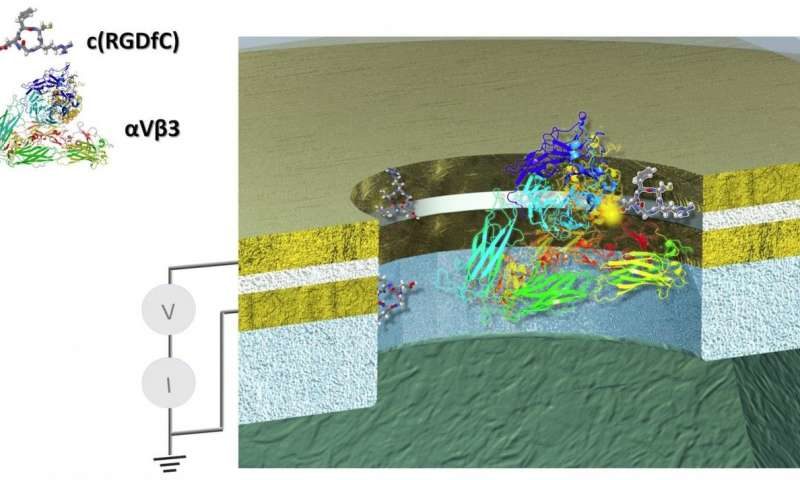
Proteins can be made to conduct electricity like a metal

heavy metal experiment
© Weisi Song, Biodesign Institute, Arizona State University
When pushing the boundaries of discovery, sometimes even the most experienced of scientists can get a surprise jolt from a completely unpredictable result.

That was the case for ASU Regents' Professor and biophysicist Stuart Lindsay, who has spent his career building new microscopes that have become the eyes of nanotechnology and next-generation, rapid and low-cost DNA and amino acid readers to make precision medicine more of a reality.

In the process, Lindsay's research team has learned a thing or two about how single molecules behave when tethered between a pair of electrodes, which is the foundation for how his DNA readers work.

The technology, called recognition tunneling, threads single molecules down a nanopore like a thread through the eye of a needle.

As they go down the nano-rabbit hole, electrodes measure the electrical properties of these single DNA or amino acid molecules to determine their sequence identity.

Having spent a considerable amount of time building DNA and amino readers, the thought was to give whole proteins a try. "The technological goal here was, can we use our technology to electronically detect whole proteins," said Lindsay.

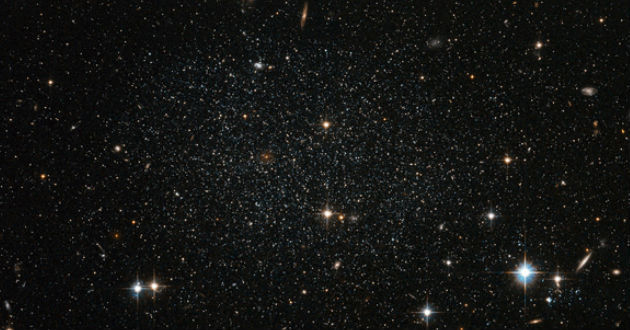
Galaxy

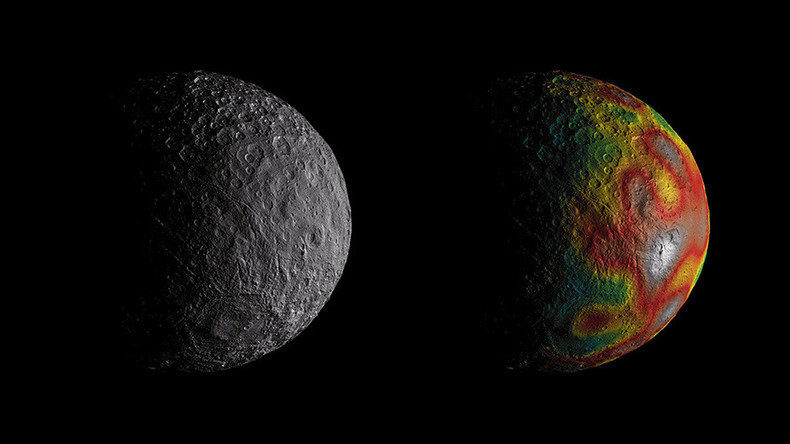
NASA: Dwarf planet Ceres may have had an ocean

Ceres dwarf planet
The dwarf planet Ceres may have once had a global ocean, according to new studies based on data from NASA's Dawn mission.

The Dawn spacecraft, which has been orbiting the only dwarf planet in the inner reaches of the solar system since March 2015, obtained measurements suggesting the presence of an ancient ocean.

"More and more, we are learning that Ceres is a complex, dynamic world that may have hosted a lot of liquid water in the past, and may still have some underground," said Julie Castillo-Rogez, Dawn's project scientist.

The team found that Ceres' crust is a mixture of ice, salts and hydrated materials that were subjected to past and possibly recent geologic activity. The crust represents most of that ancient ocean according to NASA.

Shape and gravity data measurements from the Dawn mission were used to determine the internal structure and composition of Ceres.

Robot

Why Elon Musk is sounding the alarm on Artificial Intelligence

"AI is a fundamental risk to the existence of human civilization."
Elan Musk
© Bobby Yip/Reuters
Elon Musk is a household name. The South African-born billionaire can seemingly pioneer anything: PayPal, Tesla, SpaceX, and (maybe) the Hyperloop. He's an engineer and a marketer, Steve Jobs and Steve Wozniak rolled into one. And he's always great for a quote because he's photogenic, telegenic, and technogenic.

But there's one technology he's deeply scared of: artificial intelligence. "AI is a fundamental risk to the existence of human civilization," he warned a meeting of the nation's governors earlier this year. "I have access to the very most cutting-edge AI, and I think people should be really concerned about it." He has also warned that Google is creating "a fleet of artificial-intelligence-enhanced robots capable of destroying mankind."

Comment: See also:


Comet 2

Speeding space rock is first interstellar object to be seen in our solar system

interstellar comet
© NASA
Scientists believe they've just pinpointed the first interstellar comet or asteroid ever detected to pass through the solar system, speeding by at a phenomenal rate.

The scale of our star's reach is so large that NASA says you could travel more than 13 billion km into deep space and still not escape the influence of the sun. The sheer distance makes the incursion of an alien object - dubbed A/2017 U1 - into the solar system a significant find, as it has traveled an incredible distance to register on the watchful telescopes of Earth.

The object, believed to be a comet or asteroid, was spotted by the University of Hawaii's Pan-STARRS 1 telescope on October 19.

According to NASA, the 400-meter-diameter object is traveling at an incredible 25.5km per second, and is destined to vanish from the boundaries of our planetary network.

Beaker

Composition of gut microbiome identified as factor in developing post-traumatic stress disorder

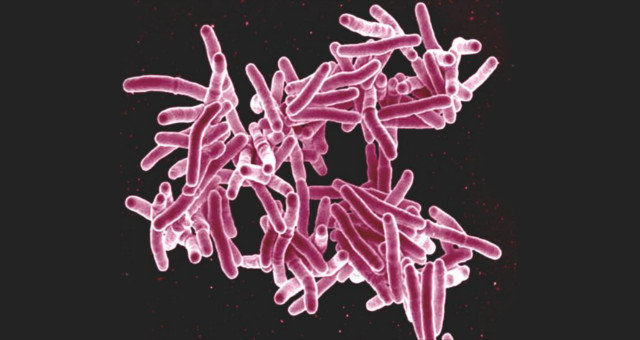
gut bacteria
The bacteria in your gut could hold clues to whether or not you will develop post-traumatic stress disorder (PTSD) after experiencing a traumatic event.

PTSD is a serious psychiatric disorder that can develop after a person experiences a life-threatening trauma. However, not everyone exposed to a traumatic event will develop PTSD, and several factors influence an individual's susceptibility, including living conditions, childhood experiences and genetic makeup. Stellenbosch University researchers are now also adding gut bacteria to this list.

In recent years, scientists have become aware of the important role of microbes existing inside the human gastrointestinal tract, called the gut microbiome. These microbes perform important functions, such as metabolising food and medicine, and fighting infections. It is now believed that the gut microbiome also influences the brain and brain function by producing neurotransmitters/hormones, immune-regulating molecules and bacterial toxins.

In turn, stress and emotions can change the composition of the gut microbiome. Stress hormones can affect bacterial growth and compromise the integrity of the intestinal lining, which can result in bacteria and toxins entering the bloodstream. This can cause inflammation, which has been shown to play a role in several psychiatric disorders.

Comment:


Nebula

'Landmark' quantum physics breakthrough with detection of Majorana fermions - dubbed 'angel particles'

angels
© St Catherine's Monastery, Mount SinaiTwo angels painted in Byzantium between 395 and 1453AD
Scientists say they have found the first evidence that 'Majorana fermions' exist, 80 years after they were first suggested

Physicists believe they have discovered a particle that is both matter and anti-matter, an idea that was first theorised 80 years ago.

When the Big Bang created the universe out of nothing, scientists believe the explosion created equal amounts of matter and anti-matter.

And, if they were ever to meet, they would annihilate each other - returning to 'nothing' apart from a burst of energy.

However, in 1937 an Italian theoretical physicist, Ettore Majorana, predicted the existence of a strange class of particles called fermions that were their own anti-particles.

And now, in an article in the prestigious journal Science, researchers from the University of California, Los Angeles, and Stanford University reported they had found the first evidence of just such an object, which they dubbed the "Angel Particle" after Dan Brown's thriller Angels and Demons which involves a bomb made from a combination of matter and anti-matter.

Galaxy

The bizarre behaviour of anti-matter has scientists saying universe shouldn't exist

Universe
© NASA
We don't know why the universe isn't destroying itself

Our universe shouldn't exist, scientists say.

The most elite scientists in the world are still struggling to find why exactly our universe didn't destroy itself as soon as it came into existence. That's what science says should have happened - but it clearly hasn't, since you're here reading this, as far as we know.

At the beginning of the universe, according to the standard model, there are equal amounts of matter and anti-matter. The trouble with that is that they would each have annihilated each other, leaving none of the matter that surrounds us today.

Researchers have been frantically looking for some difference between matter and anti-matter that could explain why the universe is still around. But they have tried a range of different possibilities - that they have different mass, electric charge, or something else - but have found no difference.

That has led researchers to question why the universe is still around at all.

Brain

UCLA neuroscientists enhance human memory by electrically stimulating the brain

Electrically stimulating the brain
FINDINGS

Neuroscientists at the David Geffen School of Medicine at UCLA have discovered precisely where and how to electrically stimulate the human brain to enhance people's recollection of distinct memories. People with epilepsy who received low-current electrical pulses showed a significant improvement in their ability to recognize specific faces and ignore similar ones.

Eight of nine patients' ability to recognize the faces of specific people improved after receiving electrical pulses to the right side of the brain's entorhinal area, which is critical to learning and memory. However, electrical stimulation delivered to the left side of the region, tested on four other people, resulted in no improvement in the patient's recall.

Microscope 1

Scientists discover certain immune cells clear debris after injury leading the way to nerve regeneration after injury

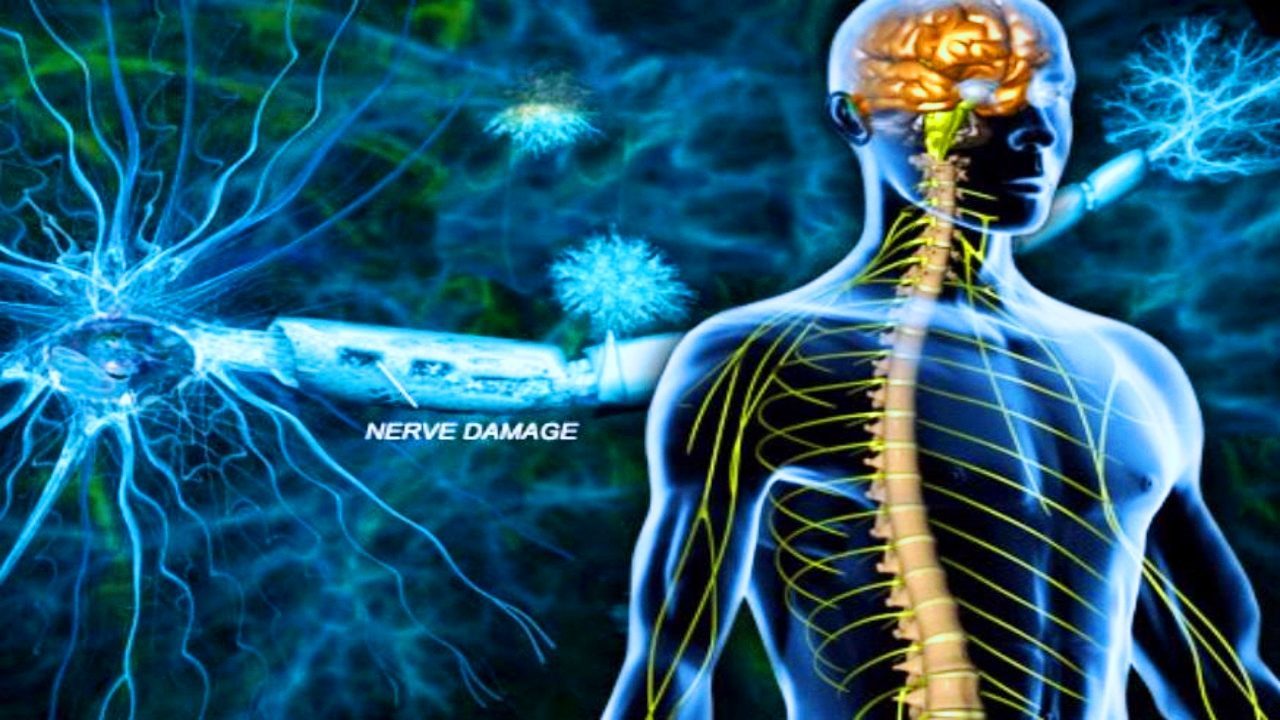
nerve regeneration
Immune cells are normally associated with fighting infection but in a new study, scientists have discovered how they also help the nervous system clear debris, clearing the way for nerve regeneration after injury. In a study published in the Journal of Neuroscience, researchers from Case Western Reserve University School of Medicine showed certain immune cells-neutrophils-can clean up nerve debris, while previous models have attributed nerve cell damage control to other cells entirely.

"This finding is quite surprising and raises an important question: do neutrophils play a significant role in nerve disorders?" said Richard Zigmond, PhD, senior author on the study and professor of neurosciences, neurosurgery, and pathology at Case Western Reserve University School of Medicine. Neutrophils are one of the most common types of immune cells and known to engulf microorganisms, but they are not normally associated with peripheral nerve damage, such as that caused by diabetes or trauma.