Science & TechnologyS


Galaxy

Asteroids may hold the key to the chemical origins of life

broken asteroid
© NASA
Asteroids are often thought to be a threat to life, but could they be the key finding out how the Earth evolved into the thriving planet which we know today?

Nicholas Hud, director of the Center for Chemical Evolution at the Georgia Institute of Technology, thinks so and has been studying space rocks in an effort to pinpoint the chemical substance which existed prior to mankind.

Partnered with NASA, the center's objective is to collect evidence of the chemical origins of life, and study possible precursors to molecules, like amino acids and sugars, that have become the building blocks of human existence.

Asteroids often make the news due to their Earth shattering potential. Last year, the US government suggested that a "catastrophic" impact from a Near Earth Objects is a real threat.

But Hud believes it is important for scientists to look to the rock formations outside our atmosphere if we are to truly understand the history of the universe.

"We can look to the asteroids to help us understand what chemistry is possible in the universe," he said.


Comment: See also:


2 + 2 = 4

A person's genes may reveal the time of their death

forensics
© Adobe stock/CCO
In Brief : By analyzing changes in a deceased person's gene activity, new software can determine an exact time of death, which could assist forensic investigations.

Every single piece of information about us is contained in our genes. It turns out, our genes can also provide clues about when, precisely, we die.

A study from the Center for Genomic Regulation (CRG) in Barcelona, Spain surveyed the gene activity that occurs in human tissue after death, and found distinct patterns that could be traced back to a person's time of death.

Comment: Found: Genes That Let You Live To 100


Ice Cube

In cold blood: The therapeutic benefits of hypothermia

cold
'Some, pale and depressed by inanition, swooned away and died, stretched on the snow ... They were seen walking insensible and ignorant where they went ... In a word, when no longer able to continue walking, having neither power nor will, they fell on their knees ... Their pulse was small and imperceptible; respiration, infrequent and scarcely perceptible in some, was attended in others by complaints and groans. Sometimes the eye was open, fixed, dull, wild, and the brain was seized by quiet delirium.'

It was the French doctor Pierre Jean Moricheau-Beaupré who provided this recounting in A Treatise on the Effects and Properties of Cold (1826), one of the most complete, original descriptions of hypothermia, the condition in which body temperature falls dangerously low, below 95°F or 35°C. He was writing of his experience on the Napoleonic retreat from Moscow in 1812, almost 80 years before the medical term was coined.

Fire

'Worst case scenario': Kikai volcano set to erupt and could kill 100 million people

A lava flow
© Richard Bouhet / AFPA lava flow
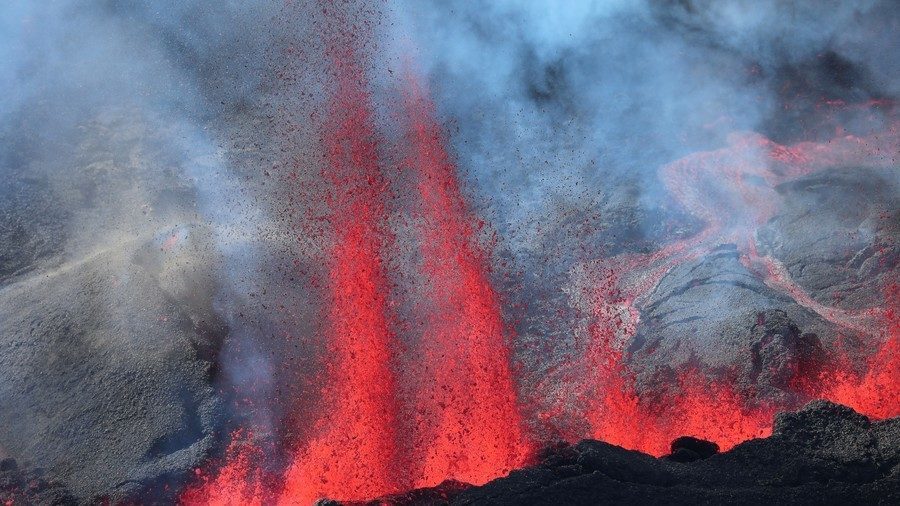
A magma reservoir potentially hidden behind an underwater volcanic crater could have civilization-ending results if it ever erupts, according to Japanese scientists.

Experts from the Kobe University Ocean Bottom Exploration Center (KOBEC) have confirmed that a giant caldera or large crater exists in the Japanese Archipelago. The crater, measuring 32 cubic kilometers, is said to be the largest of its kind and the result of an explosive underwater eruption 7,300 years ago, according to their latest study.

Sitting between the Pacific and Philippine Sea Oceanic plates, Japan is a hotbed for seismic activity, which is why scientists are keen on updating methods of predicting natural disasters. The KOBEC team has been carrying out detailed surveys of the area and published their findings in Scientific Reports.

Comment: Massive lava dome lurks underneath Japan's Ōsumi Islands


Brain

Expert claims human speech will be replaced by thought communications via computer by the year 2050

HUMAN speech will become a thing of the past by the year 2050, by which time we will communicate by thought via a computer-generated collective consciousness, it has been claimed
human speech replaced thought communication
Speech will be replaced by thought communication by 2050, it has been claimed.
Marko Karjnovic unveiled his ideas at The Museum of the Future as part of the World Government Summit in Dubai.

The Hybrid Intelligence Biometric Avatar (HIBA), will understand the feelings of people connected to it, take on their personas, exchange information with them and even become part of the fabric of their brains.

Mr Karjnovic, who has produced the exhibit, explained: "It is very similar to the work of Elon Musk - it is an open source platform for humanity.

"HIBA will have the ability to connect the minds of the most clever of us, combining those minds with everything it can find out practically and put it all together in hybrid intelligence."

Comment: Why Elon Musk is sounding the alarm on Artificial Intelligence


Beaker

Researchers reverse Alzheimer's in mice by targeting a key enzyme

Alzheimer's, dementia
© zephr/ SPL
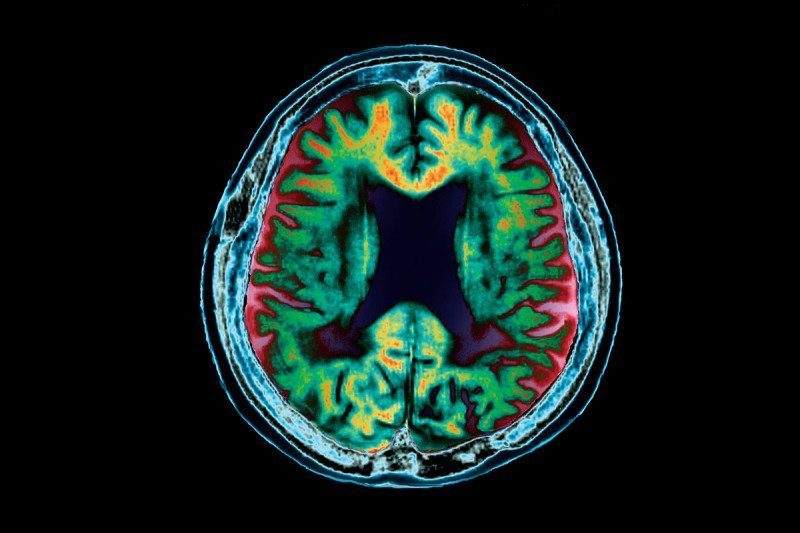
Alzheimer's has been reversed in mice for the first time, raising the hopes of a drug to combat the disease.

Decreasing the levels of a key enzyme - called BACE1 - reduced the levels of amyloid plaques, which are linked to Alzheimer's.

The mice's brains were eventually completely free of these tangles and their cognition improved.

This is the first time scientists have been able to clear the brain of these protein tangles.

It is possible a drug could be developed to help target this enzyme.

Comment: Good for the mice, but in the meantime, for humans, dietary changes can improve Alzheimer's symptoms.
The Alzheimer's antidote: using a low-carb, high-fat diet to fight Alzheimer's disease, memory loss, and cognitive decline


Seismograph

Layer of "slime" could leave areas more vulnerable to submarine landslides

ocean floor
© GettyThe new analysis, which points to a layer of slime as the reason for submarine landslides, has the potential to flag up safety risks associated with oceanic endeavors (file photo)
Slimy remains from microscopic organisms on the sea floor can trigger catastrophic tsunamis, researchers have found.

Scientists have finally learned of a potential cause for submarine landslides, according to a new report from the Helmholtz Centre for Ocean Research Kiel.

The cause for the landslides - that are often much more destructive than those on the shore - was previously a mystery.

Cassiopaea

Retrocausality may explain how the future can change what happens now - as in a quantum time machine

retrocausality
© Christoph Hetzmannseder/Keystone-France/REB Images/Getty
The idea that the future can influence the past may finally explain the inherent randomness of quantum theory and bring it in line with Einstein's space-time

If you were to break your arm tomorrow afternoon, would you suddenly find it hanging useless in a sling this morning? Of course not - the question makes no sense. Cause always precedes effect. But maybe life isn't quite so straightforward for a photon. In the subatomic realm, where the laws of quantum physics make seemingly impossible feats routine, the one thing that we always considered beyond the pale might just be true.

This idea that the future can influence the present, and that the present can influence the past, is known as retrocausality. It has been around for a while without ever catching on - and for good reason, because we never see effects happen before their causes in everyday life. But now, a fresh twist on a deep tension in the foundations of quantum theory suggests that we may have no choice but to think again.

No one is saying time travel is anything other than fantasy. But if the theorists going back to the future with retrocausality can make it stick, the implications would be almost as mind-boggling. They could not only explain the randomness seemingly inherent to the quantum world, but even remake it in a way that finally brings it into line with Einstein's ideas of space and time - an achievement that has eluded physicists for decades. "If you allow retrocausality, it is possible to have a theory of reality that's more compatible with lots of things that we think should be true," says Matthew Leifer at Chapman University in Orange, California.

Comment: And it doesn't end there...


Blue Planet

What fuels the flat-Earthers?

flat earth
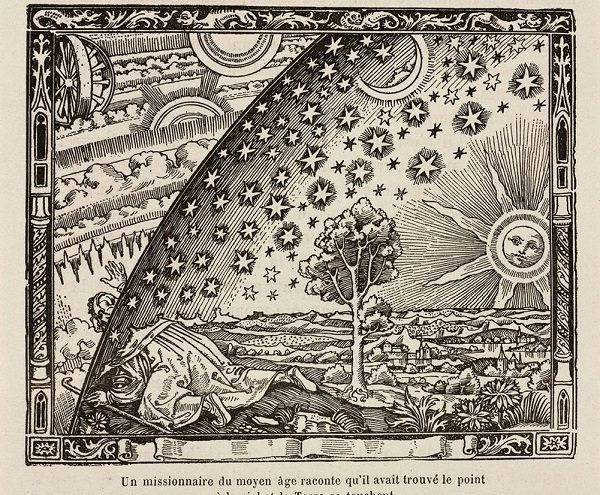
© SSPL/GettyIn this woodcut, a medieval missionary recounts that he has found the spot where the sky and the Earth touch.
A believer in flat-Earth conspiracies took another shot at shooting himself toward the stratosphere in a homemade rocket. Once again, it fell flat.

"Mad Mike" Hughes, a self-proclaimed daredevil who rejects the fact that the Earth is round, posted a video on his Facebook page about two weeks ago saying that he planned to launch himself from private property to an altitude of 1,800 feet (550 meters) on Saturday, Feb. 3. Hughes had canceled and delayed launches before, so it wasn't really clear whether Saturday's event would happen. His homemade rocket sat on the "launchpad" in Amboy, California, for about 11 minutes before it ... didn't go anywhere, as shown on a live video of the event.

Nevertheless, it spotlights a subculture that is increasingly gaining notoriety online.

That subculture is flat-Earthers, people who argue that centuries of observations that the Earth is round (including astronaut photographs from space and the fact that round-the-world travel itineraries work) are either mistaken or part of a vast cover-up. Instead, flat-Earthers argue, the planet is a disk. Exactly what this looks like varies by who is theorizing, but many flat-Earth believers say that walls of ice surround the edge of the disk, and that the planets, moons and stars hover in a sort of dome-shaped firmament above Earth, much closer to Earth than they really are.

Comment: The real conspiracy: Flat earth is a psyop


Question

Google and big business design adblocker to be installed as default on Chrome banning what it deems "most intrusive ads"

ad block chrome
© Stephen Shankland/FlickrGoogle's Chrome browser will begin blocking some adverts from 15 February.
Google will start automatically blocking intrusive ads within its Chrome browser for desktop and Android from Thursday 15 February.

The change, announced in June, will see the dominant browser that is used by over 56% of internet users block some of the most intrusive ads including full-page prestitial ads, flashing animated ads and auto-playing video ads with sound.

"A big source of frustration is annoying ads: video ads that play at full blast or giant pop-ups where you can't seem to find the exit icon," said Rahul Roy-Chowdhury, vice president for Chrome. "These ads are designed to be disruptive and often stand in the way of people using their browsers for their intended purpose - connecting them to content and information. It's clear that annoying ads degrade what we all love about the web."

Comment: What Google would consider invasive or acceptable - considering their business is advertising revenue - is questionable; it's a bit like trusting Facebook to judge for you what it considers fake news. So while online ads are bothersome, there already were excellent adblockers out there for those who wanted them, so one wonders exactly what's in it for Google and its irksome big business allies.

There are other browsers out there for people who don't want Big Tech deciding what's good for them, but with their dominance in the market, clearly they're going to have an impact.