Science & TechnologyS


Beaker

Autoimmunity problems in relation to neurological disorders

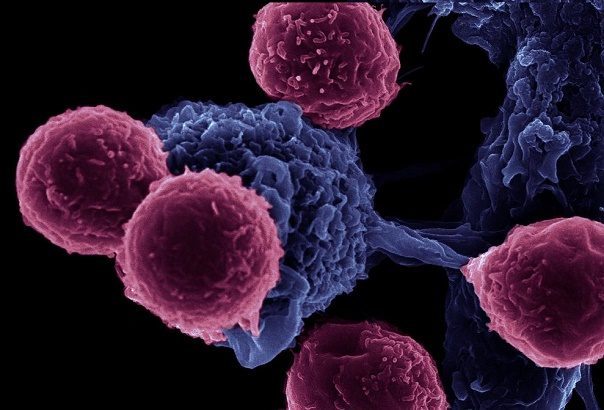
t-cell electron microscope
© Rita Serda/FEI ImageImmune cell communication, dendritic cells stimulated with adjuvant silicon microparticles interact with T cells. Taken using an FEI microscope, magnification 16,000x.
Vijendra K. Singh, Ph.D., was a research associate professor at Utah State University when he contributed this article. He has over 20 years of experience in neurobiology and immunology research, beginning at the Children's Hospital in Vancouver. He is considered a pioneer in his field and an international authority on autoimmunity and autism. He serves on the scientific board of the Autism Autoimmunity Project, New Jersey.

Dr. Singh, how did your interest in immune response and the nervous system develop?

From the beginning, my career has been devoted to the study of the nervous system. Initially, I was focusing on neurochemistry - the biochemistry of the nervous system. I was interested in specific proteins and the neuronal pathways that are found in the brain; proteins play important roles in the cellular signaling that takes place between different neurons and other cells in the brain. I also began studying immunology and was fascinated by the fact that there are chemical messengers in immune system function as well.

Then, about 20 years ago, I was struck by an article I read on the mind-body relationship that proposed a biological basis for this connection. I began to pay attention to how neurotransmitters and neuropeptides interact with other body organs, and I became interested specifically in the interaction between the nervous system and the immune system. Some neuropeptides and neurotransmitters have a clear influence on the immune response. The fact that central nervous system diseases such as multiple sclerosis (MS) had been heavily investigated as an immune disorder heightened my interest. I decided to focus on the immunology of the nervous system in health and in disease. This is a very important component of the mind-body relationship.

As you know, medical history shows us that an understanding of the mind-body relationship existed in ancient times. Old literature, in fact, documents that some of this understanding came from my homeland of India. All these factors have shaped my current area of research-which is the autoimmune response in autism.

Comment: There are many natural steps that can be taken to calm an overactive immune system:


Info

Puzzling change in Southern Ocean revealed by CSIRO

Dr Steve Rintoul
© Peter MathewDr Steve Rintoul, chief scientist of the RV Investigator voyage, with one of the deep-sea floats.
Researchers aboard an Australian ship undertaking pioneering work in the Southern Ocean have found the "first hint" of a shift in a decades-long trend towards fresher, less dense water off Antarctica.

Teams of scientists on the RV Investigator have been profiling the salinity and temperature of water between Tasmania and Antarctica at 108 locations.

They also released the first batch of deep Argot floats to measure conditions as deep as 4000 metres.

But it is the early analysis of data on salinity in the so-called bottom waters near the seabed that may stir international debate.

"Every time we've measured since the 1970s, [bottom water's] been becoming lighter and fresher," Steve Rintoul, the voyage chief scientist, told Fairfax Media on Monday as the ship took its final ocean profile.

"We've got the first hint now that maybe things are shifting back to becoming saltier and denser in the deepest part of the ocean," said Dr Rintoul, who is a senior researcher at CSIRO and the Antarctic Climate and Ecosystems (ACE) CRC.

Dr Rintoul said "this increase in salinity still brings levels to nowhere near where they were in the 1970s ... nor even into the 1990s". The trend of warming of those waters has not changed.

Bulb

President of the Gran Sasso Science Institute: The discovery of gravitational waves marks the start of a new era in astronomy

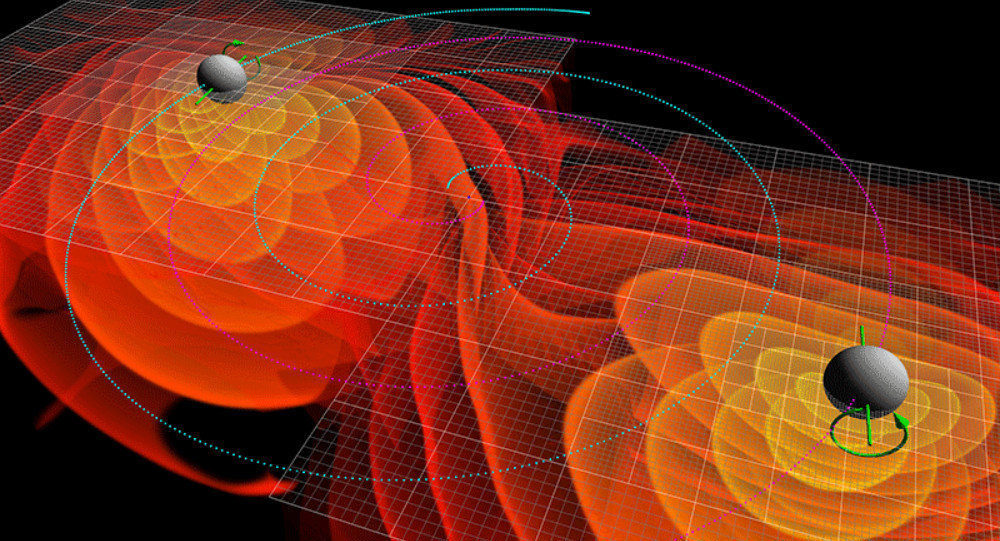
Numerical simulations of the gravitational waves
© NASA. Ames Research Center/C. HenzeNumerical simulations of the gravitational waves emitted by the inspiral and merger of two black holes
Eugenio Coccia, one of the scientists who have confirmed the existence of gravitational waves, talked to Sputnik about his research and the work of the international scientific community.

Italian professor Eugenio Coccia - president of the Gran Sasso Science Institute and founder of the institute's Center for Advanced Studies - is also a member of LIGO-Virgo scientific collaboration group. He is one of the scientists who confirmed the existence of gravitational waves and has observed merging black holes and neutron stars.

Gravitational waves are often expressed as a 'ripple' in the fabric of space-time caused by some of the most violent and energetic processes in the known universe. Gravitational waves were predicted by Albert Einstein, but their existence has only been confirmed recently, after 50 years of experiments by the LIGO observatory in the US and the Virgo observatory in Italy.

On February 9th Coccie offered a lecture called Gravitational Waves: the Golden Age of Physics at the St. Petersburg Planetarium. Now, he speaks with Sputnik about his discovery.

Comment: See also:


Brain

Brainwave measurements finds mechanism of how exercising to music enhances the experience

workout headphones brain
Headphones are a standard sight in gyms and we've long known research shows listening to tunes can be a game-changer for your run or workout.

Back in 2012, Brunel University London's Costas Karageorghis likened music to a legal, performance-enhancing drug, cheating tiredness and sparking feel-good vibes.

But the precise brain mechanisms music triggers during exercise are less understood. That's because monitoring technology is easily tricked by body movements, so scientists couldn't know if the results would be the same outside the lab.

Now researchers have used portable electroencephalogram (EEG) monitoring with interference shielding technology to measure three types of brainwaves during exercise. This lets them compare the brain's electrical feedback while exercising outdoors to music, a podcast, or no soundtrack at all.

Info

'Part of your body': Japanese researchers reveal on-skin display

New skin
© Toru Yamanaka / AFP
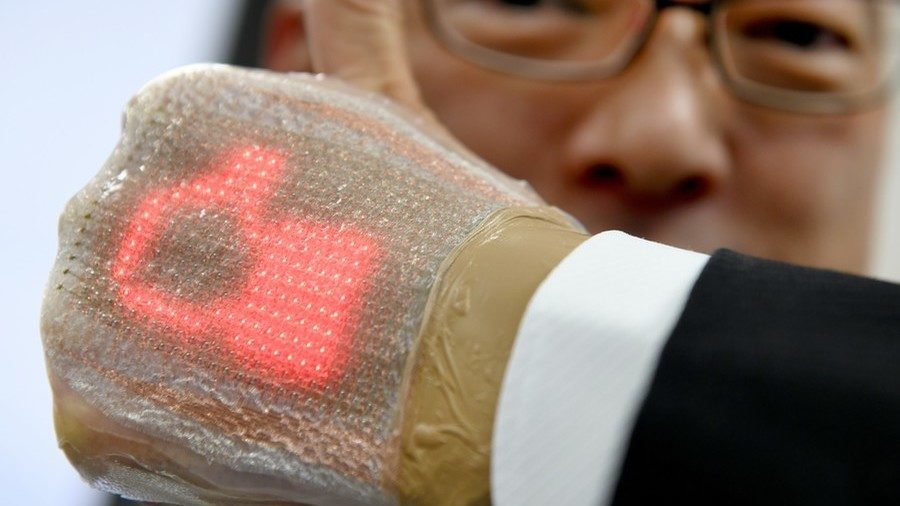
A team of Japanese scientists has developed an ultra-thin elastic LED display that can comfortably be worn over the skin. The device can be used to take body readings and receive simple messages.

The researchers from the University of Tokyo and Dai Nippon Printing (DNP) showcased their work at the annual meeting of the American Association for the Advancement of Science in Austin, Texas, on Saturday. The display consists of a one-millimeter-thick rubber sheet embedded with some 400 micro-LEDs that can be stretched and twisted without breaking the circuit.

The device can be worn on the skin for a week without causing irritation, during which time its wireless communication module can transmit medical data to doctors from their patients, which is particularly useful for elderly or disabled patients who have difficulties using existing devices.

"With this, even in home-care settings, you can achieve seamless sharing of medical data with your home doctors, who then would be able to communicate back to their patients," Professor Takao Someya, one of the project leaders, told the Japan Times.

Galaxy

A magnetic 'wormhole' that connects two regions of space has been created by scientists

wormhole
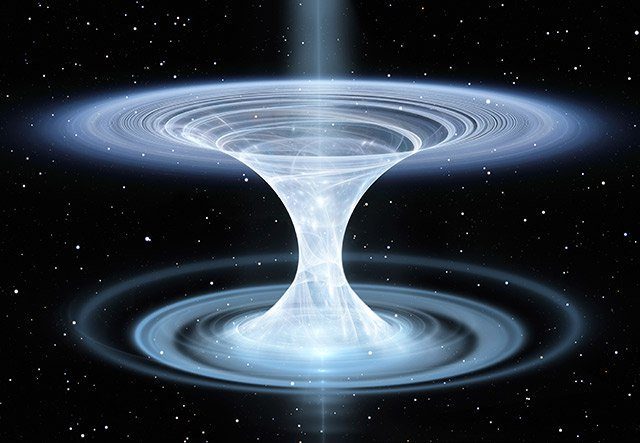
Wormholes are fascinating (but theoretical) cosmological objects that can connect two distant regions of the universe. They would allow one to create "shortcuts" through space in order to travel vast distances in a shorter period of time. They are predicted by the general Theory of Relativity, and are what Einstein referred to as "bridges" through space-time. Wormholes are mathematically predicted, if not proven, and a new study illustrates how scientists have taken these theoretical anomalies - which many physicists believe to be real - and created one for them.

Researchers in Spain, from the physics department at the Autonomous University of Barcelona, have actually created a magnetic wormhole in a lab that tunnels a magnetic field through space.

Fireball 3

Five Years after the Chelyabinsk Meteor: NASA's efforts in planetary defense

Chelyabinsk asteroid
© UnknownCoincidentally, on the same day as the Chelyabinsk event, the United Nations Committee on Peaceful Uses of Outer Space Working Group on Near-Earth Objects was meeting in Vienna to finalize a recommendation to the U.N. on how to defend Earth from possible asteroid impacts.
A blinding flash, a loud sonic boom, and shattered glass everywhere. This is what the people of Chelyabinsk, Russia, experienced five years ago when an asteroid exploded over their city the morning of Feb. 15, 2013.

The house-sized asteroid entered the atmosphere over Chelyabinsk at over eleven miles per second and blew apart 14 miles above the ground. The explosion released the energy equivalent of around 440,000 tons of TNT and generated a shock wave that blew out windows over 200 square miles and damaged some buildings. Over 1,600 people were injured in the blast, mostly due to broken glass.

"The Chelyabinsk event drew widespread attention to what more needs to be done to detect even larger asteroids before they strike our planet," said NASA Planetary Defense Officer Lindley Johnson.

"This was a cosmic wake-up call."

Comment: There is a considerable increase in reported meteorites during last decade. There are number of asteroids NASA couldn't detect until the last minute. See also:


Info

Edible electronics on the menu next!

Graphene etched onto a slice of bread
© Jeff Fitlow/Rice UniversityGraphene etched onto a slice of bread.
Graphene patterns can be written onto everyday materials such as food, paper, cloth and cardboard, say US scientists, potentially producing a new class of edible electronics.

Graphene is a revolutionary material made up of a single layer of carbon atoms arranged in a honeycomb lattice. It is almost completely transparent, extremely light and strong, and an efficient conductor of heat and electricity. Ongoing research is working to exploit its properties in diverse applications such as tissue engineering, water filtration, solar cells and glass-based electronics.

As described in a study published in the American Chemical Society journal ACS Nano, a team of scientists led by Yieu Chyan and Ruquan Ye of Rice University in Texas, US, used a commercial laser to create graphene patterns on a variety of materials, including paper, cardboard, cloth, coal, potatoes, coconuts, and toast.

"This is not ink," says James Tour, Rice University chemist and co-author of the study. "This is taking the material itself and converting it into graphene."

The materials used in the study have a common factor: lignin, a complex organic polymer that binds the cells, fibres and vessels of many plants and algae. Crucially, it is largely composed of carbon.

The team claim that any material with a high enough carbon content can be turned into graphene. In 2011 they made graphene out of insects, waste and even Girl Scout cookies, using a different technique involving carbon deposition on copper foil.

Question

Can Olympic figure skaters break the aerial 5-spin barrier?

olympic skater
© Jamie Squire/GettyMirai Nagasu, of the United States, competes at the Pyeongchang 2018 Winter Olympic Games on Feb. 12, 2018.
Olympic audiences went wild last week when Mirai Nagasu landed a triple axel, becoming the first U.S. female figure skater to turn an entire 3.5 rotations in the air at the Winter Games.

Meanwhile, male figure skaters have mastered the quadruple jump, that is, four rotations in the air. But no skater, male or female, has pulled off a quintuple-turn jump.

What gives? And more importantly, is it possible?

"I'm in the camp that I'm doubtful that that will happen," said Jim Richards, a professor of biomechanics in the Department of Kinesiology and Applied Physiology at the University of Delaware. But other human-biomechanics experts are more optimistic.

"I am a person who leans toward the 'yes' side," said Deborah King, a professor in the Department of Exercise and Sport Sciences at Ithaca College, in New York. Figure skaters could achieve a quintuple-turn jump if they perfected the key components involved in a rotation, she told Live Science.

Bizarro Earth

Scientists working on making actual 'sheeple' so they can harvest human organs from sheep

sheep people sheeple
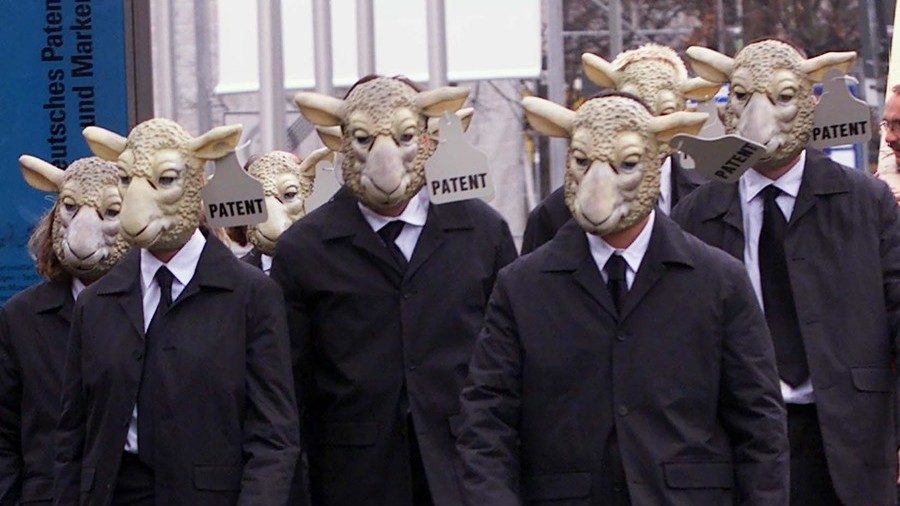
© Michael Dalder / ReutersGreenpeace activists protesting in sheep masks
A team of scientists has grown embryos inside a sheep that contain human stem cells, moving the sci-fi idea of developing human organs inside animals one step closer to reality, which has sparked ethical concerns.

The scientific breakthrough could potentially save the lives of thousands of people who are in a dire need of vital organ transplants. While many patients die before they move up to the top of a queue, organs grown inside a sheep, like a pancreas, can not only save a life but also cure a chronic illness such Type 1 Diabetes, the researchers say.

This week, the team from Stanford University was able to grow a sheep embryo injected with adult human stem cells for 28 days, including 21 days inside a sheep, it announced at a meeting of the American Association for the Advancement of Science in Austin, Texas, the Guardian reports. The experiment had to be terminated, as the law prohibits developing cross-species embryos, called chimera, for more than 28 days.

Comment: It's rather interesting that as the human species advances in scientific materialism, it draws closer to literally becoming more animal.