Science & TechnologyS


Rose

The flowers that give us chocolate are persnickety to pollinate

FLOWERS FOR CHOCOLATE
FLOWERS FOR CHOCOLATE: Pale petals curl over a cacao flower’s male parts. Here, two developing fruits, or seedpods (top left), will eventually ripen, housing the seeds that give the world chocolate.
A complicated reproductive system makes pollination a tough job

It's a wonder we have chocolate at all. Talk about persnickety, difficult flowers.

Arguably some of the most important seeds on the planet - they give us candy bars and hot cocoa, after all - come from pods created by dime-sized flowers on cacao trees. Yet those flowers make pollination just barely possible.

Growers of commercial fruit crops expect 50 to 60 percent of flowers to make a fruit, or pod, says Emily Kearney of the University of California, Berkeley. In some places, cacao crops manage to be that prolific. But worldwide norms run closer to 15 to 30 percent. In the traditional Ecuadorian plantings that Kearney studies, cacao achieves a mere 3 to 5 percent pollination.


Archaeology

Modern tech unravels mysteries of Egyptian mummy portraits

Mummy portraits
© Garrett-Evangelical Theological Seminary, Evanston, ILThe Hibbard mummy, now on display at Northwestern University, holds the body of a girl estimated to be 5 years old at death. Recent analyses might help reveal a cause of
A new exhibit explores the science of ancient funeral paintings

Everybody's a critic. Even back in second century Egypt.

While digging in Tebtunis in northern Egypt in the winter of 1899-1900, British archaeologists stumbled upon portraits of affluent Greco-Egyptians placed over the faces of mummies. One grave contained an ink and chalk sketch, a bit larger than a standard sheet of printer paper, of a woman from around the years A.D. 140 to 160. The sketch includes directions from an unidentified source to the artist to paint the "eyes softer."

That ancient critique is now the name of a temporary exhibit at Northwestern University's Block Museum of Art in Evanston, Ill. "Paint the Eyes Softer: Mummy Portraits from Roman Egypt" features the sketch, along with six more intact or nearly intact Egyptian funeral portraits, one still attached to its mummy. All were discovered more than a century ago but recently examined using modern scientific tools.

Cassiopaea

Most distant supernova observed by astronomers

Supernova
© ESO/M. Kornmesser
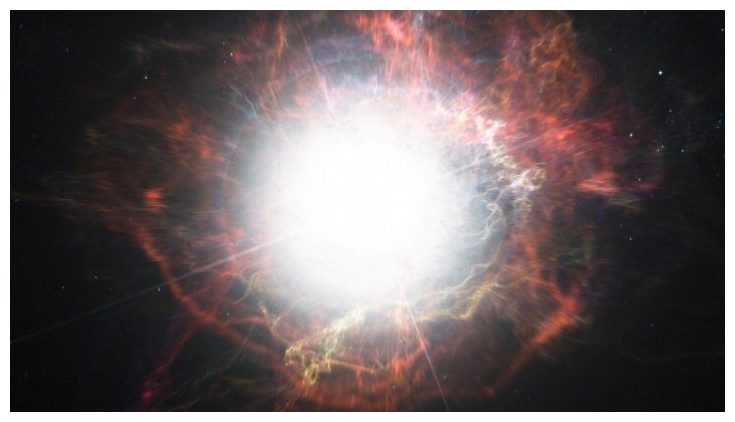
Humanity's ability to map the universe around us has just expanded significantly, as astronomers have been able to detect an enormous supernova that is farther away than any we've seen before.

The bright celestial event, named DES16C2nm, exists over ten billion light years away from planet Earth, making its discovery something of an achievement for the scientists who spotted it. It's worth pointing out that the universe itself is only around thirteen billion years old, so if the light from this supernova took ten billion years to get to us, it means that the event occurred fairly early in the lifespan of the universe.

Supernovae are among the brightest lights in the universe, caused by large, heavy stars that are bursting with so much raw volatile energy and matter that they can't help but explode in a beautiful light show. As we study stars that are further and further away from home, these big explosions are among the easiest sights to get a good look at, thanks to the sheer amount of light and energy that they give off.

This isn't to say that successfully detecting DES16C2nm was by any means easy - in order to reach further out into the stars than ever before, a team from the University of Southampton in England had to rely on specialist sky-survey equipment in Chile, before double checking with other telescopes, including the Magellan Clay Telescope, the Keck II telescope, and the Very Large Telescope, in order to make sure that this definitely was a distant supernova event.

Info

Babies can recover language related tasks after a left-side stroke

MRI of human brain
SWITCHING SIDES: These fMRI scans show the brain activity of a healthy person (left) and a stroke patient (right) while doing a language-related task. Having a stroke just before or after being born flips key language-processing areas from the left to the right side of the brain, a new study shows.
Babies' stroke-damaged brains can pull a mirror trick to recover.

A stroke on the left side of the brain often damages important language-processing areas. But people who have this stroke just before or after birth recover their language abilities in the mirror image spot on the right side, a study of teens and young adults shows. Those patients all had normal language skills, even though as much as half of their brain had withered away, researchers reported February 17 at the annual meeting of the American Association for the Advancement of Science.

Researchers so far have recruited 12 people ages 12 to 25 who had each experienced a stroke to the same region of their brain's left hemisphere just before or after birth. People who have this type of stroke as adults often lose their ability to use and understand language, said study coauthor Elissa Newport, a neurology researcher at Georgetown University Medical Center in Washington, D.C.

Info

Immortality coming soon - for 'some of us'

Immortality
© Pixabay/Public Domain
Death is such a pain. There's no opt-out, and decomposing is a hassle.

Not for long, though. According to scientist Dr. Ian Pearson, immortality may be achieved by as early as 2050... For some of us.

The past few decades have brought phenomenal developments in medical science that significantly improve our chances of living longer, healthier lives. But could we take it even further? Experts are debating just how possible it might be in the near future to extend life indefinitely. Some argue that it's impossible to keep a body going forever; others contend that it's only a matter of time before science makes death a thing of the past.

Pearson expects we'll see the beginnings of immortality within the next few decades, but (initially, at least) it will be far too expensive for the masses:
"By 2050, it will only really be for the rich and famous. Most people on middle-class incomes and reasonable working-class incomes can probably afford this in the 2060s. So anyone 90 or under by 2060. If you were born sometime in 1970 onwards, that would make you 48 this year, so anybody under 50 has got a good chance of it, and anyone under 40 almost definitely will have access to this."
This all sounds a bit too much like the recent Netflix show Altered Carbon, in which the world's wealthy elite are able to enjoy endless lifetimes of fun while the poorer among society only get a relatively short span of time on Earth.

Dig

Mexico: Flooded cave yields ancient human and animal remains

divers
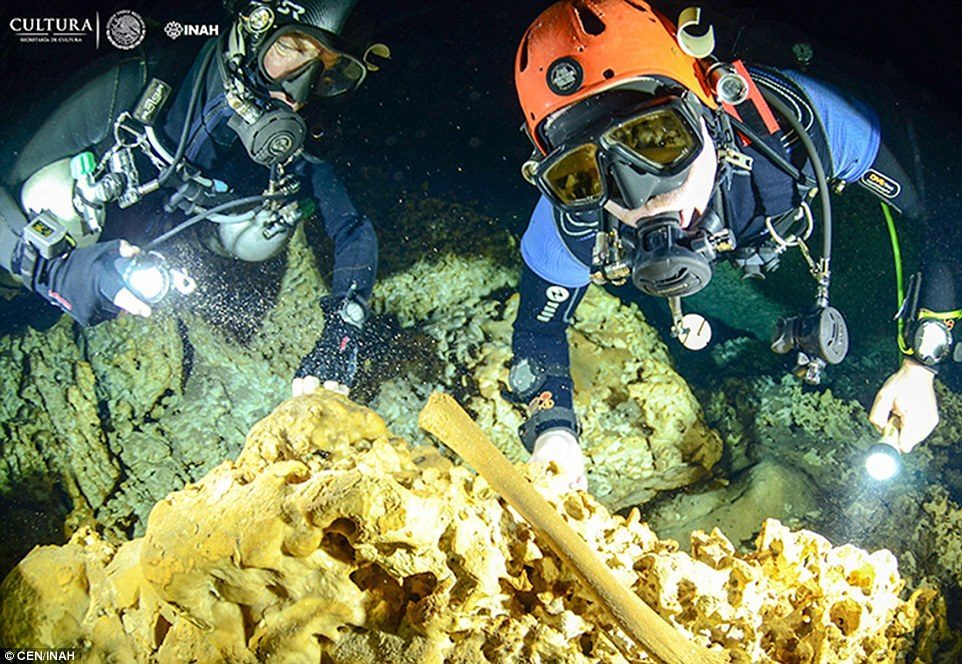
© CEN/INAHArchaeologists exploring the word's biggest flooded cave in Mexico have discovered ancient human remains at least 9,000 years old and the bones of animals who roamed the earth during the last Ice Age.
Archaeologists exploring the word's biggest flooded cave in Mexico have discovered ancient human remains at least 9,000 years old and the bones of animals who roamed the earth during the last Ice Age.

A group of divers recently connected two underwater caverns in eastern Mexico to reveal what is believed to be the biggest flooded cave on the planet, a discovery that could help shed new light on the ancient Maya civilization.

The Yucatan peninsula is studded with monumental relics of the Maya people, whose cities drew upon an extensive network of sinkholes linked to subterranean waters known as cenotes.

Researchers say they found 248 cenotes at the 347-km (216-mile) cave system known as Sac Actun, near the beach resort of Tulum. Of the 200 archaeological sites they have discovered there, around 140 are Mayan.

Headphones

Infrasound microphones could predict volcano eruptions before they hit

Villarrica volcano.
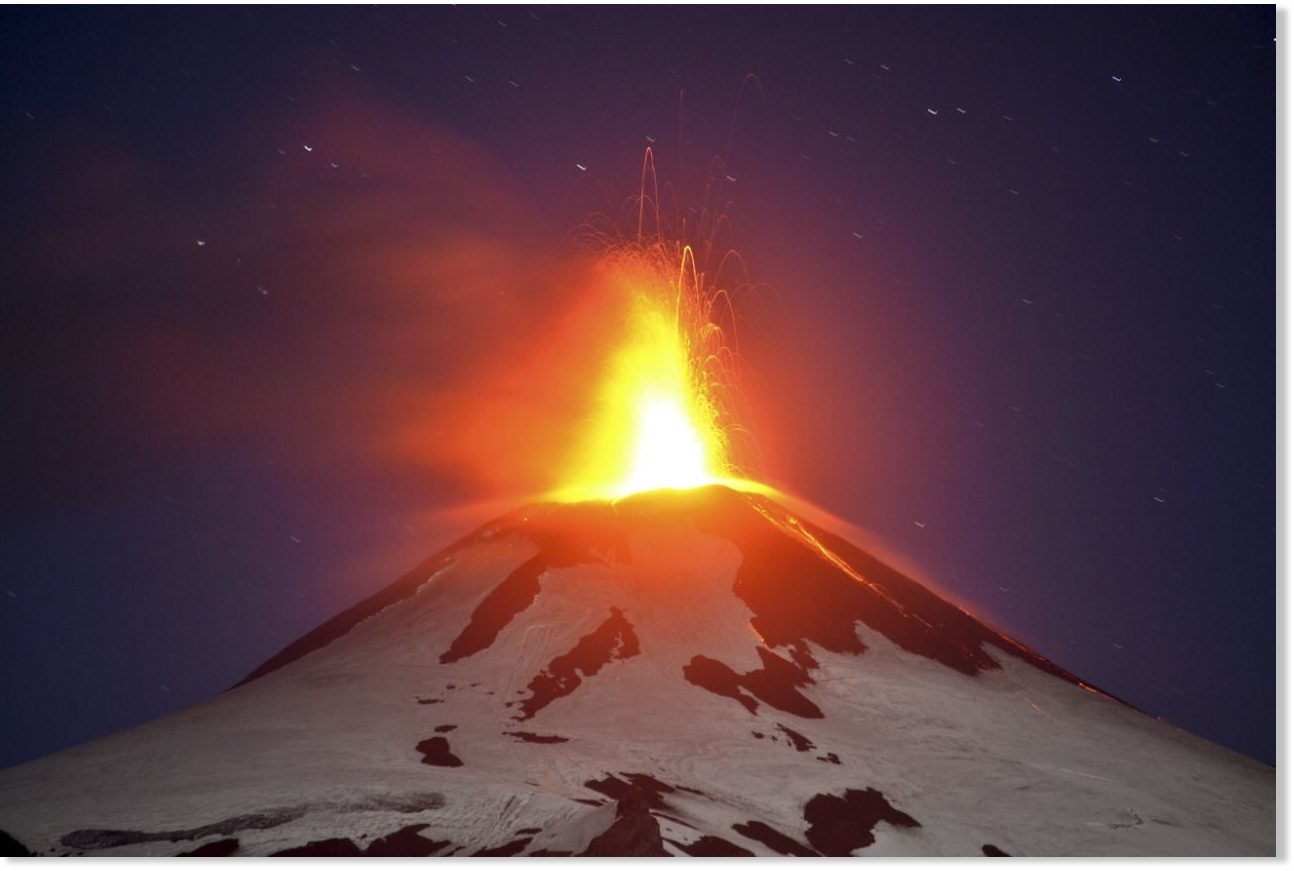
Villarrica volcano, Chile
Sound recording equipment is getting better all the time. Researchers from Boise State University, Stanford University, and Chile's University of Concepcion have just found a new, very specific application for low-frequency microphones, however, potentially helping to predict the eruption of certain volcanoes around the world.

Their technology involves monitoring inaudible low frequencies, called infrasound, which are produced by a type of active volcano such as the in southern Chile.

"Many volcanoes produce energetic infrasound — not ultrasound — which is low-frequency sound that travels long distances through the atmosphere and can be recorded with specialized microphophones," Jeffrey Johnson, an associate professor of geophysics at Boise State, told Digital Trends. "Although humans can't perceive infrasound, it can be incredibly energetic."


Eye 1

Google's AI hopes to use retinal imaging to predict heart disease and hypertension

Google AI heart problems
I can look into your eyes and see straight to your heart.

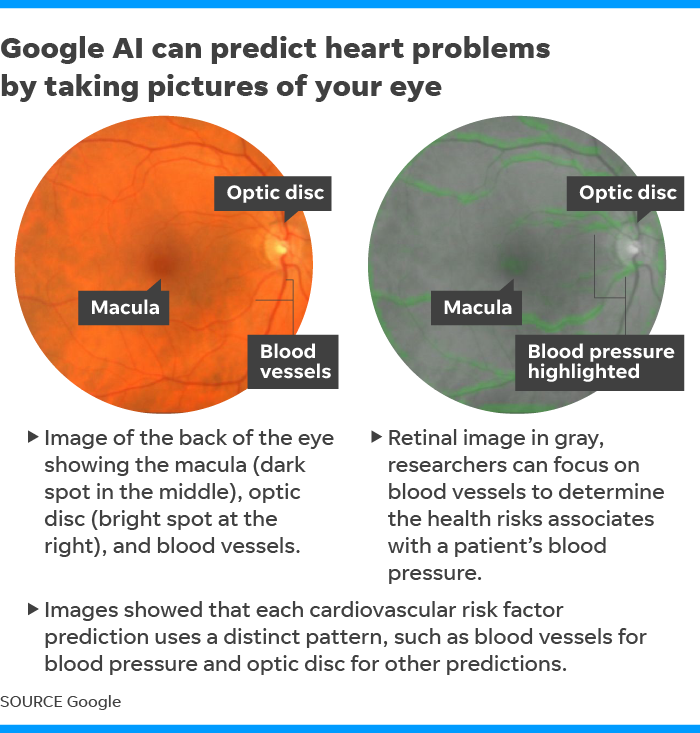
It may sound like a sappy sentiment from a Hallmark card. Essentially though, that's what researchers at Google did in applying artificial intelligence to predict something deadly serious: the likelihood that a patient will suffer a heart attack or stroke. The researchers made these determinations by examining images of the patient's retina.

Google, which is presenting its findings Monday in Nature Biomedical Engineering, an online medical journal, says that such a method is as accurate as predicting cardiovascular disease through more invasive measures that involve sticking a needle in a patient's arm.

At the same time, Google cautions that more research needs to be done.

Attention

A single volcano can change Earth's atmosphere - expert

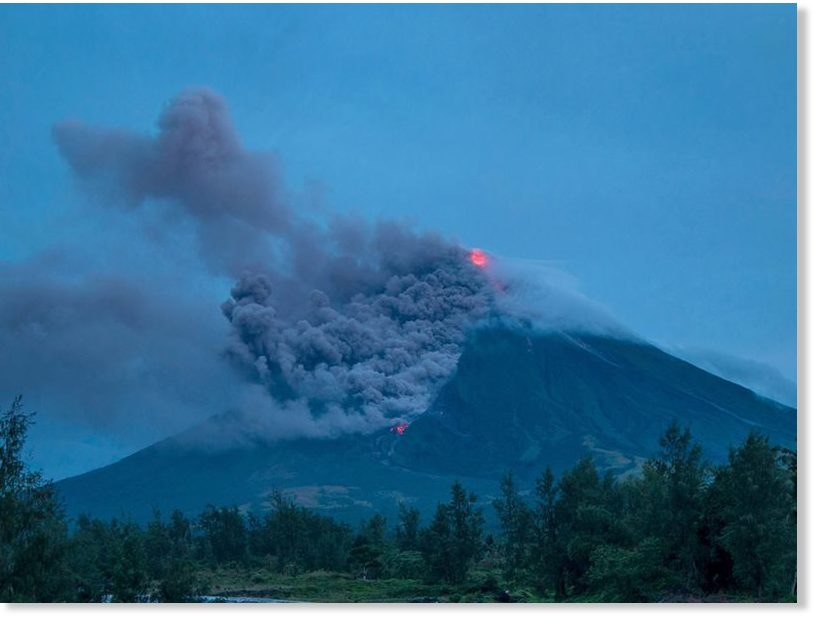
Lava cascades down the slopes of the erupting Mayon volcano in January 2018. Seen from Busay Village in Albay province, 210 miles southeast of Manila, Philippines.
© Dan AmarantoLava cascades down the slopes of the erupting Mayon volcano in January 2018. Seen from Busay Village in Albay province, 210 miles southeast of Manila, Philippines.
A single volcano can change the world's atmosphere, even permanently, depending on the intensity of the volcanic eruption, a pollution expert said.

According to Mylene Cayetano, PhD, the head of the Environmental Pollution Studies Laboratory of the Institute of Environmental Science and Meteorology at University of the Philippines Diliman, on top of being a fiery spectacle of nature, volcanoes are a force to be reckoned with.

"A single volcano has the ability to completely change the world's entire atmosphere, maybe even permanently," Cayetano said in statement. Cayetano issued the statement in light of the Philippine Institute of Volcanology and Seismology (Phivolcs) statement that Mayon's restiveness is still far from the peak of explosion, which may come in the coming weks.

According to Cayetano, Southeast Asia is one of the most geologically active regions, of the world, if not the most, and had been home to the most destructive and powerful volcanic eruptions in history. Mayon, one of the world's renowned volcanoes because of its almost-perfect conical shape, is the most active volcano in the Philippines.

Comment: See also: Adapt 2030 Ice Age Report: Sinabung eruption signals 'year without a summer' cycle (VIDEO)

'Red notice' issued to airlines as Sinabung volcano eruption shoots ash 16,000ft in Indonesia (VIDEOS)

Motorists halted by heavy ash fall from Mayon Volcano, Philippines


Boat

CIA's plan to retrieve a Soviet submarine from the ocean floor - prospects for deep sea mining

Hughes Glomar Explorer mystery ship
The Hughes Glomar Explorer


A wave of pioneers is poised to scoop up treasure from the deep sea. But was this ocean mining boom sparked by a 1970s CIA plot?


In the summer of 1974, a large and highly unusual ship set sail from Long Beach in California.

It was heading for the middle of the Pacific where its owners boasted it would herald a revolutionary new industry beneath the waves.

Equipped with a towering rig and the latest in drilling gear, the vessel was designed to reach down through the deep, dark waters to a source of incredible wealth lying on the ocean floor.

It was billed as the boldest step so far in a long-held dream of opening a new frontier in mining, one that would see valuable metals extracted from the rocks of the seabed.

But amid all the excited public relations, there was one small hitch - the whole expedition was a lie.

This was a Cold War deception on a staggering scale, but one which also left a legacy that has profound implications nearly half a century later.

Comment: For the full interactive presentation visit the original BBC link.