Science & TechnologyS


Fire

Hawaii's Kilauea Volcano is raining Olivine gemstones

green sand
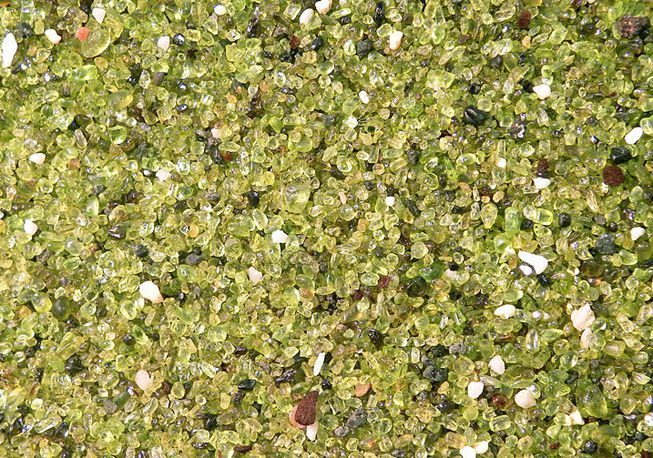
© Mother Nature NetworkOlivine stones on Papakōlea Beach in Hawaii
If Hawaii's Kīlauea volcano were to offer an apology for its chaos and destruction, it just might come in the form of a beautiful green mineral called olivine.

Over the past months we've reported on devastating lava flows and bone-shattering boulders. Now it's raining gems - a rare event that has geologists enthralled and the rest of us just plain confused.

Before you go racing off to Hawaii with dreams of making it rich, you should know a bit about the science behind this amazing event.

Olivine is an incredibly common mineral - chemically speaking, it's magnesium iron silicate. Carried to the surface on volcanic hotspots, it often taints dark igneous rocks such as basalt with mossy green hues.

Cut

A serious hurdle for CRISPR technology: Two studies find edited cells might cause cancer

CRISPR
Editing cells' genomes with CRISPR-Cas9 might increase the risk that the altered cells, intended to treat disease, will trigger cancer, two studies published on Monday warn - a potential game-changer for the companies developing CRISPR-based therapies.

In the studies, published in Nature Medicine, scientists found that cells whose genomes are successfully edited by CRISPR-Cas9 have the potential to seed tumors inside a patient. That could make some CRISPR'd cells ticking time bombs, according to researchers from Sweden's Karolinska Institute and, separately, Novartis.

CRISPR has already dodged two potentially fatal bullets - a 2017 claim that it causes sky-high numbers of off-target effects was retracted in March, and a report of human immunity to Cas9 was largely shrugged off as solvable. But experts are taking the cancer-risk finding seriously.

Comment: Additional information about the concerns of CRISPR tech:


Fire

Dangerous, golden 'Pele's hair' spun by Kilauea volcano

glass hair pele hawaii volcano
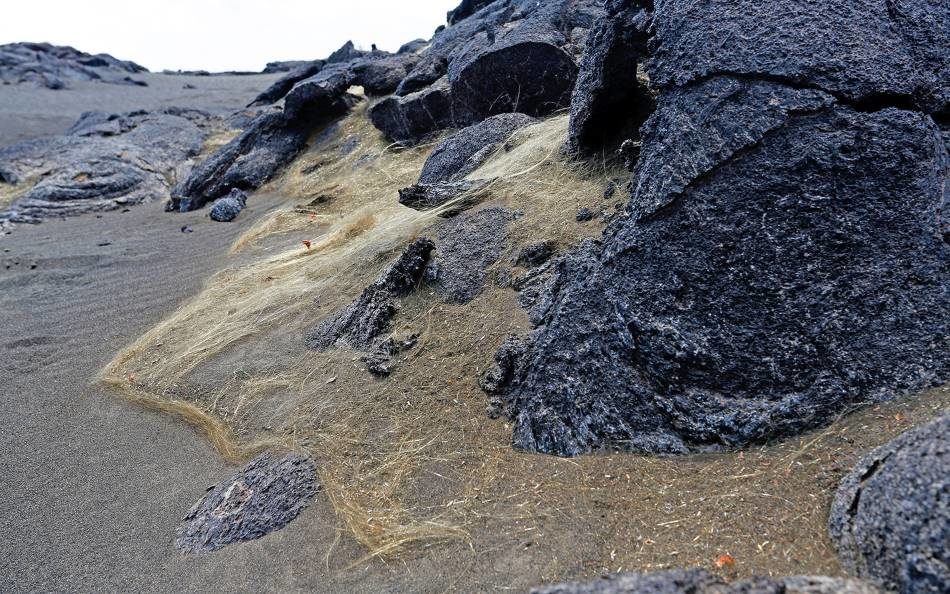
© AlamyThis hair-like material actually consists of fine strands of volcanic glass known as Pele's hair that came from lava within Kilauea volcano, in Hawaii Volcanoes National Park.
Golden, sharp strands of so-called goddess hair are covering parts of Hawaii's Big Island. But what are these potentially dangerous threads - called Pele's hair - and where did they come from?

The mats of Pele's hair - a product of the ongoing eruption from Kilauea volcano - consist of thin glass fibers that form when gas bubbles within lava burst at the lava's surface, said Don Swanson, a research geologist at the Hawaiian Volcano Observatory.

"The skin of the bursting bubbles flies out, and some of the skin becomes stretched into these very long threads, sometime[s] as long as a couple of feet [0.6 meters] or so," Swanson told Live Science.

Camcorder

X-ray vision will soon give soldiers the superhero ability to see through walls

xray vision
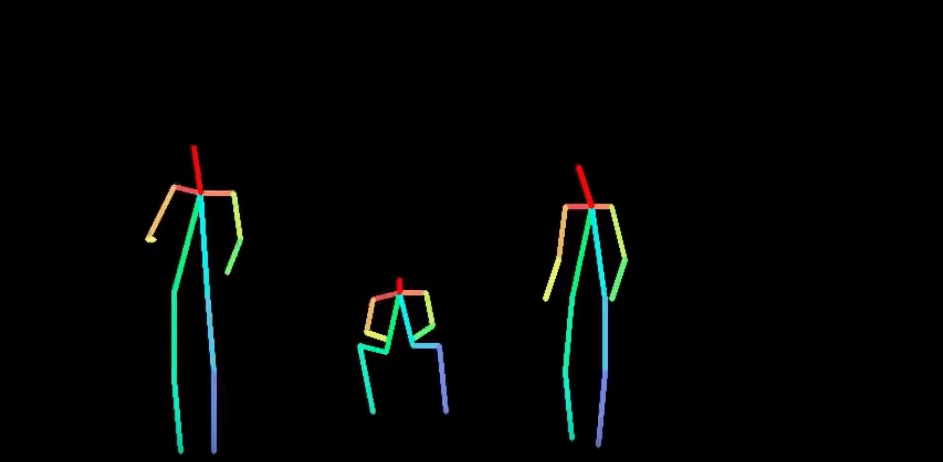
© MITAfter three people that have been mapped by the wireless AI device using radio signals, the tech allows you to see them through walls as moving stick men.
Bionic soldiers with X-ray vision could soon be a reality thanks to a new wireless system that uses radio-waves to map people's movements behind walls.

Researchers at MIT trained artificial intelligence to analyse radio signals that bounce off human bodies to create a dynamic stick figure that mimics a person's actions.

The so-called neural network can sense people's postures and movement even from the outside of a building or room.

Comment: See also:


Rocket

What happened when a scientist filed a public records request for NASA code? Two years of stonewalling

Nathan Myhrvold
Nathan Myhrvold


Retraction Watch readers may know Nathan Myhrvold, who holds a PhD in physics, as the former chief technology officer at Microsoft, or as the author of Modernist Cuisine. They may also recall that he questioned a pair of papers in Nature about dinosaurs. In that vein, he has also been raising concerns about papers describing the sizes of asteroids. (Not everyone shares those concerns; the authors of the original papers don't, and astronomer Phil Plait said Myrhvold was wrong in 2016.) Last month, Myhrvold published a peer-reviewed paper as part of his critique. The final version of that paper went live today, as did a story about the science in The New York Times and a detailed explanation by Myrhvold in Medium. As the discussion over the results continues, here he shares his experience trying to obtain details about the methodology the authors used.


Two years ago, I uploaded a preprint to arXiv.org describing what I considered serious problems, including apparently irreproducible results, that I had uncovered when analyzing a set of research articles published by the NASA Jet Propulsion Laboratory (JPL) NEOWISE project. NEOWISE is the largest scientific analysis of asteroids ever conducted; the researchers on the project have so far published estimated sizes of more than 164,000 objects in the solar system, estimates they have claimed were all derived by applying a standard approach to raw observations from the WISEspace telescope.

UFO

Russian scientist: Humans may kill aliens to survive in future

alien ship
© YouTube
Alexander Berezin, renowned Russian theoretical physicist has sensationally predicted that humans are the real bad guys in the Universe who could even destroy alien life to expand our civilization.

The scientist who works at Russia's National University of Electronic Technology Research recently published an article claiming that he has found an ultimate solution to the Fermi's paradox. Fermi's paradox asks the billion dollar question that if the universe is so vast and expanding all the time, then why humans haven't discovered alien life.

Alexander Berezin argues that humans have not found aliens just because ET or extraterrestrials do not have the intelligence like humans and it might be the reason behind the communication gap between these two entities. However, the study was published in the ArXiv digital archive.

Berezin makes it clear that humans will not indulge in this destruction process due to anger or grudge, but it is the natural system of survival. He calls it Darwin's concept of 'survival of the fittest' taken into outer space.

Comment: Resources and cooperation or doom and destruction. Who decides?


Robot

Researchers have created an AI that can predict what humans will do in the future

Blue Eyes
© Unsplash
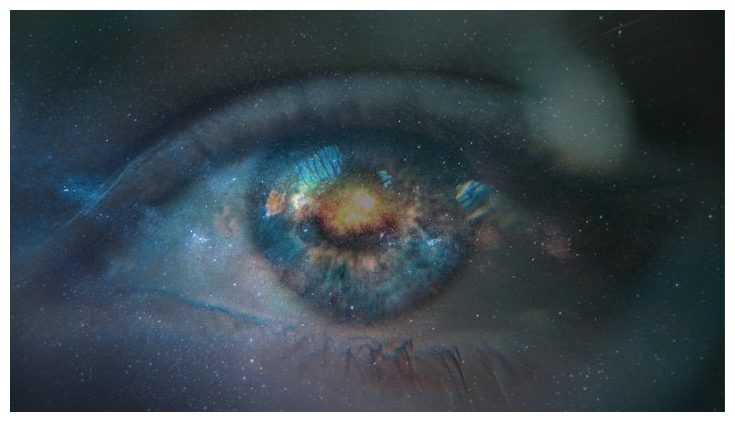
Apparently, teaching artificial intelligence to read our innermost thoughts or turning them into terrifying psychopaths isn't enough - now researchers are teaching AI systems to predict what humans will do in the future (and how long you'll be doing it) "minutes or even hours" before we decide to do it.

It's fine when Google finishes your sentences when typing into a search bar, but this new technology might be able to recognize patterns in human behavior and perform tasks before you've even thought about asking.

Like most tasks performed by artificial intelligence, this ability is tied to machine learning and neural networks.

In the course of their research, a team from the University of Bonn in Germany tried out two models for their networks: one that made predictions and "reflected" before making new more, and one that was based on a matrix structure.

Both networks were shown videos of people making relatively simple food dishes (especially breakfasts and salad) with the goal of teaching them to predict what the chef was going to do next.

Rose

Discovery: New type of photosynthesis

New Photosynthesis
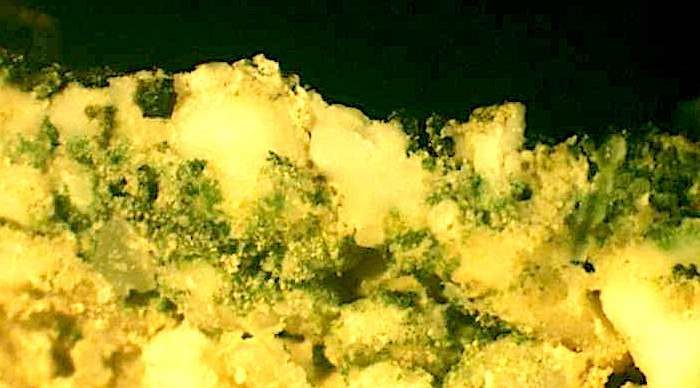
© Dennis NuernbergCross-section of beach rock (Heron Island, Australia) showing chlorophyll-f containing cyanobacteria (green band) growing deep into the rock, several millimeters below the surface.
The discovery changes our understanding of the basic mechanism of photosynthesis and should rewrite the textbooks. It will also tailor the way we hunt for alien life and provide insights into how we could engineer more efficient crops that take advantage of longer wavelengths of light.

The discovery, published today in Science, was led by Imperial College London, supported by the BBSRC, and involved groups from the ANU in Canberra, the CNRS in Paris and Saclay and the CNR in Milan.

The vast majority of life on Earth uses visible red light in the process of photosynthesis, but the new type uses near-infrared light instead. It was detected in a wide range of cyanobacteria (blue-green algae) when they grow in near-infrared light, found in shaded conditions like bacterial mats in Yellowstone and in beach rock in Australia.

As scientists have now discovered, it also occurs in a cupboard fitted with infrared LEDs in Imperial College London.

Doberman

Wild animals are reverting to nocturnal habits of distant ancestors to avoid humans

lions becoming nocturnal
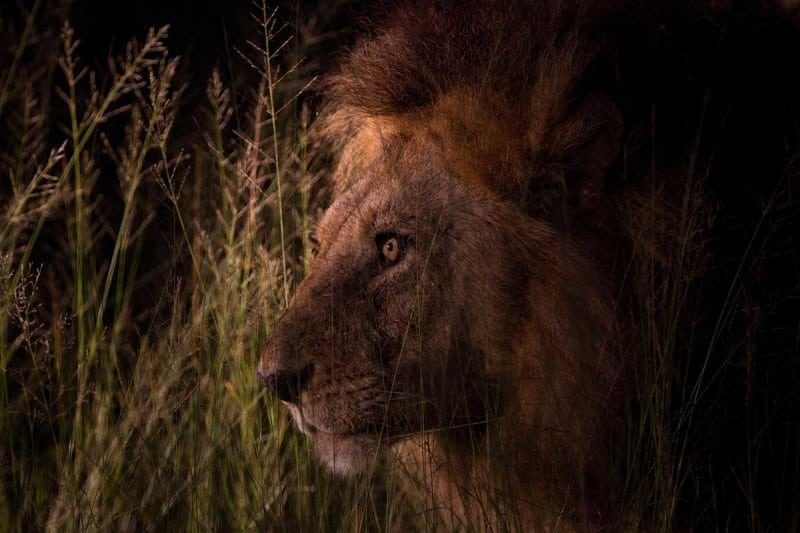
© National Geographic Creative / AlamyLions are increasingly active at night in areas where people are present
Once great monsters ruled the planet, and mammals cowered in the shadows and came out only at night. Now monsters once again rule the planet, and mammals are reverting to the nocturnal habits of their distant ancestors.

"All mammals were active entirely at night, because dinosaurs were the ubiquitous terrifying force on the planet," says Kaitlyn Gaynor of the University of California, Berkeley. "Now humans are the ubiquitous terrifying force on the planet, and we're forcing all of the other mammals back into the night-time."

Gaynor and her colleagues study the impact people have on wildlife. They noticed a striking pattern: animals were becoming more active at night to avoid human disturbances. When they looked in the scientific literature, they found many other groups had seen the same pattern.

Her team has now done a meta-analysis of 76 studies of 62 mammals all around the world. Almost all of them are shifting to the night to avoid us.

Microscope 1

The shape code: Even more information found in DNA

dna protein
© Radboud University, via YouTube
We may have yet another code to add to Jonathan Wells's growing list of information systems in the cell that challenge the Central Dogma. A new discovery hints at a "shape code" in the double helix.

Can the shape of the DNA double helix affect its behavior? Researchers at Radboud University in the Netherlands made "a remarkable discovery" about a protein named Polycomb that binds to DNA. They noticed that it would not bind unless the helix relaxed its twist slightly at the binding site. They concluded, "The shape of the DNA helix proves to be as important as its sequence."
The mechanism of DNA binding of the well-studied protein Polycomb, which is vital for cell division and embryogenesis, has finally been deciphered. A remarkable discovery, as it proves that the shape of DNA is at least as important for where the protein binds in the DNA as the DNA sequence. The role of the shape of DNA had not been demonstrated so clearly. Researchers at Radboud University will publish their findings on May 28th in the scientific journal Nature Genetics. [Emphasis added.]
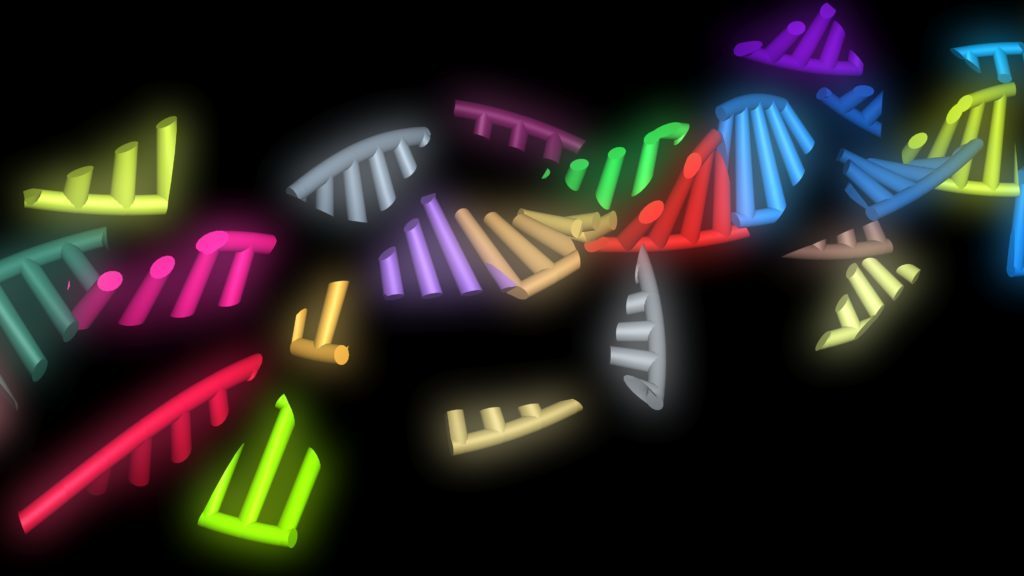
A 13-second animation shows how this works. The docking protein MTF2, which ferries Polycomb, needs the DNA to un-twist in order to bind to the site, where Polycomb will switch off specific genes. "MTF2 only recognises the binding spot on the DNA if the helix is in a relatively unwound state," the caption says.