Science & TechnologyS


Folder

Next? US intelligence developing human DNA-like models to hoard your personal data

WiresDNA
© Thomas White / Reuters
As US intelligence services struggle to store the trove of data collected during its snooping operations, a team of researchers are developing radical new storage technology based on an unusual model - human DNA.

The Molecular Information Storage program, run by the rather protractively-named Intelligence Advanced Research Projects Activity (IARPA), is recruiting scientists to help develop a system for storing huge amounts of data on "sequence-controlled polymer," molecules with a similar makeup and structure to DNA.

The technology has huge potential as researchers believe DNA-like polymer technology can store data more than 100,000 times more efficiently than current methods. The IARPA hopes that it could one day process entire exabytes of data while reducing the amount of physical space required to store it. To give you an idea of the scale: one exabyte, or one quintillion bytes, is four million times the storage capacity of a 256GB iPhone X.

The issue of how to store data is a live one for the world's intelligence services. Costly data centers take up huge amounts of land, an unsustainable situation given the increasing amount of data generated by each person on a daily basis.

Comment: Remarkable ingenuity for a nefarious purpose: An out-of-control information collection obsession for full-spectrum human dominance.


Chalkboard

Universal process showing how order falls into chaos shown by equation

Sheep moving into pen
© Richard du Toit/Getty ImagesAmong other things, the research describes how sheep move ballistically out of their pen before randomly diffusing across the pasture.
The transition from orderly progress to chaotic wandering, as happens when a herd of sheep walk together into a pasture then disperse unpredictably, has been given a detailed mathematical description for the first time.

The equations, figured out by a team of engineering researchers at Washington University in St Louis, Missouri, and published in a paper in Physical Review E, describe a universal process that occurs in a huge range of phenomena from nanoparticle scattering and bacterial migration to gas diffusion and stock-price fluctuations.

"We have shown a new starting point to investigate randomness," says Rajan Chakrabarty, who led the research. "We can see the prelude to chaos, so that people might have the ability to intervene and reverse a trend."

The classic example of random movement is the behaviour of a tiny particle such as a grain of pollen suspended in water. Buffeted from place to place by collisions with the water molecules, the particle goes on a jittery random walk known as Brownian motion. This movement, which is also what makes a droplet of dye steadily diffuse through a still glass of water or the smell of a baking cake spread through a whole house, was first explained by Albert Einstein in 1905.

Family

What causes 'uncombable' or 'spun glass' hair syndrome?

uncombable hair syndrome
© Cara McGowan18-month-old Taylor McGowan has a rare genetic condition called "uncombable hair syndrome".
Taylor McGowan, an 18-month-old from outside Chicago, is being called a mini Einstein because her hair-like the late physicist's-is wild and sticks up from her head.

The toddler's unruly, and absolutely adorable, hair is the result of a rare genetic condition called uncombable hair syndrome (UHS), which has been reported in only about 100 people globally, according to BuzzFeed. But some researchers think the numbers could be greater, according to the National Institutes of Health (NIH). Some people think that Einstein might have also had the syndrome, but this is just speculation for now, according to Buzzfeed.

So what is uncombable hair syndrome?

Satellite

Oceans' magnetic field mapped in stunning detail by Swarm satellite group

magnetic fields ocean
© European Space Agency/Planetary VisionsThis digital map shows the magnetic signals generated by Earth's oceans, from the ocean's surface to the seafloor. Credit:
Satellites circling Earth have mapped an elusive, invisible force in unprecedented detail: the magnetic field created by the currents in the planet's salty oceans, according to new research.

Most people are familiar with the powerful magnetic field produced by Earth's molten iron core, but less is known about the field generated by its oceans.

To learn more, the European Space Agency (ESA) directed three identical spacecraft, which the agency launched in 2013 and collectively calls Swarm, to map the mysterious magnetic field emanating from the oceans' tides.

Fire

Volcanic eruptions can lead to 'mass extinction' of life on Earth as it saps oxygen from oceans

Mount Fuego Guatemala
© ReutersA plume of volcanic ash rises from the mouth of Mount Fuego in Guatemala
Devastating volcanic eruptions, caused by excess carbon in the atmosphere, could one day lead to the mass extinction of all marine animals, and possibly all life on Earth - so says a new study.

The dire warning comes amid dramatic seismic events in Guatemala and Hawaii, where hundreds of people have been either killed or displaced from their homes in recent weeks.


Researchers from Florida State University looked at data dating back millions of years to the Early Jurassic Period, when powerful volcanoes spewed huge amounts of carbon dioxide into the Earth's atmosphere, drawing oxygen from the world's oceans and killing marine life. The phenomenon was known as the 'Toarcian Oceanic Anoxic Event.'

"It's extremely important to study these past events," said Theodore Them, a postdoctoral researcher at FSU. "It seems that no matter what event we observe in Earth's history, when we see carbon dioxide concentrations increasing rapidly, the result tends to be very similar: a major or mass extinction event."

Comment: See also:


2 + 2 = 4

Mathematicians publish doomsday calculations detailing 'how world could end'

comets meteor
© PixabayDoomsday calculation by mathematicians (Representational picture)
After years of speculations and many predictions on 'doomsday' or the end of human civilization, now some mathematicians from the University of Rochester in New York might have found the ultimate answer and three possible ways towards the final day of mankind.

Considering the growing population and effects of climate change, the team of researchers used mathematical models to calculate how far the human civilization will exist. The results of the study, which was published in Mary Ann Liebert, Inc., showed that either the extinction will happen gradually or through a sudden collapse.

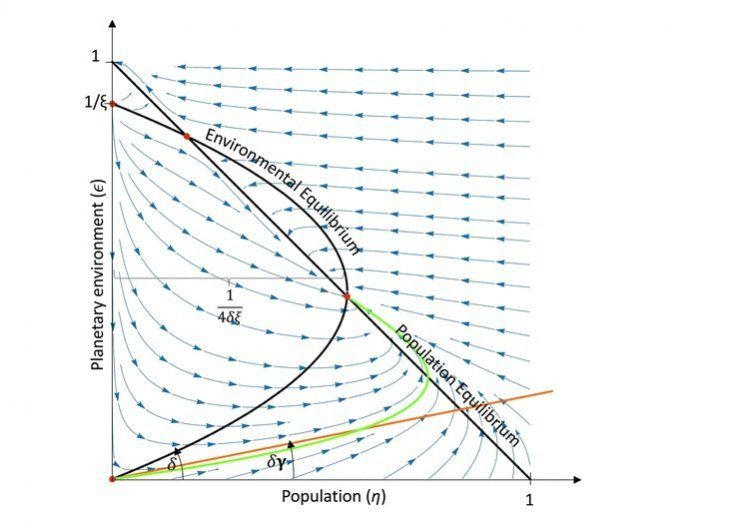
Schematic of a typical phase portrait
© University of Rochester in New York/ Mary Ann Liebert, Inc.Schematic of a typical phase portrait when there is environmental instability and no resource transition. The nullclines for population and environmental equilibria are shown in black, and the stationary points are shown in red. The population nullcline goes from (0, 1) to (1, 0) while the environmental nullcline leaves the origin with slope δ and then bends back to the null point at (0, 1/ξ). Also shown in orange is the tangent to the phase trajectory at the origin whose slope is given by γδ, as well as the trajectory from the origin to the stable equilibrium in green.

Comment: Further reading: Western civilization on the brink of collapse


Info

Two distinct populations of white blood cells found in the heart

Heart
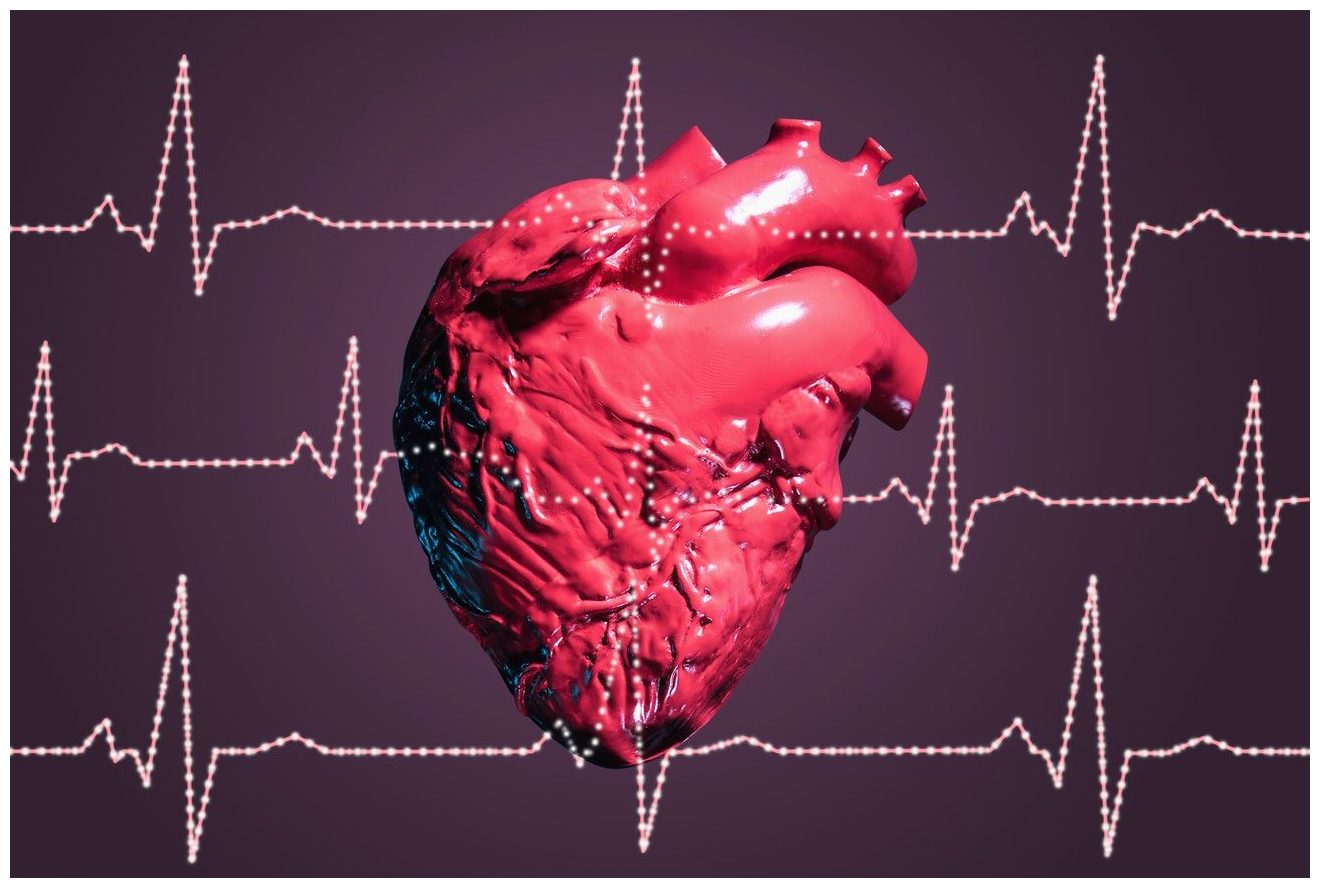
© PM Images / Getty ImagesThe white blood cell population inside the human heart isn't as uniform as previously thought.
Researchers have shown that two genetically and functionally distinct types of macrophage -white blood cells that engulf foreign matter - exist in the human heart.

The discovery, by a team led Geetika Bajpai from Washington University in Missouri, US, is revealed in a paper published in the journal Nature Medicine. It has important implications for the development of targeted immune treatments for patients with a particularly insidious type of heart disease.

Macrophages are the mammoth cells that detect, hoover up and destroy microbes and other invaders. The cells are not uniform, however, and are classified into subtypes. Two - dubbed CCR2-plus and CCR2-minus - were identified in mouse hearts in the 1960s, and have been exhaustively researched ever since.

Different macrophage subtypes have previously been found in human organs, including the skin, lungs and eyes, but this is the first study to prove that CCR2-plus and CCR2-minus are found in the human heart.

They were located in samples taken from the left heart chamber of patients with two kinds of cardiomyopathy (CM). This is a condition in which the heart muscle becomes stretched thin and cannot function, leading to heart failure. The only plausible treatments are the insertion of a device into the heart to help it function, or getting a new ticker altogether.

Info

Scientists observe bacteria 'harpooning' DNA

Bacteria
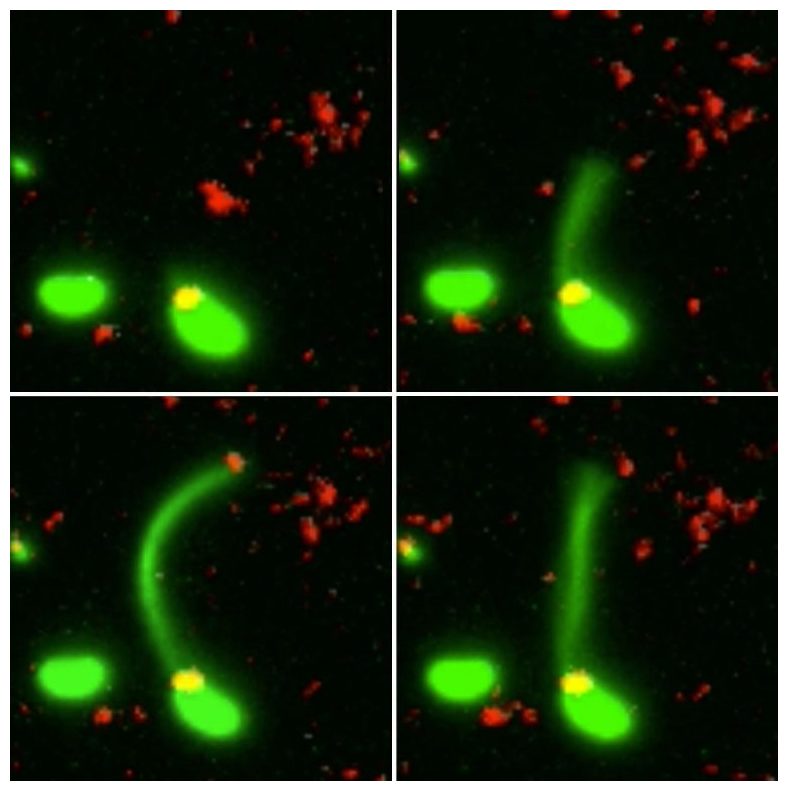
© Ankur Dalia, Indiana UniversityClockwise from upper left: This series of four still images shows a pilus stretch out from a bacterium, in green, to catch a piece of DNA in the environment, in red. This is the first step in the DNA uptake process.
Bloomington, Ind. -- Indiana University scientists have made the first direct observation of a key step in the process that bacteria use to rapidly evolve new traits, including antibiotic resistance.

Using methods invented at IU, researchers recorded the first images of bacterial appendages -- over 10,000 times thinner than human hair -- as they stretched out to catch DNA. These DNA fragments can then be incorporated into bacteria's own genome through a process called DNA uptake or "horizontal gene transfer."

The work is reported today in the journal Nature Microbiology.

"Horizontal gene transfer is an important way that antibiotic resistance moves between bacterial species, but the process has never been observed before, since the structures involved are so incredibly small," said senior author Ankur Dalia, an assistant professor in the IU Bloomington College of Arts and Sciences' Department of Biology.

"It's important to understand this process, since the more we understand about how bacteria share DNA, the better our chances are of thwarting it," he added.

Fireball 2

Target practise? Asteroid LV3 will be 35th asteroid this year to flyby Earth at 1 lunar distance

Asteroid 2018 LV3
Asteroid 2018 LV3
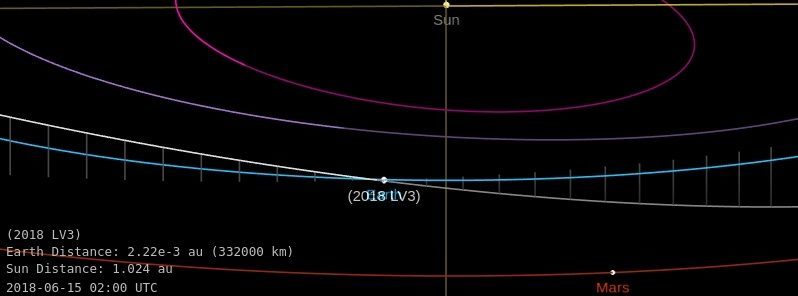
A newly discovered asteroid designated 2018 LV3 will flyby Earth at a distance of 0.86 LD / 0.00219 AU (327 619 km / 203 573 miles) on June 15, 2018. This is the 35th known asteroid to flyby Earth within 1 lunar distance since the start of the year.

This near-Earth object has an estimated diameter between 13 and 30 m (42 - 98 feet) and it belongs to the Apollo group of asteroids. It was discovered at Pan-STARRS 2, Haleakala on June 11, 4 days before its close approach.

Comment: From close calls to those actually blazing into our atmosphere, space rock activity is on the increase:


Blue Planet

New study finds human and all animal species today originated only 100K-200K years ago

DNA codes
© hipertextual.com/Ohio University/CMarZ
Research by two scientists on DNA and mitochrondria found that over 90% of animal species in existence today - including humans - had originated only 100,000 to 200,000 years ago.

While the two scientists shied away from saying it, their finding that humans and all animals date back to at most only 200,000 years ago is contrary to what evolutionists have been telling us, that the Earth and its life forms had taken millions of years to develop and evolve.

Note: DNA or Deoxyribonucleic acid carries the genetic instructions of all known living organisms. Mitochrondria are structures or organelles located in the cell's cytoplasm outside the nucleus, responsible for energy production. All mitochondrial chromosomes are inherited from the mother.

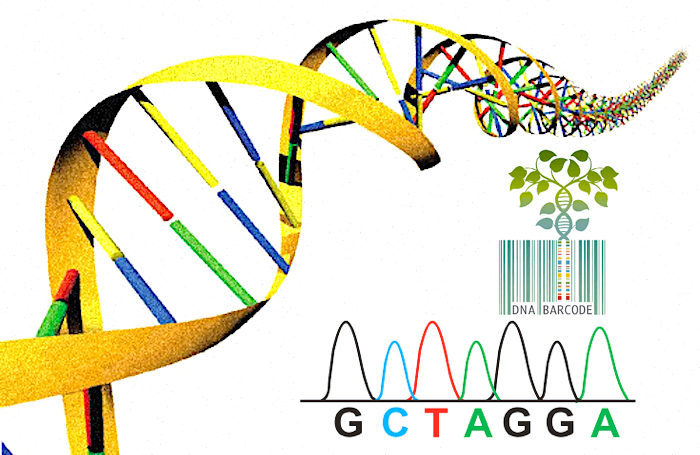
Written in a technical and, for non-specialists, arcane language, the article concerns DNA barcoding - a taxonomic method that uses a short genetic marker in an organism's DNA to identify it as belonging to a particular species. For animals, the preferred barcode regions are in mitochondria - cellular organelles that power all animal life. As the authors wrote (p. 10):
The agreement of barcodes and domain experts implies that explaining the origin of the pattern of DNA barcodes would be in large part explaining the origin of species. Understanding the mechanism by which the near-universal pattern of DNA barcodes comes about would be tantamount to understanding the mechanism of speciation.