Science & TechnologyS


Telescope

Discovery of organic molecule on Mars strongly suggests life exists on other planets

Mars
The age-old mystery, "Are we alone in the galaxy?" is now closer than ever before to being solved.

The answer is: Probably not.

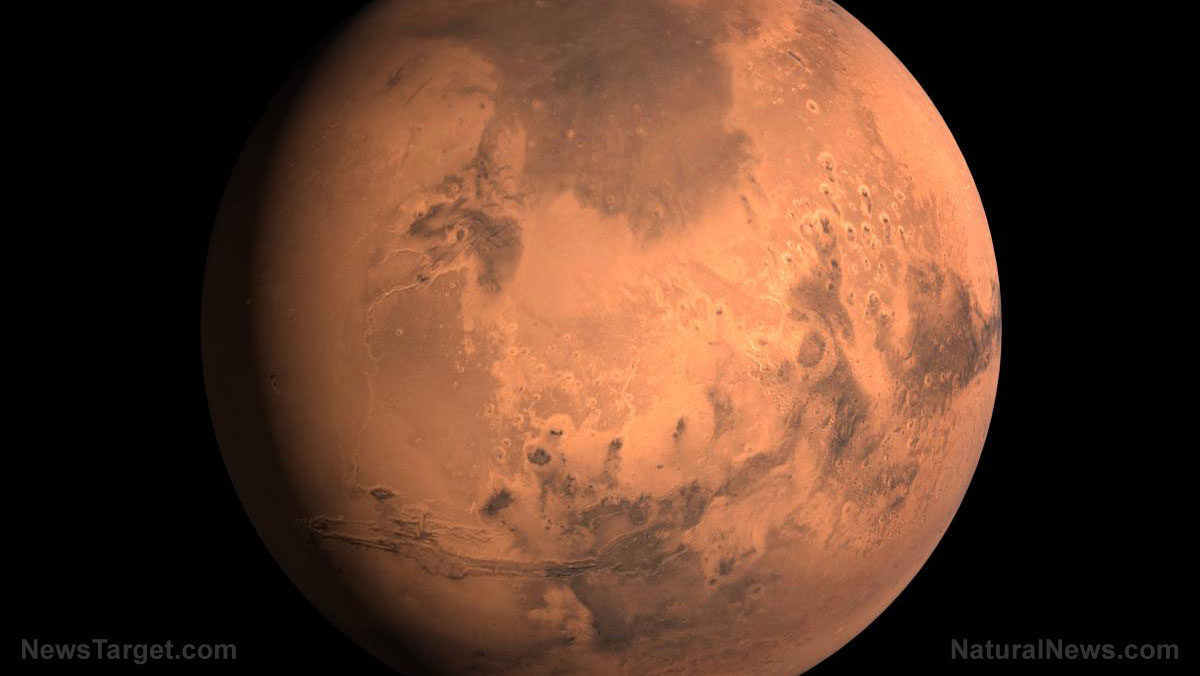
In the last few days, Fox News reported a "massive" discovery regarding Mars: The Curiosity rover put there by NASA found organic molecules on the 'red planet.'

"We found organic molecules in rocks from an ancient lake bed," said Jen Eigenbrode, research scientist at Goddard Flight Center in Goddard, Md., at a press conference simultaneously held at NASA's Jet Propulsion Laboratory in Pasadena, Calif. A variety of molecules were identified, she noted further.

Comment: This author seems to go a little overboard, here. The discovery of an organic molecule on Mars is not proof of life on other planets, and neither are Navy pilot's encounters with UFOs. While it seems quite likely that we are not alone in the Universe, let's not get ahead of ourselves and keep in check what we call 'proof'.

See also:


Christmas Tree

Scientists find trees have a 'heartbeat'

Trees 'Pump' Water from Roots to Leaves

Trees heartbeat
© Unknown
Until now, scientists thought water moved through trees by osmosis, in a somewhat continuous manner. Now they've discovered the trunks and branches of trees are actually contracting and expanding to 'pump' water up from the roots to the leaves, similar to the way our hearts pump blood through our bodies.

The only difference between our pulse and a tree's is a tree's is much slower, 'beating' once every two hours or so, and instead of regulating blood pressure, the heartbeat of a tree regulates water pressure. András Zlinszky, of Aarhus University in the Netherlands told New Scientist:
We've discovered that most trees have regular periodic changes in shape, synchronized across the whole plant... which imply periodic changes in water pressure.
Trunk 'Pumping' Motion

In his 2017 study, Zlinszky and his colleague Anders Barfod used terrestrial laser scanning to monitor 22 tree species to see how the shape of their canopies changed.

The measurements were taken in greenhouses at night to rule out sun and wind as factors in the trees' movements. In several of the trees, branches moved up and down by about a centimeter or so every couple of hours.

After studying the nocturnal tree activity, the researchers came up with a theory about what the movement means. They believe the motion is an indication that trees are pumping water up from their roots. It is, in essence, a type of 'heartbeat.'

Info

Cosmic history comes into question after new giant stars discovery

Giant Star
© NASA
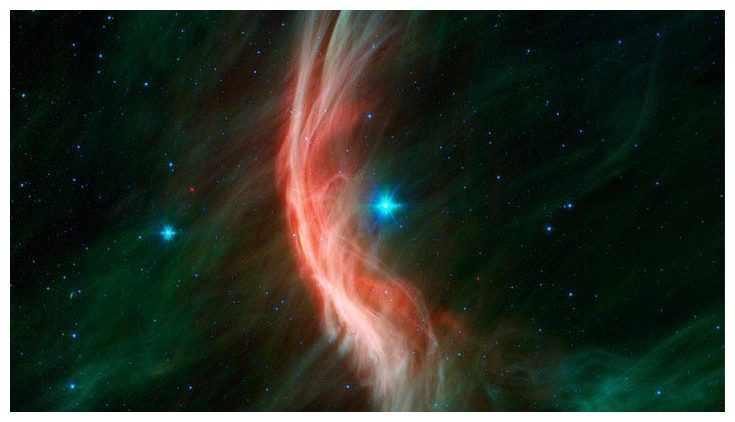
As Neil DeGrasse Tyson is fond of saying, "We are all stardust." Zooming out a bit, however, reveals that almost everything is stardust, more or less: after the Big Bang, stars were responsible for creating the heavier elements on the periodic table that eventually became the building blocks for planets, carbon-based life, and (in a roundabout way) Elon Musk.

Stars are so integral to our universe that astronomers and scientists can use stars' masses, births, and deaths to get a handle on the entire history of our cosmos.

And it turns out our current history may be wrong.

It comes down to this: More massive stars live shorter, brighter lives before exploding into supernovas, which can spur the creation of new stars, as well as black holes and even solar systems.

If you want to understand the patterns that shaped galaxies (and the rest of the universe), then you need to understand stars.

Hourglass

Study suggests evolution doesn't work the way we thought it did

early human
© Stephane De Sakutin/AFP/Getty ImagesScientists have unearthed new evidence in Greece proving that the island of Naxos was inhabited by Neanderthals and earlier humans at least 200,000 years ago, tens of thousands of years earlier than previously believed.
According to a new study, people who claim that modern-day animals have evolved over millions of years have some rethinking to do. The study examined mitochondrial DNA from thousands of different animal species and humans only to find that virtually all current animal species only date back 100,000 to 200,000 years.

Mark Young Stoeckle of the Program for the Human Environment at The Rockefeller University and David S. Thaler of the University of Basel authored the study, titled, "Why should mitochondria define species?" Stoeckle told The Christian Post:
Our findings challenge the idea that present-day animal species are millions of years old. A short summary of our view is "life keeps evolving." What we show is that most (90 percent) of animal species have similarly low mitochondrial DNA variation. This is surprising because theory predicts that older species and species with large populations should have more genetic variation. We propose that most present-day animal species, including humans, arose in the past 100,000 to 200,000 years.
Thaler added, "We studied the amount of a certain type of variation that occurs within each of many thousands of different animal species. We found that measured in this way humans are an average animal species. We humans are used to looking 'close in' and being very sensitive to differences among people. The approach we used allows one to 'zoom out' and see variation in humans on the same scale as variation within other species."

Comment: Dr. Chandra Wickramasinghe chimed in on the finding for the Cosmic Tusk:
The recent work (1) involving "DNA barcoding" of some five million specimens covering over 100,000 animal species, including humans, has been claimed to yield a result utterly incompatible with Darwinian evolution confined to the Earth. Humans, house sparrows, sandpipers are just a few examples of species that have been found - according to this paper - to display an exceedingly narrow range of genetic diversity, and this data is claimed to be consistent with all the crucial genes of 90 percent of all animal species arriving on the Earth 100,000-200,000 years ago. You could not ask for a more startling demonstration of the validity of the Hoyle-Wickramasinghe model of panspermia that was recently reviewed in an article by Steele et al (2). Evolution can only take place on a scale that vastly transcends the size of our planet, the size of our solar system, even perhaps that of the galaxy. The Earth receives injections of "evolved" genes sporadically from the cosmos at large (3). We now know that there are over 100 billion habitable planets in our galaxy alone so exchanges of material between them is well nigh impossible to avoid. It is only in such a way that all the facts about life on our planet can be understood. Viva Panspermia!

Prof Chandra Wickramasinghe

References
  1. Stoeckle, M.Y. and Thaler, D.S., 2018. Human Evolution, 33 (1-2), 1-30
  2. Steele, E.J., et al.,2018. Progress in Biophysics and Molecular Biology (http://www.panspermia.org/causeofcambrianexplosion.pdf)
  3. Hoyle, F. and Wickramasinghe, N.C. 1980. Evolution from Space (J.M. Dent, Lond)
Perhaps not the only explanation of the data, but interesting nonetheless.


Colosseum

New tech could reveal secrets in 2,000-year-old scrolls of Herculaneum

Secrets in 2,000-Year-Old Scorched Scrolls of Herculaneum
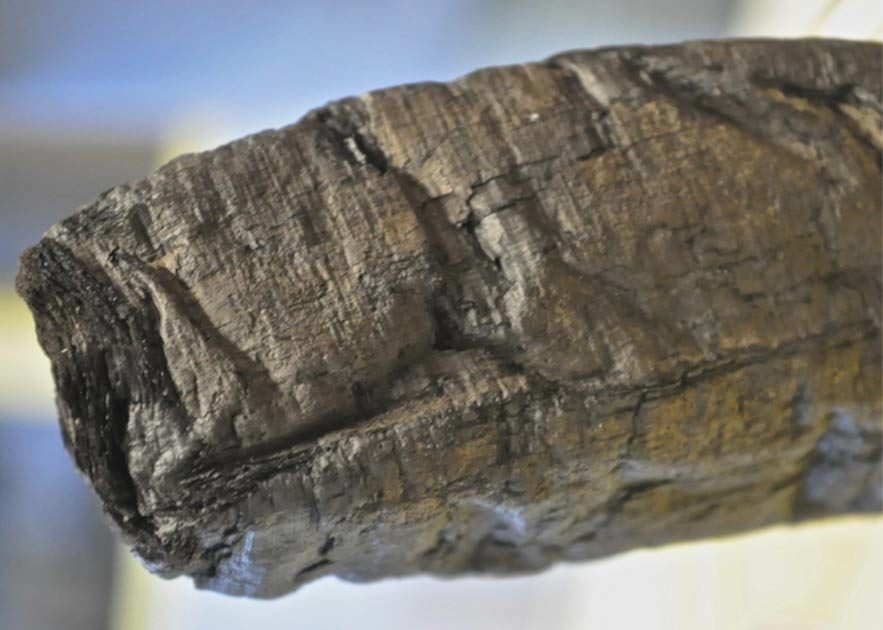
An enormous wealth of knowledge locked within hundreds of ancient papyrus scrolls scorched by the eruption of Mount Vesuvius in 79 AD, may now be revealed thanks to new technology which may enable the texts to be read.

The technique, published in the journal Nature Communications , involves a type of X-ray phase-contrast tomography, which enables letters to be highlighted based on their slightly raised height on the papyrus. So far, six scrolls have been analyzed with this method and the resulting text is currently undergoing translation.

"Both the Roman city of Pompeii and the nearby, wealthy seaside town of Herculaneum were wiped out when Mount Vesuvius erupted in A.D. 79, killing thousands of people and covering fine villas in ash and lava," writes Live Science.

In the 1970s, workers uncovered a library in a villa thought to be the home of a Roman statesman, or even Julius Caesar's father-in-law, Lucius Calpurnius Piso Caesoninus. The site, now known as the Villa of Papyri, was excavated by archaeologist Karl Weber between 1970 and 1975 by means of underground tunnels. It was found to contain nearly 2,000 ancient papyrus scrolls, the 'Herculaneum papyri'.

Comment: See also:


Microscope 1

Set of ancient teeth provide bacterial secret about bubonic plague

Skeletons
© V.V. Kondrashin, V.A. TsybinDouble burial of man and woman whose teeth reveals age of bubonic plague bacteria.
Nearly 4,000 years ago, a woman and a man were buried together just east of the Volga River in modern-day Russia, with a secret locked away in the pulp of their teeth.

The bodies were uncovered just a few years ago, the teeth pulled and sent westward to the Max Planck Institute in Germany, where Maria Spyrou was working on a Ph.D. in paleogenetics. When she subjected the pulp to a bevy of genetic tests, she found something surprising: an ancestor of the bacteria responsible for the Black Death.

She published that finding Friday in Nature Communications, providing evidence that the bacteria has origins at least 800 years earlier than scientists had previously thought.

Spyrou's finding gets at a larger scientific question, with implications for infectious diseases beyond plague: Where do diseases come from in the first place?

Light Sabers

Russian space agency will obliterate space junk with laser beams

space body
© NASA/ESA / Reuters
Russian space agency Roscosmos has unveiled its plan to shoot down space debris from a junk-littered low-earth orbit with a three-meter laser 'cannon.' If the tests are a success, the method will ensure safer space exploration.

The technology is being developed by scientists at the Research-and-Production Corporation Precision Systems, which is a subdivision of Roscosmos.

In its report to the Russian Academy of Sciences, the company asked to support its research and development, as well as experimental work to create a solid-state laser that will be able to shoot down space junk by vaporizing it with a beam.

The powerful 'laser cannon' will be based on a three-meter optical telescope, construction of which is already underway. The telescope, designed to monitor space for satellites and potentially dangerous space junk, will be transformed into an equally giant laser if the project is greenlighted.

A type of solid-base generator will supply power to the laser, the report, seen by RIA Novosti, says. The space trash destroyer will use the process known as "laser ablation" to remove the debris from spaceships or any other junk, like a cosmonaut's lost glove floating in low-earth orbit, which is between 160 to 2,000 kilometers (100-1,240 miles) above the Earth's surface. The laser's energy heats an object that is pierced with a beam until it gradually evaporates.

Cloud Lightning

Russia's military is building own giant internet cloud in case global web gets disabled

Putin
© Mikhail Klimentyev, Kremlin Pool / AP
It's the latest improvement in the Russian military's ability to operate off the rest of the world's grid.

The Russian military is building a giant cloud, the latest improvement in its ability to keep operating if its connection to the global internet is lost, severed, or hacked.

"Russian Armed Forces will receive a...closed 'cloud' storage for proprietary and confidential information," Izvestia reported this week.

The cloud will rely on data centers, built with all-Russian hardware and software at an estimated cost of 390 million rubles (about $6 million) and slated for completion by 2020, the report said. The first center has already been established in the military's Southern District, an area that includes the illegally annexed Crimean peninsula and portions of battle-struck eastern Ukraine. Russian forces have launched multiple information attacks against Ukrainian infrastructure and government since 2014, in what many see as a concerted effort to destabilize the country. The new data center makes the Russian forces operating there less susceptible to Ukrainian counterattacks.


Comment: One supposes the writer couldn't help himself to cover a story about this advance in Russian technology without throwing in the Western propaganda about Russia "attacking the Ukraine," "illegally annexing Crimea" etc.


Comment: So Russia is not only protecting itself from the toxic and failing Western economic system and acting multilaterally with new trade partners globally (without the US's permission) - but it is also creating a new internet infrastructure that can operate separately from the established one.

One can't say it enough: Imagine what Russia might be today if it didn't have to spend so much of its time, energy and focus putting out the fires set by the Imperial US and allied vassal states.


Rocket

Why Russian S-400 air-defense system is causing Washington's ire?

S-400 seen in Crimea, Russia
© Alexey Malgavko / SputnikS-400 seen in Crimea, Russia
State-of-art S-400 anti-aircraft systems have been causing a stir recently, as countries seek to obtain them despite the US threatening sanctions for the purchase. What is causing Washington's ire?

The S-400 'Triumf' is the most advanced Russian anti-aircraft system, designed to engage large variety of targets. The system is capable of shooting down aircraft at ranges of up to 400 kilometers and ballistic missiles at a range of 60 kilometers.


Mars

Life on Mars? Study suggests mud and clay probably have microbe fossils - NASA discovers best evidence yet

mars
© YouTube: Conspiracy Depot
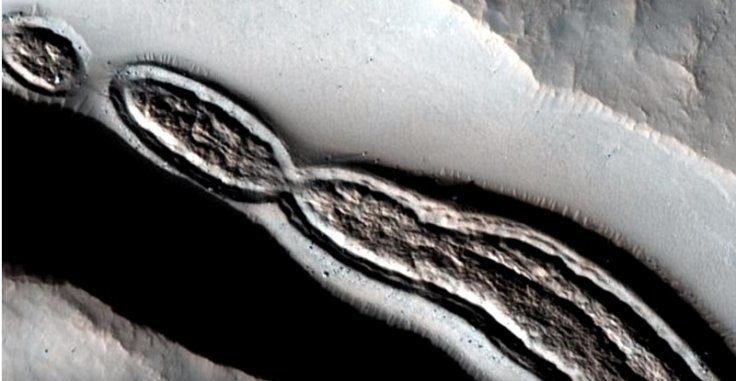
A new study conducted by researchers at the University of Edinburgh has suggested that Mars may be once home to an alien civilization, at least in microbial forms. As per the researchers who took part in the study, rocks near the ancient Martian lakes may contain traces of tiny creatures, better known as microbes.

The researchers believe that the sedimentary rocks made of mud and clay in the Martian surface may contain fossils in all probabilities. These sedimentary rocks were apparently formed during the Noachian and Hesperian Periods of Martian history. Experts argue that water was quite abundant on Mars around three to four billion years ago.

During the study, researchers conducted various experiments by replicating the environmental conditions on Mars and later tried to locate the most promising sites to look for alien fossils. The recent research was published in the Journal of Geophysical Research.

The team of researchers who took part in the study also believes that the findings obtained from this study could help NASA to select a suitable landing spot during their next Mars mission. NASA upcoming mission will be launched in 2020 and through this mission, the space agency aims to collect rock samples which will then be brought back to Earth for analysis.

Comment: Good timing. Just yesterday, this news was reported:
NASA's Curiosity rover has uncovered organic material in an ancient lakebed and confirmed a seasonal cycle of methane - offering the strongest evidence yet of potential life, past or even present, on the Red Planet.

The discoveries were revealed by NASA researchers in a highly-anticipated announcement on Thursday, and details have been published in the journal Science.

The revelations build on a similar announcement made by NASA in 2014, where scientists confirmed that they had discovered chlorinated molecules on the planet for the first time. This latest evidence, however, is far more compelling.

The Curiosity rover discovered organic matter preserved in 3-billion-year-old mudstones at the Gale Crater. The material was located in the first layers of rock, some four miles away from where the chlorinated molecules had been found.

"All life as we know it is based on organic molecules," Jen Eigenbrode, a research scientist at Goddard, said during the press announcement, suggesting that, while this evidence doesn't definitely prove there is life on Mars, the signs are there to investigate further.

Questions remain, however, as to how the organic material was formed. "While we don't know the source of the material, the amazing consistency of the results makes me think we have a slam-dunk signal for organics on Mars,"Eigenbrode said. "It is not telling us that life was there, but it is saying that everything organisms really needed to live in that kind of environment, all of that was there."

Another team of scientists, led by Christopher Webster from the California Institute of Technology, presented evidence that methane concentrations detected on Mars follow strong seasonal variations. The seasonal variation provides an important clue for determining the origin of martian methane.

Webster explained that this is an exciting discovery because 99 percent of methane produced on earth has a biological origin, giving examples of rice paddies and termites. He also pointed out that as methane only lasts for 300 years in the atmosphere and any detections mean that it was created or released relatively recently.

Overall, the latest discoveries bode well for future endeavours. "The chances of being able to find signs of ancient life with future missions, if life ever was present, just went up," said Curiosity's project scientist, Ashwin Vasavada.