OF THE
TIMES
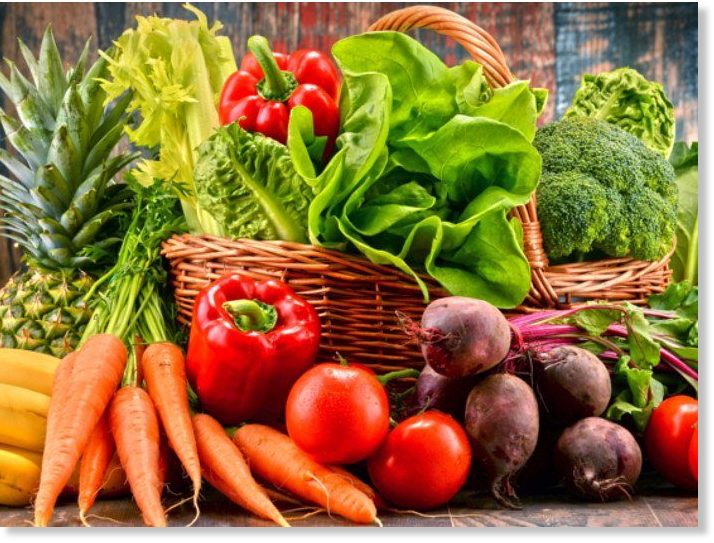
The mean (95% CI) reported yield changes for all vegetables and legumes combined were +22.0% (+11.6% to +32.5%) for a 250-ppm increase in CO2 concentration...So, they are assuming water availability will be less and more salty in the future, and there will be more ozone O3 pollution. Yet all indications thus far that a warmer world will be a wetter world due to enhanced atmospheric water vapor, and so far, ozone pollution has been declining, especially in coastal areas.
... −8.9% (−15.6% to −2.2%) for a 25% increase in O3 concentration,−34.7% (−44.6% to −24.9%) for a 50% reduction in water availability, and −2.3% (−3.7% to −0.9%) for a 25% increase in salinity.
The authors acknowledge limitations of the study, including the fact that collated evidence on the impact of environmental changes on the nutritional quality of vegetables and legumes was limited and the research team identified this as an area requiring more evidence generation.


Researchers at Oxford University and the Swiss agricultural research institute, Agroscope, have created the most comprehensive database yet on the environmental impacts of nearly 40,000 farms, and 1,600 processors, packaging types, and retailers. This allows them to assess how different production practices and geographies lead to different environmental impacts for 40 major foods.So how did they assess the environmental impact of our daily foodstuffs? Pollutants like heavy metals or toxic chemicals being released? Destruction of fragile ecosystems? The number of endangered species affected? Invasive genetically modified technologies and their consequences? Nope. Those things don't matter in the grand scheme of things, apparently. All that matters now is carbon dioxide, the innocuous gas that feeds plants. In the current media landscape, all the horrific things we do to the environment get a pass. The only thing that gets attention is CO2.
Allan & Delair bring serious questions to bear on the mainstream interpretation of our reality and history and do it armed to the teeth with science. The case they make for a Golden Age world prior to the Deluge is compelling and quite unique. Wielding hard data from literally every field of science, they demonstrate that hundreds of thousands of years of ice ages may be a myth created to explain many anomalous findings on earth that uniformitarian science had no other way to explain. This data strongly suggests a completely different planet prior to a worldwide cataclysm that they say occurred in 9500 bc, but the latest research puts the most recent major event back at least another thousand years.In Of Flash Frozen Mammoths and Cosmic Catastrophes Pierre Lescaudron writes:
Last, but not least, the mammoth's diet argues against the creature existing in a polar climate. How could the woolly mammoth sustain its vegetarian diet of hundreds of pounds of daily intake in an Arctic region devoid of vegetation for most of the year? How could woolly mammoths find the gallons of water that they had to drink everyday?See also:
To make things worse, the woolly mammoth lived during the ice age, when temperatures were colder than today. Mammoths could not have survived the harsh northern Siberia climate of today, even less so 13,000 years ago when the Siberian climate should have been significantly colder.
The evidence above strongly suggests that the woolly mammoth was not a polar creature but a temperate one. Consequently, at the beginning of the Younger Dryas, 13,000 years ago, Siberia was not an arctic region but a temperate one.
Comment: Further reading: