Science & TechnologyS


Info

New paper on the 'hard problem of consciousness'

Consciousness Study
© UnSplash
Ready to have your mind blown?

A new paper published in The Journal of Consciousness Studies claims that consciousness isn't a unique property of humans-rather, the entire universe is conscious, and humans are all manifestations of its multiple personalities.

The proposition, based on research into dissociative identity disorder in humans, is meant to solve a perennial problem in philosophy: the "hard problem" of finding where consciousness comes from and understanding its true nature.

The hard problem of consciousness can be summed up like this:
Humans are made up of a bunch of matter (atoms) that organizes itself into biological systems (sensory organs, the brain, etc.), but if humans are just assemblies of various systems, why are we able to reflect on those systems and have individual, subjective experiences?
Why aren't we unthinking automatons?
Bizarro Earth

Elites work with Saudi Arabia, Israel, Jordan on complete smart city (VIDEO)

digital grid city
Outside of their obvious geopolitical influence and machinations, the Bilderberg Group is firmly entrenched in the push by global tech elites toward Artificial Intelligence, quantum computing and smart technology.

Aaron and Melissa Dykes cover Bilderberg's designs for the complete smart city digital grid of the future and where freedom is headed under such centralized management of every human movement and activity.


Microscope 2

Giant viruses invent genes found no where else on Earth

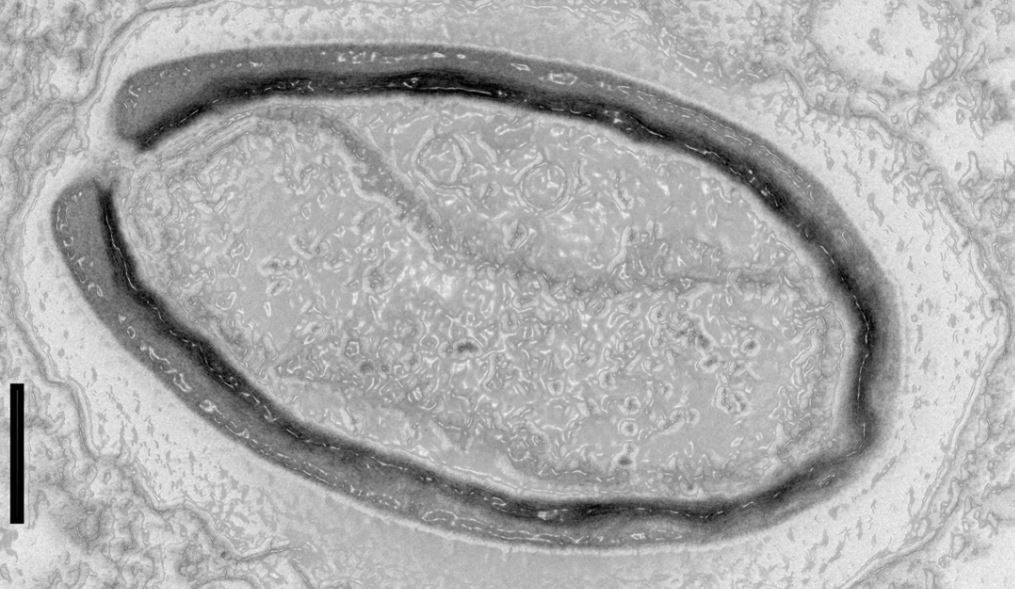
Pandoravirus quercus virus
© IGS-CNRS/AMUPandoravirus quercus, as viewed through an electron microscope. The scale bar equals 100 nanometers.
Giant viruses may invent genes and proteins found nowhere else on Earth, new research suggests.

As their name implies, giant viruses are big - as big as bacteria, and more than twice the size of typical viruses, scientists have previously reported. Giant viruses have more complex genomes than some simple microbial organisms, and many of their genes code for proteins found only in giant viruses, according to past studies.

These so-called orphan genes puzzled scientists, but a new study may suggest where they come from. In three new species of Pandoraviruses - a family of giant viruses described in 2013 - these genes originated in the viruses themselves. The giant viruses were like factories, churning out novel genes and proteins - though the origin and purpose of this prolific gene creation is still a mystery, the study authors wrote.

Even before the discovery of giant viruses, viruses occupied a questionable position on the tree of life: They contain much of the cellular material found in living organisms, including DNA or RNA, but they lack cell structure and cannot replicate outside a host - two key criteria for defining life.

Hourglass

Carbon-14 dating accuracy called into question after researchers discover major flaw in assumptions

Though one of the most essential tools for determining an ancient object's age, carbon dating might not be as accurate as we once thought.

When news is announced on the discovery of an archaeological find, we often hear about how the age of the sample was determined using radiocarbon dating, otherwise simply known as carbon dating.

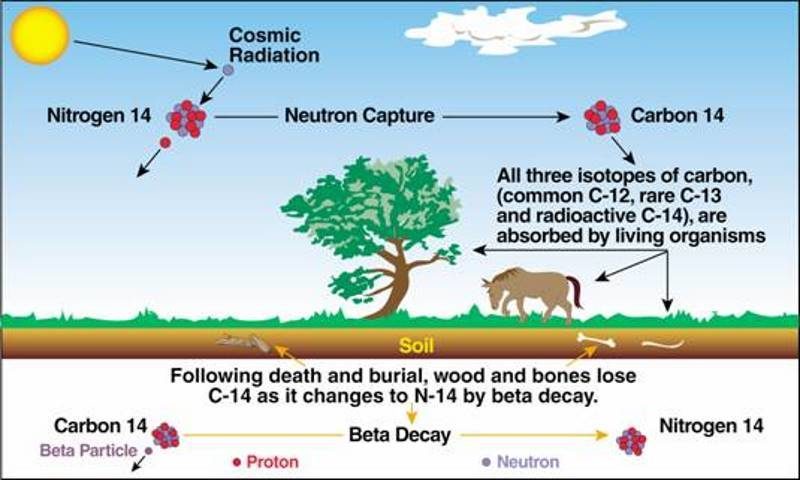
Deemed the gold standard of archaeology, the method was developed in the late 1940s and is based on the idea that radiocarbon (carbon 14) is being constantly created in the atmosphere by cosmic rays which then combine with atmospheric oxygen to form CO2, which is then incorporated into plants during photosynthesis.
crabon cycle carbon-14 dating

Meteor

Meteor craters: The best candidate for the location of the origin of life on earth

origin of life
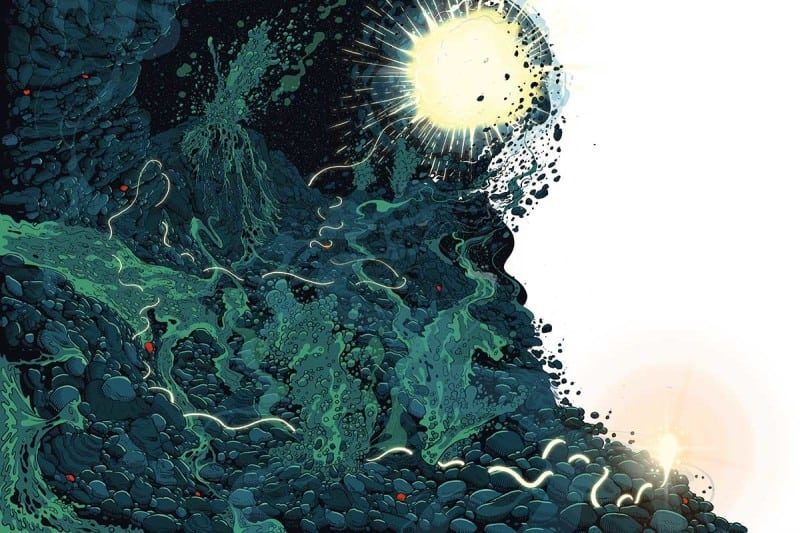
NEARLY 4 billion years ago, the first life appeared on our planet. It would have looked unlike any life as we know it today, more basic even than bacterial cells - barely more than a few genetic molecules packaged up in some kind of a sac. Working out how this popped into existence is one of our greatest intellectual endeavours. And at the root of the problem is an epic hunt for the perfect location.


Comment: Not only that. It's one of the world's greatest mysteries because our current theories are totally inadequate to explain it.


Researchers studying the origins of life each have their favourite spot. Some sites offer the right molecular ingredients, others provide ready-made little containers to hold these early reactions. But is it possible that one special place had the perfect combination of all the conditions essential for the chemistry of life? And does a similar place still exist today, on Earth or elsewhere in the universe?

Charles Darwin kicked off the quest. In a letter he wrote to the botanist Joseph Dalton Hooker in 1871, he described a hypothetical warm little pond, rich in chemicals and salts, with sources of light, heat and electricity. He imagined that in such an environment, proteins might spontaneously form, ready to turn into something more complex. In the 1950s, chemists Stanley Miller and Harold Urey managed to create Darwin's pond in the lab. They mixed water with gases they thought would have been present on early Earth, and zapped them with simulated lightning. This produced amino acids, the building blocks of all proteins.


Comment: Darwin was thinking along these lines before we knew about DNA and how information-rich it is. Things don't become "more complex" - especially to the degree necessary for life - without some intelligent input.


Beaker

Tiny quantum device has redefined the ampere

quantum measurement ampere
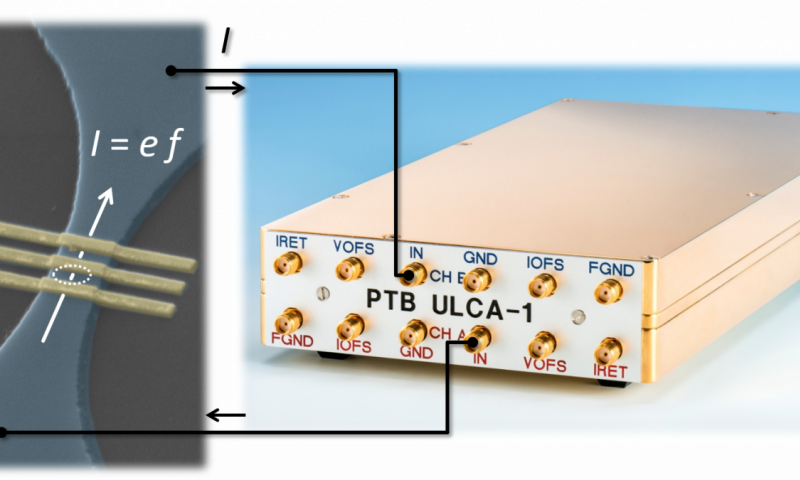
© Physikalisch-Technische BundesanstaltSemiconductor single-electron current source ("single-electron pump", left), connected to the high-precision current/voltage converter ("ultrastable low-noise current amplifier" (ULCA), right).
EU-funded scientists have succeeded in redefining the ampere in terms of fundamental constants of physics. Based on the electron charge, the newly developed microscopic device has been reported as the most accurate technique for making measurements of tiny currents to date.

Over the last few decades, the need for increasingly high-accuracy and reliable measurements has determined a shift towards standards based on fundamental quantities of nature.

Within the EU-funded project SINHOPSI, researchers from the University of Cambridge, the National Physical Laboratory and Hitachi Ltd have joined forces in creating novel quantum technology critical in creating a new standard for electrical current based on electron charges. Experimental demonstrations advanced the state of the art of both accurate electric current generation and single-charge remote sensing.

Bulb

'Shocking' new workout claims to cut gym time in half

man lifting weights
If you could change your entire body by simply doing a 30-minute workout twice a week, but you'd get shocked in the process, would you do it?

Shock Therapy gym on the Upper East Side offers workout classes that promise just such an electric edge.

Clients don a power suits that hook up to Electronic Muscle-Stimulation Technology, known as EMS.

Comment: Or, consider the Body By Science approach of Dr. Doug McGuff to improve health and strength, which doesn't require getting mildly electrocuted twice a week.


Snowflake Cold

An engineer debunks claims of man-made CO2 causing arctic and antarctic melting

It's just amazing how we as a society can let global group-think ideas have fantastically large continued public traction when direct scientific observation utterly refutes the very basis of the ideas. Can not the alarmist scientific folks (I'm thinking here of Mann, Alley, Schmidt, Hansen, etc.) be just a little bit honest about what is actually going on?

Sea level rise is widely reported every single day as an imminent man-made climatic disaster. Portions of Greenland melt, and portions of Antarctica melt. are presented as proof-positive that human burning of fossil fuels is causing the Earth to overly warm and therefore causing these melts...which will lead to coastal inundation...and we must therefore change our ways at any cost.

However, it just so happens that these same portions of Greenland and Antarctica melt are now known to be situated over highly active geothermal sites... and that 100% of the observed melt is easily and readily attributable to current enhanced geothermal heat release.

Robot

Touch-sensitive artificial nerve developed for robots

Robot Shaking Hands
© Erik Tham/Getty ImagesOne day, robots will be able to feel through their skin. A touch-sensitive artificial nerve brings that day closer.
Bridging the gap between biological systems and machines has come one step closer, with a report in the journal Science detailing a touch-sensitive artificial nerve. Capable of distinguishing Braille characters and even interfacing with a cockroach leg, the device could have wide-reaching applications in robotics and prosthetic limbs.

The artificial nerve, developed by scientists at Stanford University in the US and Seoul National Universities in Korea, brings together three components to mimic at action of a sensory nerve cell.

An organic polymer-based pressure sensor feeds information to a flexible ring oscillator, which functions as an electronic neuron. The signal generated is then fed to an artificial synaptic transistor, which integrates the outputs from multiple pressure sensors, modelled after the synapse between biological nerve cells. This synaptic transistor can then feed output to a computer, or can be directly linked to a biological nerve cell.

The polymer-based pressure sensors, which have been previously reported by co-author Zhenan Bao, professor of chemical engineering at Stanford, can detect the weight of a single flower petal weighing just 0.8 milligrams. This means that artificial skin imbedded with these cells could be even more sensitive than human skin.

"We take skin for granted but it's a complex sensing, signalling and decision-making system," says Bao.

Mars

NASA says Mars rover Opportunity is 'sleeping' though massive dust storm

mars rover opportunity
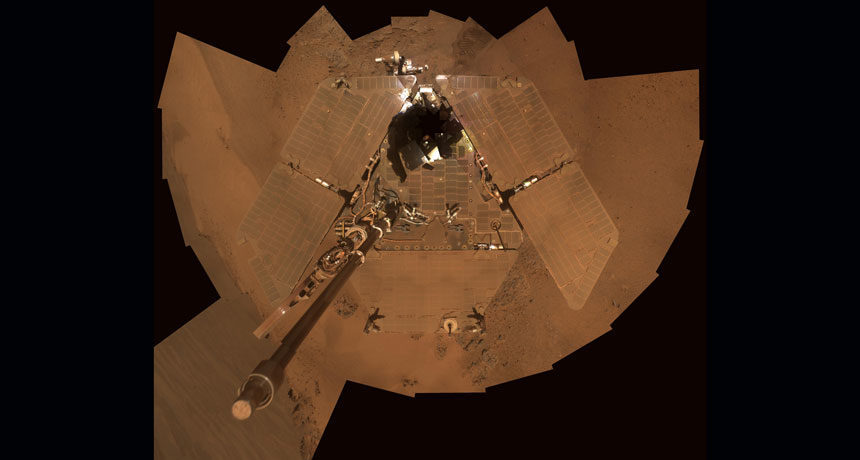
© JPL-Caltech/NASA, Cornell Univ., Arizona State UniversityNASA’s Opportunity rover took this self-portrait on Mars in December 2011, showing dust buildup on its solar panels. Now the craft is stuck in one of the worst dust storms ever seen on the Red Planet.
The craft may be able to hibernate through a dust storm that could last months

The veteran Opportunity rover isn't dead yet. Currently, the craft is in a deep sleep to ride out a massive Martian dust storm, NASA officials said in a briefing on June 13. The rover may wake itself up when the storm ends.

Opportunity is enveloped in a vast dust storm that grew from a small patch spotted on May 30 to cover a quarter of the planet by June 12 (SN Online: 6/11/18). Too little sunlight is reaching the rover's solar panels, so Opportunity is in low-power mode - just barely enough to run the rover's internal clock - until its batteries can charge again. The team hasn't heard from Opportunity since June 10, and no transmissions are expected until the storm clears.

Comment: