Science & TechnologyS


People

New algorithm can predict who will win a debate

trump hillary debate
© NBC
Northeastern professor Lu Wang believes that the right mix of linguistic analysis, artificial intelligence, and data visualization can produce more meaningful debates. Understanding what makes a persuasive argument is at the heart of an interdisciplinary project she is leading.

Ideally, debates are like fuel for the engine of democracy. But in their current form on social media, are they really getting us anywhere?

The ultimate goal is to help social media platforms evolve from echo chambers full of hate speech to places where constructive conversations flourish.

"Debates should be mechanisms for discovering something new about the world," said Nick Beauchamp, assistant professor of political science at Northeastern and a collaborator on the project. "The hope is that you would come away from a debate not with just a set of new facts you learned, but also with a better way of thinking about the problem."

With this goal in mind, Wang and Beauchamp designed an algorithm that identifies features of a strong argument. Using a dataset of 118 Oxford-style debates--in which the winner is whomever can sway more of the audience to their side--the algorithm was able to predict debate winners 74 percent of the time.

Mars

Epic dust storm on Mars now engulfs entire planet

NASA's Curiosity on Mars
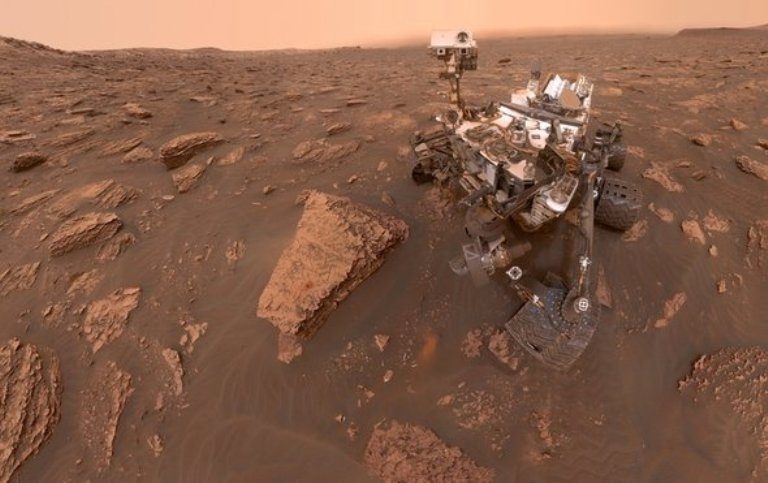
© NASA and JPL-CaltechA self-portrait taken by NASA's Curiosity mission on June 15, 2018 shows the rover surrounded by a darkened landscape beneath a dust-shrouded sky.
On Mars, the sky is dust.

A massive dust storm on Mars that covered one-fourth of the planet just a week ago has grown into a global weather event, NASA officials said Wednesday (June 20).

The dust storm has knocked NASA's Opportunity rover offline for want of sunlight. The agency's nuclear-powered Curiosity, meanwhile, is snapping photos of the ever-darkening Martian sky. The two rovers are on opposite sides of Mars.

"The Martian dust storm has grown in size and is now officially a 'planet-encircling' (or 'global') dust event," NASA officials said in a statement. [The Mars Dust Storm of 2018 Explained]

The last dust storm on Mars to go global occurred in 2007, five years before the Curiosity rover landed at its Gale Crater site, according to officials with NASA's Jet Propulsion Laboratory (JPL) in Pasadena, California. The Opportunity rover has been exploring the plains of Meridiani Planum on the opposite side of Mars since 2004. During that 2007 Martian dust storm, NASA also lost contact with Opportunity for days due to low power levels from the lack of sunlight.


Beaker

Interfacial water can be very dead, electrically speaking

Water electrically dead
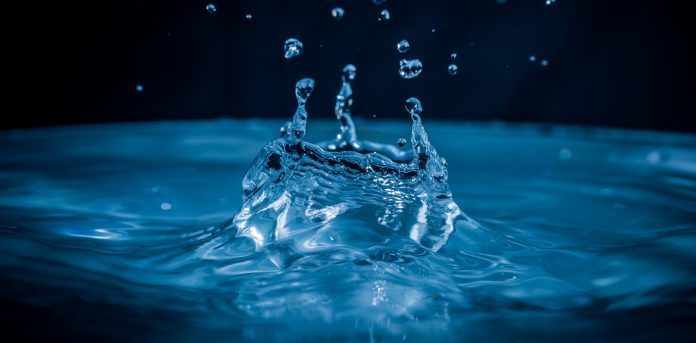
Research shows that water is electrically dead at interfaces
In a study published in Science this week, the researchers describe the dielectric properties of water that is only a few molecules thick. Such water was previously predicted to exhibit a reduced electric response but it remained unknown by how much. The new study shows that atomically thin layers of water near solid surfaces do not respond to an electric field, a finding that has very important implications for understanding of many phenomena where water is involved, including life of course.

Water molecules are small and seemingly simple but nonetheless exhibit rather complex properties, many of which remain poorly understood. Among them is the ability of water to dissolve substances much better than any other solvent. Water is therefore known as the "universal" solvent.

Behind this solvation ability is the fact that water molecules behave like tiny dipoles with two opposite charges placed at the ends of the molecule. This makes it easy for water to dissolve salts and sugars whereas substances like oils are repelled. The dipolar properties of water - or, as scientists call it, the polarizability - also play an important role in the structuring of the molecules of life, proteins and nucleic acids. Therefore, it is hardly surprising that for many decades scientists tried to figure out how water behaves on a microscopic scale, in the immediate vicinity of other substances, solid surfaces and macromolecules.

Info

Genomes help to resolve the mystery of syphilis

Syphilis
© Fototeca Gilardi/Getty ImagesA 1926 woodcut warning of the disfiguring effects of syphilis.
A new report in the snappily titled journal PLOS Neglected Tropical Diseases presents, for the first time, the sequenced and reconstructed genomes of historic Treponema pallidum subspecies - the bacteria responsible for syphilis and three other related diseases. This promises to help solve the mystery of the origin of one of humanity's most feared diseases.

Syphilis is a gruesome malady. The causative agent, a corkscrew shaped bacterium, is sexually transmitted. It initially produces pustules which turn to ulcers, then a raft of other symptoms in its secondary phase, most notably a widespread and unsightly rash of varying severity.

In its tertiary stage, which can appear many years after initial infection, it can produce gross deformations of flesh and bone, or attack the central nervous system or heart. It can also be passed from mother to unborn child.

The variety of symptoms syphilis can present has led to the disease being known as the Great Imitator, as it can masquerade as a host of other illnesses and is often therefore misdiagnosed.

But it was not always thus. The modern disease is a very different beast than the monstrosity which first appeared in Europe at the end of the fifteenth century.

Cassiopaea

Oxygen gas filaments identified as the universe's missing matter

universal matter
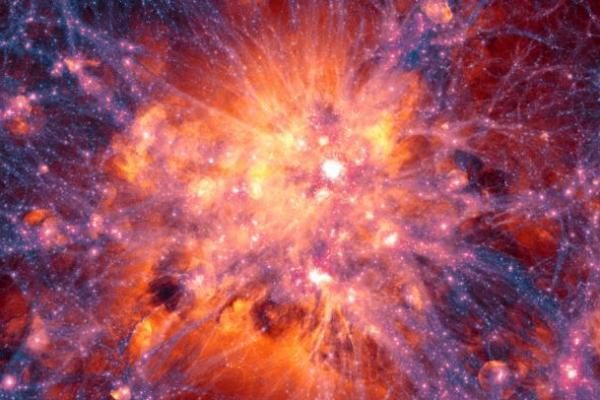
© Illustris Collaboration/CU BoulderAn illustration imagines the filaments of gas that make up the cosmic web that connects galaxies across the universe.
Until now, scientists had only found roughly two-thirds of the cosmos' ordinary matter. But astronomers have solved the so-called "missing baryon problem," locating the last reservoir of missing ordinary matter.

Scientists found the missing matter in the form of oxygen gas. The gas filaments were found in intergalactic space, registering temperatures of around 1 million degrees Celsius.

Astronomers found the elusive matter with the help of the radiation from a distant quasar, a super luminous black hole.

As scientists worked out the chemistry of the Big Bang, they were able to estimate the amount of ordinary matter in the universe -- the matter you can see. Over the last few decades, scientists found 10 percent of the ordinary locked up inside galaxies and roughly 60 percent in intergalactic clouds of diffuse gas.

Dollar

'Ten times cheaper': Russian space company testing rocket engine that runs on iodine

Carrier rocket
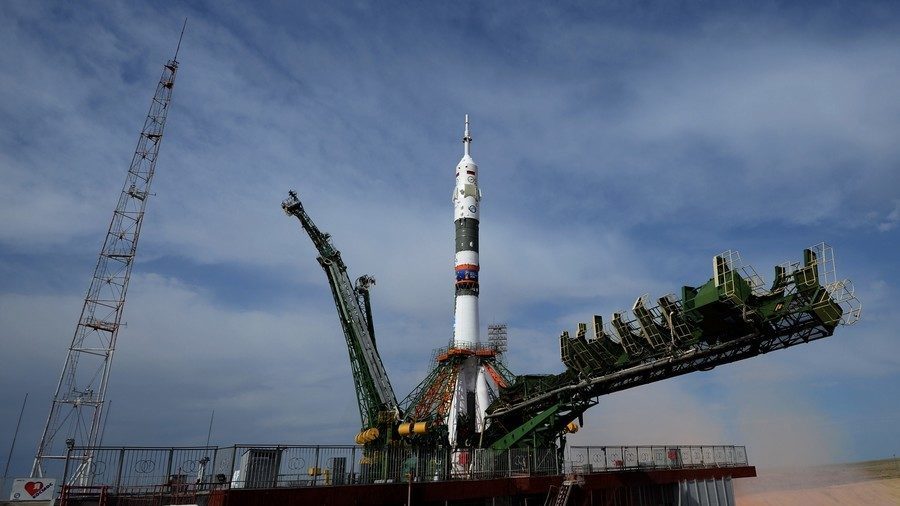
© Sergey Mamontov / Sputnik.The launch of Soyuz-FG carrier rocket with Soyuz MS-09 manned spacecraft in Baikonur, Kazakhstan. June 6, 2018.
Russian spacecraft manufacturer Energia is developing an electric propulsion rocket engine which runs on 'pure' iodine. The new thruster can make rockets smaller, lighter and cheaper.

Engineers have patented a method of using iodine for electric-powered spacecraft propulsion, the Energia Space and Rocket Corporation said on Thursday. The company, based in the Moscow region, is the nation's main builder of space rockets and components for the International Space Station (ISS). It said the idea to use 'pure' iodine for space exploration was first proposed in the 90s, but thorough research started only several years ago.

Solid iodine is easy to store, can be quickly converted into gas, and is cost-effective, compared to xenon which typically serves as propellant in electric-powered propulsion engines. Switching to iodine can potentially make the process "ten times cheaper', while the engine itself will be smaller and less heavy, the company said. Furthermore, xenon-run engines are incapable of long-distance flights, like going to the Moon.

Info

New method improves DNA barcodes

B-DNA
© Richard Wheeler (Zephyris)This illustration shows the most common structure of DNA found in a cell, called B-DNA.
Austin, Texas - In the same way that barcodes on your groceries help stores know what's in your cart, DNA barcodes help biologists attach genetic labels to biological molecules to do their own tracking during research, including of how a cancerous tumor evolves, how organs develop or which drug candidates actually work. Unfortunately with current methods, many DNA barcodes have a reliability problem much worse than your corner grocer's. They contain errors about 10 percent of the time, making interpreting data tricky and limiting the kinds of experiments that can be reliably done.

Now researchers at The University of Texas at Austin have developed a new method for correcting the errors that creep into DNA barcodes, yielding far more accurate results and paving the way for more ambitious medical research in the future.

The team - led by postdoctoral researcher John Hawkins, professor Bill Press and assistant professor Ilya Finkelstein - demonstrated that their new method lowers the error rate in barcodes from 10 percent to 0.5 percent, while working extremely rapidly. They describe their method, called FREE (filled/truncated right end edit) barcodes, today in the journal Proceedings of the National Academy of Sciences.

The researchers have applied for a patent and are making the method freely available for academic and noncommercial use.

Meteor

US National Science and Technology Council calls for improved asteroid detection, tracking and deflection

NASA asteroid tracking deflection
On Wednesday, June 20, 2018, the U.S.'s National Science and Technology Council released a report calling for improved asteroid detection, tracking and deflection. NASA is taking part in the effort, along with federal emergency and White House officials.
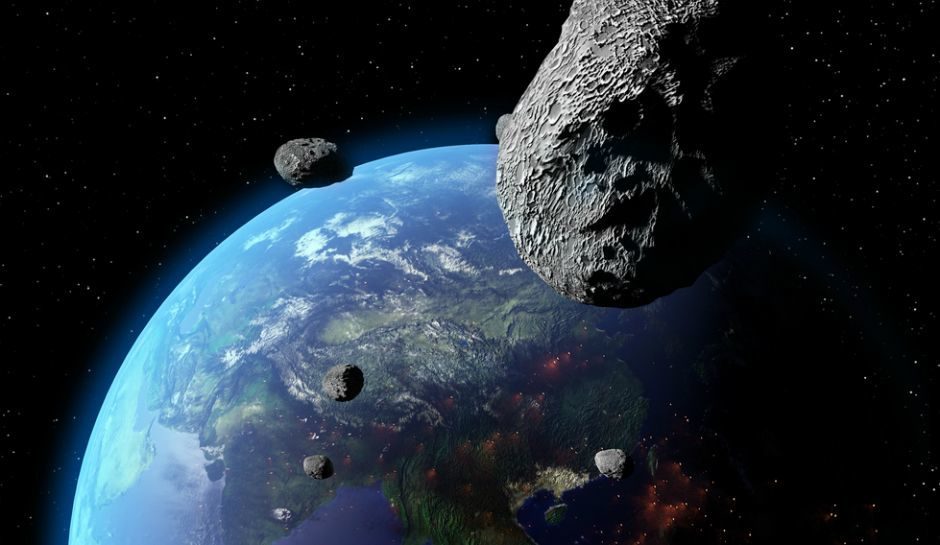
The U.S. government is stepping up efforts to protect the planet from incoming asteroids that could wipe out entire regions or even continents.

The National Science and Technology Council released a report Wednesday calling for improved asteroid detection, tracking and deflection. NASA is participating, along with federal emergency, military, White House and other officials.

For now, scientists know of no asteroids or comets heading our way. But one could sneak up on us, and that's why the government wants a better plan.


Comment: And they are sneaking up on us with increasing frequency.


NASA's planetary defense officer, Lindley Johnson, said scientists have found 95 percent of all these near-Earth objects measuring one kilometer (two-thirds of a mile) or bigger. But the hunt is still on for the remaining 5 percent and smaller rocks that could still inflict big damage.

Comment: Looks like someone has been paying attention to the alarming number of space rocks in our skies recently:


Water

Tidal wave of plastic garbage will flood the world in wake of China's refusal to stop importing scrap

plastic garbage
In this June 4, 2018, photo, a man collects plastic and other recyclable material from the shores of the Arabian Sea, littered with plastic bags and other garbage, in Mumbai, India.
A tidal wave of plastic trash will flood the world over the next decade, a new study says, and warnings are already blaring like sirens in the United States.

In the wake of China's decision to stop importing nearly half of the world's scrap starting Jan. 1, particularly from the wealthiest nations, waste management operations across the country are struggling to process heavy volumes of paper and plastic that they can no longer unload on the Chinese. States such as Massachusetts and Oregon are lifting restrictions against pouring recyclable material into landfills to grant the operations some relief.

If Europe and the rest of the world struggle like the United States, according to the study by researchers at the University of Georgia released Wednesday, an estimated 111 million metric tons of plastic waste will pile up by 2030. Based on the amount of domestic scrap exported to China, the researchers estimate that the United States will have to contend with 37 million metric tons of extra waste, an amount it's not prepared to handle.

The more immediate and noticeable change for most Americans, both conservationists and waste management operators said, will be in their homes. As recycling programs change or even disappear, residents will face new questions about what material can be recycled and what cannot.

Comment: China says no to Western trash while the EU bumps up its recycling efforts


Seismograph

New research suggests risk of California earthquake higher than previously thought

Aftermath of 6.0 quake in Napa, CA
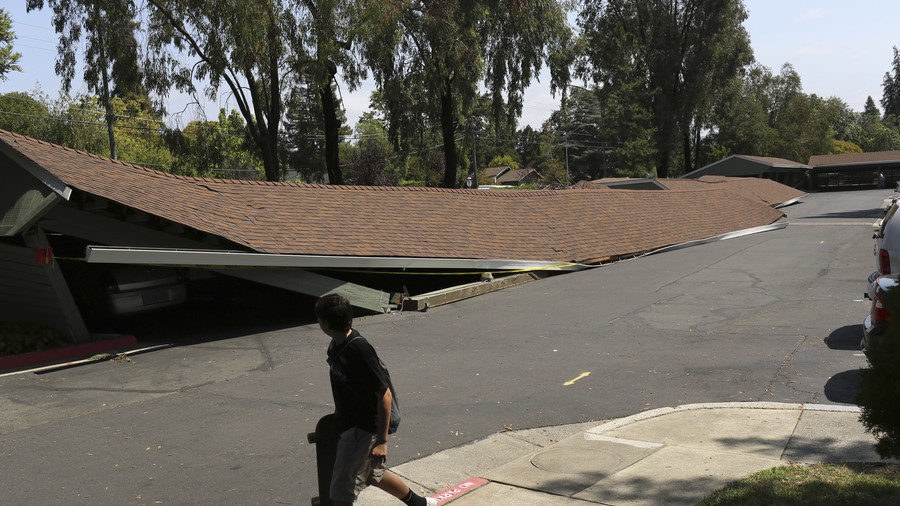
© Robert Galbraith/ReutersAftermath of magnitude 6.0 earthquake in Napa, California, 2014.
Geophysicists are hypothesizing that the San Andreas fault line in California could be the central point of a massive earthquake after new research suggested that the fault may be at higher risk than previously thought.

Researchers at Arizona State University have published a new study looking at the likelihood of a 7.5-magnitude (or stronger) quake occurring and rupturing the entire fault line.

It has long been thought that the central section of the fault line, which stretches 90 miles from San Juan Bautista southward to Parkfield, was creeping steadily in such a way that provided for the safe release of energy. That "creeping" movement, scientists believed, lessened the chances of a huge quake rupturing the entire fault line - but new research casts doubt over old assumptions.