Science & TechnologyS


Brain

People who anthropomorphize are actually smarter than those who don't

Your habit of talking to your pets, plants or any inanimate object, for that matter, is a sign of intelligence, not stupidity.
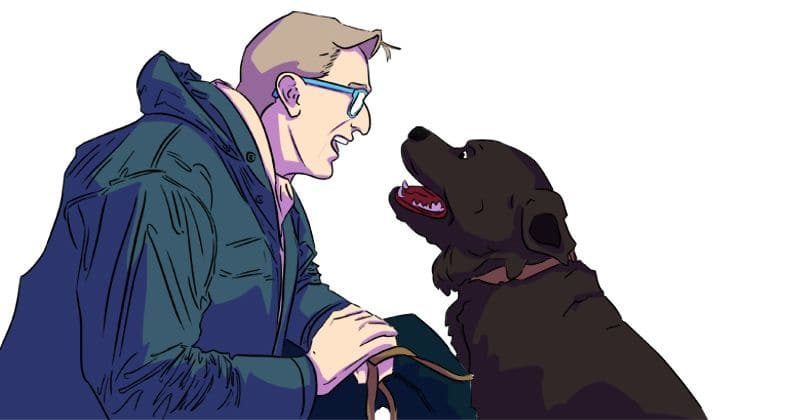
man and dog
Pet owners around the globe, if not all then most of them, have daily conversations with their pets, how they'd talk to normal human beings. They wish their pets good morning, ask them if they're hungry and if they wish to go for a walk, almost as if their pets are understanding them and will talk back any second now.

Do you talk to your pets like you talk to your friends? Be it a dog, cat, parrot or a guinea pig. If so, we're sure you've heard things like "Are you nuts?", "You've gone cuckoo" and seen people get weirded out by your behavior.

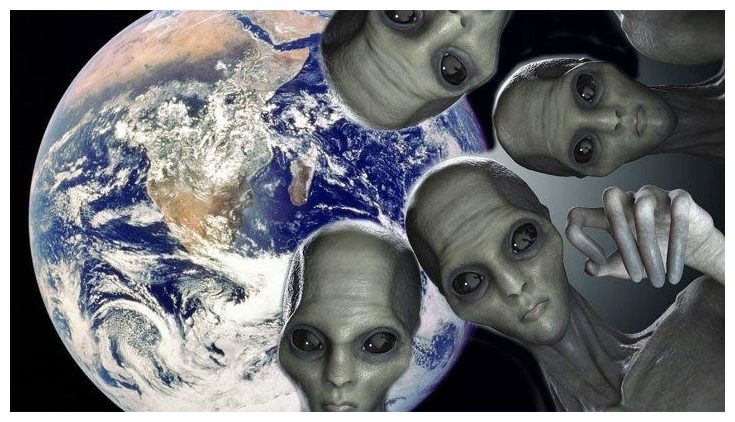
Grey Alien

A new study out of Oxford university says humans might be the only civilization in the observable universe

Alien Civilizations
© YouTube
The Fermi Paradox may finally have an answer.

Between claims that humans aren't the first civilization to call the Milky Way home and warnings that advanced alien civilizations could destroy us with their interstellar messages, it's surprising how many studies have been written about extraterrestrial intelligences (ETIs) without the confirmation that they exist in the first place.

One of the greatest hopes of the scientific community is knowing that even the most pessimistic versions of the Drake Equation (the mathematical formula proposed to estimate the number of alien civilizations in existence) still predict that humans aren't alone-at least, until now.

New research from the Future of Humanity Institute and Oxford University claims that humans might be the only civilization in the observable universe.

Of course, the research is still based on estimates, since there's so much we still don't know about our universe. Still, even when experimenting with different probabilities, the research has found that there's still a good chance that we might be alone.

Galaxy

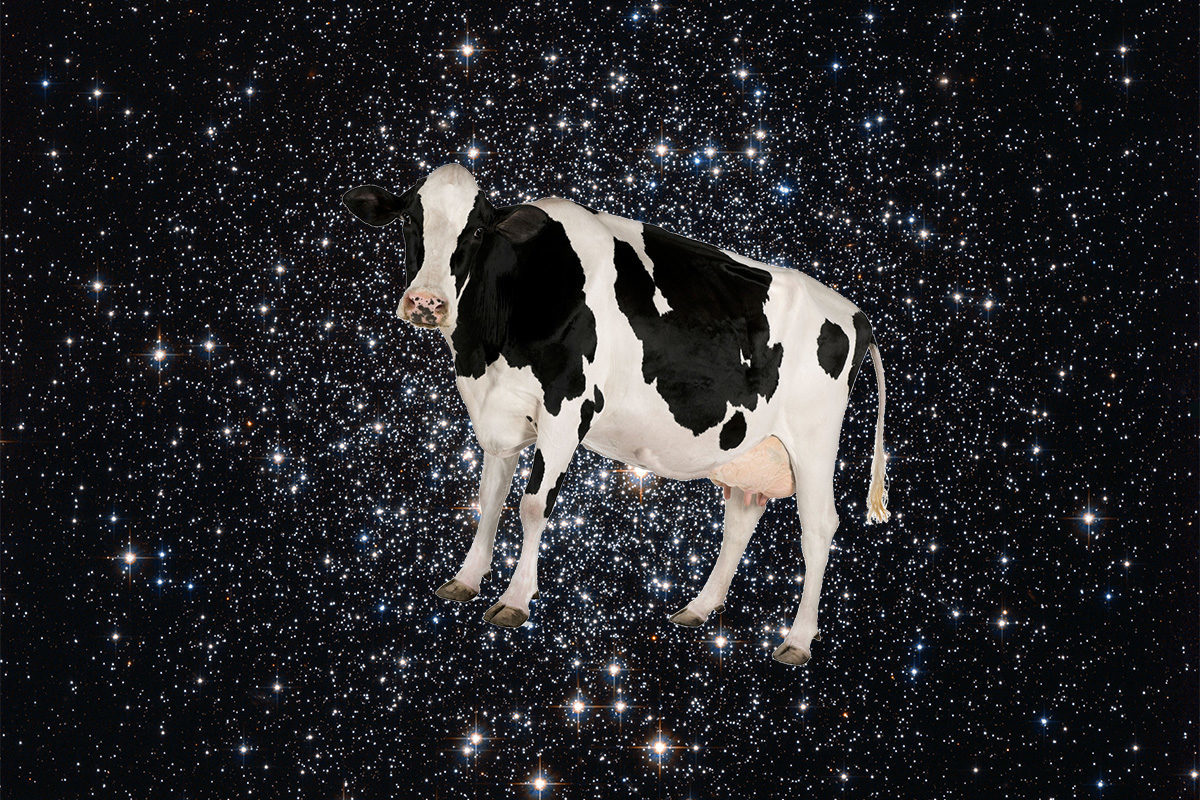
'The cow': Astronomers puzzled by incredibly bright and fast mystery burst from space

mystery burst from space dubbed “the cow”
A mystery burst from space has been dubbed “the cow”
Something is exploding incredibly quickly in the sky, and astronomers are scrambling to figure out what it is. On 17 June, the twin ATLAS telescopes in Hawaii spotted a bright flash in space that hadn't been there when they'd checked about two days before.

Most supernovae take a few weeks or even longer to reach their full brightness, but this explosion took days. "It really just appeared out of nowhere," says Kate Maguire at Queen's University Belfast, who is part of the ATLAS team. Its peak brightness was incredibly high, 10 to 100 times brighter than most normal supernovae.

"There are other objects that have been discovered that are as fast, but the fastness and the brightness, that's quite unusual," says Maguire. "There hasn't really been another object like this."

Horse

Horses know when something's amiss

Putin with his horse
© Alexey Druzhinin/AFP/Getty ImagesVladimir Putin talking to his favourite horse. The animals are able to detect a disconnect between word and deed, research suggests.
Horses, it seems, may have a sense of the incongruous.

Research led by cognitive scientist Kosuke Nakamura from the University of Tokyo in Japan examines the reaction of horses to visual and audio cues when the emotion expressed in one does not match that of the other.

The results, published in the journal Scientific Reports, is believed to be the first time this type of cognition has been tested in horses - a remarkable thing, given that the species was domesticated around 5000 years ago and has lived in close proximity to humans ever since.

To conduct their research, Nakamura and colleagues recruited 19 horses from their own institution and the nearby Tokyo University of Agriculture and Technology.

Bandaid

A plan to exterminate mosquitoes just received major funding from the Gates Foundation

So crazy it just might work.
mosquito
Beyond being itch-provoking summer pests, mosquitoes kill an estimated 830,000 people around the world each year. That makes them more deadly than any animal on Earth, humans included.

A majority of those mosquito-caused deaths (more than 440,000) are cases of malaria, which are transmitted person to person in a one-celled parasite that female mosquitoes pass around when they suck our blood.

Comment: Fooling with the complexities of nature without fully understanding these relationships will have 'unintended' consequences. The biotech industry is hell-bent on developing these GMO mosquitoes and won't let anyone get in their way:

Anti-GMO mosquito activist delivering petition to EPA found floating dead in DC hotel pool

See also:


Brain

Brain cells once thought to disappear during development were just found in adults

They've been there the whole time.
brain cells
© Rockefeller U
Scientists have thought for decades that one area of the brain simply disappears during human development. Now, genetic similarities between cells in the subplate and neurons linked to autism suggest a different scenario.

In a new paper, researchers demonstrate that subplate neurons survive, and in fact become part of the adult cerebral cortex, a brain area involved in complex cognitive functions.

Blackbox

Consciously quantum: Do we create our own reality?

youniverse abstract
© Natalie Nicklin

The idea that we create reality seems absurd. But an audacious new take on quantum theory suggests the fundamental laws of nature emerge from our own experiences


Does reality exist without us? Albert Einstein appeared to be in no doubt: surely the moon doesn't vanish when we aren't looking, he once asked incredulously. He had been provoked by the proposition, from quantum theory, that things only become real when we observe them. But it is not such a daft idea, and even Einstein kept an open mind. "It is basic for physics that one assumes a real world existing independently from any act of perception," he wrote in a 1955 letter. "But this we do not know."

In the decades since, physicists have found it maddeningly difficult to write the observer out of quantum theory. Now some are contemplating a mind-boggling alternative: that a coherent description of reality, with all its quantum quirks, can arise from nothing more than random subjective experiences. It looks like the "perspective of a madman", says the author of this bold new theory, because it compels us to abandon any notion of fundamental physical laws. But if it stands up, it would not only resolve some deep puzzles about quantum mechanics, it would turn our deepest preconceptions about reality itself inside out.

Comment: See also:


Grey Alien

Energy-hungry aliens are snatching stars and storing them in mega-structures, says new study

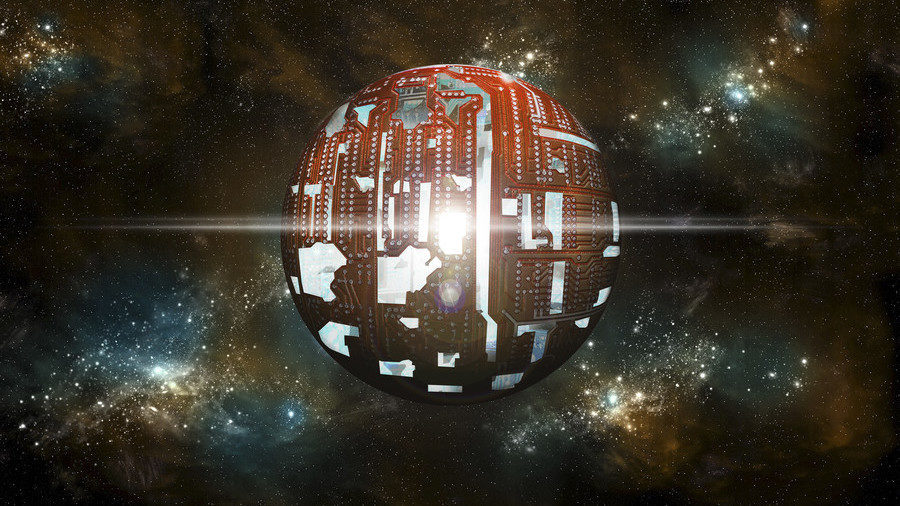
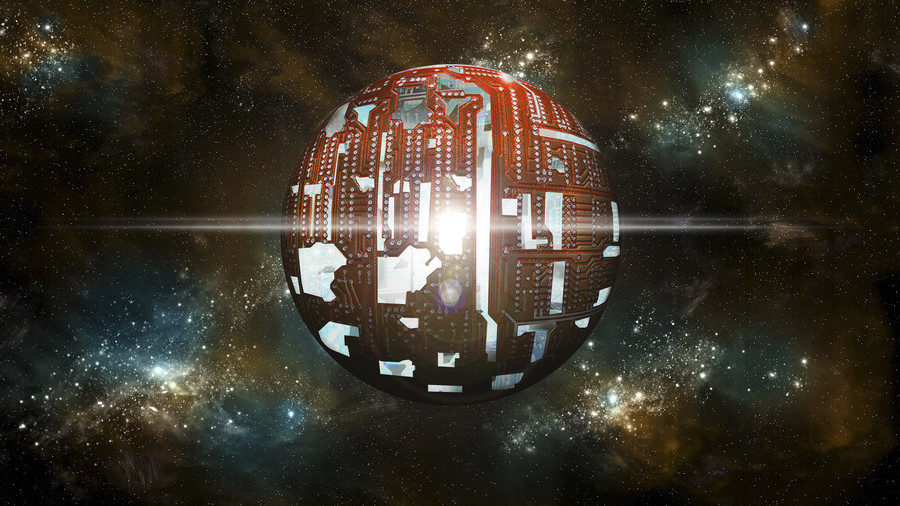
Dyson sphere
© Marc Ward / Stocktrek Images / Getty ImagesAn artists depiction of a theoretical Dyson sphere.
Alien civilizations may be forced to capture stars and harness their energy using ginormous structures - all to keep themselves alive in the cold, ever-expanding vastness of universe, a Fermilab cosmologist believes.

Expansion of the universe, thought to be further accelerated by dark energy, is flinging matter apart, while galaxies are being pushed away from each other. This is a challenge alien technologies will have to deal with in order for them to survive, Dan Hooper, a senior Fermi National Accelerator Laboratory scientist, writes in a new study.

The paper looks at the use of megastructures, popularly known as Dyson spheres, which may theoretically be built around stars to harvest their energy. But it goes further than that, arguing that the huge balls of gas will also have to be shifted in their course so as not to escape the energy-hungry aliens.

"In order to maximise its access to useable energy, a sufficiently advanced civilisation would chose to expand rapidly outward, build Dyson Spheres or similar structures around encountered stars, and use the energy that is harnessed to accelerate those stars away from the approaching horizon and toward the centre of the civilization," Hooper, who is also a professor of astronomy at the University of Chicago, writes.

Robot

New IBM computer makes its debut in public debate

Dan Zafrir
© Ted Chin / IBMRenowned Israeli debater Dan Zafrir takes on IBM Research's experimental AI system, Project Debater, in San Francisco on Monday.
The human brain may be the ultimate super computer, but artificial intelligence is catching up so fast that it can now hold a substantive debate with a human.

IBM's Project Debater made its public debut in San Francisco Monday afternoon, where it squared off against Noa Ovadia, the 2016 Israeli debate champion, and in a second debate against Dan Zafrir, a nationally renowned debater in Israel. The new AI system is the latest grand challenge from IBM, which previously created Deep Blue, the program that beat chess champion Garry Kasparov, and Watson, which bested humans on the game show Jeopardy.

In its first public outing, Project Debater turned out to be a formidable opponent, scanning the hundreds of millions of newspaper and journal articles in its memory to quickly synthesize an argument on a topic and position it was assigned on the spot. The skinny, black, rectangular screen stands about five and a half feet tall, putting it around the same height as a human opponent.

"Project Debater could be the ultimate fact-based sounding board without the bias that often comes from humans," said Arvind Krishna, director of IBM Research.

Mars

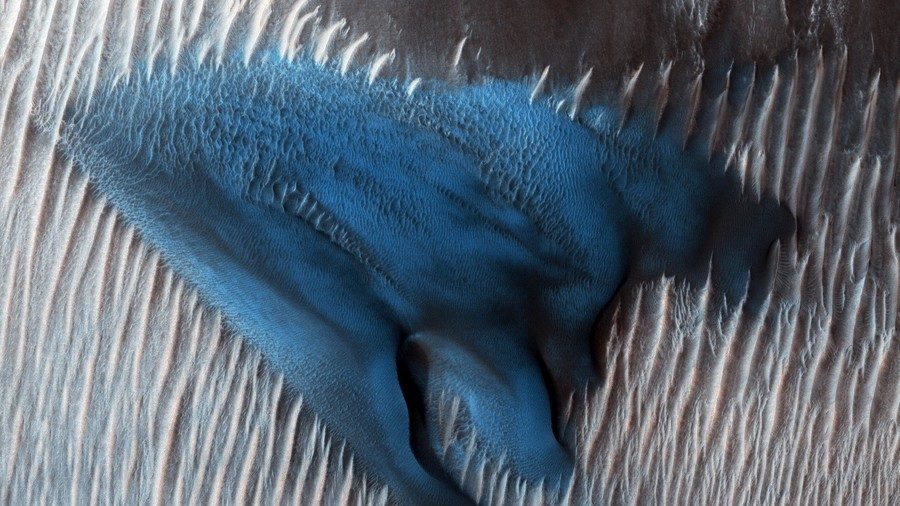
'Once in a blue dune': NASA shares striking image of Mars' Loyt crater

Blue dune, Mars
© JPL-Caltech/Univ. of Arizon / NASA
NASA has shared a stunning image of a field of finely-marked turquoise sand dunes smeared across the floor of a Martian crater.

The eye-catching snap, captured by the Mars Reconnaissance Orbiter, shows an accumulation of 'barchan' (or crescent-shaped) sand dunes on the Lyot Crater -a large crater in the Vastitas Borealis region of the Red Planet.

Just to the south of the group of barchan dunes lies a large dune with a stranger and more complex structure, depicted in a striking blue shade in the enhanced color image. According to NASA, this formation is made of finer material and may have "a different composition than the surrounding" dunes.

Comment: See also: Epic dust storm on Mars now engulfs entire planet