Science & TechnologyS


Cloud Grey

'Fog harvesting' techniques could yield water for drinking and agriculture in the world's driest regions

alto hospicio atacama desert chile
© Dr. Virginia Carter Gamberini.Panoramic view of Alto Hospicio, located in Chile's Atacama desert, one of the driest places in the world.
With less annual rainfall than 1 mm per year, Chile's Atacama Desert is one of the driest places in the world. The main water source of cities in the region are underground rock layers that contain water-filled pore spaces which last recharged between 17,000 and 10,000 years ago.

Now, local researchers have assessed if "fog harvesting," a method where fog water is collected and saved, is a feasible way to provide the residents of informal settlements with much needed water.

"This research represents a notable shift in the perception of fog water use — from a rural, rather small-scale solution to a practical water resource for cities," said Dr. Virginia Carter Gamberini, an assistant professor at Universidad Mayor and first co-author of the Frontiers in Environmental Science study.

"Our findings demonstrate that fog can serve as a complementary urban water supply in drylands where climate change exacerbates water shortages."

Magnify

The enduring mystery of static electricity: An exciting turn in an age-old quest

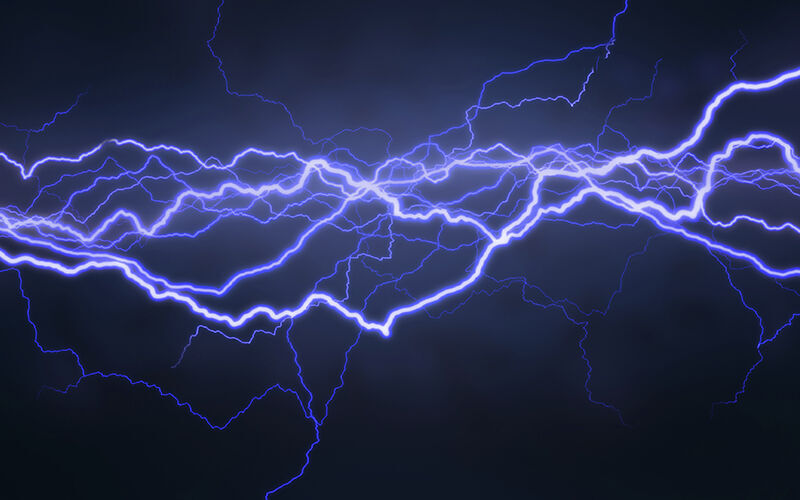
static electricity
© Thinkstock
Contact electrification depends on materials' contact history, ISTA physicists show

For centuries, static electricity has been the subject of intrigue and scientific investigation. Now, researchers from the Waitukaitis group at the Institute of Science and Technology Austria (ISTA) have uncovered a vital clue to this enduring mystery: the contact history of materials controls how they exchange charge. The groundbreaking findings, now published in Nature, explain the prevailing unpredictability of contact electrification, unveiling order from what has long been considered chaos.

From a tiny electric jolt when touching a doorknob to styrofoam peanuts that cling to a mischievous cat's fur — the well-known and seemingly simple phenomenon of static electricity has puzzled people since antiquity. How could this ubiquitous effect, frequently demonstrated to bedazzled children by rubbing a balloon on their hair, still not be completely understood by scientists?

Galaxy

Scientists discover black holes spinning unexpectedly fast: 'You're essentially looking at its fossil record'

illustration
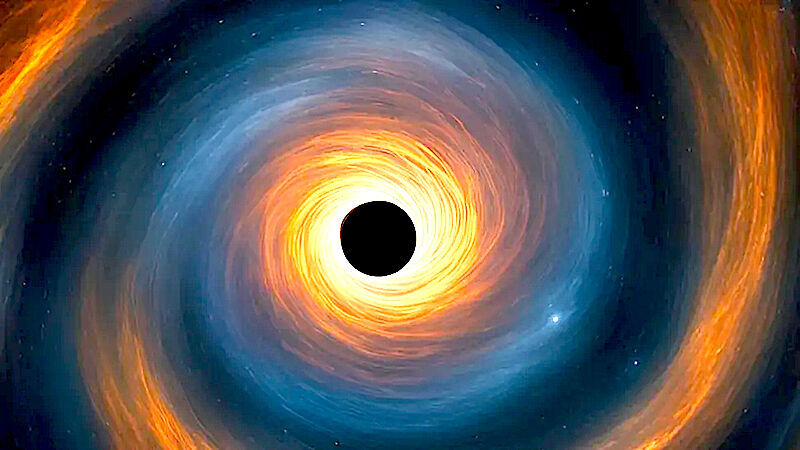
© Robert LeaAn illustration shows a rotating supermassive black hole
Scientists have discovered that some supermassive black holes rotate much more rapidly than expected. The discovery came as the result of a new form of "black hole archeology" that links black hole spins to the gas and dust they have consumed to grow over 7 billion years of cosmic history.

The findings, courtesy of the Sloan Digital Sky Survey (SDSS) suggest a few things. For one, the early universe may have been more orderly than previously suspected. And secondly, the growth of supermassive black holes through the merger chain of progressively larger and larger black holes (triggered as galaxies collide and merge) may be supplemented by the objects voraciously feasting on surrounding gas and dust.

Info

The inner ear of Neanderthals reveals clues about their enigmatic origin

New study challenges the theory that Neanderthals originated after an evolutionary event that implied the loss of part of their genetic diversity.

Neanderthal male
© Allan Henderson under CC BY 2.0Life appearance reconstruction of a Neanderthal male at the Natural History Museum of London.
Neanderthals emerged around 250.000 years ago from European populations — referred to as "pre-Neanderthals" — which inhabited the Eurasian continent between 500.000 and 250.000 years ago. It was long believed that no significant changes occurred throughout the evolution of Neanderthals, yet recent paleogenetic research based on DNA samples extracted from fossils revealed the existence of a drastic genetic diversity loss event between early Neanderthals (or ancient Neanderthals) and later ones (also referred to as "classic" Neanderthals). Technically known as a "bottleneck", this genetic loss is frequently the consequence of a reduction in the number of individuals of a population. Paleogenetic data indicate that the decline in genetic variation took place approximately 110,000 years ago.

The presence of an earlier bottleneck event related to the origin of the Neanderthal lineage was also a widespread assumption among the scientific community. As such, all hypotheses formulated thus far were based on the idea that the earliest Neanderthals exhibited lower genetic diversity than their pre-Neanderthal ancestors, as consequence of a bottleneck event. However, the existence of a bottleneck at the origin of the Neanderthals has not been confirmed yet through paleogenetic data, mainly due to the lack of genetic sequences old enough to record the event and needed for ancient DNA studies.

In a study led by Alessandro Urciuoli (Institut Català de Paleontologia Miquel Crusafont, Universitat Autònoma de Barcelona) and Mercedes Conde-Valverde (Cátedra de Otoacústica Evolutiva de HM Hospitales y la Universidad de Alcalá), researchers measured the morphological diversity in the structure of the inner ear responsible for our sense of balance: the semicircular canals. It is widely accepted that results obtained from studying the morphological diversity of the semicircular canals are comparable to those obtained through DNA comparisons.


Comet

Ancient texts are shedding light on auroras

ancient texts describe auroras
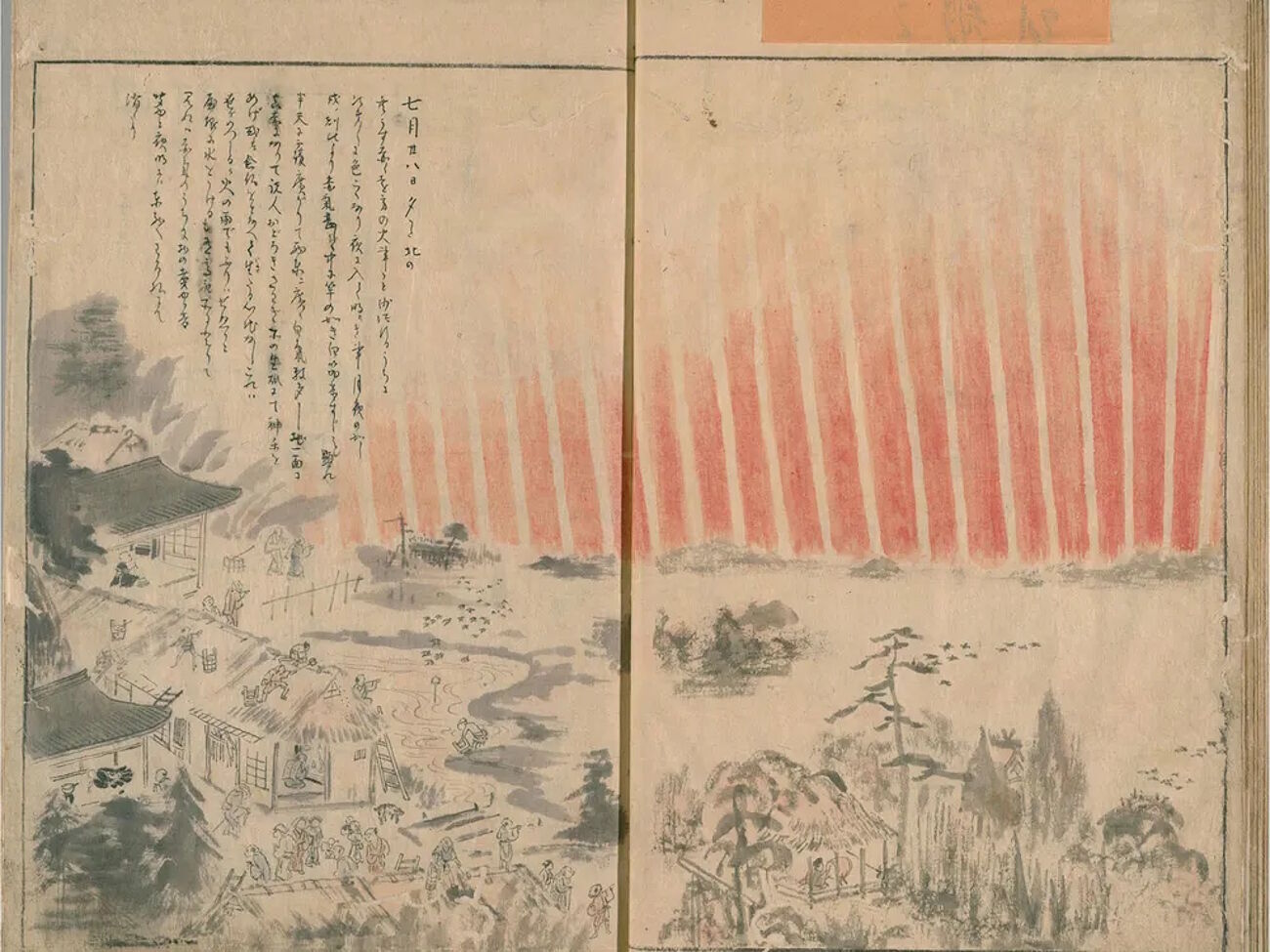
© Courtesy of the National Diet Library.A drawing of the aurora observed from Nagoya, Japan, on September 17, 1770. The written description also notes its intensity: “as bright as a night with a full moon.” MS Special 7–59, National Diet Library, ff. 6b–7a (at Nagoya).
Documenting episodes of the phenomenon thousands of years ago may help us predict damaging solar storms in the future

Rumors of a strange and terrifying event swept Japan in early September 1859. The "sky seemed to be burning," according to one diarist. From Aomori Prefecture on the northern edge of the country's main island to Wakayama, more than 600 miles south, the sky glowed red. Many assumed it was the light of distant fires, but no one could decide where they burned. Had a thousand houses been destroyed in Minato? Or liquor stores at Hyogo or Nishinomiya? Residents of these places assumed there'd been fires elsewhere. Koyasan, Gojo, Hashimoto and even Russia were all suggested as places that could be burning.

The historian of Shingu, a city 80 miles south of Kyoto in Wakayama, noted that "red vapor" in the northern sky had also been seen 90 years earlier in September 1770. Reports during that event similarly hypothesized that the strange light was the result of faraway fires, though other unusual effects appeared, too. One account noted that "white stripes like rods appeared within intensive red vapor," which covered half the sky. Some people feared the world would end. They dedicated divine dances and prayed to Buddha while the eerie lights streamed through the sky, according to another account.

Cassiopaea

The Milky Way's black hole is producing a brilliant light show

artist conception black hole
© NASA, ESA, CSA, Ralf Crawford (STScI)An artist's concept of Sagittarius A*, surrounded by a flaring disk of hot gas
The black hole at the center of our galaxy is experiencing a flurry of flares, ranging from flickers to brilliant eruptions, according to a team that analyzed data from recent observations by the Webb Space Telescope.

The observations detailed the extreme environment in the immediate vicinity of Sagittarius A* (pronounced A-star), the supermassive black hole at the center of the Milky Way. Sagittarius A* is about four million times the mass of the Sun, and it's surrounded by a disk of material sucked towards the black hole by the object's inexorable gravity. According to a Northwestern University release, the recent observations are the longest and most detailed yet of the black hole.

According to the team's recent study — published today in The Astrophysical Journal Letters — the black hole's accretion disk is burbling with energetic flares, offering hints at how black holes — which remain some of the most confounding objects in the universe — affect their immediate environments.

Microscope 2

Scientists just rewrote our understanding of epigenetics

RNA strand
© koto_feja/Getty ImagesEpigenetic modifications made to both DNA and its cousin, RNA, control gene activity.
DNA and RNA epigenetics, once thought to be separate, have now been found to work together to fine-tune gene expression.

Scientists have uncovered a new way that cells control their genes — and it may rewrite our understanding of "epigenetics."

Epigenetics is a form of DNA modification that doesn't affect the DNA sequence itself. Instead, it describes when chemical groups attach to specific genes, thus switching those genes on or off, or else changing the 3D shape of chromosomes.

Now, in a study published Jan. 17 in the journal Cell, scientists have uncovered a whole new method of gene regulation that involves epigenetic tweaks made to both DNA and its molecular cousin RNA, at the same time. Looking forward, the researchers want to unpack how this new type of gene control relates to cancer.

Meteor

NASA makes emergency call as odds of 'city-killing' asteroid striking Earth increase

James Webb telescope
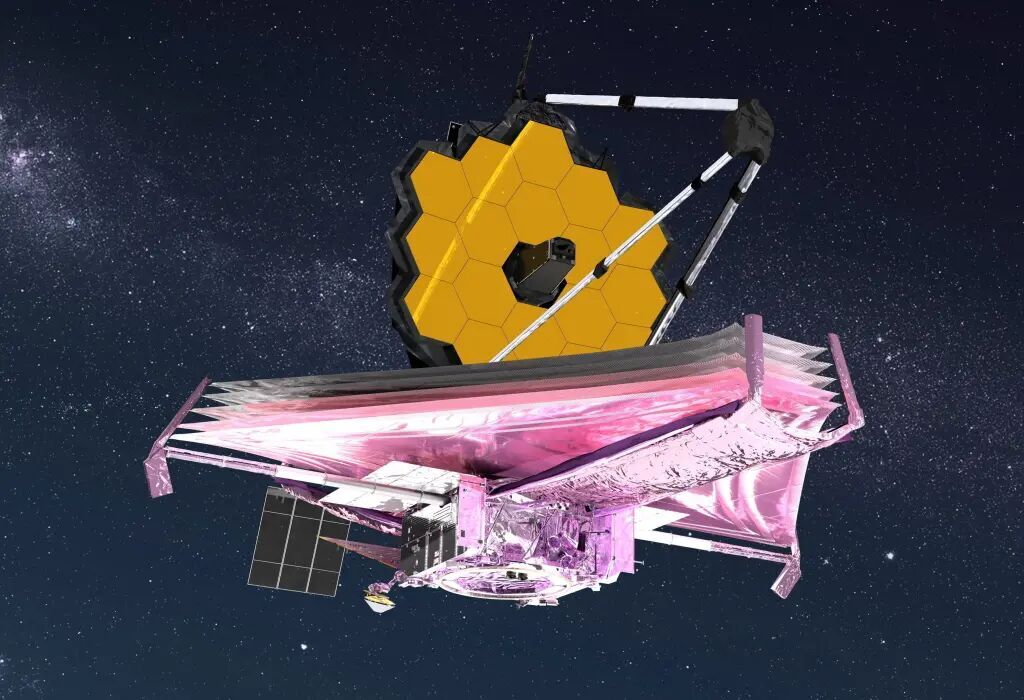
© NASA / SWNSAn artist’s impression of the James Webb telescope, which will be used to paint a more accurate picture of the asteroid’s size.
Will it help stave off a potential Armageddon?

NASA is training humanity's most powerful telescope on a "city-killing" asteroid to determine whether or not we need to brace for deep impact.

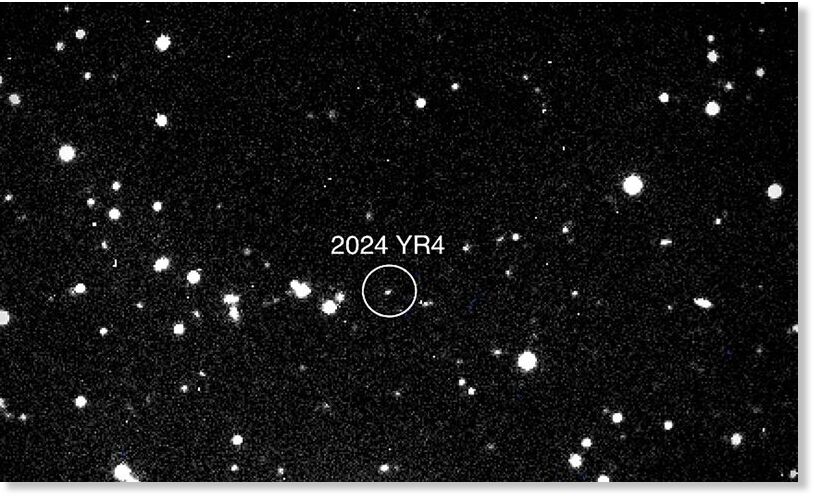
Dubbed 2024 YR4, the building-sized space rock reportedly has a 1-in-43 chance of slamming into Earth in 2032 — up from about 1%, the Independent reported.

The asteroid was discovered by NASA in December and is reportedly at the top of NASA's watch list when it comes to hazards from beyond.

Meteor

Best of the Web: China steps up planetary defense efforts amid asteroid impact concerns

asteroid 2024 YR4
© VCGThis handout picture provided by NASA on January 31, 2025 shows asteroid 2024 YR4 as observed by the Magdalena Ridge 2.4m telescope at the New Mexico Institute of Technology on January 27, 2025
Recent reports of a potential asteroid impact have sparked widespread concern on Chinese social media, with many voicing safety worries. Amid the discussions, public attention has turned to China's recruitment of planetary defense experts. On Thursday, media reported that Shan Zhongde, head of the China National Space Administration (CNSA), visited the Earth Observation and Data Center - a move expert says highlights China's growing focus on this critical field.

Shan said during a symposium held at the center that recent efforts in asteroid monitoring and early warning have shown promising progress. He emphasized the need to strengthen technological innovation, actively explore new models of digital and intelligent supervision, and enhance capabilities in identifying, assessing, warning against and responding to safety risks, according to the official WeChat account of Chinese Lunar Exploration Program.

The visit follows mounting worries from the public, after news broke out that an asteroid that could be as big as a football field could strike Earth in December 2032. According to an ABC News report on Wednesday, the chances of the asteroid named 2024 YR4 impacting Earth within the next decade have doubled within weeks, according to NASA astronomers.

Pi

The most energetic neutrino ever seen splashes down in Mediterranean detector

highest energy particle detected
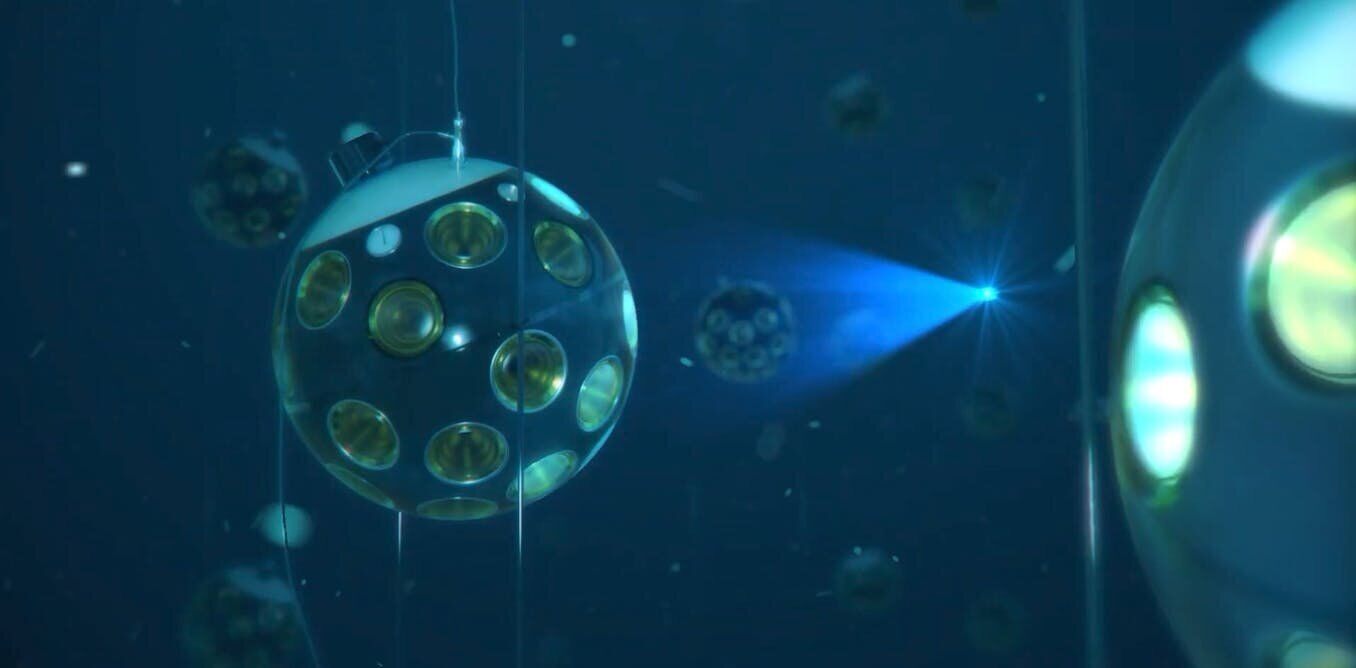
© KM3NeTAn artist’s impression of a high-energy particle travelling through the KM3NeT neutrino telescope.
A "ghost particle" discovered by a detector in the Mediterranean carried 30 times more energy than any neutrino observed to date

The highest-energy cosmic neutrino detected to date was observed by KM3NeT, which sits at the bottom of the Mediterranean Sea near Sicily, Italy and Provence, France.

For the fishes swimming deep in a particular patch of the Mediterranean Sea off the coast of Sicily in the wee hours of February 13, 2023, it was a night like any other — at least until a sudden azure shimmer, invisible to human eyes, shot through the dark water. The event signaled something extraordinary: the detection of the most energetic particle of its kind that has been measured to date.

The flash was the calling card of a cosmic neutrino, a tiny and typically mild-mannered "ghost particle," so named because of its astronomical unlikelihood of interacting with the ordinary matter that makes up our world. A neutrino might pass through a light-year of lead unscathed. And each second some 100 trillion of these particles (most of which have been emitted by our sun) pass through your body. That makes them difficult to catch — but also potent messengers of otherwise-occluded astrophysical processes at work in the opaque hearts of stars and the dust-darkened cores of galaxies.