Science & TechnologyS


Microscope 2

Study finds silent X chromosome genes 'reawaken' in older females, perhaps boosting brain power

Human sex chromosomes
(L) Female sex chromosome (R) Male sex chromosome
Females have one active X chromosome and one dormant X chromosome in each cell. But a study suggests that genes on the dormant X get "reawakened" later in life, potentially giving the brain a boost.

Dormant genes on the X chromosome may reawaken in old age, potentially giving the aging female brain a boost that the male brain doesn't receive.

This phenomenon may help to explain why, on many measures, females show a higher level of cognitive resilience in old age than males do.

The findings come from a new study in lab mice, and the researchers also backed up the results with genetic data from humans. More research is still needed to confirm that the findings in mice translate to people, but overall, the work points to a potential difference in how female and male brains age.

Palette

Do AI robo-authors qualify for copyright? It's still no, says appeals court

Computer scientist Stephen Thaler again told his 'Creativity Machine' can't earn a ©

Updated The US Court of Appeals for the District of Columbia Circuit has affirmed a lower court ruling that content created by an AI model without human input cannot be copyrighted.

The plaintiff in this case is computer scientist Stephen Thaler, who developed a machine-learning system called the Creativity Machine that produced an image titled, A Recent Entrance to Paradise. Here it is in all its machine-generated glory...
ai art copyright lawsuit

Microscope 1

A newly-tested method may be a more reliable way to detect debilitating Chagas disease

el paso chagas disease
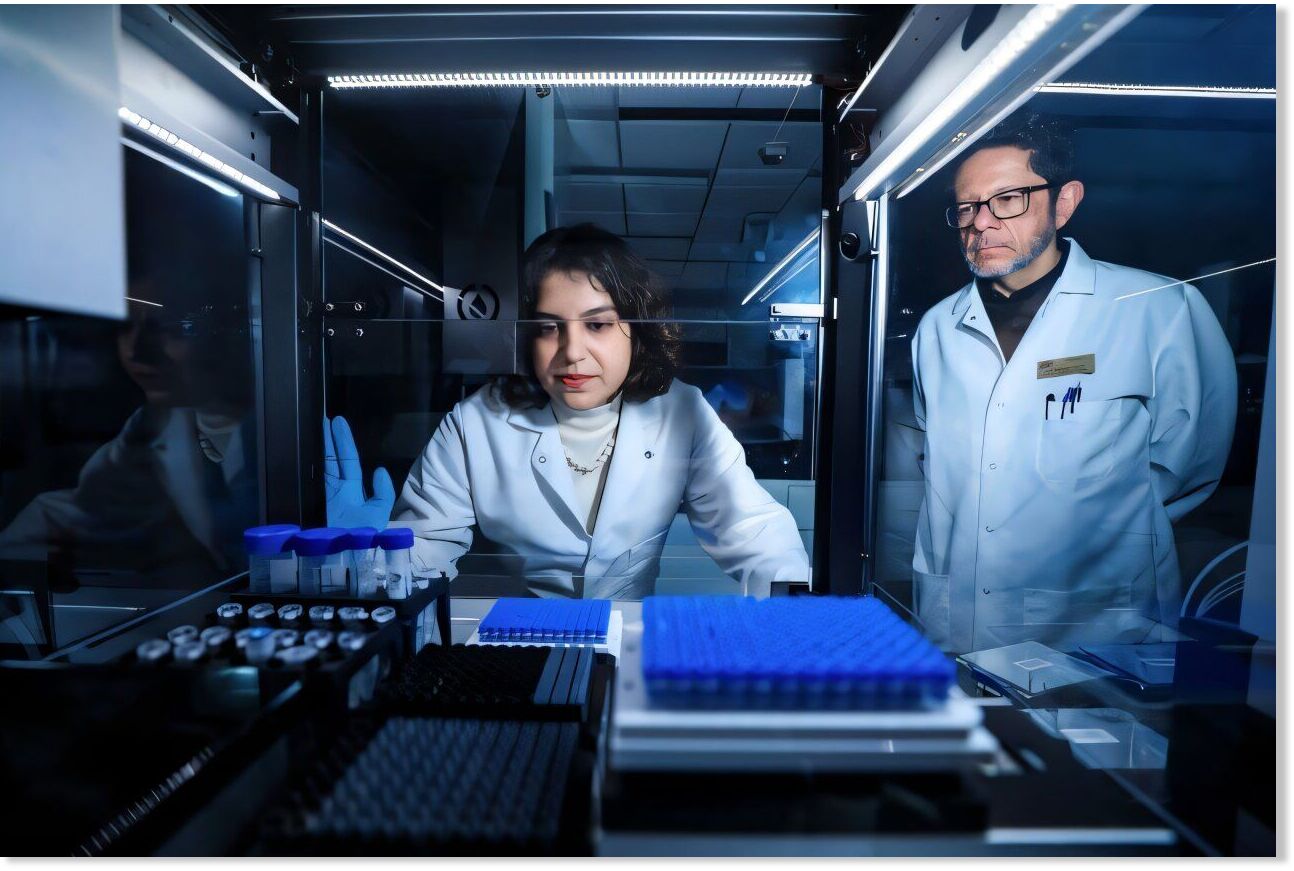
Priscila Silva Grijo Farani, Ph.D., a postdoctoral fellow at The University of Texas at El Paso, examines an automated pipetting system used for Chagas disease samples while her mentor, Igor Almeida, Ph.D., a prominent Chagas disease researcher, looks on. Credit: The University of Texas at El Paso
Researchers at The University of Texas at El Paso have successfully tested a faster, more sensitive and reliable way to diagnose Chagas disease, a debilitating parasitic illness that affects approximately 6 million people worldwide. The results of the study were recently published in the International Journal of Molecular Sciences.

While Chagas disease is highly prevalent across Latin America — from Mexico to Argentina — its diagnosis remains challenging due to the extensive geographic variability of parasite strains, explained Priscila Silva Grijo Farani, Ph.D., a postdoctoral fellow in UTEP's Almeida lab who led the study.

Chagas disease, Farani said, progresses in two stages: an acute phase lasting 4-5 weeks, during which patients typically do not experience specific symptoms, and a chronic phase that can persist for decades, leading to severe heart and gastrointestinal complications.

Volcano

Scientists monitoring Alaskan volcano Mount Spurr say it's showing activity that will 'most likely end in an explosive eruption,'

mt spurr alaska active volcano
© USGS AVOView of Mount Spurr on March 11 during an AVO overflight. The summit crater is present in the lower center, Crater Peak is in the center left.
Mount Spurr near Anchorage has been showing signs of unrest for a year. Now scientists think it's creeping closer to an eruption.

A huge volcano in Alaska appears to be "moving closer to an eruption," scientists monitoring it have said.

Mount Spurr, which sits 81 miles (130 kilometers) west of Anchorage, is now releasing unusual levels of volcanic gases near its summit and from a flank vent that last erupted in 1992.

The 11,000-foot (3,370-meter) volcano has been undergoing an uptick in earthquakes and snow and ice melt on its slopes in the past year, indicating magma movement under the surface. Now, according to scientists at the Alaska Volcano Observatory (AVO), it's most likely that this unrest will end in an eruption.

Archaeology

Skeletons uncovered in Egyptian pyramids reveal surprising historical twist

nubian pyramids egypt
© Felix Friebe/stock.adobe.comNubian pyramids in the Sudan. 3 Nubian pyramids in the Sudan. “If these hard-working individuals are indeed of lower socioeconomic status, this counters the traditional narrative that the elite were exclusively buried in monumental tombs,” concluded the team.
'Counters the traditional narrative'

"Pyramid schemes" aren't just for the wealthy.

Archaeologists have long theorized that Egyptian pyramid tombs were reserved for the elite. However, analysis of skeletons belonging to "extremely active" people might prove that they were dead wrong — and that poor physical laborers could've been interred there as well.

These findings, which were published in the Journal Of Anthropological Anthropology, could reshape how we view these ancient mausoleums.

"I think we have assumed for far too long that pyramids were just for the rich," declared study author Sara Schrader, an archaeology professor at the University Of Leiden, Netherlands, according to New Scientist.

NPC

Study: People are getting dumber

people cell phones
© Tara Moore via Getty Images
Human intellectual abilities such as reasoning and problem-solving are diminishing, possibly due to increased exposure to visual media, the Financial Times (FT) has reported.

Human intelligence appeared to peak in the early 2010s and has been in decline since, the FT added, citing PISA, an international benchmarking test for 15-year-olds that includes reading, mathematics and science, and adult cognitive evaluations.

The reported trend comes amid a rise in artificial intelligence (AI) which, by some estimates, may surpass human IQ in a matter of years.

Info

Can any nearby supernova cause a mass extinction?

The Veil Nebula Supernova Remnant.
© NASA/ESA/Hubble Heritage TeamThe Veil Nebula Supernova Remnant.
The most dangerous parts of a supernova explosion are the outputs like X-rays and gamma rays. Even though they only share a small fraction of a supernova's power, they are extremely dangerous. But they're not going to disintegrate the Earth. We are simply too far away from any potential supernova for that to ever be a problem.

What can happen is that these forms of radiation pack enough energetic punch that they can tear apart molecules. Elements like nitrogen and oxygen prefer to float around as molecules in our atmosphere. But then once they get hit by x rays, gamma rays, and cosmic rays, they get broken apart. And then they recombine in interesting and fascinating ways like various nitrogen oxides, including everybody's favorite nitrous oxide AKA laughing gas. And while everyone's laughing and having a good time, our ozone layer gets stripped away.

That's the danger of a too-close supernova: it breaks up our ozone layer. And without an ozone layer, it means the Earth is vulnerable to ultraviolet radiation from the Sun. Our ozone layer protects us from the vast majority of ultraviolet radiation. There are a couple specific bands of wavelengths that do sneak through, which is why we need to wear sunscreen here on the surface, so we don't get nasty tans and sunburns and skin cancer and all that.

But imagine no ozone layer, then you get all the UV radiation, the full output, and it's bad. And it's not just a matter of quicker tans and faster burns and higher rates of skin cancer. The problem is that photosynthetic microorganisms like algae become vulnerable. They get cooked and then they die. And since they form the very base layer of the food chain, you end up with whole ecosystem collapse and a mass extinction.


Jet3

Russian Superjet makes milestone test flight

superjet
© unknownRussian Superjet
The import-substituted aircraft demonstrated stable operations, according to state-owned defense conglomerate Rostec.

A prototype of Russia's new SJ-100 superjet, equipped with domestically produced engines, has successfully completed its first test flight, the state-owned Rostec corporation announced on Monday.

Russia's aviation industry has faced increasing pressure to replace Western-made components due to sanctions imposed after the escalation of the Ukraine conflict in 2022. In response, the SJ-100 program was developed to eliminate foreign reliance, replacing around 40 imported systems with Russian alternatives, including avionics, landing gear, auxiliary power units, and control systems. The PD-8 engine, domestically developed by the United Engine Corporation, is a crucial element of this effort.

According to Rostec, the SuperJet remained airborne for approximately 40 minutes during the test flight, reaching a speed of 500kph and an altitude of 3,000 meters. Engineers assessed the gas-dynamic stability of the PD-8 engines under various conditions. The engines performed steadily and the flight objectives were met in full, according to Rostec.

Brain

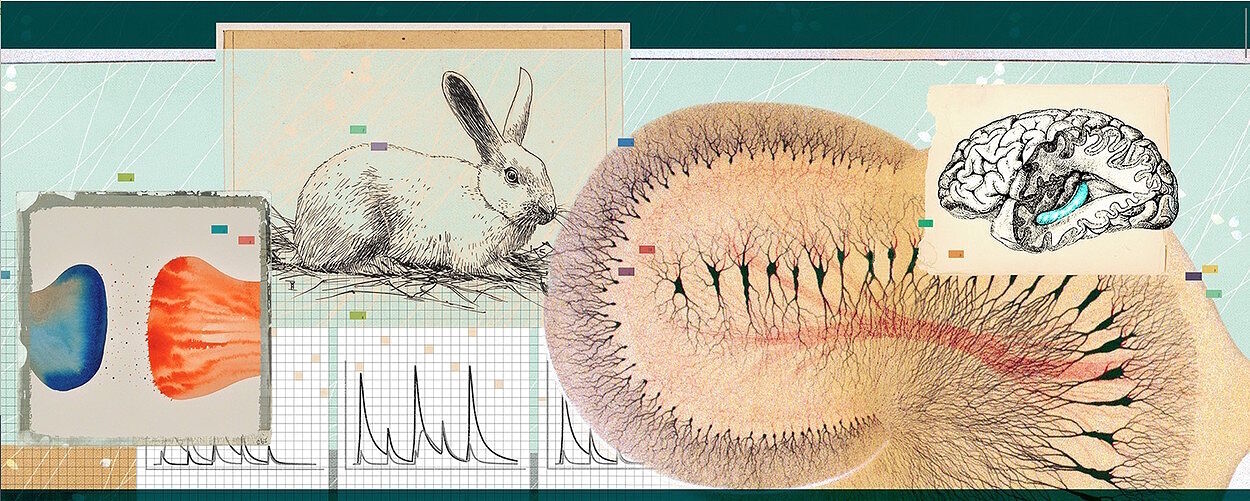
It began with a rabbit: Unraveling the mystery of memory

rabbit memory neurons research collage
© Knowable Magazine
Half a century after the discovery of long-term potentiation, we're still learning how the brain remembers

On a rainy day in July 2024, Tim Bliss and Terje Lømo are in the best of moods, chuckling and joking over brunch, occasionally pounding the table to make a point. They're at Lømo's house near Oslo, Norway, where they've met to write about the late neuroscientist Per Andersen, in whose lab they conducted groundbreaking experiments more than 50 years ago.

The duo only ever wrote one research paper together, in 1973, but that work is now considered a turning point in the study of learning and memory. Published in the Journal of Physiology, it was the first demonstration that when a neuron — a cell that receives and sends signals throughout the nervous system — signals to another neuron frequently enough, the second neuron will later respond more strongly to new signals, not for just seconds or minutes, but for hours.

Microscope 2

Study finds epigenetic 'scars' on the genome can be passed down by grandmothers

three generations syria trauma epigenetic changes
© Ameen AlwaniIn the early 1980s, the Syrian regime carried out a massacre in the city of Hama that killed tens of thousands of people. A survivor (left) and her daughter and granddaughter contributed to a study examining whether such trauma can be biologically inherited.
In a story of collaboration and community, researchers identified intergenerational epigenetic changes caused by war and trauma in Syrian refugees.

There are markers that sit on top of DNA and change over the course of one's lifetime, and they can even be passed down to future generations. These "epigenetic" markers alter how genes are expressed — without changing their codes — and they can change based on a person's experiences and environment.

Research suggests that stressful events can tweak a person's epigenetics — but what happens on a larger scale? How do people's epigenetics change, for example, in a population exposed to upheaval or violence multiple times over generations?

A new study, published Feb. 27 in the journal Scientific Reports, sought to answer that question.