Science & TechnologyS


Better Earth

A juvenile colossal squid is caught on camera for the first time in the deep sea

juvenile colossal squid
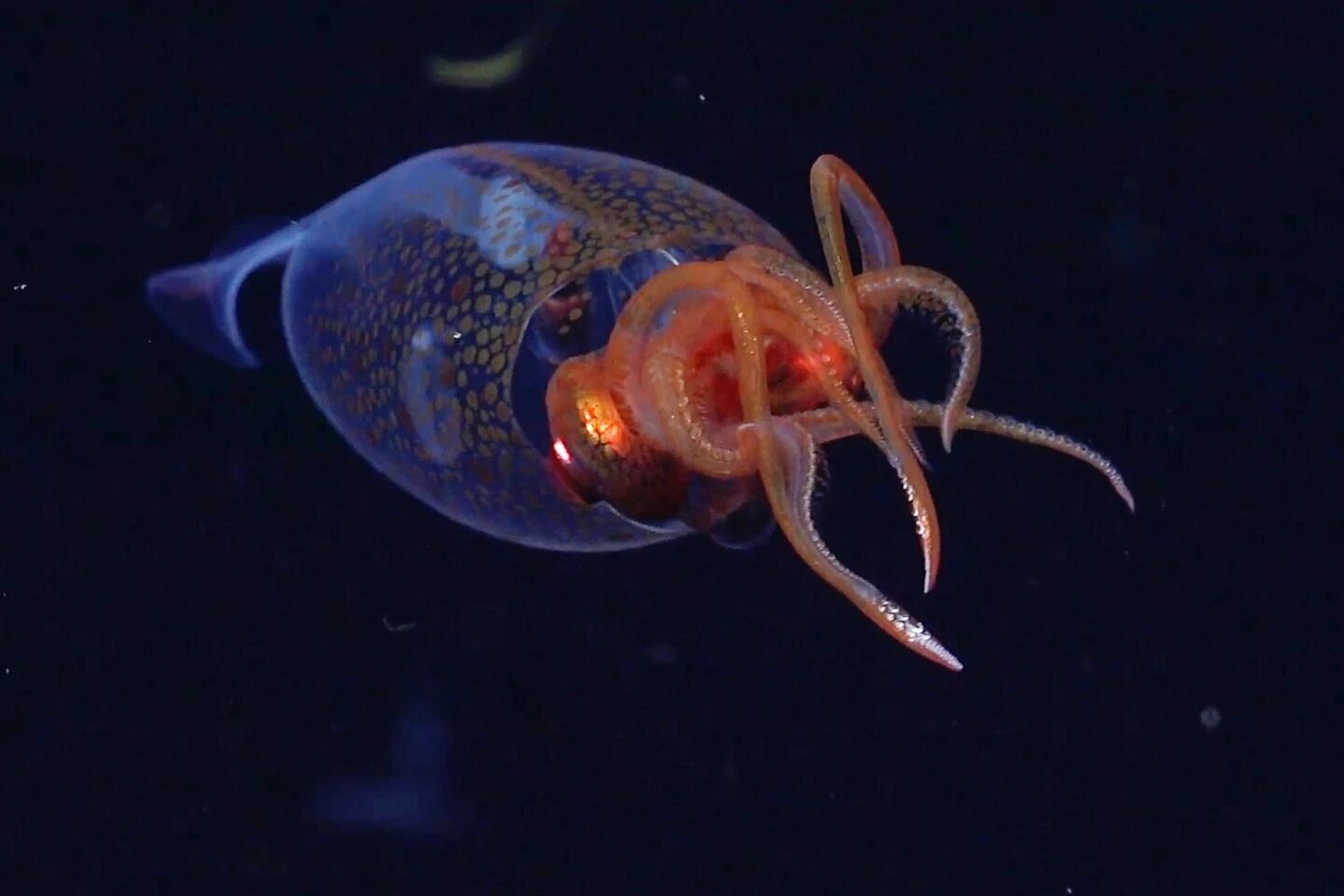
© ROV SuBastian/Schmidt Ocean Institute via APThis frame grab provided by the Schmidt Ocean Institute shows a colossal squid, or Mesonychoteuthis hamiltoni, in its natural habitat, during an Ocean Census flagship expedition in the South Sandwich Islands in the South Atlantic Ocean, Sunday, March 9, 2025
A colossal squid has been caught on camera for the first time in the deep sea by an international team of researchers steering a remotely operated submersible.

The sighting was announced Tuesday by the Schmidt Ocean Institute.

The squid filmed was a juvenile about 1 foot (30 centimeters) in length at a depth of 1,968 feet (600 meters) in the South Atlantic Ocean. Full-grown adult colossal squids, which scientists have uncovered from the bellies of whales and seabirds, can reach lengths up to 23 feet (7 meters) — almost the size of a small fire truck.

Galaxy

JWST discovers most distant and earliest Milky Way 'twin' ever seen: Meet dragon-galaxy Zhúlóng

Zhúlóng the earliest and most distant spiral galaxy JWST
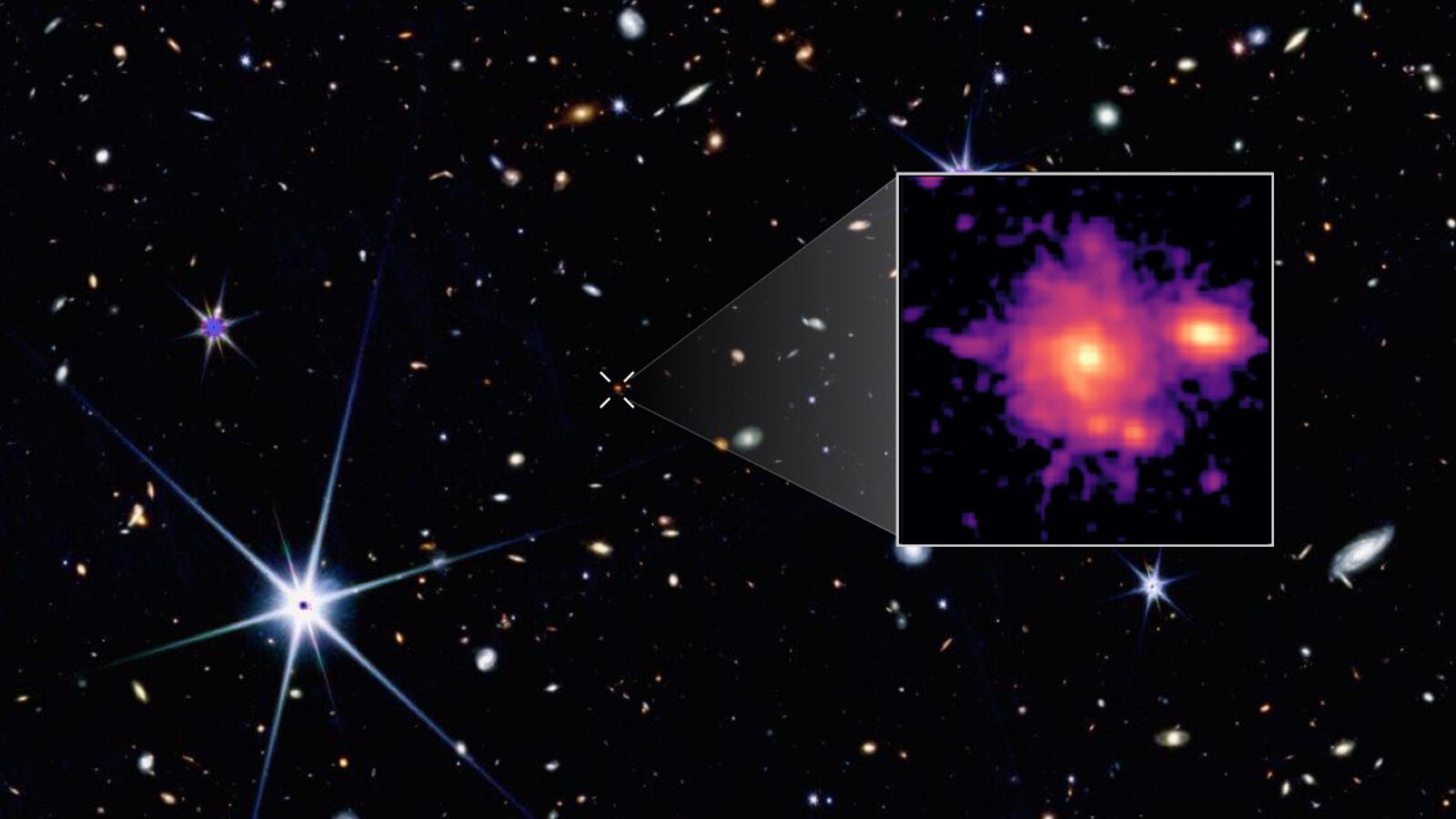
© NASA/CSA/ESA, M. Xiao (University of Geneva), G. Brammer (Niels Bohr Institute), Dawn JWST ArchiveAn image of Zhúlóng the earliest and most distant spiral galaxy ever seen
Astronomers have discovered the most distant and thus earliest spiral galaxy ever seen, using the James Webb Space Telescope (JWST). This "twin" of the Milky Way existed just 1 billion years after the Big Bang, challenging our theories of galactic evolution.

Previously, it was believed that galaxies like ours would take billions of years to form distinct features like spiral arms, vast star-forming disks, and central bulges of densely packed stars. Yet, rather than being the expected chaotic galactic blob, those well-ordered features appear to be present in this galaxy, which is so distant that its light has taken 12.8 billion years to reach us.

"We named this galaxy Zhúlóng, meaning 'Torch Dragon' in Chinese mythology. In the myth, Zhúlóng is a powerful red solar dragon that creates day and night by opening and closing its eyes, symbolizing light and cosmic time," team leader Mengyuan Xiao of the University of Geneva (UNIGE) said in a statement. "What makes Zhúlóng stand out is just how much it resembles the Milky Way in shape, size, and stellar mass."

Info

Astronomer finds the universe could be spinning

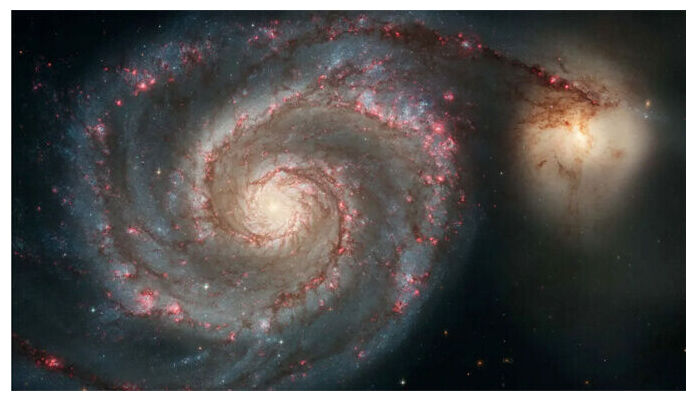
The Whirlpool Galaxy, M51
© NASAThe Whirlpool Galaxy, M51, is a spiral galaxy located 31 million light-years away.
A new study in Monthly Notices of the Royal Astronomical Society by researchers including István Szapudi of the University of Hawaiʻi at Mānoa Institute for Astronomy suggests the universe may rotate — just extremely slowly. The finding could help solve one of astronomy's biggest puzzles.

"To paraphrase the Greek philosopher Heraclitus of Ephesus, who famously said 'Panta Rhei' — everything moves, we thought that perhaps Panta Kykloutai — everything turns," said Szapudi.

Current models say the universe expands evenly in all directions, with no sign of rotation. This idea fits most of what astronomers observe. But it doesn't explain the so-called "Hubble tension" — a long-standing disagreement between two ways of measuring how fast the universe is expanding.

Nebula

UK researchers announce possible signs of extraterrestrial life

Cosmos
A Cambridge-led team has found Earth-like gasses in the atmosphere of a planet 124 light-years away

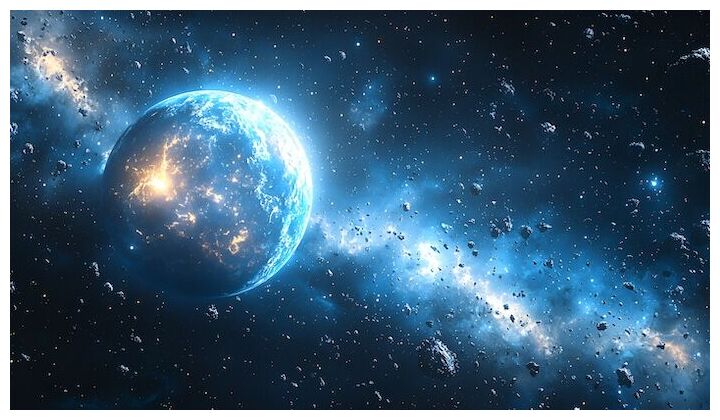
UK researchers have claimed to have found a possible sign of life on a faraway planet. Scientists from the University of Cambridge have announced the detection of a gas that on Earth is only made by living organisms.

The discovery, which was made using NASA's James Webb Space Telescope, could be the strongest hint yet of life beyond Earth.

The team studied K2-18 b, a planet about 124 light-years away in the Leo constellation. It is known as a "hycean" planet, meaning it may have a hydrogen-rich atmosphere and liquid water oceans. Such conditions make it a promising candidate for life.

Question

Massive black hole 'waking up' in Virgo constellation

Black Hole
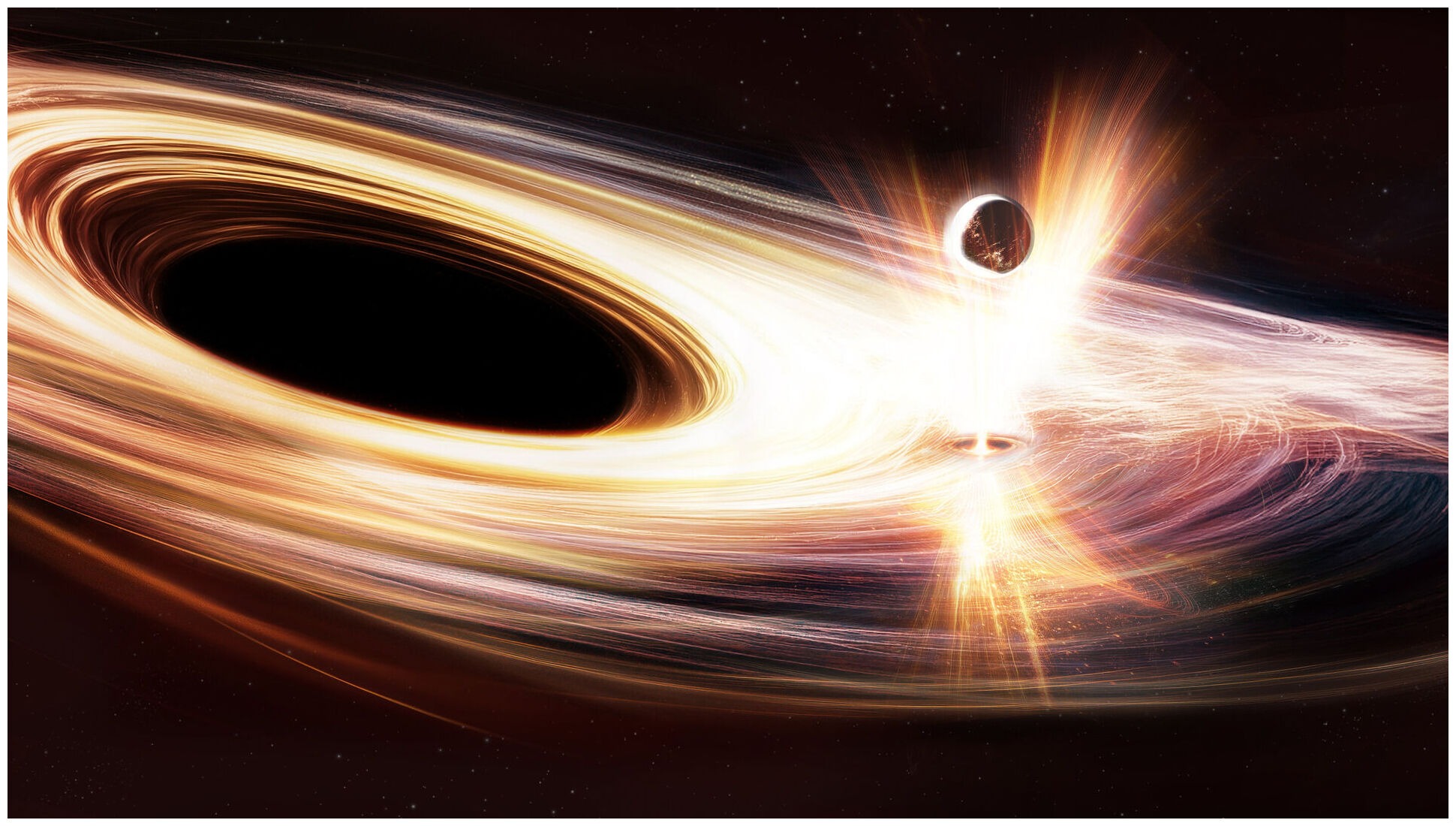
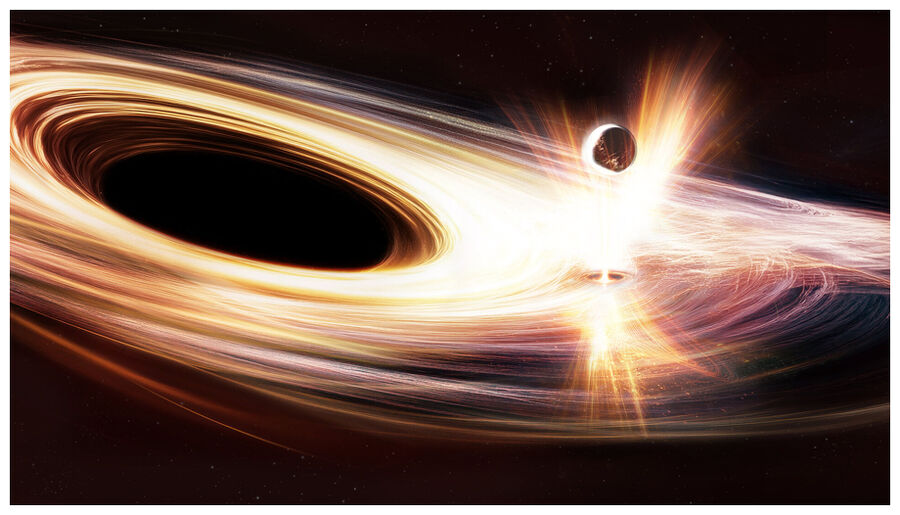
© European Space AgencyArtist's impression of the accretion disc around the massive black hole Ansky and its interaction with a small celestial object.
A massive black hole at the heart of a galaxy in the Virgo constellation is waking up, shooting out intense X-ray flares at regular intervals that have puzzled scientists, a study said Friday.

Astronomers previously had little reason to pay any attention to galaxy SDSS1335+0728, which is 300 million light years from Earth. But in 2019, the galaxy suddenly started shining with a brightness that turned some telescopes its way.

Then in February last year, Chilean astronomers started noticing regular bursts of X-rays coming from the galaxy.

This was a sign that the galaxy's sleeping black hole was waking from its slumber, according to the study published in the journal Nature Astronomy.

Most galaxies, including our home Milky Way, have a supermassive black hole squatting at their heart, like a spider in a web.

These invisible monsters gobble up everything that comes their way — not even light can escape their almighty suck.

If an unlucky star swings too close, it gets torn apart.

The star's shattered material becomes a stream that spins rapidly around the black hole, forming what is called an accretion disk that is gradually swallowed.

But black holes can also go through long periods of inactivity when they do not attract matter.

And after a fairly uneventful period, the bright, compact region at the heart of galaxy SDSS1335+0728 has been classified as an "active galactic nucleus" — and given the nickname "Ansky".

"This rare event provides an opportunity for astronomers to observe a black hole's behavior in real time" using several X-ray telescopes, astronomer Lorena Hernandez-Garcia of Chile's Valparaiso University said in a statement.

Lightning

What doesn't kill you: Lightning strikes on a species of tropical tree makes it grow stronger

Dipteryx oleifera panama tree lightning strikes
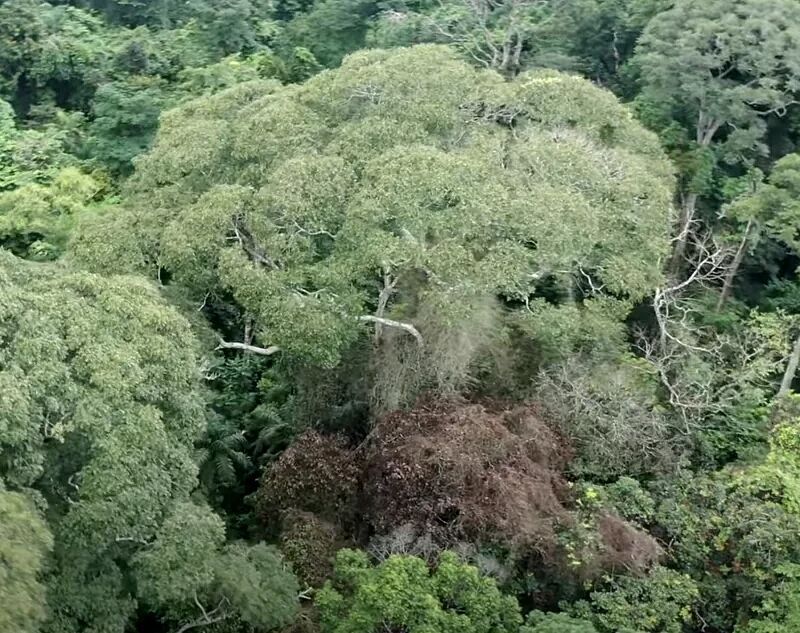
© Evan Gora /Screenshot by NPRResearchers studying lightning's effects on Panama's forests found that one tree, Dipteryx oleifera, often survives being hit by lightning — and even benefits from the overall effects. One of the trees is seen here at center, four weeks after it was hit by a lightning strike that killed neighboring trees (the brown mass at lower center).
Researchers studying lightning's effects on Panama's forests found that one tree, Dipteryx oleifera, often survives being hit by lightning — and even benefits from the overall effects. One of the trees is seen here at center, four weeks after it was hit by a lightning strike that killed neighboring trees (the brown mass at lower center).

Lightning strikes kill millions of trees each year — but it turns out that some large tropical trees can not only survive a strike, but also benefit from its effects, according to a recent study.

The lightning's immense power cleanses these trees of parasitic vines. It also zaps trees nearby, reducing competition. One tree called Dipteryx oleifera, a towering presence in Panama's forests, is particularly adept at thriving after enduring events that are deadly to most other trees.

Magnify

Purple haze: The human eye does not actually see purple, it's actually your brain making it up

purple graphic not real color
© aire images/Getty ImagesIt’s just a pigment of your imagination
You might be today years old when you realize there is no purple in the rainbow. There is no P in ROYGBIV.

But wait, what about violet? Well, despite what you may have come to believe, violet is not purple. In fact, violet (along with the rest of the colors in a naturally occurring rainbow) has something purple doesn't — its own wavelength of light. Anyone who ever ended up with a sunburn knows violet wavelengths are real, as the Sun's ultraviolet (UV) radiation is the reason you need to wear sunscreen, even though you can't see those wavelengths (more on that later). Red, orange, yellow, green, blue, and indigo are all just as real.

But purple? Well, purple is just your brain's way of resolving confusion.

That's right. Red and blue (or violet) wavelengths are two opposite extremes on the spectrum. When you see both of these wavelengths in the same place, you eyes and brain don't know what to do with them, so they compensate, and the clashing wavelengths register as the color we call purple. It doesn't actually exist.

Blue Planet

Scientists discover new phylum of microbes in Earth's deep soil

deep earth soil new phylum microbes
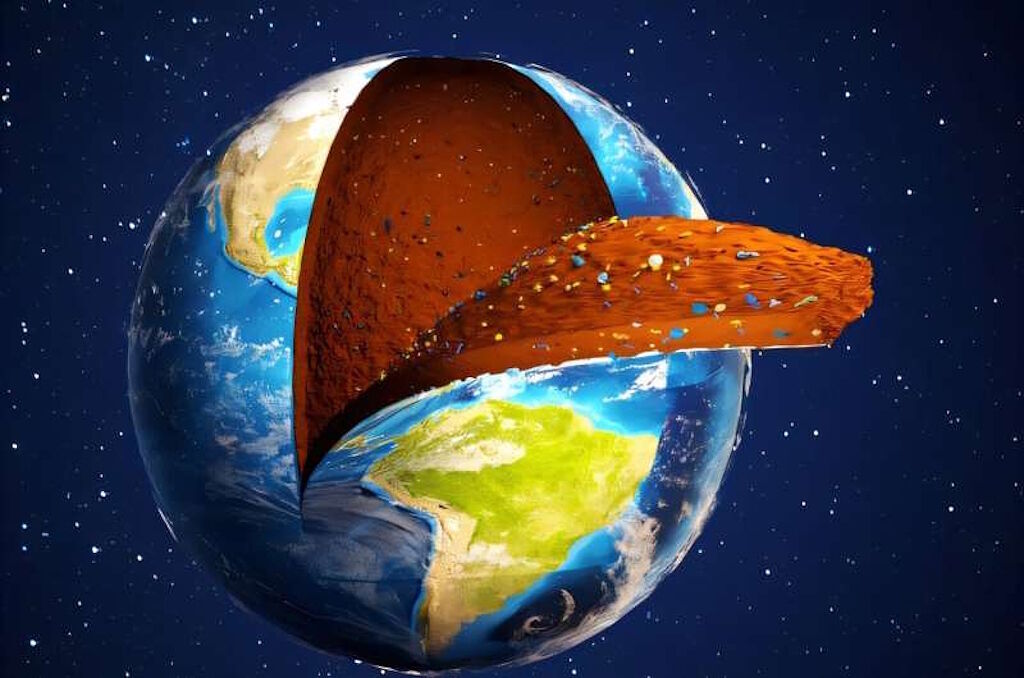
© Michigan State UniversityThis image shows the Earth's Critical Zone, which extends from the tops of trees down through the soil to depths up to 700 feet and depicts the microbes which live throughout this zone. This zone supports most life on the planet as it regulates essential processes like soil formation, water cycling and nutrient cycling, which are vital for food production, water quality and ecosystem health.
Scientists have discovered a new phylum of microbes in Earth's Critical Zone, an area of deep soil that restores water quality. Ground water, which becomes drinking water, passes through where these microbes live, and they consume the remaining pollutants. The paper, "Diversification, niche adaptation and evolution of a candidate phylum thriving in the deep Critical Zone," is published in the Proceedings of the National Academy of Sciences.

Leonardo da Vinci once said, "We know more about the movement of celestial bodies than about the soil underfoot." James Tiedje, an expert in microbiology at Michigan State University, agrees with da Vinci. But he aims to change this through his work on the Critical Zone, part of the dynamic "living skin" of Earth.

"The Critical Zone extends from the tops of trees down through the soil to depths up to 700 feet," Tiedje said. "This zone supports most life on the planet as it regulates essential processes like soil formation, water cycling and nutrient cycling, which are vital for food production, water quality and ecosystem health. Despite its importance, the deep Critical Zone is a new frontier because it's a major part of Earth that is relatively unexplored."

Info

Holograms that can be grabbed and manipulated

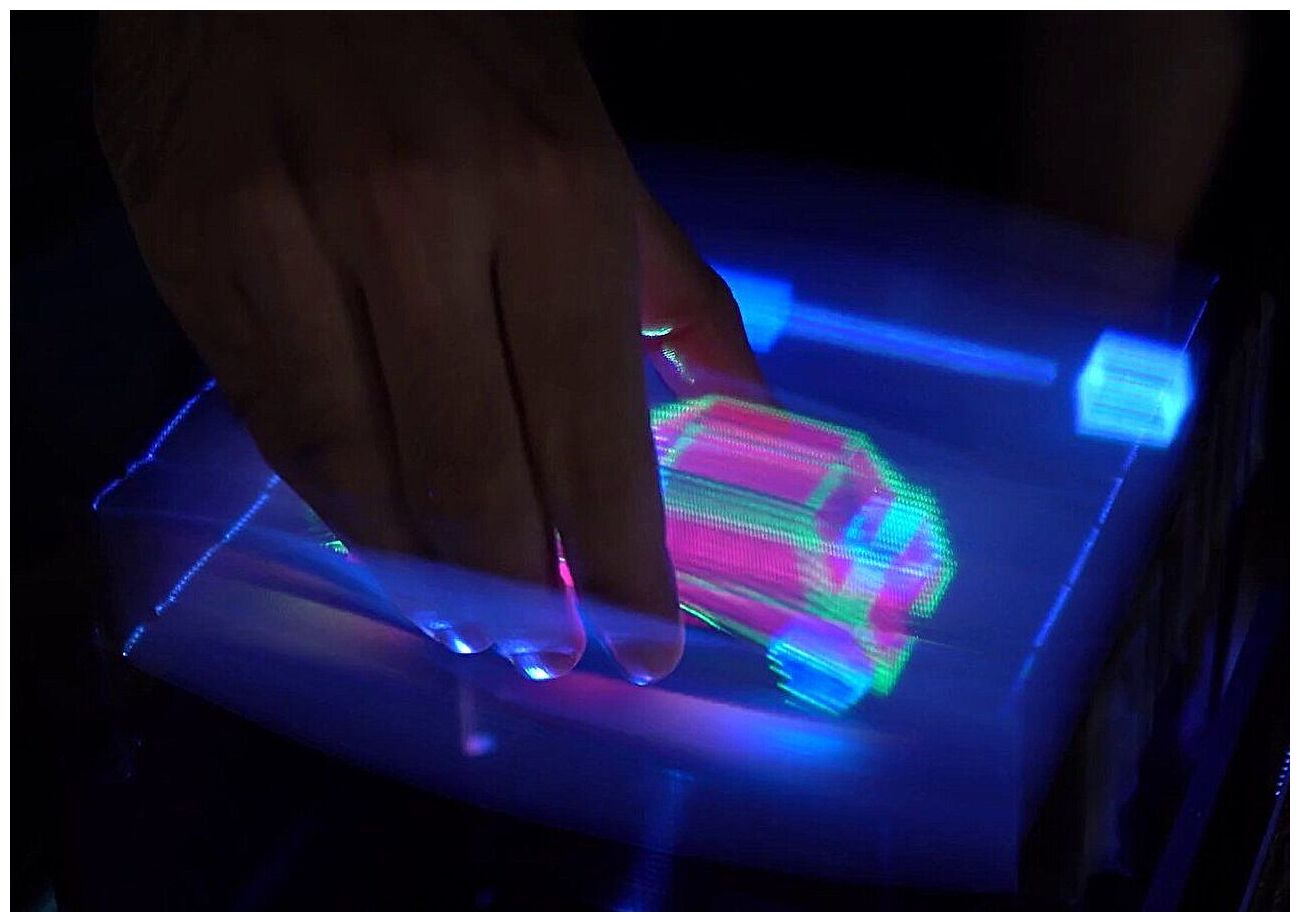
A 3D car is grabbed and rotated by a user.
© Iñigo Ezcurdia 2025A 3D car is grabbed and rotated by a user.
Researchers have succeeded, for the first time, in displaying three-dimensional graphics in mid-air that can be manipulated with the hands. The team includes Doctor Elodie Bouzbib, from Public University of Navarra (UPNA), together with Iosune Sarasate, Unai Fernández, Manuel López-Amo, Iván Fernández, Iñigo Ezcurdia and Asier Marzo (the latter two, members of the Institute of Smart Cities).

"What we see in films and call holograms are typically volumetric displays," says Bouzbib, the first author of the work. "These are graphics that appear in mid-air and can be viewed from various angles without the need for wearing virtual reality glasses. They are called true-3D graphics.

"They are particularly interesting as they allow for the 'come-and-interact' paradigm, meaning that the users simply approach a device and start using it."

"Commercial prototypes of volumetric displays already exist, such as those from Voxon Photonics or Brightvox Inc., but none allow for direct interaction with the holograms," the team points out. Asier Marzo, the lead researcher, comments that direct interaction means "being able to insert our hands to grab and drag virtual objects."


Info

Earth's first crust composition discovery rewrites geological timeline

Researchers have made a breakthrough discovery that changes our understanding of Earth's early geological history, challenging beliefs about how our continents formed and when plate tectonics began.

A study published today in Nature reveals that Earth's first crust, formed about 4.5 billion years ago, probably had chemical features remarkably like today's continental crust.
Earth Crust
© Macquarie UniversityMeteor bombardment: Early Earth was bombarded by meteors which played a crucial role in disrupting and recycling Earth’s first crust.
This suggests the distinctive chemical signature of our continents was established at the very beginning of Earth's history.

Professor Emeritus Simon Turner from the Faculty of Science and Engineering at Macquarie University led the study, which included researchers from around Australia and the UK and France.

"This discovery has major implications for how we think about Earth's earliest history," says Professor Turner.

"Scientists have long thought that tectonic plates needed to dive beneath each other to create the chemical fingerprint we see in continents.

"Our research shows this fingerprint existed in Earth's very first crust, the protocrust - meaning those theories need to be reconsidered."