Science & TechnologyS

Fireball 5

Tunguska explosion in 1908 caused by asteroid grazing Earth says new theory

A new theory explains the mysterious explosion in Siberia, scientists say, suggesting Earth barely escaped a far greater catastrophe.
Asteroid
© Dotted Yeti/Shutterstock
In the early morning of June 30, 1908, a massive explosion flattened entire forests in a remote region of Eastern Siberia along the Tunguska River. Curiously, the explosion left no crater, creating a mystery that has puzzled scientists ever since โ€” what could have caused such a huge blast without leaving any remnants of itself?

Now Daniil Khrennikov at the Siberian Federal University in Russia and colleagues have published a new model of the incident that may finally resolve the mystery. Khrennikov and co say the explosion was caused by an asteroid that grazed the Earth, entering the atmosphere at a shallow angle and then passing out again into space.

"We argue that the Tunguska event was caused by an iron asteroid body, which passed through the Earth's atmosphere and continued to the near-solar orbit," they say. If they are correct, the theory suggests Earth escaped an even larger disaster by a hair's breadth.

First some background. Scientists have long speculated on the cause of the Tunguska impact. Perhaps the most widely discussed idea is that the explosion was the result of an icy body, such as a comet, entering the atmosphere. The ice then rapidly heated up and evaporated explosively in mid-air but without ever hitting the ground.

Evil Rays

Best of the Web: Pentagon to dish out $600M in contracts for '5G dual-use experimentation' at 5 US military sites, including to 'aid lethality'

Pentagon, 5G
© Reuters/Al Drago/Pascal Rossignol
The US military has partnered with more than a dozen companies for "large-scale experimentation" with 5G technology, including efforts to enhance the "lethality" of certain systems, in what's slated to be a $600 million project.

Dubbing 5G tech a "foundational enabler for all US defense modernization," the Pentagon announced the massive research initiative on Thursday, which will hand hundreds of millions to 15 private contractors to conduct testing at five US military installations. The Pentagon, adding that it would bring together experts from several industries and disciplines, said in a statement:
"Today, the Department of Defense announced $600 million in awards for 5G experimentation and testing at five US military test sites, representing the largest full-scale 5G tests for dual-use applications in the world.

"Projects will include piloting 5G-enabled augmented/virtual reality for mission planning and training, testing 5G-enabled Smart Warehouses, and evaluating 5G technologies to enhance distributed command and control."

Sun

Solar storm: Huge flare bursts from the Sun - Watch NASA video

Solar storm: Huge flare bursts from the Sun
A HUGE solar flare burst out of the Sun, and the phenomenon was caught in stunning detail by NASA cameras.

The Sun is constantly bubbling and erupting, releasing huge solar flares into space and when it does, it releases a barrage of solar particles into the cosmos. NASA has just released a video of a massive solar flare, which if it had been released earlier, the bombardment of solar particles would have been on a collision course with Earth.

The video from NASA's Solar and Heliospheric Observatory (SOHO) satellite shows the Sun beginning to murmur, before a huge flare is released.


Cassiopaea

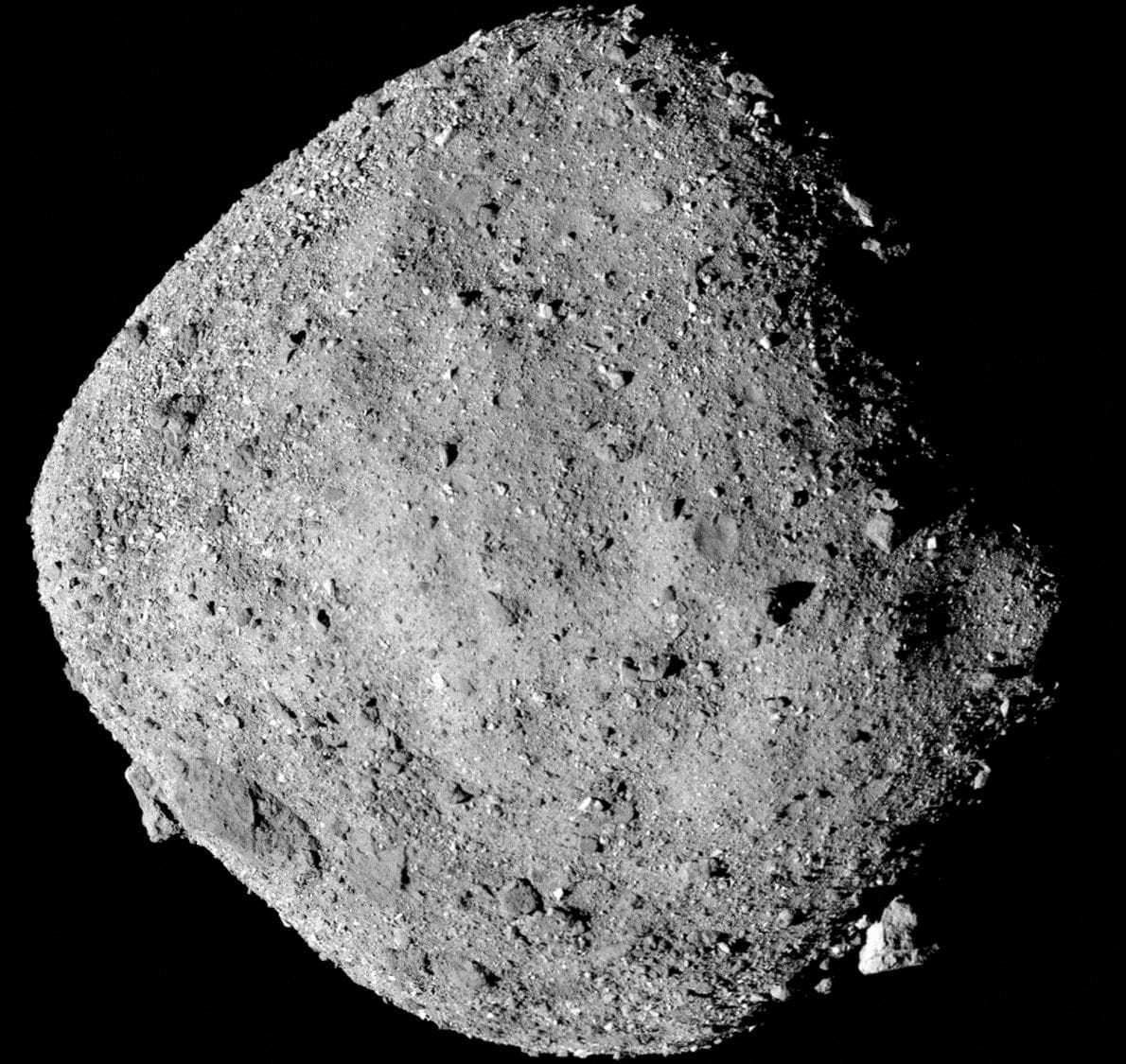
Scientists study the rugged surface of near-Earth asteroid Bennu - evidence of carbonate compounds found

asteroid Bennu
© (NASA/Goddard/University of Arizona/AP) By Joel Achenbach December 25This mosaic image collected on Dec. 2 and provided by NASA shows the asteroid Bennu, which is being studied by the NASA probe Osiris-REx. Bennu regularly crosses Earth's orbit and will pass close to our planet in about 150 years.
As the days count down to NASA's OSIRIS-REx spacecraft's Touch-And-Go asteroid sample collection attempt, Southwest Research Institute scientists have helped determine what the spacecraft can expect to return from the near-Earth asteroid Bennu's surface. Three papers published online by Science on Oct. 8 discuss the color, reflectivity, age, composition, origin and distribution of materials that make up the asteroid's rough surface.

On October 20, the spacecraft will descend to the asteroid's boulder-strewn surface, touch the ground with its robotic arm for a few seconds and collect a sample of rocks and dust -- marking the first time NASA has grabbed pieces of an asteroid for return to Earth. SwRI scientists played a role in the selection of the sample sites. The first attempt will be made at Nightingale, a rocky area 66 feet in diameter in Bennu's northern hemisphere. If this historic attempt is unsuccessful, the spacecraft will try again at a secondary site.

Comment: RT adds:
Elsewhere in the research, an abundance of carbonate minerals were located in the asteroid's geology, which suggest extensive hydrothermal systems, containing both water and carbon dioxide, throughout Bennu and its now-deceased parent asteroid.

This adds further credence to the theory that asteroids may work as some form of seeder for life across the universe.

Researchers now suspect that the space rock is more dense at its surface and more porous towards its core, which may help explain the random ejections of material that occur all the time. These ejections have been invaluable to studying the asteroid's gravity, as the debris falls back down near where it was thrown out, all under the watchful eye of the NASA probe.


Cow

Majority of respondents support chimeric animal research

pigs
Almost 60 percent of people in a new study on attitudes in the US felt comfortable using animals to grow human organs from induced pluripotent stem cells.

Human-animal chimeric embryos โ€” organisms created using cells from two or more species โ€” have the potential to change how researchers study disease and generate organs and tissues for human transplants. One day, scientists have proposed, it may be possible for someone with, say, pancreatic cancer to have their stem cells injected into a modified swine embryo lacking its own pancreas so it can grow the human organ for donation.

Already, human-animal chimeric embryos (HACEs) have been created using human cells injected into pigs, sheep, mice, rats, and monkeys, although none in the US have been brought to term. In fact, their very existence is ethically contentious. What happens, for example, if scientists were to grow a human brain in an animal, blurring the line between species?

In response to ethical, social, and legal concerns, the National Institutes of Health (NIH) issued a moratorium on funding for HACE research in 2015 pending the development of a new set of regulatory guidelines. While research continues in other countries โ€” and even in the US, through collaborations with foreign researchers and private funding โ€” the NIH has yet to reverse its decision, despite previous announcements that it would do so.

Comment: It will be interesting to see how far this research goes, and where it actually leads to. But considering how values, morality and a denial or higher intelligence seems to be in ever shorter supply in some quarters we shouldn't be too surprised to see more monstrosities presented to the world under the guise of a "wonderful scientific breakthrough!". In fact, the work of it already appears to be well underway.

See:


Attention

A scientific review of the science behind lockdown concludes the policy was a MISTAKE & will have caused MORE deaths from Covid-19

Anti-lockdown protest in London
© REUTERS / Henry NichollsAnti-lockdown protest in London, Britain, August 29, 2020
The report, analysing the information available to UK policymakers in March, says schools shouldn't have shut, that only vulnerable groups like the old should have been isolated, & that herd immunity may have been a better route.

A new paper by researchers at Edinburgh University suggests that lockdowns do not help to reduce the death toll from Covid-19, but may simply postpone those deaths. It's another piece of evidence that suggests that a different strategy to combat the pandemic - one that doesn't impose blanket restrictions across society - is needed.

The research was done by a team from Edinburgh's School of Physics and Astronomy. If that sounds odd, Professor Graeme Ackland, one of the authors, has a good explanation. He told me: "From March, every serious epidemiologist has been seconded to SPI-M (the Scientific Pandemic Influenza Group on Modelling) and SAGE (the main Scientific Advisory Group for Emergencies), producing new research on a timescale of days. There simply aren't enough of them to also do replication or even careful peer review. But there were thousands of people who could do data-cleaning, code checking, validation and replication."

Ackland and his colleagues were, he says, "tasked by SPI-M and SAGE with exploring any 'reservations'. SPI-M understood very well the problem of groupthink in a closed community, and asked us to 'kick the tyres' on everything. Another thing real epidemiologists would do themselves given enough time."

Their paper is not really a criticism of the original modelling done before lockdown. In fact, it uses the model used by Imperial College to assess a wider range of scenarios than was done at the time. "My overall opinion", says Ackland, "is that the government's experts have reliably produced better predictions than the 'newspaper experts'."


Comment: In other words, flawed as the official data is, that very data shows the lockdowns were idiotic and dangerous.


Comment: Government logic: Okay, but let's have another lockdown, because Covid.


Info

Researchers have developed a hydrogel that could help repair damaged nerves

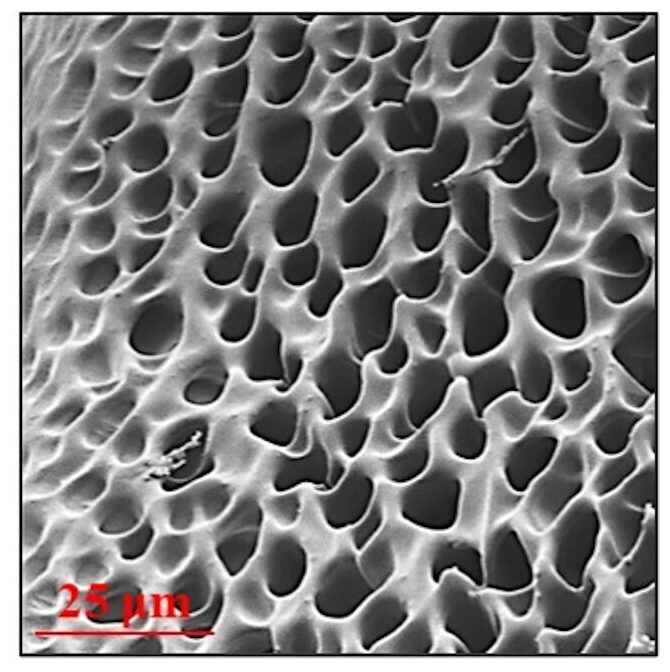
Conductive polymer hydrogel
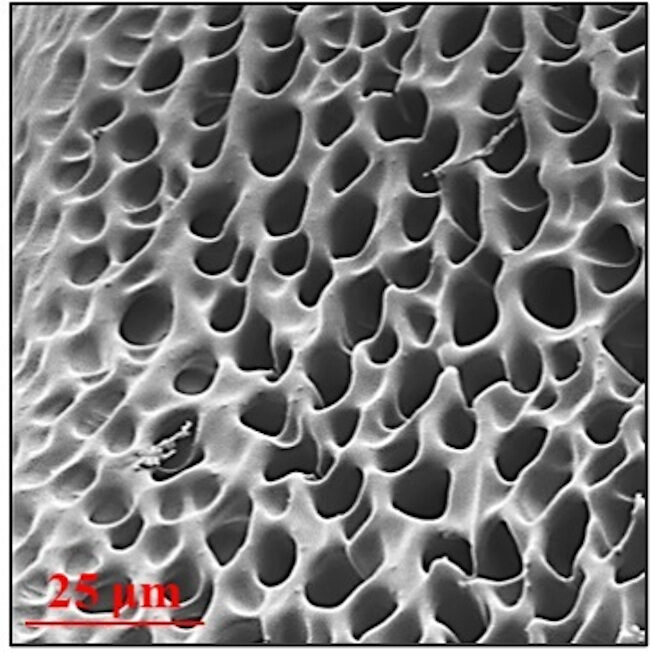
© Adapted from ACS Nano 2020, DOI: 10.1021/acsnano.0c05197A conductive polymer hydrogel could help repair damaged peripheral nerves.
Injuries to peripheral nerves -- tissues that transmit bioelectrical signals from the brain to the rest of the body ยญยญ-- often result in chronic pain, neurologic disorders, paralysis or disability. Now, researchers have developed a stretchable conductive hydrogel that could someday be used to repair these types of nerves when there's damage. They report their results in ACS Nano.

Injuries in which a peripheral nerve has been completely severed, such as a deep cut from an accident, are difficult to treat. A common strategy, called autologous nerve transplantation, involves removing a section of peripheral nerve from elsewhere in the body and sewing it onto the ends of the severed one. However, the surgery does not always restore function, and multiple follow-up surgeries are sometimes needed. Artificial nerve grafts, in combination with supporting cells, have also been used, but it often takes a long time for nerves to fully recover. Qun-Dong Shen, Chang-Chun Wang, Ze-Zhang Zhu and colleagues wanted to develop an effective, fast-acting treatment that could replace autologous nerve transplantation. For this purpose, they decided to explore conducting hydrogels -- water-swollen, biocompatible polymers that can transmit bioelectrical signals.

The researchers prepared a tough but stretchable conductive hydrogel containing polyaniline and polyacrylamide. The crosslinked polymer had a 3D microporous network that, once implanted, allowed nerve cells to enter and adhere, helping restore lost tissue. The team showed that the material could conduct bioelectrical signals through a damaged sciatic nerve removed from a toad. Then, they implanted the hydrogel into rats with sciatic nerve injuries. Two weeks later, the rats' nerves recovered their bioelectrical properties, and their walking improved compared with untreated rats. Because the electricity-conducting properties of the material improve with irradiation by near-infrared light, which can penetrate tissues, it could be possible to further enhance nerve conduction and recovery in this way, the researchers say.

Microscope 2

2,000 year old 'exceptionally preserved' brain material found in Vesuvius victim

Herculaneum
The preserved brain cells were found in the remains of a man at the archaeological site at Herculaneum
Brain cells have been found in exceptionally preserved form in the remains of a young man killed in the eruption of Mount Vesuvius almost 2,000 years ago, an Italian study has revealed.

The preserved neuronal structures in vitrified or frozen form were discovered at the archaeological site of Herculaneum, an ancient Roman city engulfed under a hail of volcanic ash after nearby Mount Vesuvius erupted in the year 79.

"The study of vitrified tissue as the one we found at Herculaneum... may save lives in future," study lead author Pier Paolo Petrone, forensic anthropologist at Naples' University Federico II, told AFP in English.

Comment: See also:


Water

Scientists create 'super enzyme' that eats plastic bottles six times faster

plastics
Scientists have created a new "super enzyme" that can break down plastic up to six times faster than their previous enzyme.

A team of researchers that previously re-engineered a plastic-eating enzyme named PETase have now combined it with a second enzyme to speed up the process, according to a press release from the University of Portsmouth.

The super enzyme could have major implications for recycling polyethylene terephthalate (PET), which is the most common thermoplastic used in single-use drinks bottles, carpets, and clothing.

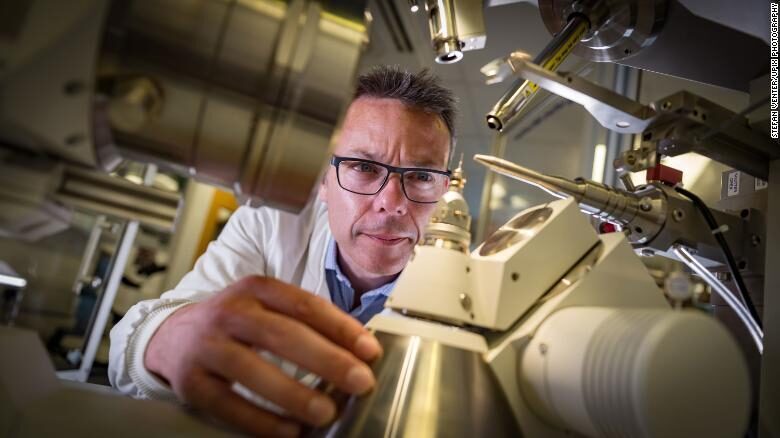
John McGeehan
Project co-lead John McGeehan pictured in the laboratory.

Comment: See also:


Info

Electromagnetic fields used to treat diabetes in mice

Carter and Huang in the lab 2020
© University of IowaCarter and Huang in the lab 2020.
Researchers from the University of Iowa have discovered a safe new way to manage blood sugar non-invasively. Exposing diabetic mice to a combination of static electric and magnetic fields for a few hours per day normalizes two major hallmarks of type 2 diabetes, according to new findings published Oct. 6 in Cell Metabolism.

"We've built a remote control to manage diabetes," says Calvin Carter, PhD, one of the study's lead authors and a postdoc in the lab of senior author Val Sheffield, MD, PhD, professor in the Stead Family Department of Pediatrics, Division of Medical Genetics and Genomics, and the Department of Ophthalmology and Visual Sciences at the UI Carver College of Medicine. "Exposure to electromagnetic fields (EMFs) for relatively short periods reduces blood sugar and normalizes the body's response to insulin. The effects are long-lasting, opening the possibility of an EMF therapy that can be applied during sleep to manage diabetes all day."

The unexpected and surprising discovery may have major implications in diabetes care, particularly for patients who find current treatment regimens cumbersome.

The new study indicates that EMFs alter the balance of oxidants and antioxidants in the liver, improving the body's response to insulin. This effect is mediated by small reactive molecules that seem to function as "magnetic antennae."